Unisciti a noi in un viaggio nel mondo dei libri!
Aggiungi questo libro allo scaffale
Grey
Scrivi un nuovo commento Default profile 50px
Grey
Iscriviti per leggere l'intero libro o leggi le prime pagine gratuitamente!
All characters reduced
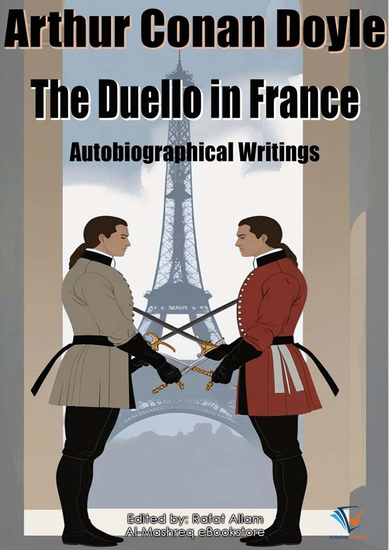
The Duello in France - Autobiographical Writings - cover

The Duello in France - Autobiographical Writings

Arthur Conan Doyle

Casa editrice: Al-Mashreq eBookstore

  • 0
  • 0
  • 0

Sinossi

The Duello in France is Arthur Conan Doyle's sharp, insightful, and historically rich exploration of one of Europe's most romanticized and dangerous customs: the duel. In this autobiographical essay, Doyle delves into the tradition of French dueling with both fascination and critique, offering a vivid narrative informed by personal study and cultural observation. With the precision of a historian and the flair of a novelist, he recounts gripping real-life duels, exposes their often absurd codes of honor, and reflects on how this lethal ritual persisted in a supposedly civilized society. More than a historical account, this is Doyle in his element—dissecting human behavior, honor, and ego through the lens of a bygone European institution. As much a meditation on masculinity and violence as it is a cultural essay, The Duello in France is a compelling and elegant piece of nonfiction from one of literature's most versatile minds.
Disponibile da: 01/08/2025.
Lunghezza di stampa: 32 pagine.

Altri libri che potrebbero interessarti

  • Room for Two - cover

    Room for Two

    Abel Keogh

    • 0
    • 0
    • 0
    "Sweetie, I'm home." I tried to put as much kindness into my voice as possible. I didn't want to have another argument - at least not right away. 
    Silence. 
    "Sweetheart?" 
    A gunshot echoed from our bedroom, followed by the sound of a bullet casing skipping along a wall. 
    Everything slowed down. 
    *** 
    When a life is destroyed, when guilt says you played a role in its destruction, how do you face the days ahead? Twenty-six-year-old Abel Keogh chooses to ignore the promptings he receives concerning his wife's mental illness, and now he feels he is to blame for her choices. If only he had listened . . . 
    At some point in our lives, each of us face devastating afflictions and must eventually cope with loss. Regardless of how it happens, the outcome is still the same - we are left isolated, alone, wondering what we could have done differently, and where we can turn for peace. This is Abel's story of love and loss in his own words. His search for peace and the miracle that follows is proof that love and hope can endure, despite the struggles and tragedies that shape each of our lives.
    Mostra libro
  • A Legacy of Purpose - How the Leadership Alliance Is Reshaping the Future of Work - cover

    A Legacy of Purpose - How the...

    Malcolm Allen

    • 0
    • 0
    • 0
    In a time of shifting demographics and evolving workforce demands, the academic pipeline remains critically important but persistently unequal. A Legacy of Purpose reveals how one organization has created a transformative model for diversifying research and academia through mentorship, opportunity, and collaboration.
    Mostra libro
  • It Should Be Easy to Fix - cover

    It Should Be Easy to Fix

    Bonnie Robichaud

    • 0
    • 0
    • 0
    In 1977, Bonnie Robichaud accepted a job at the Department of Defence military base in North Bay, Ontario. After a string of dead-end jobs, with five young children at home, Robichaud was ecstatic to have found a unionized job with steady pay, benefits, and vacation time.
    		 
    After her supervisor began to sexually harass and intimidate her, her story could have followed the same course as countless women before her: endure, stay silent, and eventually quit. Instead, Robichaud filed a complaint after her probation period was up. When a high-ranking officer said she was the only one who had ever complained, Robichaud said, “Good. Then it should be easy to fix.”
    		 
    This timely and revelatory memoir follows her gruelling eleven-year fight for justice, which was won in the Supreme Court of Canada. The unanimous decision set a historic legal precedent that employers are responsible for maintaining a respectful and harassment-free workplace. Robichaud’s story is a landmark piece of Canadian labour history—one that is more relevant today than ever.
    Mostra libro
  • Austerlitz or Death - cover

    Austerlitz or Death

    Auguste Vallois

    • 0
    • 0
    • 0
    "Austerlitz or Death" is an epic historical novel by Auguste Vallois, a captain of the Imperial Guard who recounts his memories from the battlefields of Europe to the solitude of inner exile. 
    From his revolutionary youth in Lyon to the Egyptian campaign, the victories in Italy, the glory at Austerlitz, the frozen hell of Russia, and the final tragedy at Waterloo, Auguste tells the story of the Napoleonic Empire in first person and with painful clarity—not from the pages of history books, but from the blood, mud, and soul of those who built it… and watched it fall. 
    Through these pages, the reader will march alongside a man who lost everything but his honor. You will witness how a soldier is forged, how faith fades, how a sword is held even on broken knees. Each chapter is filled with emotion, introspection, fire, and silence. Every victory bears the taste of sacrifice, and every defeat, the dignity of those who never surrendered. 
    Vallois's prose is both elegant and raw, intimate and epic, heir to the great traditions of war and memory literature such as All Quiet on the Western Front or The Disasters of War. This is not the official history of Napoleon, nor the tale of grand strategists. It is the story of the anonymous men who believed in something greater than themselves… and paid the price. 
    A novel that masterfully blends epic military drama, psychological depth, and historical tragedy. Ideal for readers of war literature, historical fiction, soldier memoirs, or explorations of the human condition in times of crisis. 
    "I served the Emperor. And I do not regret it." 
    — Auguste Vallois
    Mostra libro
  • Kingdom of Kongo - Christianity Trade and the Kingdom That Resisted Colonization - cover

    Kingdom of Kongo - Christianity...

    Rolf Hedger

    • 0
    • 0
    • 0
    The Kingdom of Kongo emerged as one of the most powerful and centralized states in Central Africa. Its origins can be traced back to the early Bantu migrations, which spread agriculture, ironworking, and complex social structures across the region. By the 14th century, various smaller chiefdoms in present-day Angola and the Democratic Republic of Congo began to coalesce under a single authority, forming what would become the Kingdom of Kongo. 
    The region’s fertile lands and access to major rivers facilitated both agriculture and trade. Kongo’s early economy relied on the cultivation of crops such as millet, sorghum, and bananas, as well as the production of iron tools and weapons. The abundance of natural resources allowed the ruling elite to accumulate wealth and expand their influence. As trade networks developed, Kongo became a center of commerce, linking the interior regions of Central Africa with coastal markets. 
    Kongo's social and political organization was highly structured. At the top of the hierarchy was the king, known as the Manikongo, who ruled from the capital, Mbanza Kongo. The Manikongo exercised authority over provincial rulers, who governed different regions of the kingdom. This system allowed for centralized administration while also granting local leaders autonomy in managing their territories. The kingdom was further divided into districts and villages, with a bureaucratic structure that ensured tax collection, military organization, and judicial functions.
    Mostra libro
  • Armenian Genocide - Atrocities Deportation and Plunder by the Convicts Army - cover

    Armenian Genocide - Atrocities...

    Kelly Mass

    • 0
    • 0
    • 0
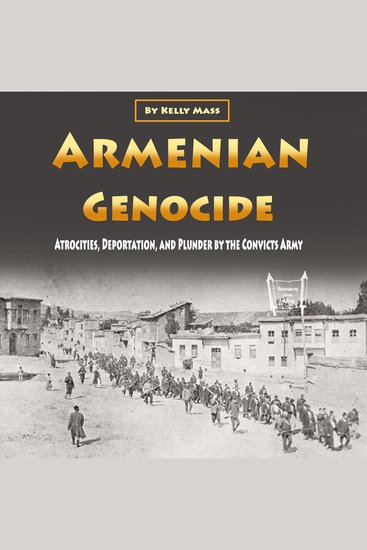
    Yes, even before World War II, there was a genocide, and not too long before that, actually. We are talking about the Armenian deportations that killed between 1 and 2 million innocent civilians, an atrocity the Turkish government still doesn’t fully acknowledge. Rock bands like System of a Down have complained in their music about it, historians have turned pieces of evidences into large books, and when you talk to Armenians, they still remember what their ancestors told them about it. 
    At the time of World War I, the Ottoman Empire committed the Armenian genocide, which led to the organized death of around one million ethnic Armenians. It was primarily achieved by mass executions, death marches resulting in the Syrian Desert, and the pushed Islamization of Armenian women and kids, led by the judgment Committee of Union and Development (CUP). The Ottoman Empire was collapsing, and in a cruel act of desperation and vengeance, they decided to take out their empirical frustrations on the Armenians and “take care of the Armenian problem.” Mass rapes, murder, deportation, theft, robberies, starvation, and mayhem was the consequence. It became one of the ugliest faces of the First World War in history. 
    Become more familiar with the gruesome events in in Eastern Anatolia, which is now divided into Turkey and Armenia. Learn what moved the perpetrators, what they did, and what the aftermath was like. You can do all that through this concise book.
    Mostra libro