Join us on a literary world trip!
Add this book to bookshelf
Grey
Write a new comment Default profile 50px
Grey
Subscribe to read the full book or read the first pages for free!
All characters reduced
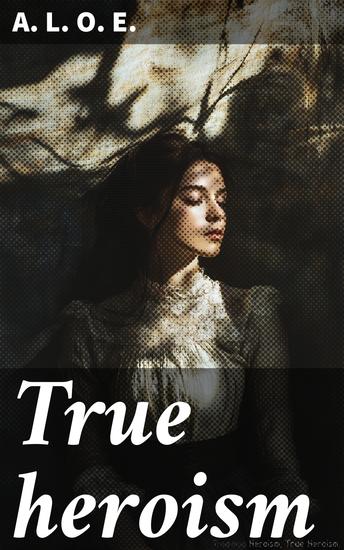
True heroism - cover

True heroism

A. L. O. E.

Publisher: Good Press

  • 0
  • 0
  • 0

Summary

In "True Heroism," A. L. O. E. explores the multifaceted nature of heroism through a series of vignettes that blend realism with moral allegory. Written in the Victorian era, the book employs an accessible yet poignant literary style that illuminates the ideals of bravery, sacrifice, and integrity. A. L. O. E. skillfully intertwines narrative and didactic elements, encouraging readers to reflect on the virtues of moral courage that transcend mere acts of physical valor. Through well-crafted characters and vivid settings, the author contextualizes heroism within the social mores of her time, presenting a critique of conventional notions while advocating for a deeper understanding of what it means to be truly heroic. A. L. O. E., or the renowned author Charlotte Maria Tucker, was a prolific writer driven by her commitment to social reform and moral instruction. This book reflects her engagement with contemporary debates regarding women's roles in society, education, and the moral fabric of the Victorian age. A passionate advocate for the power of literature to shape ethical awareness, A. L. O. E.'s works resonate with her belief that storytelling can cultivate a spirit of compassion and resilience against societal challenges. "True Heroism" is a compelling and thought-provoking read that invites readers to reconsider their perceptions of bravery. A. L. O. E.'s exploration of inner strength and moral fortitude provides a timeless commentary that remains relevant today. This book is highly recommended for individuals keen on understanding the deeper, often overlooked, virtues of heroism that inspire genuine acts of kindness and courage.
Available since: 03/02/2025.
Print length: 140 pages.

Other books that might interest you

  • Tales For Every Season - cover

    Tales For Every Season

    Ivan Bunin

    • 0
    • 0
    • 0
    One of the last true classics of Russian literature and 1933 Nobel Laureate for literature, Ivan Bunin brings you a series of relationship tales as diverse as the seasons and far more engrossing.
    Show book
  • The Reticence of Lady Anne - From their pens to your ears genius in every story - cover

    The Reticence of Lady Anne -...

    Saki Saki

    • 0
    • 0
    • 0
    Hector Hugh Munro, more familiarly known by his pen-name ‘Saki’ was born in what was then Akyab in British Burma on 18th December 1870. His father was an Inspector General for the Indian Imperial Police, and his mother the daughter of a Rear Admiral. 
    When he was 2 his mother died and he and his siblings were sent back to England to be raised by their grandmother and paternal maiden aunts in a strict, puritanical household near Barnstaple, Devon. Educated by governesses Saki used many of these women as character models for his later writing. 
    At 17 his father retried and returned to England and then embarked on a series of European travels with Saki and his siblings. 
    After a short stint working in Burma with the Indian Imperial Police Saki decided to move to London to make a living as a writer. Initially he wrote as a journalist for a number of newspapers and magazines before attempting an historical study, ‘The Rise of the Russian Empire’, whose real value lay in directing him to writing short stories instead, the first of which, ‘Dogged’, he published in 1899. 
    From here it was a short stab of the pen to writing political satire before in 1902 he became the foreign correspondent for The Morning Post, first in the Balkans, then Russia, Paris and back to London in 1908, where 'the agreeable life of a man of letters with a brilliant reputation awaited him.'  
    Collections of his short stories full of witty, mischievous and often macabre stories that satirized Edwardian society and two novels now appeared in the years up to the Great War.  At its’ outbreak he was 43 but managed to join as an ordinary trooper. More than once he returned to the battlefield when officially too sick or injured.  
    On 14th November 1916 Hector Hugh Munro was sheltering in crater during the Battle of the Ancre, when he was shot and killed by a German sniper. According to several sources, his last words were "Put that bloody cigarette out!"
    Show book
  • The Two Captains - cover

    The Two Captains

    Friedrich de la Motte Fouqué

    • 0
    • 0
    • 0
    Two officers, friends since boyhood, love the same woman, and the friendship is the real subject — a short German romance about honour, and about the point at which honour stops being a virtue. Fouqué was a Prussian cavalry officer of Huguenot descent who fought Napoleon and wrote Undine, German Romanticism's most enduring fairy tale. This is the same sensibility, condensed.
    Show book
  • A Slander - cover

    A Slander

    Anton Chekhov

    • 0
    • 0
    • 0
    A Slander is a very short story that reflects the behavior of society concerning public image. Chekhov basically writes that one should be sure before taking action. A Slander is both somber and funny, demonstrating we are our own worst enemy.
    Show book
  • The Phantom Rickshaw and Other Ghost Stories - cover

    The Phantom Rickshaw and Other...

    Rudyard Kipling

    • 0
    • 0
    • 0
    "Not every ghost haunts a castle; some haunt the open road in the midday sun."
    
    In this chilling collection, Rudyard Kipling proves that the bright sun of the Indian subcontinent can be just as terrifying as a dark English manor. The title story, The Phantom Rickshaw, follows Jack Pansay, a man haunted by the literal apparition of the woman he spurned—a ghost that only he can see, appearing in a yellow-paneled rickshaw amidst the fashionable crowds of Simla. From the claustrophobic nightmare of a "living graveyard" in The Strange Ride of Morrowbie Jukes to the eerie whispers of the supernatural in the barracks, Kipling explores the thin veil between reality and madness. These are not just ghost stories; they are psychological thrillers that examine guilt, isolation, and the uncanny friction between East and West.
    
    The Horror of the Mind: What makes Kipling's ghosts so effective is their ambiguity. Is Jack Pansay truly seeing a specter, or is he crumbling under the weight of his own moral failures? Kipling was a pioneer of the "psychological ghost," where the supernatural serves as a manifestation of a character's internal decay.
    
    The Strange Ride of Morrowbie Jukes: Often considered a precursor to modern "weird fiction," this standout story features a man trapped in a literal pit of the "living dead." It is a visceral, terrifying exploration of social collapse and the loss of reason that remains one of Kipling's most disturbing achievements.
    
    Why It Is a Must-Read: The Phantom Rickshaw offers a unique perspective on the Victorian ghost story. By transplanting gothic tropes into the vivid, dusty, and complex landscape of India, Kipling created a brand of horror that feels both exotic and intimately human. It is essential reading for fans of classic suspense and anyone interested in the darker side of the colonial imagination.
    
    Experience the ghosts of the Himalayas. Purchase "The Phantom Rickshaw and Other Ghost Stories" today.
    Show book
  • Let Loose - cover

    Let Loose

    Mary Cholmondeley

    • 0
    • 0
    • 0
    Title: Let Loose 
    Author: Mary Cholmondeley 
    Narrator: Jonathan Dunne 
    Original Publication: 1890 
    Public Domain: Yes 
    Series Placement: Number 39 in the Timeless Terrors series 
    Description: 
    Let Loose by Mary Cholmondeley is a tale of forbidden curiosity and ancestral dread — a Gothic masterpiece that fuses the haunted past with the peril of modern discovery. First published in the late Victorian era, it stands as one of the most unsettling explorations of the supernatural in English fiction. 
    When an architect is summoned to restore a decaying abbey, he unwittingly disturbs a tomb long sealed — and unleashes a terror bound by sacred warning. Cholmondeley’s story unfolds with elegant restraint and rising unease, revealing that the boundaries between the living and the dead are more fragile than reason admits. 
    Narrated by Amazon bestselling horror author Jonathan Dunne, this performance captures the tale’s chilling atmosphere — the echoing corridors, the whisper of desecrated dust, and the growing certainty that some doors, once opened, can never again be closed. While the text is in the public domain, this narration is an original performance and copyright © 2025 Jonathan Dunne. 
    Part of Timeless Terrors, a series devoted to resurrecting the masters of the macabre, Let Loose stands as a warning from the past — that reverence ignored and curiosity unchained can awaken horrors best left entombed.
    Show book