Junte-se a nós em uma viagem ao mundo dos livros!
Adicionar este livro à prateleira
Grey
Deixe um novo comentário Default profile 50px
Grey
Assine para ler o livro completo ou leia as primeiras páginas de graça!
All characters reduced
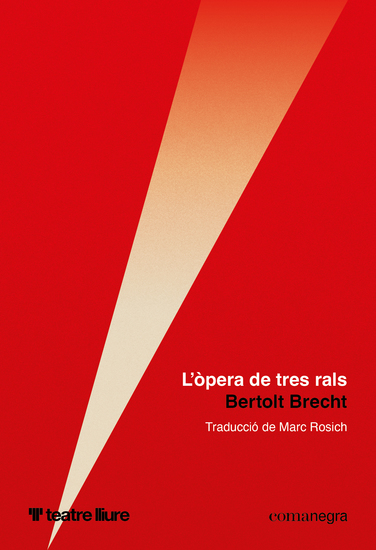
L'òpera de tres rals - cover
LER

L'òpera de tres rals

Bertolt Brecht

Tradutor Marc Rosich

Editora: Comanegra

  • 0
  • 0
  • 0

Sinopse

En un Londres victorià i marginal, Mackie el Navalla es casa amb Polly, la filla de Peachum, l'home que controla els captaires de la capital. Per recuperar-la, els Peachum mouran fils perquè Mackie acabi a la garjola. Però se'ls escapa un detall: Mackie manté un lligam d'amistat amb el temut Tigre Brown, cap de la policia.

La Temporada 76/77, Fabià Puigserver i Carles Santos van portar Bertolt Brecht a l'escenari de Gràcia amb "Ascensió i caiguda de la ciutat de Mahagonny". En aquesta ocasió, l'univers brechtià torna a escena amb "L'òpera de tres rals", una crítica marxista del capitalisme que conserva una vigència ferotge i l'obra més vista a l'Alemanya del seu temps fins a l'arribada dels nazis al poder, l'any 1933. Dirigit per Marta Pazos i Dani Espasa, l'espectacle commemora el 50è aniversari del Teatre Lliure a partir de la nova traducció de Marc Rosich.
Disponível desde: 09/09/2026.
Comprimento de impressão: 136 páginas.
Outros livros que poderiam interessá-lo

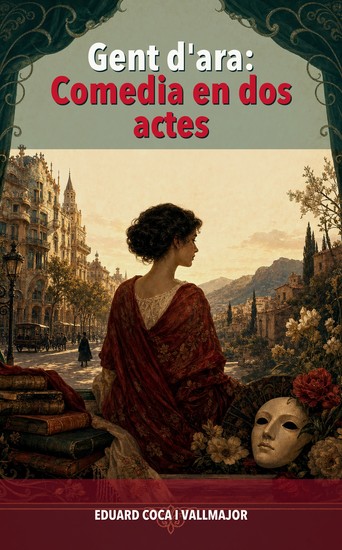
  • Gent d'ara: Comedia en dos actes - cover

    Gent d'ara: Comedia en dos actes

    Eduard Coca i Vallmajor

    • 0
    • 0
    • 0
    "Gent d'ara" by Eduard Coca i Vallmajor is a stage comedy written in the early 20th century. It satirizes the clash between tradition and modernity in a Barcelona household where a stern shopkeeper father, Rimbau, demands his son Joanet join the family business while the son yearns to become an architect; Rosa, the level‑headed mother, is torn, as a pompous moralist (Don Ignasi), a sharp, ironic neighbor (Joseph), and Joseph's literary wife Mercedes stir the pot. Expect brisk domestic skirmishes, witty needling, and a humorous portrait of "people of today" pushing against old certainties. The opening of this play sets the conflict in motion: in their old Barcelona flat, Rimbau scolds Rosa and condemns Joanet's studies, enlisting Don Ignasi to preach parental authority, while neighbors Mercedes (a self‑styled intellectual novelist) and her sardonic husband Joseph drift in, trading barbs. Joseph quietly learns from the maid that father and son have already clashed, then counsels the arriving Joanet and his friend Lluis to stay respectful yet firm. A family gathering erupts when Rimbau publicly berates his son and even threatens violence, leaving Rosa in tears as Act I falls. At the start of Act II in the Vallcarca summer house, Don Ignasi pushes Rosa to side with the father, but she defends Joanet's vocation; tensions simmer over lunch, Joseph and Mercedes bicker about her writing, Joanet bursts out over insults to his mother, and Rosa pleads for calm. Mercedes attempts a dramatic reading of her novel, but as Don Ignasi sneaks off to corner Joanet and others slip away, the reading collapses and the family's generational standoff remains unresolved. This Catalan-language digital edition is prepared with active navigation, clean typography, a custom cover and a reading file stripped of source-site notices, donation text and unnecessary external links.
    Ver livro
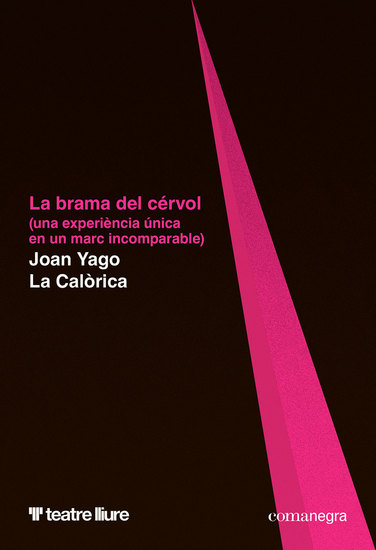
  • La brama del cérvol - Una experiència única en un marc incomparable - cover

    La brama del cérvol - Una...

    Joan Yago, La Calòrica

    • 0
    • 0
    • 0
    Un vell hotel de muntanya enmig del no-res. Alguns han vingut des de molt lluny per sentir la majestuosa brama del cérvol; totes les guies ho descriuen com una experiència única. D'altres han vingut a tancar un important negoci immobiliari o a intentar salvar el seu matrimoni. També hi ha un grup de creadors escènics que espera passar uns dies discutint sobre les possibilitats del teatre polític per transformar la societat, i dues noies perdudes al bosc, a la recerca d'una festa secreta que, segons diuen alguns, se celebra en aquella vall des de fa mil anys.
    Històries múltiples, personatges que es creuen: uns estan paralitzats pel sentiment de buidor, d'altres necessiten escapar del soroll... Però tots estan sols al món, o això és el que es pensen. Mentrestant, van passant els dies i encara ningú ha sentit la brama dels cérvols.
    Ver livro
  • Aigues encantades - cover

    Aigues encantades

    Joan Puig i Ferreter

    • 0
    • 0
    • 0
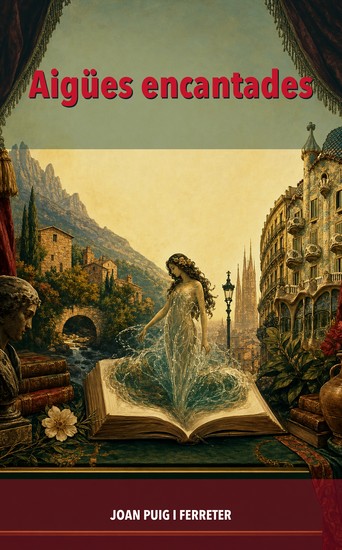
    "Aigües encantades" by Joan Puig i Ferreter is a Catalan stage drama written in the early 20th century. Set in a mountain village gripped by drought, it pits religious tradition and sacred legends about "enchanted" waters against a modern, rational bid to capture and distribute that water. The central figures include the rebellious student-teacher Cecilia, her devout parents Pere Amat and Juliana, the wavering schoolmaster Vergés, the forceful priest Mossèn Gregori, and a persuasive outsider who promises practical salvation. The result is a charged portrait of faith, fear, progress, and community power. The opening of the play presents a tense home scene: while bells toll for a penitential procession, Cecilia rejects the village's rites, sparring with Vergés and clashing bitterly with her authoritarian father and sorrowful mother. News spreads of a well-spoken foraster who claims the village can draw real water from the supposedly sacred pools, and Mossèn Gregori quietly prepares to neutralize him. A scandal erupts when Amat reports that Cecilia has publicly embraced the newcomer, hardening his resolve against her. In the next scene, at the shepherd Romanill's courtyard, villagers gather; the batlle and Amat try to intimidate the host, but a crowd floods in as the outsider—an engineer—insists he brings peace and a practical plan, not an assault on belief. The people waver between curiosity and hostility as he begins to explain that the "enchanted" waters are living and accessible, and the confrontation remains unresolved as tensions crest. This Catalan-language digital edition is prepared with active navigation, clean typography, a custom cover and a reading file stripped of source-site notices, donation text and unnecessary external links.
    Ver livro
  • La peste groga: Pessa comica-burlesca composta d'afagitons bosquetjats del natural com a memoria de la febre amarilla del any 1870 - cover

    La peste groga: Pessa...

    Pere d'Alcantara Penya

    • 0
    • 0
    • 0
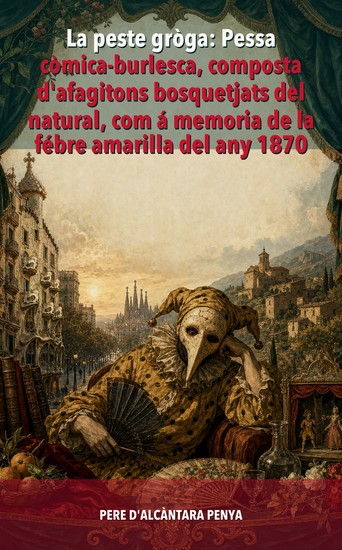
    "La peste gròga : Pessa còmica-burlesca, composta d''afagitons bosquetjats del…" by Pere d''Alcàntara Penya i Nicolau is a comic-burlesque stage play written in the late 19th century. Set in Palma during the panic of the yellow fever scare of the early 1870s, it lampoons rumor, fear, and official overreaction. The likely topic is a satirical take on public hysteria, misinformation, and everyday opportunism during a supposed epidemic. The one-act action unfolds on a city street as a cobbler (Mestre Cinto) and a coffee vendor (Ignaci) trade rumors about "the yellow plague," while a shopkeeper (l'Amo 'n Pau), two doctors (Don Nadal and Don Tófol), and a city councilor (Pere-Antoni) move in and out. When a sack is delivered to the shopkeeper's closed store, the gossips decide it hides an infected woman smuggled past the city gates. Authorities arrive, tensions rise, and suspicion peaks—until the supposed "pest" is revealed to be a gigantic yellow squash (carabassa) proudly produced for inspection. The farce ends with the busybodies chastened, and the play punctures the folly of credulity and the chaos that fear—rather than disease—can spread. This Catalan-language digital edition is prepared with active navigation, clean typography, a custom cover and a reading file stripped of source-site notices, donation text and unnecessary external links.
    Ver livro
  • El cor del poble: Drama en tres actes - cover

    El cor del poble: Drama en tres...

    Ignasi Iglesias

    • 0
    • 0
    • 0
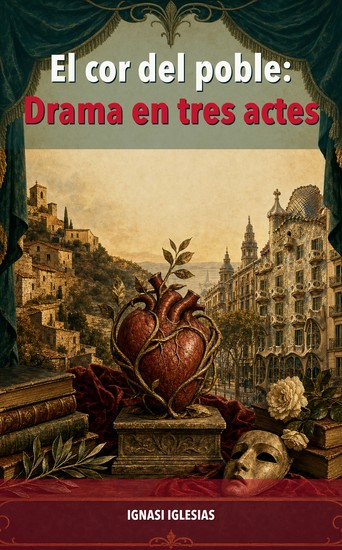
    "El cor del poble: Drama en tres actes" by Ignasi Iglesias is a play written in the early 20th century. The drama unfolds in a working-class neighborhood of Barcelona, focusing on the characters' daily struggles and interactions that explore themes of familial ties, societal expectations, and personal aspirations. The opening of the play introduces us to a modest room where the main character, Madrona, prepares for the evening's festivities, alluding to her husband Passarell's involvement in a choir performance. Through dialogue between Madrona and a young neighbor, Xic, we learn about Madrona's concerns for her household and her son, Fidel. As the conversation develops, we are introduced to the complex web of relationships and character dynamics that will shape the narrative. The arrival of Don Albert brings a significant twist, as he reveals to Madrona that Fidel's biological mother is alive and wishes to acknowledge him, leading to underlying tension within the household. The scenes are rich with emotion, reflecting the characters' aspirations and their connections to each other as they navigate their socio-economic environment. This Catalan-language digital edition is prepared with active navigation, clean typography, a custom cover and a reading file stripped of source-site notices, donation text and unnecessary external links.
    Ver livro
  • Una nit de carnaval: Pessa en un acte y en vers - cover

    Una nit de carnaval: Pessa en un...

    Joaquin Dimas

    • 0
    • 0
    • 0
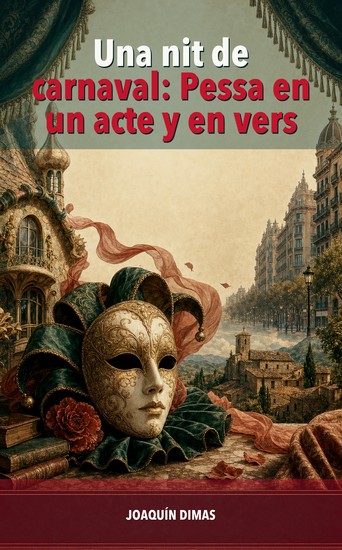
    Una nit de carnaval: Pessa en un acte y en vers by Joaquín Dimas is presented as a clean Catalan-language ebook in the general tradition. The edition preserves the work's literary character while preparing it for sustained digital reading with an active table of contents and clear structure. The opening pages establish the tone with this passage: Personas Sr. Climent. Barber Teresa. Sa muller. Salvador. Germá de Teresa. Máscara 1.ª. Vehins. Idem 2.ª. " Idem 3.ª. " Sr. Pau. " Sr. Xarápi. " Comparsas. " La escena passa en Barcelona, á la nit de Carnaval. Una nit de carnaval. Lo teatro representa un carre The file has been rebuilt for fluent reading without source-site boilerplate or extraneous links.
    Ver livro