Unisciti a noi in un viaggio nel mondo dei libri!
Aggiungi questo libro allo scaffale
Grey
Scrivi un nuovo commento Default profile 50px
Grey
Iscriviti per leggere l'intero libro o leggi le prime pagine gratuitamente!
All characters reduced
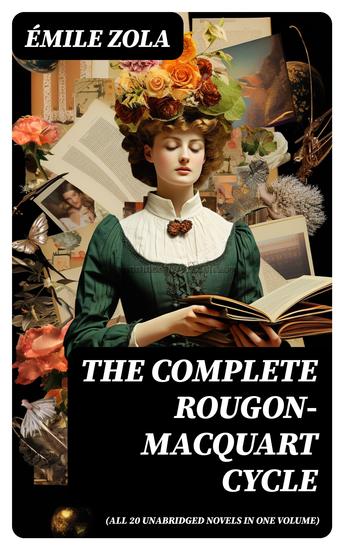
The Complete Rougon-Macquart Cycle (All 20 Unabridged Novels in one volume) - cover

The Complete Rougon-Macquart Cycle (All 20 Unabridged Novels in one volume)

Zola Émile

Casa editrice: DigiCat

  • 0
  • 0
  • 0

Sinossi

In "The Complete Rougon-Macquart Cycle," Émile Zola offers a monumental exploration of the complex interplay between heredity and environment in the lives of successive generations of the Rougon-Macquart family. Spanning twenty unabridged novels, this literary magnum opus employs Zola's signature naturalistic style, characterized by detailed descriptions and an unwavering commitment to depicting reality with scientific rigor. Set against the backdrop of the social, political, and economic upheavals of 19th-century France, this work serves as both an epic chronicle and a penetrating social commentary, revealing the moral and physical decay wrought by the Second Empire's rapid industrialization. Zola, a leading figure in the literary movement known as Naturalism, was profoundly influenced by Darwinian theories of evolution and the socio-political landscape of his time. His commitment to portraying life as it is, without romantic embellishment, stems from his desire to expose the underlying socio-economic factors that determine human behavior. Zola's personal experiences, including his struggles with poverty and his observations of the working class, inspired him to advocate for social reform through his writing. This edition is a must-read for scholars and enthusiasts alike, granting readers a comprehensive view of Zola's ambitious project. Engaging with this cycle not only provides insight into the intricate narratives of the Rougon-Macquart family but also invites reflection on broader themes of societal influences that continue to resonate today.
Disponibile da: 13/11/2023.
Lunghezza di stampa: 2450 pagine.
Altri libri che potrebbero interessarti

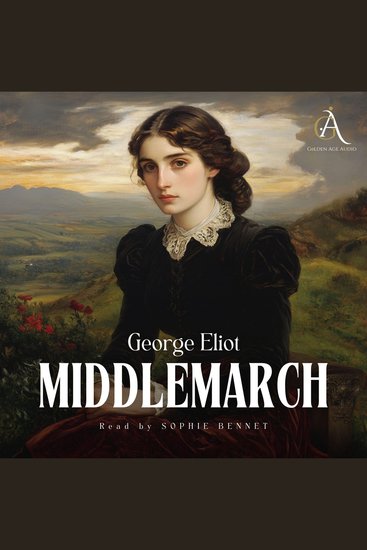
  • Middlemarch - Audiobook - cover

    Middlemarch - Audiobook

    George Eliot, Classic...

    • 0
    • 0
    • 0
    Middlemarch by George Eliot is a sweeping and deeply insightful novel that explores the intricate web of life in a small English provincial town during the early 19th century. With interwoven storylines and a wide cast of vividly drawn characters, the novel delves into themes such as marriage, ambition, idealism, social change, and the limitations of women's roles in Victorian society. At the center of the novel is Dorothea Brooke, a young woman full of noble aspirations, whose desire to do good and live a meaningful life clashes with the rigid expectations of her environment.Rather than focusing on one hero, Middlemarch presents a mosaic of lives—clergy, doctors, landowners, bankers—each dealing with their own struggles, hopes, and moral dilemmas. Eliot's psychological insight and moral depth transform even the most ordinary lives into complex, moving portraits. Often considered one of the greatest novels in the English language, Middlemarch is both a brilliant critique of society and a compassionate examination of human nature.
    Mostra libro
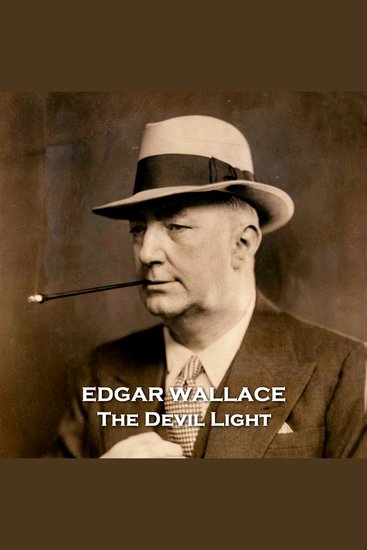
  • The Devil Light - Former soldier and journalist that became a revered author and screenwriter - cover

    The Devil Light - Former soldier...

    Edgar Wallace

    • 0
    • 0
    • 0
    Richard Horatio Edgar Wallace was born on the 1st April 1875 in Greenwich, London.  Leaving school at 12 because of truancy, by the age of fifteen he had experience; selling newspapers, as a worker in a rubber factory, as a shoe shop assistant, as a milk delivery boy and as a ship’s cook.  
     
    By 1894 he was engaged but broke it off to join the Infantry being posted to South Africa. He also changed his name to Edgar Wallace which he took from Lew Wallace, the author of Ben-Hur.  
     
    In Cape Town in 1898 he met Rudyard Kipling and was inspired to begin writing. His first collection of ballads, The Mission that Failed! was enough of a success that in 1899 he paid his way out of the armed forces in order to turn to writing full time.  
     
    By 1904 he had completed his first thriller, The Four Just Men. Since nobody would publish it he resorted to setting up his own publishing company which he called Tallis Press. 
      
    In 1911 his Congolese stories were published in a collection called Sanders of the River, which became a bestseller. He also started his own racing papers, Bibury’s and R. E. Walton’s Weekly, eventually buying his own racehorses and losing thousands gambling.  A life of exceptionally high income was also mirrored with exceptionally large spending and debts.  
     
    Wallace now began to take his career as a fiction writer more seriously, signing with Hodder and Stoughton in 1921. He was marketed as the ‘King of Thrillers’ and they gave him the trademark image of a trilby, a cigarette holder and a yellow Rolls Royce. He was truly prolific, capable not only of producing a 70,000 word novel in three days but of doing three novels in a row in such a manner. It was estimated that by 1928 one in four books being read was written by Wallace, for alongside his famous thrillers he wrote variously in other genres, including science fiction, non-fiction accounts of WWI which amounted to ten volumes and screen plays. Eventually he would reach the remarkable total of 170 novels, 18 stage plays and 957 short stories. 
     
    Wallace became chairman of the Press Club which to this day holds an annual Edgar Wallace Award, rewarding ‘excellence in writing’.  
     
    Diagnosed with diabetes his health deteriorated and he soon entered a coma and died of his condition and double pneumonia on the 7th of February 1932 in North Maple Drive, Beverly Hills. He was buried near his home in England at Chalklands, Bourne End, in Buckinghamshire.
    Mostra libro
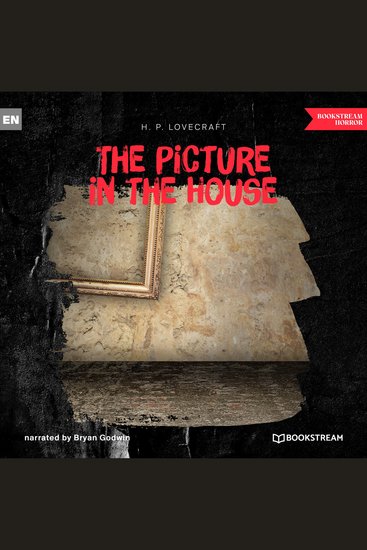
  • Picture in the House The (Unabridged) - cover

    Picture in the House The...

    H. P. Lovecraft

    • 0
    • 0
    • 0
    While riding his bicycle in the Miskatonic Valley of rural New England, a genealogist seeks shelter from an approaching storm. He enters an apparently abandoned house, only to find it occupied by a "loathsome old, white-bearded, and ragged man", speaking in "an extreme form of Yankee dialect... thought long extinct." The narrator notices that the house is full of antique books, exotic artifacts, and furniture predating the American Revolution. At first, the old man appears harmless and ignorant towards his guest. However, he shows a disquieting fascination for an engraving in a rare old book, Regnum Congo, and admits to the narrator how it made him hunger for "victuals I couldn't raise nor buy"- presumably human flesh. It's suggested that the old man was murdering travelers who stumbled upon the house to satisfy his "craving", and has extended his own life preternaturally through cannibalism.[4] Soon, a now frightened narrator realizes the old man has been alive for over a century. Still, the old man denies he ever acted upon such a desire. Suddenly, a drop of blood falls from the ceiling, clearly coming from the floor above, and splashes a page in the book. The narrator then looks up to see a spreading red stain on the ceiling; this belies the old man's statement. At that moment, a bolt of lightning destroys the house. Fortunately, the narrator survives to tell of his ordeal.
    Mostra libro
  • The Snowstorm - Author of War & Peace Anna Karenina and countless other classics Russian realist Tolstoy brings a harsh look at life in Winter - cover

    The Snowstorm - Author of War &...

    Leo Tolstoy

    • 0
    • 0
    • 0
    Leo Tolstoy was born in 1828 in the Russian province of Tula to a wealthy noble family. As a child, he had private tutors but he showed little interest in any formal education. When he went to the University of Kazan in 1843 to study oriental languages and law, he left without completing his courses.  Life now was relaxed and idle but with some writing also taking place.  Gambling debts forced an abrupt change of path and he joined the army to fight in the Crimean War.  He was commended for his bravery and promoted but was appalled at the brutality and loss of life.  He recorded these and other earlier experiences in his diaries which formed the basis of several of his works. 
     
    In 1852 ‘Childhood’ was published to immediate success and was followed by ‘Boyhood’ and ‘Youth’. 
     
    His experience in the army and the horrors he witnessed resulted in ‘The Cossacks’ in 1862 and the trilogy ‘Sevastopol Tales’. After the war he travelled around Europe, visiting London and Paris and meeting such luminaries as Victor Hugo and Charles Darwin.  
     
    It was now that Tolstoy began his masterpiece, ‘War and Peace’. Published in 1869 it was an epic work that changed literature. He quickly followed this with ‘Anna Karenina’.  
     
    These successes made Tolstoy rich and helped him accomplish many of his dreams but also brought problems as he grappled with his faith and the lot of the oppressed poor. These revolutionary views became so popular that the authorities now kept him under surveillance.  
     
    He led a life of asceticism and vegetarianism and put his socialist ideals into practice by establishing numerous schools for the poor and food programmes. He also believed in giving away his wealth, which caused much discord with his wife.  
     
    His writing continued to bring forth classics such as ‘The Death of Ivan Ilyich’ and many brilliant and incisive short stories such as ‘How Much Land Does A Man Need’.  
     
    In 1901 Tolstoy was excommunicated from the Church and controversially deselected for the Nobel Prize for Literature. 
     
    Whilst undertaking a pilgrimage by train in October 1910 with his daughter Aleksandra he caught pneumonia in the nearby town of Astapovo.  Leo Tolstoy died on November 9th, 1910, he was 82. 
     
    In this much acclaimed short story Tolstoy’s characters are engulfed by a huge snowstorm which descends upon them and puts the successful conclusion of their journey into perilous doubt.
    Mostra libro
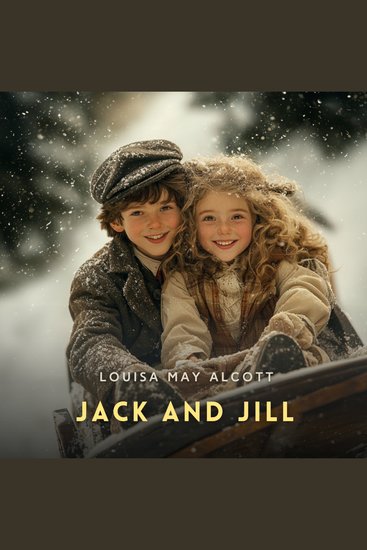
  • Jack and Jill - cover

    Jack and Jill

    Louisa May Alcott

    • 0
    • 0
    • 0
    Jack Minot and Janey Pecq are best friends who live next door to each other. They are always seen together, so Janey gets the nickname of Jill, to mimic the old rhyme. The two do go up a hill one winter day— and then suffer a terrible accident. Seriously injured in a sledding accident, they recover from their physical injuries, while learning life lessons along with their many friends. They are helped along their journey to recovery by various activities created by their mothers.
    Mostra libro
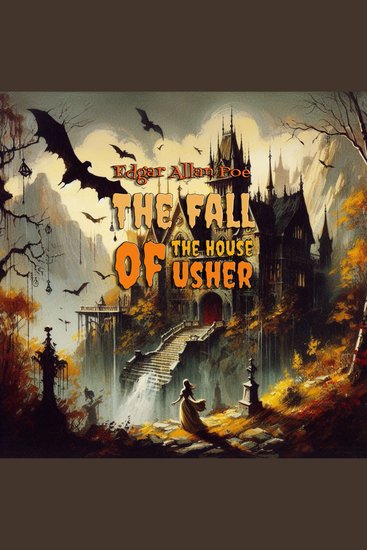
  • The Fall of the House of Usher - cover

    The Fall of the House of Usher

    Edgar Allan Poe

    • 0
    • 0
    • 0
    "The Fall of the House of Usher" is a short story by American writer Edgar Allan Poe, first published in 1839 in Burton's Gentleman's Magazine, then included in the collection Tales of the Grotesque and Arabesque in 1840. The short story, a work of Gothic fiction, includes themes of madness, family, isolation, and metaphysical identities. 
    The story begins with the unnamed narrator arriving at the house of his childhood friend, Roderick Usher, having received a letter from him in a distant part of the country, complaining of an illness and asking for his help. As he arrives, the narrator notices a thin crack extending from the roof, down the front of the house and into the adjacent tarn, or lake. 
    It is revealed that Roderick's sister, Madeline, is also ill and falls into cataleptic, deathlike trances. Roderick and Madeline are the only remaining members of the Usher family... 
    CREATED: 
    Narrated by Logan Keen 
    Author: Edgar Allan Poe 
    Date of original publication: 1840 
    Genre: short story 
    Language : English 
    Version : unabridged, full/complete 
    Without subtitles
    Mostra libro