
Unisciti a noi in un viaggio nel mondo dei libri!
Aggiungi questo libro allo scaffale
Grey
Scrivi un nuovo commento Default profile 50px
Grey
Iscriviti per leggere l'intero libro o leggi le prime pagine gratuitamente!
All characters reduced
Science of Sleep - cover

Science of Sleep

Xena Mindhurst

Traduttore A AI

Casa editrice: Publifye

  • 0
  • 0
  • 0

Sinossi

"Science of Sleep" explores the crucial role sleep plays in our lives, going beyond a simple period of rest to reveal its intricate connection to our health and cognitive functions. The book investigates the biological and psychological mechanisms that govern sleep, highlighting how it impacts everything from cellular repair to memory consolidation. Did you know that sleep patterns have adapted across different species, and that our understanding of sleep has evolved from ancient beliefs to modern scientific discoveries? The book takes you on a journey through the stages of sleep, the science of dreams, and the impact of sleep on memory, learning, and various health conditions. It delves into the neuroscience of sleep, offering insights into how our brains orchestrate this nightly process. By understanding these mechanisms, the book argues, we can optimize our sleep habits and improve our waking lives. It uses scientific evidence, incorporating findings from sleep studies and neuroimaging research, to provide a robust and evidence-based approach. The book begins with an introduction to the fundamental concepts of sleep and progresses to explore the science of dreams. The latter sections focus on practical strategies for improving sleep quality and addressing common sleep disorders, making it a valuable resource for anyone interested in sleep science, sleep disorders, and sleep hygiene.
Disponibile da: 12/02/2025.
Lunghezza di stampa: 86 pagine.

Altri libri che potrebbero interessarti

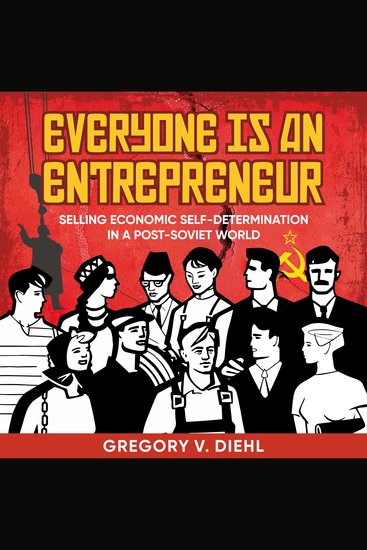
  • Everyone Is an Entrepreneur - Selling Economic Self-Determination in a Post-Soviet World - cover

    Everyone Is an Entrepreneur -...

    Gregory V. Diehl

    • 0
    • 0
    • 0
    Westerners today grow up with abundant opportunities to determine their own values, identities, and roles in society. But for generations, millions who lived under Soviet rule in the USSR had these essential freedoms withheld, determined instead by a central authority that claimed the right to choose for them and enforce their compliance. Thirty years after the Soviet Union’s decisive collapse, the old communist paradigm continues to limit those who come of age in a post-Soviet world.Everyone Is an Entrepreneur showcases the experience of an American author acclimating to life in the developing post-Soviet economy of Armenia. Along the way, he examines how the intelligent and hardworking people he lives among are stuck in a state of transition away from all-encompassing, bureaucratic control. They struggle to adjust to the responsibilities of economic self-determination because they have never learned how to see the world through entrepreneurial eyes.Entrepreneurship is a principled way of seeing the world, a paradigm that applies to people in all cultural and economic circumstances: Artists, office workers, doctors, teachers, farmers, and laborers alike. By adopting this universal outlook, anyone can produce more wealth, accomplish bigger goals, and take control of their life like never before.
    Mostra libro
  • Economic Theories and Policies - Understanding Key Economic Systems and Strategies (4 in 1) - cover

    Economic Theories and Policies -...

    Arlo Holders

    • 0
    • 0
    • 0
    Take a look at this book bundle! It contains the following books: 
      - Mercantilism Explained: Mercantilism, a dominant economic theory from the 16th to the 18th century, played a pivotal role in shaping the economic and political landscape of early modern Europe. Rooted in the belief that a nation's wealth and power were measured by its stockpile of precious metals, particularly gold and silver, mercantilism emphasized the importance of maintaining a favorable balance of trade. Nations sought to maximize exports while minimizing imports, often employing protectionist policies to achieve this goal. This approach reflected the belief that global wealth was finite, creating fierce competition among nations to secure the largest share of resources and economic advantage. 
      - The Neoliberal Revolution: Neoliberalism is a term widely used to describe a set of economic policies and ideas that emphasize the importance of free markets, deregulation, privatization, and limited government intervention. Emerging in the mid-20th century, neoliberalism represented a distinct shift away from the welfare state and Keynesian economics, which had dominated Western economies in the post-World War II era. 
      - The Venture Capital Playbook: Venture capitalists, typically investors or firms, provide capital in exchange for equity ownership in the company. This investment is usually made in industries that are considered innovative or disruptive, such as technology, healthcare, and biotechnology. 
      - Venture Capital Explained: The venture capital industry is an essential component of the startup ecosystem, providing financial backing to companies that may not yet be profitable but have strong potential. Many of the world’s most successful companies, including Amazon, Google, and Facebook, received early funding from venture capital firms. 
     
    Mostra libro
  • Summary: The Tipping Point - How Little Things Can Make a Big Difference by Malcolm Gladwell: Key Takeaways Summary & Analysis Included - cover

    Summary: The Tipping Point - How...

    Brooks Bryant

    • 0
    • 0
    • 0
    Disclaimer: This is not the official book, it is a summary & it does not accompany the official. 
    Ever wondered why some ideas, trends, or behaviors go viral while others fizzle out? Our summary of Malcolm Gladwell's 'The Tipping Point' dives into the fascinating world of social epidemics and the critical moments that make or break them. Gladwell's groundbreaking book uncovers the secret ingredients that trigger massive change, and our summary distills these complex ideas into actionable insights. 
    Discover the types of people who are natural 'epidemic spreaders,' the significance of 'stickiness,' and the power of context in shaping our actions. Whether you're a marketer aiming for the next big hit, an entrepreneur seeking to make an impact, or simply curious about the mechanics of change, this summary is your quick guide to understanding the tipping points in life and business. 
    Don't miss the opportunity to learn why small actions can result in enormous effects. Unlock the secrets of 'The Tipping Point' and become an agent of remarkable change!
    Mostra libro
  • If the Allies Had Fallen - The Consequences of Losing D-Day - cover

    If the Allies Had Fallen - The...

    Marcus Draysun

    • 0
    • 0
    • 0
    The success of D-Day was never inevitable. The invasion of Normandy was the most ambitious military operation of the war, requiring precise coordination, secrecy, and an extraordinary amount of luck. The Allies knew that failure would not just be a setback—it could mean the prolonged survival of Nazi Germany and a vastly different world order. Every decision leading up to June 6, 1944, carried immense weight, as the fate of millions hung in the balance. 
    For months, Allied planners debated the best approach for opening a Western Front. The Soviets, engaged in brutal combat with German forces on the Eastern Front, pressured Britain and the United States to act quickly. Churchill, haunted by the disastrous Gallipoli campaign of World War I, feared the consequences of a premature landing. General Dwight D. Eisenhower, the Supreme Allied Commander, had to make the ultimate call: when and where to launch the largest amphibious invasion in history. 
    The chosen location—Normandy—was a calculated risk. Pas de Calais, the closest point between Britain and France, seemed like the most obvious target, and the Germans heavily fortified it. By contrast, Normandy’s beaches offered a less expected but still formidable challenge. Hitler’s Atlantic Wall, a vast network of bunkers, mines, and obstacles, was designed to repel any invasion. The Germans had tens of thousands of troops stationed along the coast, and if they had guessed the true landing site, they could have crushed the invasion before it gained a foothold.
    Mostra libro
  • Bookends - Collected Intros and Outros - cover

    Bookends - Collected Intros and...

    Anonimo

    • 0
    • 0
    • 0
    A brilliant, idiosyncratic collection of introductions and afterwords (plus some liner notes) by New York Times bestselling and Pulitzer Prize winning author Michael Chabon—“one of contemporary literature’s most gifted prose stylists” (Michiko Kakutani, New York Times). 
    In Bookends, Pulitzer Prize winning author Michael Chabon offers a compilation of pieces about literature—age-old classics as well as his own—that presents a unique look into his literary origins and influences, the books that shaped his taste and formed his ideas about writing and reading. 
    Chabon asks why anyone would write an introduction, or for that matter, read one. His own daughter Rose prefers to skip them. Chabon's answer is simple and simultaneously profound: ""a hope of bringing pleasure for the reader."" Likewise, afterwords—they are all about shared pleasure, about the ""pure love"" of a work of art that has inspired, awakened, transformed the reader. Ultimately, this thought-provoking compendium is a series of love letters and thank-you notes, unified by the simple theme of the shared pleasure of discovery, whether it's the boyhood revelation of the most important story in Chabon's life (Ray Bradbury's ""The Rocket Man""); a celebration of ""the greatest literary cartographer of the planet Mars"" (Edgar Rice Burroughs, with his character John Carter); a reintroduction to a forgotten master of ghost stories (M. R. James, ironically ""the happiest of men""); the recognition that the worlds of Wes Anderson's films are reassembled scale models of our own broken reality (as is all art); Chabon's own rude awakening from the muse as he writes his debut novel, The Mysteries of Pittsburgh; or a playful parody of lyrical interpretation in the liner notes for Mark Ronson's Uptown Special, the true purpose of which, Chabon insists, is to ""spread the gospel of sensible automotive safety and maintenance practices."" 
    Galaxies away from academic or didactic, Bookends celebrates wonder—and like the copy of The Phantom Tollbooth handed to young Michael by a friend of his father he never saw again—it is a treasured gift.
    Mostra libro
  • Sea of Troubles - The European Conquest of the Islamic Mediterranean and the Origins of the First World War - cover

    Sea of Troubles - The European...

    Ian Rutledge

    • 0
    • 0
    • 0
    In the mid-eighteenth century, most of the Mediterranean coastline and its hinterlands were controlled by the Ottoman Empire, a vast Islamic power regarded by Christian Europe with awe and fear. By the end of the First World War, however, this great civilisation had been completely subjugated, and its territories occupied by European powers. Sea of Troubles is the definitive account of the European conquest of the Levant and North Africa over three centuries. Ian Rutledge reveals the intense imperial rivalry between six European powers - Britain, France, Italy, Spain, Austria-Hungary and Russia - who all jostled for control of the trade, lands and wealth of the Islamic Mediterranean. The competition between these states made their conquest a far more difficult and extended task than they encountered elsewhere in the world. Yet, as new contenders entered the contest, and as rivalries intensified in the early twentieth century, events would spiral out of control as the continent headed towards the First World War.
    Mostra libro