
Unisciti a noi in un viaggio nel mondo dei libri!
Aggiungi questo libro allo scaffale
Grey
Scrivi un nuovo commento Default profile 50px
Grey
Iscriviti per leggere l'intero libro o leggi le prime pagine gratuitamente!
All characters reduced
More Cargoes - 1897 - cover

More Cargoes - 1897

W.W. Jacobs

Casa editrice: DigiCat

  • 0
  • 0
  • 0

Sinossi

In "More Cargoes," W. W. Jacobs continues to enchant readers with his signature blend of humor and maritime adventure. This collection of short stories revolves around the lives of sailors and the peculiarities of life at sea, showcasing Jacobs's deft storytelling and vibrant characterizations. With a rich narrative style that balances wit and pathos, Jacobs vividly captures the essence of early 20th-century maritime life, steeped in the lore and language of seafaring. From comical misadventures to more poignant reflections, the collection highlights the unpredictability of the ocean and the human spirit's resilience against it. W. W. Jacobs, born in 1863, was greatly influenced by his own experiences growing up in London, close to the bustling docks. His background, coupled with a natural affinity for storytelling, provided him with a wealth of material for his writings. Jacobs's earlier works established him as a prominent figure in British literature, and the intuitive humor present in "More Cargoes" reflects his understanding of the common man's struggles and triumphs, particularly in the context of maritime culture. This delightful anthology is highly recommended for readers who appreciate a blend of humor, adventure, and keen observations of human nature. Jacobs's ability to immerse readers in the world of sailors makes "More Cargoes" not only entertaining but also a poignant reflection on life's unpredictability. Whether you are a long-time fan of Jacobs or new to his work, this collection promises to leave a lasting impression.
Disponibile da: 16/09/2022.
Lunghezza di stampa: 118 pagine.

Altri libri che potrebbero interessarti

  • Men Without Women - cover

    Men Without Women

    Ernest Hemingway

    • 0
    • 0
    • 0
    Experience the poignant brilliance of Ernest Hemingway's Men Without Women, a masterful collection of short stories exploring the complexities of masculinity, isolation, and emotional resilience. These narratives capture lives defined by longing, courage, and the aching void of love lost or unattained. 
    This collection includes some of Hemingway’s finest work, each story a gem of his minimalist style and sharp emotional insight:The UndefeatedIn Another CountryHills Like White ElephantsThe KillersChe Ti Dice La Patria?Fifty GrandA Simple EnquiryTen IndiansA Canary for OneAn Alpine IdyllA Pursuit RaceToday Is FridayBanal StoryNow I Lay Me 
    Each story invites listeners into a world of raw emotion, deep introspection, and Hemingway's timeless prose. From the tension of bullfighting arenas to the quiet pain of human disconnection, Men Without Women resonates with themes of love, loss, and the indomitable spirit. 
    This audiobook brings these classic tales to life, making it an essential addition to any literary enthusiast’s collection.
    Mostra libro
  • They - From their pens to your ears genius in every story - cover

    They - From their pens to your...

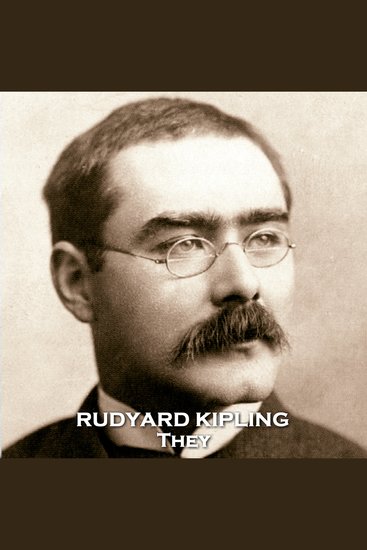
    Rudyard Kipling

    • 0
    • 0
    • 0
    Joseph Rudyard Kipling was born in Mumbai, India on 30th December 1865.   
    As was the custom in those days, he and his sister were sent back to England when he was 5.  The ill-treatment and cruelty by the Portsmouth couple they boarded with Kipling said contributed to the onset of his literary life.  
    At 16 he returned to India to work on a local paper where he was soon contributing and writing.  It also exposed him to the issues of identity and national allegiance which pervade much of his work.  
    In 1886, his ‘Departmental Ditties’, collection of verse appeared in print followed by 39 short stories for his newspaper over only 8 months.  These were then published as ‘Plain Tales from the Hills’, shortly after his 22nd birthday.  
    He continued his prolific pace of writing before being dismissed in a dispute and, taking his pay-off and the profits from the sale of some publishing rights, decided to return to London, travelling via Rangoon, Hong Kong, Japan and the United States, all the while writing articles, and arriving at Liverpool in October 1889. 
    Over the next two years he saw further works published as books and in magazines, as well as a nervous breakdown for which he was prescribed a sea voyage, to South Africa, Australia, New Zealand and India.  
    Happier times came with marriage to Caroline Starr Balestier in January 1892.  The honeymoon began in Vermont and ended in Yokahama where they heard their bank had failed.  They returned to Vermont and settled.  Caroline was now pregnant and he was planning the ‘Jungle Books’.  
    A failed arbitration between the US and England resulted in an argument between Caroline’s brother and Kipling, and then his arrest.  At the hearing he was mortified by the exposure of his private life and after settling the matter they returned to England and life in Torquay.  ‘Kim’ was published in 1902, and ‘Just So Stories for Little Children’, a year later.  
    In 1907 he was awarded the Nobel Prize for Literature with the citation “in consideration of the power of observation, originality of imagination, virility of ideas and remarkable talent for narration which characterise the creations of this world-famous author”.   
    When the Great War erupted, he scorned those who refused conscription.  His son enlisted and was killed at the Battle of Loos in September 1915, at 18, an exploding shell had ripped his face apart.  This death inspired Kipling’s writing thereafter, but the tragedy broke his life and by 1930 his prolific pen had almost ceased. 
    Rudyard Kipling died on 18th January 1936 from a perforated duodenal ulcer.  He was 70.  His ashes are buried at Poets’ Corner in Westminster Abbey.
    Mostra libro
  • Dracula – Chapter 14: The Gathering of the Clues - A Chapter-by-Chapter Reading of Bram Stoker’s Classic - cover

    Dracula – Chapter 14: The...

    Bram Stoker

    • 0
    • 0
    • 0
    Title: 
    Dracula – Chapter 14: The Gathering of the Clues 
    Subtitle: 
    A Chapter-by-Chapter Reading of Bram Stoker’s Classic 
    Series Name: 
    Dracula (Chapter-by-Chapter Reading) 
    Series Entry: 
    14 
    Description: 
    In this pivotal chapter, the scattered horrors surrounding Count Dracula finally begin to connect. Mina Harker, deeply troubled by Jonathan’s breakdown after seeing the mysterious stranger in London, secretly reads and types her husband’s terrifying journal from Castle Dracula. What once seemed like the ravings of illness now carries the chilling weight of truth. 
    Professor Van Helsing reaches out to Mina after studying Lucy Westenra’s papers, sensing that Mina may hold the missing pieces of a far greater mystery. Their meeting reveals Mina’s intelligence, compassion, and remarkable attention to detail, qualities that immediately earn Van Helsing’s admiration and trust. In turn, Mina bravely places Jonathan’s journal in his hands, risking painful memories in the hope of uncovering the truth behind Lucy’s death. 
    Van Helsing’s reading of Jonathan’s account confirms his darkest suspicions: Count Dracula has indeed come to England. Reassured that he is not mad, Jonathan begins writing again and joins Van Helsing in quietly preparing for the struggle ahead. Meanwhile, disturbing newspaper reports about the mysterious “Bloofer Lady” and children found wounded in the night convince Van Helsing that Lucy’s transformation is already underway. 
    The chapter builds toward one of the novel’s most unforgettable revelations. In a tense conversation with Dr. Seward, Van Helsing finally dares to speak the impossible aloud: Lucy Westenra has become one of the Un-Dead. 
    This is Chapter 14 of Bram Stoker’s Dracula, narrated by Amazon-bestselling horror author Jonathan Dunne, part of a complete chapter-by-chapter audiobook presentation of this enduring Gothic masterpiece. 
    📖 Public domain text. Original publication: 1897.
    Mostra libro
  • Brewster's Millions - cover

    Brewster's Millions

    George Barr McCutcheon

    • 0
    • 0
    • 0
    The story revolves around Montgomery Brewster, a poor man who inherits a large sum of money. However, there is a catch - he has to spend every penny within 30 days, and end up with nothing at that time. Should he make the deadline, he stands to gain an even larger sum; should he fail, he remains penniless.Brewster finds that spending so much money is more difficult than he first thinks, especially when the lawyers are trying to make him fail so that they can claim the money. What makes it worse is that he starts to be a little too successful with some ventures, actually making money from them.Can Brewster empty his pockets in time for the deadline, or will he end the book as he started it, with nothing?
    Mostra libro
  • The Case for the Baptism of the Mantelonian Queen - cover

    The Case for the Baptism of the...

    Mike DeFrench

    • 0
    • 0
    • 0
    A priest in the far future makes his case a Cardinal of the Catholic Church for the baptism of an alien species.
    Mostra libro
  • Kenta's Way - The lazy samurai - cover

    Kenta's Way - The lazy samurai

    Fritz Angelo

    • 0
    • 0
    • 0
    "A story about a young samurai student who preferred laziness over hard work until one day, his life will change forever."
    Mostra libro