Unisciti a noi in un viaggio nel mondo dei libri!
Aggiungi questo libro allo scaffale
Grey
Scrivi un nuovo commento Default profile 50px
Grey
Iscriviti per leggere l'intero libro o leggi le prime pagine gratuitamente!
All characters reduced
Marionettes masks and shadows - cover

Marionettes masks and shadows

Winifred H. Mills, Louise M. Dunn

Casa editrice: Good Press

  • 0
  • 0
  • 0

Sinossi

In 'Marionettes, Masks and Shadows,' Winifred H. Mills and Louise M. Dunn curate a captivating anthology that traverses the realms of theatrical performance, illusion, and the enigmatic play of light and shadow. This collection's thematic exploration resonates with the compelling art of puppetry and masque, prompting reflections on the human condition and the staged facades that mask reality. Through a diverse spectrum of literary styles, from poignant prose to lyrical verse, the anthology creates an evocative tableau, inviting readers to delve into the rich interplay of characters and the conceptual shadows they cast. Mills and Dunn bring together an assembly of writers who are not only illustrious in their crafts but also insightful articulators of a shared vision. Their collective works echo with the ethos of theatrical and literary movements that sought to blur the delineations between illusion and reality, drawing from the timeless tradition of storytelling while infusing modern sensibilities. The anthology's strength lies in its ability to unify variegated voices, reflecting unique cultural and historical narratives that challenge conventional perceptions and invite deeper engagement with the underlying themes. This anthology presents scholars, students, and enthusiasts with an unparalleled opportunity to explore the multifaceted dimensions of performance and identity. Both imaginative and thought-provoking, 'Marionettes, Masks and Shadows' offers a rich educational experience, furnishing a dialogue between different artistic interpretations and the thematic juxtapositions within. Readers are encouraged to immerse themselves in the nuanced exploration of these literary pieces, gaining insights into the masquerade of life and the intricate dance between appearance and essence. It stands not only as a collection but as a catalyst for deeper contemplation and understanding.
Disponibile da: 24/04/2025.
Lunghezza di stampa: 200 pagine.

Altri libri che potrebbero interessarti

  • Are You Good with God? - cover

    Are You Good with God?

    D. A. Horton

    • 0
    • 0
    • 0
    The gospel according to hip hop. Yeah, that’s a thing.Christian ideas often show up in hip hop music. Biblical themes and even Jesus Himself appear in the lyrics. But beneath all the God-talk, can a true gospel message be found?Pastor D. A. Horton (aka hip hop artist Azriel) says yes. And he wants you to know the gospel message is deep . . . powerful . . . theological . . . and surprisingly simple to comprehend. It all comes down to:God’s designOur downfallGod’s demonstrationOur decision 
    Are You Good With God? is a book of giant truths written in the raw and rhythmic style of hip hop. The poetry of the streets will energize you with the dynamic power of Scripture. Like every other global language, hip hop speaks to the human heart with truths that really matter. So if hip hop is your mother tongue, why not listen to what God is saying to you?
    Mostra libro
  • The Insanity of the Artist - Creating at the Edge of the Abyss - cover

    The Insanity of the Artist -...

    Thierry Delcourt

    • 0
    • 0
    • 0
    Salvador Dalí sublimated his madness without ever falling into it. Antonin Artaud, confronted with the traumas of childhood, oscillated all his life between an overflowing creation and accesses of madness. Niki de Saint Phalle, thanks to artistic expression, cured herself of a deep depression linked to the trauma of incest. Vincent van Gogh, in order to reach the summit of his art, put himself in danger to the point of committing suicide. Camille Claudel exhausted herself in her creation and ended up being interned and never creating again.
    Based on the life and work of a dozen artists of genius, Thierry Delcourt tries to understand these artists’ transition from the summits of creation and the artistic abyss. Why do some people fall into madness while others go through life without a hitch? Why do some sick people find healing through creation? Why do many artists have an obsessive need to create relentlessly?
    To these fascinating questions, this book offers striking answers about creation on the brink of the abyss.
    Mostra libro
  • Kill Bill - Volume 1- The Ultimate Trivia Collection - From The Movie Directed By Quentin Tarantino - cover

    Kill Bill - Volume 1- The...

    Film Trivia Metaverse

    • 0
    • 0
    • 0
    KILL BILL: VOLUME 1 
    THE ULTIMATE TRIVIA COLLECTION 
      
    FROM THE MOVIE DIRECTED BY QUENTIN TARANTINO 
      
    CREATED BY FILM TRIVIA METAVERSE 
      
    ABOUT THE FILM 
    Kill Bill: Volume 1 is a 2003 action film directed by Quentin Tarantino. The story follows "The Bride," a former assassin who is left for dead after a brutal massacre at her wedding rehearsal, orchestrated by her former team, the Deadly Viper Assassination Squad. She survives a four-year coma and embarks on a mission of vengeance against those who wronged her, including her former mentor, Bill. The film is a blend of martial arts, samurai, and revenge genres, featuring stylish violence, visually striking sequences, and elements of both Western and Eastern cinematic influences, all underpinned by Tarantino's signature storytelling. 
      
    TRIVIA SAMPLES: 
      
    "The Bride’s iconic yellow outfit is an homage to Bruce Lee’s costume in his final film, Game of Death (1978)." 
      
    "The scene where the Bride splits a baseball in two with a samurai sword was filmed for real on set, with Zoë Bell, Uma Thurman’s stunt double, performing the stunt." 
      
    "Quentin Tarantino owns the 'Pussy Wagon' from Kill Bill and drove it as his daily vehicle to promote Kill Bill: Vol. 2 (2004). He even lent it for use in Missy Elliott’s music video for 'I’m Really Hot,' as well as Lady Gaga and Beyoncé’s 'Telephone' video." 
      
    "Over four hundred fifty gallons of fake blood were used for both Kill Bill movies, as revealed by special effects artist Christopher Allen Nelson."
    Mostra libro
  • So You Want To Do A Solo Show? - cover

    So You Want To Do A Solo Show?

    Gareth Armstrong

    • 0
    • 0
    • 0
    A unique guide to every aspect of putting on your own solo show: choosing the subject, raising the finance, booking the venue - and performing it!
    More and more actors – faced with ever longer periods of unemployment – are turning to the solo show as a way of keeping active, keeping visible, and keeping the wolf from the door! This book is essential reading for anyone contemplating such a move, and comprehensively covers every aspect of putting on your own one-person show.
    Being a veteran of the solo-show circuit, as a writer, performer and director, Gareth Armstrong is the ideal guide. He takes you step by step through each stage of the process:
    Choosing the right material – or devising your own
    Raising the finance
    Finding the venues
    Hiring a bookings manager and other personnel
    Arranging publicity
    Winning an audience
    There is a special section on that mecca for solo shows, the Edinburgh Fringe, and an extensive appendix covering funding bodies, venues, festivals and more. Throughout the book, Armstrong illustrates his points with case studies of actual solo shows by performers such as Miriam Margolyes, Linda Marlowe and Guy Masterson.
    'So You Want To Do A Solo Show? is a thorough, meticulous, hands-on, "how-to-do" manual, covering everything from the germination of an idea right through to the costing of the flyers. It is, I think, the most valuable read for any performer who has ever thought "If only I could have some control over the way my career is going"' Maureen Lipman, from her Foreword
    Mostra libro
  • A Rare Recording of Film Icon Dorothy Lamour - cover

    A Rare Recording of Film Icon...

    Dorothy Lamour

    • 0
    • 0
    • 0
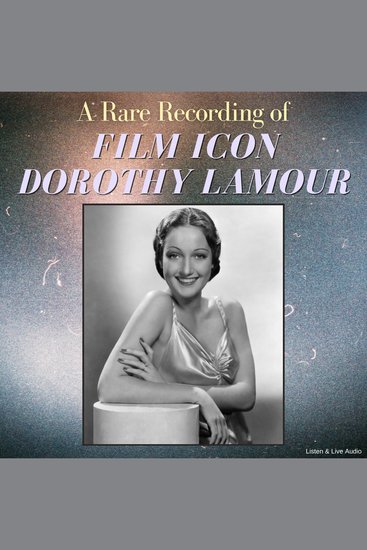
    Dorothy Lamour, born Mary Leta Dorothy Slaton (December 10, 1914 - September 22, 1996) was an American actress and singer from New Orleans. Lamour began her career in the 1930s as a big band singer. In 1936, she moved to Hollywood, where she signed with Paramount Pictures. She is best remembered for having appeared in a series of successful comedies starring Bing Crosby and Bob Hope, and for her appearance as Ulah in The Jungle Princess (1936) brought her fame and marked the beginning of her image as the "Sarong Queen." The following interview is from 1978.
    Mostra libro
  • Superbook - The World of Superhero Movies According to Smersh Pod - cover

    Superbook - The World of...

    John Rain

    • 0
    • 0
    • 0
    If you mention the word ‘superhero’ these days, everyone and their mum can tell you a potted history of it all, because they’ve sat through numerous phases, extended TV series, and animated side-specials of expansive character-development, culminating in extraordinary final chapters, with the screen literally stacked full of characters battling one another while your eyes bleed with excitement and spectacle.
    
    But before 1997, people would generally only think of a few things: Christopher Reeve smiling as he keeps a watchful eye over Earth’s atmosphere, Michael Keaton running around Gotham while dressed in molded rubber. Nicholas Hammond's Spider-Man being hauled up a wall on a rope, pretending to grip it, while also being a foot away from it. Bill Bixby trying not to get angry, Flash Gordon arriving in another galaxy, that was essentially a soft porn film, Dolph Lundgren mumbling in broken English while Frank Langella hammed behind a mask, and how Michael Crawford dressed like a bird was the closest thing Disney had to a cinematic universe.
    
    Despite starting on a high in 1978, by 1997 there could be no doubt that the genre was dead. Out was the sheen of verisimilitude, and in were Bat-credit-cards, ugly CGI, slashed budgets, rubber nipples and Martin Sheen in a girdle.
    
    So, whatever happened to the heroes? Join John Rain as he walks through every film of note from 1978 to 1997, and examines just what went wrong, and how. Is it a bird? Is it a plane? No, it’s SUPERBOOK.
    Mostra libro