Unisciti a noi in un viaggio nel mondo dei libri!
Aggiungi questo libro allo scaffale
Grey
Scrivi un nuovo commento Default profile 50px
Grey
Iscriviti per leggere l'intero libro o leggi le prime pagine gratuitamente!
All characters reduced
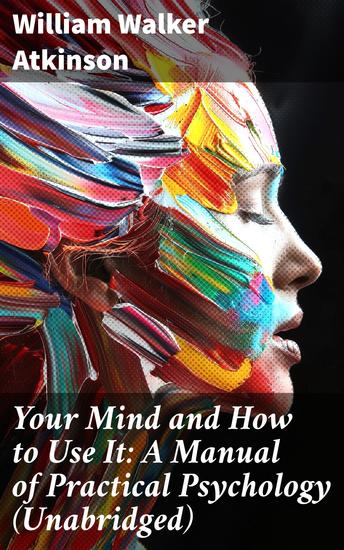
Your Mind and How to Use It: A Manual of Practical Psychology (Unabridged) - Unlocking the Power of Your Mind: Practical Psychology for Self-Improvement - cover

Your Mind and How to Use It: A Manual of Practical Psychology (Unabridged) - Unlocking the Power of Your Mind: Practical Psychology for Self-Improvement

William Walker Atkinson

Casa editrice: Good Press

  • 0
  • 0
  • 0

Sinossi

In "Your Mind and How to Use It: A Manual of Practical Psychology," William Walker Atkinson presents a comprehensive exploration of the mind's capabilities through the lens of early 20th-century psychology. Blending accessible language with practical exercises, Atkinson outlines concepts such as thought vibration, mental imagery, and the power of suggestion. This work is situated within the New Thought movement, a philosophical approach that emphasizes the mental creation of reality, thus making it a pivotal resource for those interested in psychological self-improvement and metaphysical inquiry. William Walker Atkinson, an influential figure in the New Thought movement, was a prolific writer and lecturer on various subjects, including psychology, philosophy, and personal development. His background in legal and publishing fields, combined with a deep interest in the emerging psychological theories of his time, shaped his approach in this work. Through his myriad writings, Atkinson sought to empower individuals by teaching them how to harness their mental potential, reflecting a strong belief in the transformative power of the mind. This book is highly recommended for readers seeking to deepen their understanding of psychological principles that can affect personal growth and success. Atkinson's insights remain relevant today, making "Your Mind and How to Use It" a valuable guide for anyone interested in unlocking the power of their own mind and applying practical psychology to daily life.
Disponibile da: 09/01/2024.
Lunghezza di stampa: 80 pagine.
Altri libri che potrebbero interessarti

  • A New Money Story - The Beliefs Behaviors and Brain Science to Rewire for Wealth - cover

    A New Money Story - The Beliefs...

    David Krueger MD

    • 0
    • 0
    • 0
    A NEW MONEY STORY: The Beliefs, Behaviors, and Brain Science to Rewire for Wealth 
    Book Summary 
    Neuroscientists estimate that over 90 percent of our operating systems—beliefs, behaviors, patterns—are 
    unconscious. Since the surface story determines less than 10 percent of our decisions, how can we 
    illuminate the shadow story responsible for over 90 percent of what we do each day? Once we 
    systematically understand our relationship with money, our individual meanings and symbolism, can we 
    overcome the mind and brain’s resistance to change? 
    A NEW MONEY STORY: The Beliefs, Behaviors, and Brain Science to Rewire for Wealth will help you 
    recognize, own, and assess each component of your money story. You can then decide what to change, 
    map changes, author new storylines, and even program the changes to transform core identity to make it 
    complete and lasting. This systematic stepwise process to inform and strategically catalyze behavior 
    change will rewrite mind software and revise brain hardware of money stories as they are interwoven with 
    life, wellness, relationship, and career stories. These behavior, mind, and brain changes offer long-term 
    successful strategies, and even can crystallize a vision of your future self to significantly affect positive 
    money decisions.
    Mostra libro
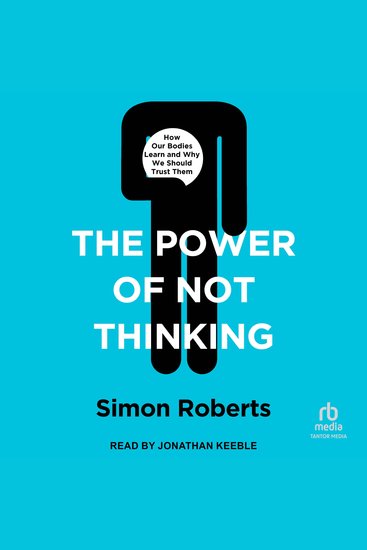
  • The Power of Not Thinking - How Our Bodies Learn and Why We Should Trust Them - cover

    The Power of Not Thinking - How...

    Simon Roberts

    • 0
    • 0
    • 0
    Ask someone to point to the part of their body responsible for their intelligence and it is highly likely that they will point at their head. This assumption is understandable, given that, for centuries, from Descartes' "cogito ergo sum" to the computer age, this is what we have been told to think. 


    And yet we all share common experiences that have revealed the incomparable power of "not thinking." Have you ever struggled to remember your pin number only to hold your fingers out and type it correctly with your hands, played the piano without focusing on remembering the correct notes, or listened to your gut feeling when under the pressure of a big decision? All these instances prove that it is time to stop neglecting the role the body plays in our acquisition of knowledge and to explore how it is that brain and body combine to deliver what we view as uniquely human intelligence. 


    In this unique new book, Simon Roberts looks at the pivotal role that our body plays in how we learn. Drawing upon an incredible range of cutting-edge science, real-life examples, and personal experience, Roberts explores the complexity of even the simplest of tasks that humans perform every day and goes on to explain how, with a greater awareness of the processes at work, we can tap into our full potential and excel in any area of our lives.
    Mostra libro
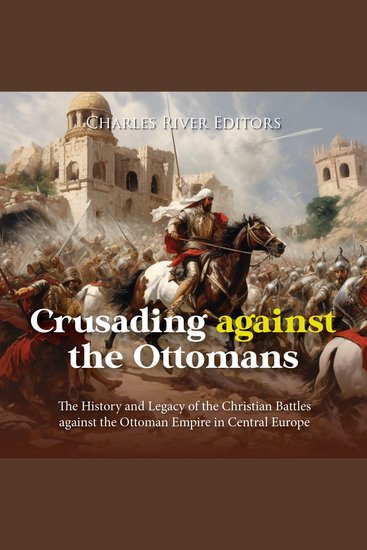
  • Crusading against the Ottomans: The History and Legacy of the Christian Battles against the Ottoman Empire in Central Europe - cover

    Crusading against the Ottomans:...

    Editors Charles River

    • 0
    • 0
    • 0
    In terms of geopolitics, perhaps the most seminal event of the Middle Ages was the successful Ottoman siege of Constantinople in 1453. The city had been an imperial capital as far back as the 4th century, when Constantine the Great shifted the power center of the Roman Empire there, effectively establishing two almost equally powerful halves of antiquity’s greatest empire. Constantinople would continue to serve as the capital of the Byzantine Empire even after the Western half of the Roman Empire collapsed in the late 5th century. Naturally, the Ottoman Empire would also use Constantinople as the capital of its empire after their conquest effectively ended the Byzantine Empire, and thanks to its strategic location, it has been a trading center for years and remains one today under the Turkish name of Istanbul. 
    Naturally, the Byzantines and Europeans didn’t take the Ottoman incursions laying down, and in the generations before the Ottoman victory at Constantinople, European alliances frequently tried to check Ottoman advances, couching their campaigns in the terms of crusading. One of them came near the end of the 14th century, and it presaged what was to come in the 15th century. 
    The Ottoman campaigns of the 14th century would provide the context for the events that led to the Battle of Nicopolis. One of the last major crusades was launched in 1396 by Pope Boniface IX, and the timing was perfect for the European kingdoms to unite and form a strong threat to the Ottomans. The 100-year war between France and England was in a state of truce, and King Richard II had just married Princess Isabella of France. Thus, both the English and the Franks would be able to send forces to join in a crusade, and so would Hungary, Bulgaria, Venice, Genoa, Croatia, Wallachia, the Holy Roman Empire, and the Knights Hospitaller.
    Mostra libro
  • Enlightenment The: An Enthralling Guide to a Period of Scientific Political and Philosophical Discourse in European History - cover

    Enlightenment The: An...

    Billy Wellman

    • 0
    • 0
    • 0
    Can you imagine how the world would be different today if there had been no Enlightenment era?  
    The Age of Enlightenment, which lasted throughout the 18th century, brought about fundamental changes in people’s thinking and transformed the entire fabric of society. 
    Even ordinary people began to question the entrenched beliefs and dogmas. They wanted education, justice, freedom, and progress. They struggled to eliminate despotic rulers and desired to be governed by democratically elected representatives. 
    But how did this fundamental shift in thinking occur in a relatively short period? And who were the great thinkers and philosophers of that era who dared to go against the established authority of the church and the power of the autocrats? Are you curious about how the Enlightenment influenced the French and American Revolutions?  
    If so, this audiobook holds the answers you seek. You will also learn about the following:The ideals of the Enlightenment, including reason, individual freedom, and democracy;How the average person viewed the Enlightenment;The philosophy and impact of great thinkers like Rousseau, Locke, Hume, and Voltaire;How the American and French Revolutions brought about changes to the traditional monarchy;The massive progress in education, science, and social justice;A brief look at the Scientific Revolution and the inventions that changed history;The explosive growth of trade and commerce that reduced poverty and created wealth;The remarkable women who stood up for women’s rights;And much, much more! 
    Scroll up and click the “add to cart” button to learn more about the Enlightenment!
    Mostra libro
  • How to Make Friends: A Practical Realistic Guide To Building Better Social Skills Meaningful Relationships & Connecting With People - cover

    How to Make Friends: A Practical...

    Darcy Carter

    • 0
    • 0
    • 0
    Friendships can have a major impact on your health and well-being, but it's not always easy to maintain or develop friendships. 
    In the digital era of isolation, more adults are lonely or dissatisfied with their social life than ever before. 
    A common issue people face is that they're not sure how to make friends and create a social life. There are many ways someone can find themselves in this situation:You moved to a new area and don't know anyone.You’ve been in a relationship and have neglected your social life. 
    Or maybe you already have some friends but you are still struggling in social situations. You get lost for words, you freeze up, and it feels like you are lacking certain social skills. If any of this applies to you, then keep on reading. 
    In this book, you will find a practical solution for adults who are ready to improve their social life. Now, this is not just another self-help book filled with generic advice such as "be nice", “love yourself", "don't be too eager", etc. 
    There is no unrealistic positive magic pill vibe here. 
    I'll go over the basics so you can improve your social skills...and if you already have good social skills, then I'll share many advanced concepts and techniques to help you develop even better social skills. Here is just a small taste of what's inside:How to Make Friends at Any Age (without being weird)Where + How to Meet Other People Looking for New FriendshipsTwelve Ways to Start Conversations and Connect with AnyoneDevelop Amazing Social Skills, Confidence, Charisma 
    And much, much more…Now is the time for you to start creating a buzzing social life filled with amazing friends and always something interesting going on. 
    Go ahead—you owe it to yourself to listen to this audiobook.
    Mostra libro
  • Jung and Active Imagination with James Hillman - cover

    Jung and Active Imagination with...

    James Hillman

    • 0
    • 0
    • 0
    James Hillman is the father of Archetypal Psychology. This rare program focuses on Education, Imagination and Myth with James Hillman. 
     
    The emergence of C.G. Jung’s Red Book from years of storage in a Swiss vault has re-kindled interest in active imagination. This method of self-exploration involves actively engaging one’s own imagination in dialogue, through writing, art, or the spoken word. 
     
    In this 2.5 -hour streaming video program, James Hillman —noted author, psychologist, and the first Director of Studies at the Jung Institute in Zurich — introduces the method and delves deeply into the therapeutic value it offers in an increasingly noisy and demanding world. 
     
    Hillman considers the history and theory of active imagination in Jung, its relationship to making art, and offers examples for scrutiny and discussion. He discusses the fear of inviting demons and opening wounds, and addresses the difference between the voices of inner figures and auditory hallucinations. 
     
    The major re-examination of Jung’s original ideas and inspiration doesn’t stop there, though. Hillman goes on to examine the role of imagination in contemporary culture, and whether imagination itself might need re-imagining. 
     
    Hillman’s seminar was taped December 9, 2009, in California. 
     
    ISBN: 9781637570593
    Mostra libro