Unisciti a noi in un viaggio nel mondo dei libri!
Aggiungi questo libro allo scaffale
Grey
Scrivi un nuovo commento Default profile 50px
Grey
Iscriviti per leggere l'intero libro o leggi le prime pagine gratuitamente!
All characters reduced
Shielding the Workforce - Comprehensive Approaches to Personnel Security - cover

Shielding the Workforce - Comprehensive Approaches to Personnel Security

William Ubagan

Casa editrice: ZRK Book Shop

  • 0
  • 0
  • 0

Sinossi

"Shielding the Workforce: Comprehensive Approaches to Personnel Security" is an in-depth exploration of the modern strategies and best practices in ensuring the safety and security of employees in the workplace. This book offers a comprehensive guide to personnel security, focusing on preventive measures, risk management, and the protection of sensitive organizational information. It covers a wide range of topics, from creating secure environments and understanding the psychological aspects of workplace safety, to implementing robust security protocols for managing employee data and mitigating potential threats. Drawing on real-world case studies and expert insights, the book provides practical solutions for organizations of all sizes, emphasizing the importance of integrating security measures into the overall culture of a company. Whether you're a human resources professional, security manager, or organizational leader, "Shielding the Workforce" equips you with the knowledge needed to protect your team, your assets, and your organization's reputation in an ever-evolving threat landscape.
Disponibile da: 11/11/2024.
Lunghezza di stampa: 81 pagine.

Altri libri che potrebbero interessarti

  • Mercury and Gemini: The History and Legacy of NASA’s Groundbreaking Spaceflight Programs - cover

    Mercury and Gemini: The History...

    Editors Charles River

    • 0
    • 0
    • 0
    The successful Apollo 11 mission was certainly an astonishing technological triumph, but what is less well remembered now are that many programs preceded Apollo and were essential to its success. Project Mercury was one of those, and in many ways it represented the greatest step forward in terms of the conquest of space. Before Project Mercury, there was no certainty that a human could survive the rigors of a space launch or live outside Earth’s atmosphere. There was no agreement on just what an astronaut should be, and various individuals involved debated whether they should be pilots, technicians, scientists, or even merely observers in an automated craft. Before Project Mercury, no one was entirely certain what a rocket capable of taking a person into space would look like, or even whether building such a craft was within the capabilities of engineering in the 1950s. 
    Gemini also marked another important milestone as America finally surpassed the Soviet Union in space technology. Before Gemini, the US was playing a desperate game of catch-up as it attempted to match Soviet accomplishments. The last Project Mercury flight launched in May 1963, and before then, Russia had put the first satellite in Earth’s orbit and the first man in space and had followed these with longer flights than the tiny Mercury spacecraft. In terms of military significance, it was recognized that the ability to dominate space was very important, and to many people in America, it seemed that Russia was well on the way to doing this. No one could have guessed that it would be almost three years before the next American manned space flight occurred when Gemini 3 left the launch pad in March 1965. It seemed to many people that the Russian lead in space exploration had become unassailable and, in order to reestablish the credibility of the US space program, the Gemini flights simply had to succeed.
    Mostra libro
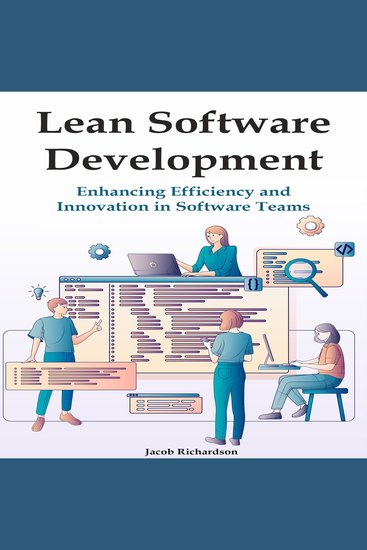
  • Lean Software Development - Enhancing Efficiency and Innovation in Software Teams - cover

    Lean Software Development -...

    Jacob Richardson

    • 0
    • 0
    • 0
    "Lean Software Development: Enhancing Efficiency and Innovation in Software Teams" offers a comprehensive guide to implementing lean principles in the software development process. This book is designed to help teams streamline their workflows, eliminate waste, and foster a culture of continuous improvement and innovation. 
    Rooted in the core principles of lean methodology, this book provides practical strategies and actionable insights to optimize every stage of software development. Through a combination of theoretical frameworks and real-world examples, readers will learn how to create more value for their customers while reducing inefficiencies and enhancing team collaboration. 
    Key topics include:Understanding the principles of lean software development and their application to modern software practicesIdentifying and eliminating waste to improve efficiency and speed up delivery timesImplementing continuous integration and continuous delivery (CI/CD) pipelines to enhance software qualityFostering a culture of innovation and continuous improvement within development teamsUtilizing lean metrics to measure performance and drive data-driven decisionsEnhancing customer feedback loops to ensure software meets user needs and expectationsIntegrating lean principles with agile and DevOps methodologies for a holistic approach to software development 
    "Lean Software Development: Enhancing Efficiency and Innovation in Software Teams" is an essential resource for software developers, project managers, and team leaders seeking to refine their processes and achieve higher levels of efficiency and innovation. Embrace the lean mindset and transform your software development practices to deliver exceptional value to your customers and stay ahead in the competitive technology landscape. 
     
    Mostra libro
  • Deep Learning with Python - A Comprehensive guide to Building and Training Deep Neural Networks using Python and popular Deep Learning Frameworks - cover

    Deep Learning with Python - A...

    Brian Murray

    • 0
    • 0
    • 0
    Deep Learning with Python is a comprehensive guide to building and training deep neural networks using Python and popular deep learning frameworks. Whether you are a beginner or an experienced data scientist, this book provides a detailed understanding of the theory and practical implementation of deep learning. 
    Starting with an introduction to deep learning, the book covers essential topics such as neural network architecture, training and optimization, regularization, and transfer learning. It also covers popular deep learning frameworks such as TensorFlow, Keras, and PyTorch. 
    The book includes practical examples and step-by-step instructions to help you build and train deep neural networks for a variety of applications, including image and speech recognition, natural language processing, and time series analysis. You will also learn how to use advanced techniques such as convolutional neural networks, recurrent neural networks, and generative adversarial networks. 
    With its comprehensive coverage of deep learning and practical examples, this book is an essential resource for anyone interested in building and training deep neural networks using Python and popular deep learning frameworks. 
     
    Mostra libro
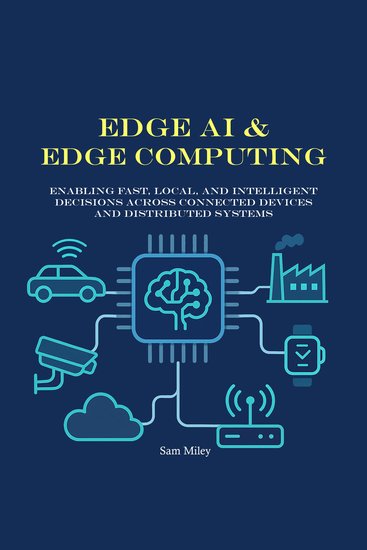
  • Edge AI & Edge Computing - Enabling Fast Local and Intelligent Decisions Across Connected Devices and Distributed Systems - cover

    Edge AI & Edge Computing -...

    Sam Miley

    • 0
    • 0
    • 0
    Smarter. Faster. Closer to the action. 
    The future of intelligent technology isn't in distant data centers — it's at the edge. From self-driving cars and smart cameras to industrial automation and personalized healthcare, Edge AI is powering a new generation of ultra-responsive, real-time systems. 
    In this action-oriented guide, you’ll discover how Edge AI and edge computing work together to deliver lightning-fast insights, reduced latency, and privacy-first intelligence — all without relying on the cloud. Whether you're building IoT solutions, optimizing machine learning pipelines, or leading digital transformation, this book gives you the competitive edge. 
    Inside, you’ll learn how to: 
    •	Build scalable edge architectures with real-time processing 
    •	Deploy AI models on devices from smartphones to sensors 
    •	Optimize for speed, bandwidth, and offline functionality 
    •	Use tools like NVIDIA Jetson, TensorFlow Lite, and edge containers 
    •	Apply edge AI in smart cities, retail, healthcare, and industry 4.0 
    If your business depends on fast decisions, smart automation, and powerful user experiences — this book shows you how to put intelligence where it matters most. At the edge.
    Mostra libro
  • Harnessing Disruption - Building the Tech Future Without Breaking Society - cover

    Harnessing Disruption - Building...

    Sarah Kreps

    • 0
    • 0
    • 0
    In Harnessing Disruption, Sarah E. Kreps—a national security expert and military veteran—offers a fresh, clear-eyed framework for understanding the social and political dynamics that shape technological change. From nuclear weapons to AI, cryptocurrency, and social media, breakthrough innovations rarely arrive without backlash. Disruption is not collapse. History shows it is part of a recurring pattern.With unmatched insight and authority, Kreps traces a five-stage cycle that technologies follow: emergence, early warnings, crisis, agenda-setting, and institutional response. Drawing on decades of research and real-world policy experience, she argues that disruption is neither inherently dangerous nor inherently self-correcting. Rather, it's a process we can steer, if we learn to see the signs and act decisively.Harnessing Disruption challenges fatalistic narratives that cast AI and other technologies as uncontrollable forces. It makes the case for cautious optimism: that institutions can adapt, societies can recalibrate, and technologies can be governed in ways that protect both innovation and the public good. Timely, incisive, and grounded in both historical precedent and contemporary case studies, this book provides the tools for anyone to understand where we are in the cycle of disruption and how to shape what comes next.
    Mostra libro
  • Mind Bending Paradoxes For Sleep - cover

    Mind Bending Paradoxes For Sleep

    Calm Sleep Academy

    • 0
    • 0
    • 0
    This audiobook is narrated by an AI Voice.   
    What if the very act of thinking about logic could lead you into peaceful, restful sleep? This unique audiobook presents fifty carefully crafted paradoxes designed to engage your mind while gently guiding you toward slumber. Each paradox, from the famous Barber Paradox to Zeno's Achilles and the Tortoise, offers a fascinating journey through logical contradictions that have puzzled philosophers and mathematicians for centuries. The soothing narration explores mind-bending concepts like the Liar Paradox, the Unexpected Hanging, and the Crocodile Paradox, transforming complex philosophical problems into bedtime companions. These thought-provoking scenarios work by occupying your conscious mind with intriguing puzzles while your body naturally relaxes into sleep. Perfect for insomniacs, philosophy enthusiasts, students, and anyone seeking an alternative to traditional sleep aids, this collection makes abstract thinking accessible and surprisingly calming. The gentle pacing and thoughtful explanations create an ideal sleep environment, replacing racing thoughts with structured contemplation. Each paradox is presented with clear reasoning, historical context, and multiple resolution attempts, making complex logical problems digestible for all listeners. Whether you're struggling with restless nights or simply curious about the fundamental nature of logic and reality, these paradoxes offer both intellectual stimulation and practical sleep assistance. Experience how ancient philosophical puzzles can become modern solutions for better rest and deeper understanding of the fascinating contradictions that shape our world.
    Mostra libro