Unisciti a noi in un viaggio nel mondo dei libri!
Aggiungi questo libro allo scaffale
Grey
Scrivi un nuovo commento Default profile 50px
Grey
Iscriviti per leggere l'intero libro o leggi le prime pagine gratuitamente!
All characters reduced
Richard II: The Life and Death of King Richard the Second - cover

Richard II: The Life and Death of King Richard the Second

William Shakespeare

Casa editrice: Memorable Classics eBooks

  • 0
  • 0
  • 0

Sinossi

Richard II by William Shakespeare The Life and Death of King Richard the Second, commonly called Richard II, is a history play by William Shakespeare believed to have been written around 1595.

It is based on the life of King Richard II of England (ruled 1377–1399) and chronicles his downfall and the machinations of his nobles. It is the first part of a tetralogy, referred to by some scholars as the Henriad, followed by three plays about Richard's successors: Henry IV, Part 1; Henry IV, Part 2; and Henry V.
Although the First Folio (1623) includes the play among the histories, the earlier Quarto edition of 1597 calls it The tragedie of King Richard the second.

The play spans only the last two years of Richard's life, from 1398 to 1400. It begins with King Richard sitting majestically on his throne in full state, having been requested to arbitrate a dispute between Thomas Mowbray and Richard's cousin, Henry Bolingbroke, later Henry IV, who has accused Mowbray of squandering money given to him by Richard for the king's soldiers and of murdering Bolingbroke's uncle, the Duke of Gloucester.

Bolingbroke's father, John of Gaunt, 1st Duke of Lancaster, meanwhile, believes it was Richard himself who was responsible for his brother's murder. After several attempts to calm both men, Richard acquiesces and it is determined that the matter be resolved in the established method of trial by battle between Bolingbroke and Mowbray, despite the objections of Gaunt.
Disponibile da: 02/06/2022.
Altri libri che potrebbero interessarti

  • Imperial Chinese Foundations - Uniting the Land (3 in 1) - cover

    Imperial Chinese Foundations -...

    Rolf Hedger

    • 0
    • 0
    • 0
    The story of China's imperial unification represents one of history's most consequential political transformations. "Imperial Chinese Foundations: Uniting the Land" explores the three dynasties that forged China's imperial system—a political structure that would endure for over two millennia. 
    The brief but revolutionary Qin Dynasty (221-206 BCE) ended centuries of warring states by conquering all rivals under the leadership of the First Emperor, Qin Shi Huang. Through military might, standardized writing, currency, measurements, and a unified legal code, the Qin created China's first centralized bureaucratic empire—though their harsh Legalist policies triggered rebellion after the emperor's death. 
    The Western Han Dynasty (206 BCE-9 CE) consolidated imperial rule through a more pragmatic blend of Confucian ideology and centralized governance. Under Emperor Wu's dynamic leadership, the Han expanded Chinese territory, opened the Silk Road, established the civil service examination system, and created cultural and political institutions that would define Chinese civilization for millennia. 
    As power shifted to the Eastern Han (25-220 CE), the dynasty initially flourished before facing mounting challenges from natural disasters, court intrigues, and the Yellow Turban Rebellion. Yet even as political cohesion weakened, this period saw remarkable innovations—including paper, the seismograph, and advances in mathematics and medicine—while Buddhism began its profound influence on Chinese civilization. 
    Through examining these three foundational dynasties, we witness the birth and evolution of the imperial Chinese state that would serve as a template for governance across East Asia and continue to influence Chinese identity into the modern era.
    Mostra libro
  • A Rare Recording of Film Icon Burt Lancaster - cover

    A Rare Recording of Film Icon...

    Burt Lancaster

    • 0
    • 0
    • 0
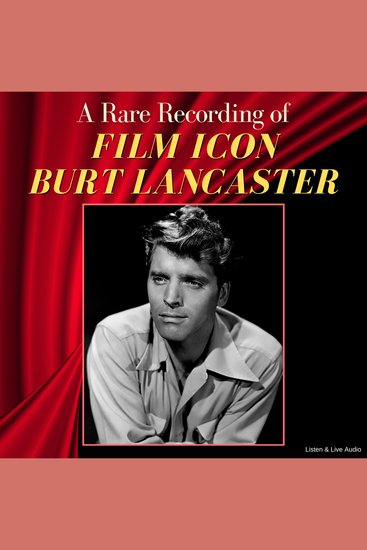
    Burton Stephen Lancaster (November 2, 1913 - October 20, 1994), born in New York City, was an American actor, producer and director. Initially known for playing tough guys with a tender heart, he went on to achieve success with more complex and challenging roles over a 45-year career in films and television. He was a four-time Academy Award Best Actor nominee, winning the Oscar and Golden Globe for the 1960 film, Elmer Gantry, and BAFTA award winner for Birdman of Alcatraz (1963) and Atlantic City (1982). The following recordings are from tv interviews from 1963 and 1973.
    Mostra libro
  • Through the Gates of Goodness - Discovering the Transformative Power of Virtue - cover

    Through the Gates of Goodness -...

    James Allen, Tim Zengerink

    • 0
    • 0
    • 0
    What if dedicating yourself to virtue could unlock a life of immeasurable peace, prosperity, and joy? 
    James Allen’s heartfelt exploration demonstrates how living by the highest moral standards fosters profound inner change. Adapted for contemporary readers, this work reveals the quiet but powerful influence of qualities like honesty, kindness, and humility—ushering you through the gates of goodness and into a realm of lasting fulfillment. 
    What You’ll Discover in This Modern Translation: 
    - The practical impact of everyday acts of virtue 
    - How moral integrity leads to enhanced mental clarity and purpose 
    - Steps for overcoming temptation and navigating ethical dilemmas 
    - Insights that tie personal virtue to collective well-being 
    Imagine entering each day guided by genuine kindness and integrity—experiencing a deep sense of wholeness that resonates in all you do. Let James Allen escort you beyond mere goodness into a life of true moral and spiritual triumph. 
    Walk through the gates of goodness. Get your copy now and begin your journey toward a virtue-driven transformation.
    Mostra libro
  • The Rambo Report - Five Films Three Books One Legend - cover

    The Rambo Report - Five Films...

    Nat Segaloff, David Morrell

    • 0
    • 0
    • 0
    From the beginning, Rambo was more than a character in a 1972 novel by David Morrell. He was the culmination of the author's personal encounters with veterans returning from the Vietnam War. The 1982 movie adaptation of First Blood reflected the novel's powerful insights into a troubled veteran's postwar experience. Then in 1985, the film's explosive sequel Rambo: First Blood Part II transformed the character into something shockingly different. With a focus on blood-and-guts action, Rambo became an invincible one-man army. A new kind of hero for a new day in America. A pop-culture icon as controversial as he was crowd-pleasing—blasting his way through the influential action film franchise in Hollywood history. The Rambo legend was born. 


    Five feature films. Three novels. Seven video games. Countless comic books, action figures, and even an animated show for kids. The Rambo machine has been as unstoppable as Rambo himself. Now for the first time, Hollywood insider Nat Segaloff digs deep into the man, the myth, and the massive impact of the phenomenon known as "The Rambo Effect." Packed with behind-the-scenes anecdotes, cultural insights, and debates about violence in the media, this is an explosive no-holds-barred report from the front lines of Hollywood mythmaking. A must-listen for Rambo fans, movies buffs, and anyone interested in American culture.
    Mostra libro
  • Stories on lord Shiva series - 21 - From various sources of Shiva Purana - cover

    Stories on lord Shiva series -...

    Anusha HS

    • 0
    • 0
    • 0
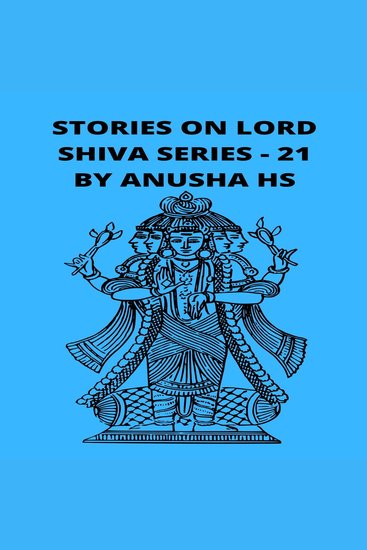
    Lord shiva is adi and he is only the anthya. He is the sole reason for the happenings in both the movable and immovable worlds. Therefore, it is said that not even a spring of grass will move without his permission. He is the one who has given life to all the creatures. He is also the one who takes away the lives of all the creatures. Sadhus sages and aghoraas practice severe penance without minding day and night on Lord Shiva.He blesses his devotees with boons. He is called Bole Shankar. All recite his five syllabled mantra or panchakshari mantra " om Namah Shivaya" which is the most popular one among all the other mantras. Lord Shiva who is also called Parameswara is the one who has got no birth and death. He is only the beginning and he is the end. Nandi which happens to be the vehicle of Lord Shiva is a bull. The abode of Lord Shiva is Mount Kailash. In Hindu religion Lord Shiva is called Devaadi Deva Mahadeva which means God for all the Gods. He is the supreme God. Lord Shiva has three eyes. The third eye is situated in between his brows. The third eye is used by him only whenever he wants to destroy the things. He is the one who dwells at cemetery.Once Lord Shiva had presented his dancing skills before the sage Bharata. He had one follower while dancing whose name was Tandava. That's how it became Shiva Tandava. During the time of Mahashivratri whosoever takes the darshan of Lord Shiva's twelve jyotirlingas they are believed to incur special blessings from Lord Shiva. In olden days where ever, Lord Shiva appeared on the planet Earth, in those places Shivalinga came out from the ground naturally such places became Jyotirlingas.
    Mostra libro
  • Futureproof - How to Live for Jesus in a Culture That Keeps on Changing - cover

    Futureproof - How to Live for...

    Stephen McAlpine

    • 0
    • 0
    • 0
    How the gospel equips Christians to live confidently for Christ in an increasingly secular society, facing the challenges of the future with confidence.  We are living in a time of rapid cultural change, when Christian views are often seen as outdated and even dangerous. This can leave us feeling anxious about how to live out what we believe and uncertain about the future of the church.  Steve McAlpine’s first book, Being the Bad Guys, sought to explain how our culture ended up so far away from biblical Christianity and how to reach out with the gospel wisely. In this book, he explores where things are heading and what we can do about that now, both as individuals and as a church.  Steve examines secular narratives about purpose and authenticity, connectedness and progress, and compares them to the promises made by the Bible. He shows that the Bible offers a more satisfying, more realistic, and more hopeful vision of the future.  He also examines the things that cause many Christians and non-Christians to be anxious about the future: technological change, political polarization, clashes over climate, and culture wars around gender and identity. He reminds readers that God is in control and helps them to think through how they can live wholeheartedly for Christ, facing the challenges of the future with confidence and leading the way in terms of citizenship, stewardship, and community.  Stephen McAlpine is the Director for Cultural Engagement at City to City Australia. A former pastor, he now writes and speaks on theology, church, and culture.
    Mostra libro