Rejoignez-nous pour un voyage dans le monde des livres!
Ajouter ce livre à l'électronique
Grey
Ecrivez un nouveau commentaire Default profile 50px
Grey
Abonnez-vous pour lire le livre complet ou lisez les premières pages gratuitement!
All characters reduced
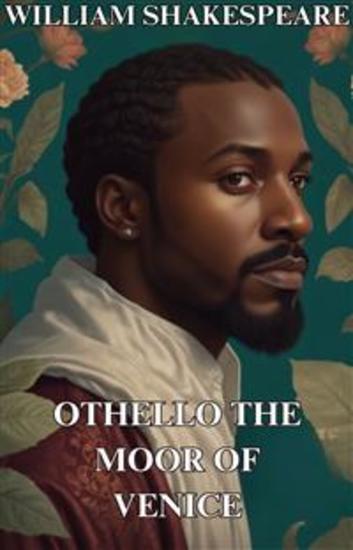
OthelloThe Moor Of Venice(Illustrated) - cover

OthelloThe Moor Of Venice(Illustrated)

William Shakespeare

Maison d'édition: Micheal Smith

  • 0
  • 0
  • 0

Synopsis

Illustrated Edition: Immerse yourself in the world of Shakespeare with this beautifully illustrated edition that features 20 stunning illustrations, bringing the characters and scenes to life in vivid detail.
	 Summary and Characters List: Dive into the drama with a handy summary that sets the stage for the tragic tale of love and deception. Get to know each character intimately with our comprehensive characters list, enhancing your understanding of their motivations and actions.
	 Author Biography: Explore the life and times of the legendary William Shakespeare, the brilliant mind behind this timeless masterpiece. Gain insights into the playwright's fascinating journey and the enduring legacy of his work.

 "Othello: The Moor of Venice"
Step into a world of jealousy, betrayal, and tragedy in one of Shakespeare's most gripping and unforgettable plays. Othello, the esteemed Moorish general, is consumed by a deadly web of deceit spun by the cunning Iago. As love turns to suspicion and trust crumbles to dust, the stage is set for a heart-wrenching exploration of human nature.
This meticulously crafted illustrated edition is the perfect way to experience the Bard's timeless words anew. Whether you're a Shakespeare aficionado or a newcomer to his genius, this edition of "Othello" promises a captivating journey through a classic tale of passion, manipulation, and the devastating consequences of unchecked jealousy.
Rediscover the power of Shakespeare's storytelling in this stunning illustrated edition. Get your copy today and embark on a journey into the heart of darkness with "Othello: The Moor of Venice." 
Disponible depuis: 13/01/2024.

D'autres livres qui pourraient vous intéresser

  • The Two Voices - An autobiographical poem written by Tennyson after his friend committed suicide - cover

    The Two Voices - An...

    Alfred Lord Tennyson

    • 0
    • 0
    • 0
    Alfred Tennyson was born on August 6th, 1809, in Somersby, Lincolnshire, the fourth of twelve children. 
    Most of Tennyson's early education was under the direction of his father, although he did spend four unhappy years at a nearby grammar school.  He also showed an early and burgeoning talent for writing; by the age of twelve he had written a 6,000-line epic poem.  
    In the 1820s, however, Tennyson’s father began to suffer frequent mental breakdowns exacerbated by his alcoholism. One brother had frequent violent quarrels with his father, a second would be confined to an insane asylum, and another was later an opium addict. 
    Tennyson left home in 1827 to join his brothers at Trinity College, Cambridge and with it escape from Somersby. At Trinity he was those who knew little of the problems that clouded his life. Although shy he was keen to make new friends; he was handsome, intelligent, humorous, and a gifted impersonator. 
    That same year, he and his brother Charles published Poems by Two Brothers. It attracted the attention of the “Apostles," a select undergraduate literary club led by Arthur Hallam. They provided friendship and confidence. Hallam and Tennyson became the best of friends. 
    The pair, in the summer of 1830, were involved in a ridiculous jaunt to take money and secret messages to revolutionaries plotting to overthrow the Spanish king. Tennyson's political enthusiasm was marginal compared to Hallam's, but he was glad to make his first trip abroad.  
    The landscape and atmosphere of the Pyrenees generated such wonderful poems as "Oenone," "The Lotus-Eaters;" inspired by a waterfall in the mountains; and "The Eagle;" invoked from the sight of the great hunters circling above them. The small village of Cauteretz and the surrounding valley became a location Tennyson would return to many times over the next sixty years. 
    In 1830, he published Poems, ‘Chiefly Lyrical’ and in 1832 a volume entitled ‘Poems’.  Tennyson, stung by the harshness of several reviews, would not publish again for nine years.  
    In the autumn of 1833, in what was meant as a gesture of gratitude and reconciliation to his father, Hallam accompanied him to the Continent. In Vienna Hallam died suddenly of apoplexy as a result of a congenital malformation of the brain.  
    Hallam’s death, together with that of his father and a myriad of anxieties, stem-ming mainly from the belief that his family were grimly attached to poverty, and fears that he might become a victim of epilepsy, madness, alcohol, and drugs, as others in his family had, or that he might die like Hallam, conspired to upset the delicate balance of Tennyson's emotions.  
    In 1836, he became engaged to Emily Sellwood. From their correspondence it is clear that she was very much in love with him. He seems to excessively worry about not having the financial means to marry.  He was also falling into trances, which he thought were connected with the epilepsy from which other family members suffered. To marry, he thought, would mean passing on the disease to any children he might father. He broke off the engagement. 
    During these years he used the dark feelings and events to write many of his finest works; "Ulysses," "Morte d'Arthur," "Tithonus," "Tiresias," and "Break, break, break."  
    In 1842 Tennyson’s Poems (in two volumes) was a tremendous critical and popular success.  
    In 1845 he was granted a government pension of £200 a year in recognition of his poetic achievements and his financial need.  Despite this financial support his doubts persisted.  
    Life for Tennyson was becoming increasingly productive and more lucrative.  By 1849 ‘The Princess’ had been published. He was now offered a large advance if he would assemble his elegies on Hallam into one complete poem.  
    Tennyson had now also resumed his relationship with Emily Sellwood and by the following year was talking again of marrying her. 
    In the Spring of 1850 the Poet Laureate William Wordsworth died and a new Laureate was
    Voir livre
  • Judas Goat - Poems - cover

    Judas Goat - Poems

    Gabrielle Bates

    • 0
    • 0
    • 0
    "Stellar . . . with great humanity, grace and precision." —Nicole Sealey, author of Ordinary Beast 


    Gabrielle Bates's electric debut collection Judas Goat plumbs the depths of intimate relationships. The book's eponymous animal is used to lead sheep to slaughter, while its own life is spared, and its harrowing existence echoes through this spellbinding collection of forty poems, which wrestle with betrayal and forced obedience, violence and young womanhood, and the "forbidden felt language" of sexual and sacred love. These poems conjure encounters with figures from scriptures, domesticated animals eyeing the wild, and mothering as a shape-shifting, spectral force; they question what it means to love another person and how to exorcise childhood fears. All the while, the Deep South haunts, and no matter how far away the speaker moves, the South always draws her back home. 


    In confession, in illumination, Bates establishes herself as an unflinching witness to the risks that desire necessitates, as Judas Goat holds listeners close and whispers its unforgettable lines.
    Voir livre
  • It Happened One Night - Adapted from the screenplay & performed for radio by the original film stars - cover

    It Happened One Night - Adapted...

    Mr Punch

    • 0
    • 0
    • 0
    Mr Punch Presents: IT HAPPENED ONE NIGHT, the winner of five Oscar’s including Best Picture in 1934, is Frank Capra’s classic romantic comedy, telling the story of a runaway heiress (Claudette Colbert) who falls in love with a cynical reporter (Clark Gable) on a cross-country bus trip across America. Clark Gable and Claudette Colbert recreate their roles in this special radio production. 
      
    This high-quality audiobook has been re-mastered and re-edited from the original radio broadcast. 
      
    Also available as part of the Hollywood Playhouse BOX SET, a collection of 14 Oscar winning ear-movies, adapted from the original screenplays & performed for the radio by many of the original film stars in front of a live studio audience. 
      
    These radio dramas were….to become as popular as the movies themselves. Hollywood Movie Memories 
      
    This is an excellent audio product that will appeal to the majority of audiobook listeners. Talking Business 
      
    A lovely series to add to any film, audio or crime lovers’ collection. Audio World
    Voir livre
  • For the Marriage of Faustus and Helen - Poem attempting to bridge the gap between the classic past and the oncoming industrial era - cover

    For the Marriage of Faustus and...

    Hart Crane

    • 0
    • 0
    • 0
    Harold Hart Crane was born on the 21st July 1899 in Garrettsville, Ohio. 
    Crane was drawn to literature at an early age, becoming a voracious reader and pursuing self-education rather than attach himself to a more formal college education, although he did attend East High School in 1913.  His developing love of poetry was nurtured with the works of the English Romantics and the French Symbolists, as well as near contemporary American poets. 
    Much of his youth was spent shuttling between Cleveland and New York as his parents’ marriage descended into continuing conflict before they separated with Crane still in his teens.  Shortly after Crane attempted to enlist in the U S Military but was rejected for being a minor. 
    His first published poem also came in 1917 with ‘C33’ and its reference to the cell number that Oscar Wilde was incarcerated in. 
    Crane now centred more of his time in New York and immersed himself in the vibrant artistic scene of Greenwich Village.  Alongside this he dabbled in various jobs to support himself, including copywriting and work in a munitions factory, as he continued to develop his ambitions for a poetic career.   
    His early work was already being noticed for its lush and rich use of words and by the time ‘White Buildings’ was published in 1926 he was being critically acclaimed. 
    Despite this success his personal life was troubled.  It was both nourishing his work and fuelling complex patterns of despair as he sought to establish his identity.  In a time when homosexuality was openly condemned his openly gay attitude sat uneasily as he pursued relationships that were both intense and emotionally fraught. 
    His acclaimed work ‘The Bridge’ in 1930 was both ambitious and a foundation stone for new American poetry.  Against this his battles with depression and alcoholism were being lost. 
    Hart Crane died on the 27th April 1932 by jumping from the deck of a steamship into the Gulf of Mexico upon his return to the United States from Mexico.  He was 32.
    Voir livre
  • The Bali Paradigm - Prose Poems and Illustrations by Michael M Clements - cover

    The Bali Paradigm - Prose Poems...

    Michael M Clements

    • 0
    • 0
    • 0
    Have you ever dreamed of starting a new life in a tropical paradise far from home? The Bali Paradigm chronicles such a leap through the prose, poetry and illustrations of author Michael M Clements, who sold his business, his house and all his possessions and moved with his partner and son to start a new life in Bali, and in the process, created this raw and inspiring account of what it feels like to jump from one life paradigm into the next.
    Voir livre
  • The Ghost Sonata - A Drama In Three Scenes - cover

    The Ghost Sonata - A Drama In...

    August Strindberg

    • 0
    • 0
    • 0
    Enter the surreal world of August Strindberg's "The Ghost Sonata," where a young student becomes entangled in the mysterious affairs of a haunted mansion. As he navigates its labyrinthine corridors, he encounters a cast of eccentric characters, including a mysterious old man who seems to have blackmail over everyone in the house, a woman who has begun to resemble a mummy after being locked away in a closet for years, a young girl who can't leave her hyacinth room,  and an ethereal milk maid who seems to hold the future of everyone involved delicately in her hands. This truly is one of the most bizarre and nihilistic works to ever come out of Strindberg's catalog, but also helped lay down the correct foundation for his final play, the Great Highway.
    Voir livre