Unisciti a noi in un viaggio nel mondo dei libri!
Aggiungi questo libro allo scaffale
Grey
Scrivi un nuovo commento Default profile 50px
Grey
Iscriviti per leggere l'intero libro o leggi le prime pagine gratuitamente!
All characters reduced
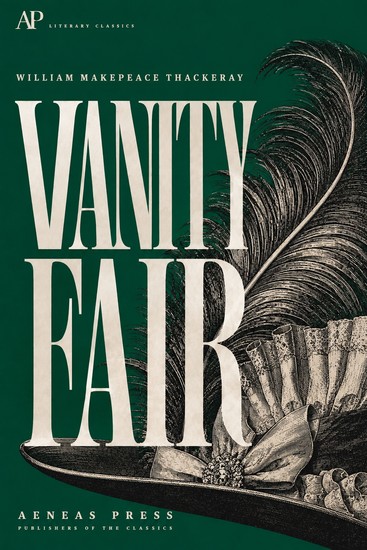
Vanity Fair - A Novel Without a Hero - cover

Vanity Fair - A Novel Without a Hero

William Makepeace Thackeray

Casa editrice: Aeneas Press

  • 0
  • 0
  • 0

Sinossi

Becky Sharp leaves school by throwing the dictionary out of the carriage window, and proceeds to climb through a society that deserves her. Thackeray subtitled it a novel without a hero and meant it: the good are dull, the charming are ruinous, and Waterloo is fought in a single sentence offstage while the wives wait in Brussels. He drew the original illustrations himself.
Disponibile da: 19/08/2026.
Lunghezza di stampa: 937 pagine.
Altri libri che potrebbero interessarti

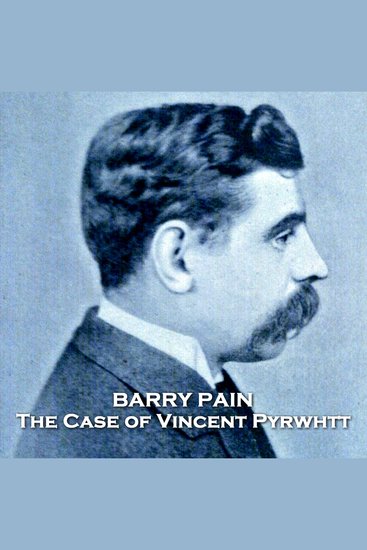
  • The Case of Vincent Pyrwhtt - From their pens to your ears genius in every story - cover

    The Case of Vincent Pyrwhtt -...

    Barry Pain

    • 0
    • 0
    • 0
    Barry Eric Odell Pain was born at 3 Sydney Street in Cambridge on 28th September 1864. He was one of 4 children. 
    He was educated at Sedbergh School and then Corpus Christi College, Cambridge. 
    In 1889, Cornhill Magazine published his short story ‘The Hundred Gates’.  This opened the way for Pain to advance his literary career on several fronts. He became a contributor to Punch and The Speaker, as well as joining the staff of both the Daily Chronicle and Black and White.  
    Pain was also a noted and prominent contributor to The Granta and from 1896 to 1928 a regular contributor to the Windsor Magazine. 
    It is often said that Pain was discovered by Robert Louis Stevenson, who compared his work to that of Guy de Maupassant.  It’s an apt comparison. Pain was a master of disturbing prose but was also able to inject parody and light comedy into many of his works.  A simple premise could in his hands suddenly expand into a world very real but somehow emotionally fraught and on the very edge of darkness. 
    Barry Pain died on 5th May 1928 in Bushey, Hertfordshire.
    Mostra libro
  • My Honoured Master - From their pens to your ears genius in every story - cover

    My Honoured Master - From their...

    Catherine Amy Dawson Scott

    • 0
    • 0
    • 0
    The bookshelves of British literature are incredible collections that have gathered together centuries of very talented authors.  From these Isles their fame spread and whilst among their number many are now forgotten or neglected their talents endure.  Among them is Catherine Amy Dawson Scott.
    Mostra libro
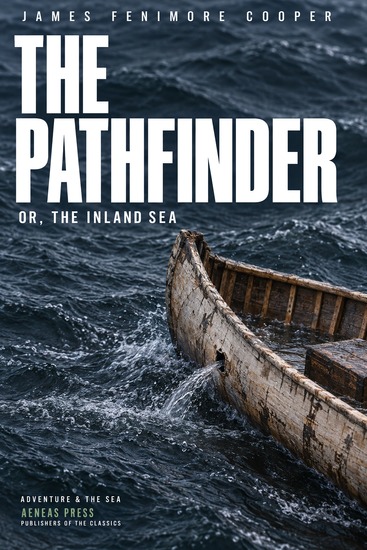
  • The Pathfinder - or The Inland Sea - cover

    The Pathfinder - or The Inland Sea

    James Fenimore Cooper

    • 0
    • 0
    • 0
    The scout of the Leatherstocking tales, past forty, guides a sergeant's daughter to a garrison on Lake Ontario and finds he wants to marry her. Cooper had served in the navy on those lakes and knew what a gale does to a schooner with a lee shore. He made his hero, for once, a man who can be refused. Thirty-one plates of rivers, forests and moonlight, from Kensett's Hudson River Scene to a wooded river landscape of 1670, carry the inland waters and wild shore through the text.
    Mostra libro
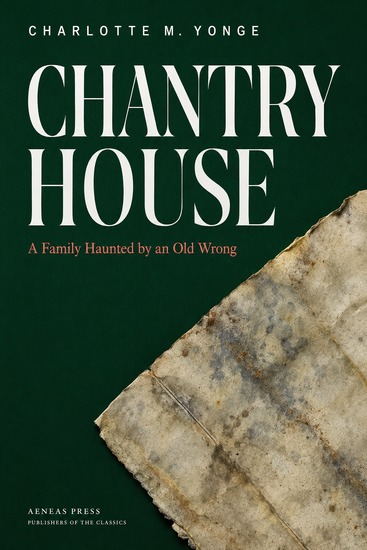
  • Chantry House - A Family Haunted by an Old Wrong - cover

    Chantry House - A Family Haunted...

    Charlotte M. Yonge

    • 0
    • 0
    • 0
    A family moves into a house they have inherited and finds it comes with a story nobody will finish telling, in the quiet High Church manner Yonge made her own. She wrote over a hundred and fifty books and gave the profits away - one novel paid for a missionary schooner, another for a church. This edition is bound with a gallery of 58 plates, among them paintings by Edward Hicks, Arthur Hughes and Thomas Gainsborough, ranging in date from 1737 to 1886.
    Mostra libro
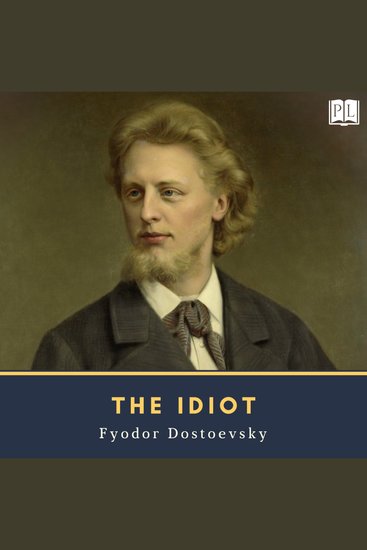
  • The Idiot - cover

    The Idiot

    Fyodor Dostoevsky

    • 0
    • 0
    • 0
    Acclaimed by the 20th-century Russian critic Mikhail Bakhtin for its "polyphony" (a literary concept introduced by Bakhtin to describe a plurality of voices within a narrative), The Idiot is regarded by modern critics as one of Dostoevsky's most experimental and artistically uneven novels.
    The novel follows the entrance of the epileptic Prince Muishkin - a character Dostoevsky meant to represent a "positively good and beautiful man" - into a circle of Russian high society characterized by vanity, greed, and social ambition. Thanks to his epileptic condition and his simplicity, earnestness, and kindness of heart, Muishkin is frequently branded by his newfound social circle as the titular "idiot"; but in reality, he's a man of extraordinary sensitivity and insight. His arrival in society sets off a series of dramatic events and interpersonal strife centered around himself and his distant relations.
    The Idiot drew upon many of Dostoevsky's significant personal experiences, such as his Russian Orthodox faith, his experience of nearly being executed in 1849, and his own struggle with epilepsy, all of which inform his depiction of Prince Muishkin's distinctive psychology.
    Mostra libro
  • We - A Dystopia of the One State - cover

    We - A Dystopia of the One State

    Eugene Zamiatin

    • 0
    • 0
    • 0
    In the One State everyone lives behind glass, walks in step and is numbered; D-503 is building the spaceship that will bring this happiness to other planets, and then a woman shows him the wild land beyond the wall. Zamyatin wrote it in 1920, and it was banned in Russia before it was published anywhere; Orwell read it in French and reviewed it in 1946, three years before Nineteen Eighty-Four. The narrator keeps a diary in the language of mathematics. Sixty night and moonlight plates by painters including Johan Christian Dahl and Carl Gustav Carus run from 1820 to 1929, the cold lunar light of the One State's glass world.
    Mostra libro