Unisciti a noi in un viaggio nel mondo dei libri!
Aggiungi questo libro allo scaffale
Grey
Scrivi un nuovo commento Default profile 50px
Grey
Iscriviti per leggere l'intero libro o leggi le prime pagine gratuitamente!
All characters reduced
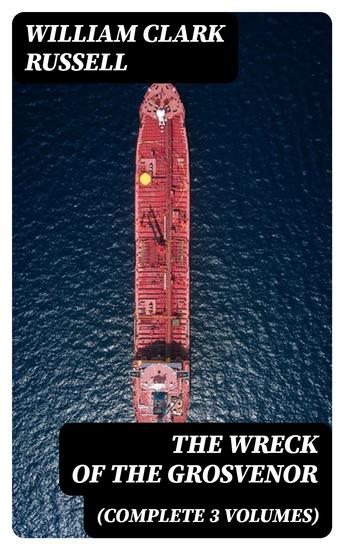
The Wreck of the Grosvenor (Complete 3 Volumes) - Enriched edition - cover

The Wreck of the Grosvenor (Complete 3 Volumes) - Enriched edition

William Clark Russell

Casa editrice: DigiCat

  • 0
  • 0
  • 0

Sinossi

In "The Wreck of the Grosvenor," William Clark Russell weaves a gripping maritime tale across three volumes that explores themes of survival, loyalty, and the awe-inspiring power of nature. Written during the late Victorian era, Russell's narrative style is characterized by rich, vivid descriptions and an intricately woven plot that delves into the lives of his characters against the backdrop of a tragic shipwreck. This novel not only serves as an adventure story but also acts as a commentary on the human condition, probing the depths of despair and the resilience found in dire circumstances, reminiscent of nautical literature's tradition yet advancing it with psychological depth and emotional nuance. Russell, a renowned maritime novelist and a sailor himself, draws from his personal experiences at sea and an extensive knowledge of maritime lore to craft this compelling narrative. His firsthand encounters with the ocean's unpredictable nature and the camaraderie among sailors vividly inform the characters and settings of "The Wreck of the Grosvenor," providing an authenticity that resonates throughout the novel. Russell's dedication to his craft and his passion for the marine environment is palpable in every sentence. This extraordinary work remains a must-read for enthusiasts of nautical fiction and adventure narratives. Russell's ability to evoke both the beauty and treachery of the sea entices readers into a world where the line between hero and victim is perilously thin. By immersing oneself in "The Wreck of the Grosvenor," one engages not only with a thrilling account of survival but also with a profound exploration of human spirit amidst chaos.

In this enriched edition, we have carefully created added value for your reading experience:
- A succinct Introduction situates the work's timeless appeal and themes.
- The Synopsis outlines the central plot, highlighting key developments without spoiling critical twists.
- A detailed Historical Context immerses you in the era's events and influences that shaped the writing.
- A thorough Analysis dissects symbols, motifs, and character arcs to unearth underlying meanings.
- Reflection questions prompt you to engage personally with the work's messages, connecting them to modern life.
- Hand‐picked Memorable Quotes shine a spotlight on moments of literary brilliance.
- Interactive footnotes clarify unusual references, historical allusions, and archaic phrases for an effortless, more informed read.
Disponibile da: 13/11/2022.
Lunghezza di stampa: 334 pagine.

Altri libri che potrebbero interessarti

  • The Doll - cover

    The Doll

    Charles W. Chesnutt

    • 0
    • 0
    • 0
    Charles Chesnutt's "The Doll" is a story of seeking truth, facing discrimination, and making bold choices for the sake of one's own livelihood.
    "The Doll", depicts the African American barber as a human character by showing him struggle with and simply show human thoughts and emotions. The story takes place during a time of huge racial prejudice, a time in which some people did not even consider African Americans to be human.
    Mostra libro
  • At Christmas Time - From their pens to your ears genius in every story - cover

    At Christmas Time - From their...

    Anton Chekhov

    • 0
    • 0
    • 0
    Anton Pavlovich Chekhov was born on 29th January 1860 in Taganrog, on the south coast of Russia.  
    His family life was difficult; his father was strict and over-bearing but his mother was a passionate story-teller, a subject Chekhov warmed to. As he later said; ‘our talents we got from our father, but our soul from our mother’.  
    At school Chekhov was distinctly average. At 16 his father mis-managed his finances and was declared bankrupt. His family fled to Moscow. Chekhov remained and eked out a living by various means, including writing and selling short sketches to newspapers, to finish his schooling. That completed and with a scholarship to Moscow University obtained he rejoined his family. 
    He was able to help support them by selling satirical sketches and vignettes of Russian lifestyles and gradually obtained further commissions. In 1884, he qualified as a physician and, although it earned him little, he often treated the poor for free, he was fond of saying ‘Medicine is my lawful wife, and literature is my mistress.’ 
    His own health was now an issue as he began to cough up blood, a symptom of tuberculosis.  Despite this his writing success enabled him to move the family into more comfortable accommodation.  
    Chekhov wrote over 500 short stories which included many, many classics including ‘The Kiss’ and ‘The Lady with a Dog’.  His collection ‘At Dusk’ won him the coveted Pushkin Prize when was only 26.  
    He was also a major playwright beginning with the huge success of ‘Ivanov’ in 1887.   
    In 1892 Chekhov bought a country estate north of Moscow. Here his medical skills and money helped the peasants tackle outbreaks of cholera and bouts of famine. He also built three schools, a fire station and a clinic.  It left him with less time for writing but the interactions with real people gained him detailed knowledge about the peasantry and their living conditions for his stories.  
    His most famous work, ‘The Seagull’ was received disastrously at its premiere in St Petersburg. It was later restaged in Moscow to highlight its psychological aspects and was a huge success. It led to ‘Uncle Vanya’, ‘The Three Sisters’ and ‘The Cherry Orchard’.  
    Chekhov suffered a major lung hemorrhage in 1897 while visiting Moscow. A formal diagnosis confirmed tuberculosis and the doctors ordered changes to his lifestyle.  
    Despite a dread of weddings the elusive literary bachelor quietly married the actress Olga Knipper, whom he had met at rehearsals for ‘The Seagull’, on 25th May 1901. 
    By May 1904 with his tuberculosis worsening and death imminent he set off for the German town of Badenweiler writing cheerful, witty letters to his family and assuring them his health was improving.  
    On 15th July 1904 Anton Chekhov died at Badenweiler.  He was 44.
    Mostra libro
  • A Letter to a Hindu - cover

    A Letter to a Hindu

    Leo Tolstoy

    • 0
    • 0
    • 0
    "A Letter to a Hindu" (also known as "A Letter to a Hindoo") was a letter written by Leo Tolstoy to Tarak Nath Das on 14 December 1908. The letter was written in response to two letters sent by Das, seeking support from the Russian author and thinker for India's independence from colonial rule. 
    In "A Letter to a Hindu", Tolstoy argued that only through the principle of love could the Indian people gain independence from colonial rule. Tolstoy saw the law of love espoused in all the world's religions, and he argued that the individual, nonviolent application of the law of love in the form of protests, strikes and other forms of peaceful resistance were the only alternative to violent revolution. These ideas ultimately proved to be successful in 1947 in the culmination of the Indian independence movement.
    Mostra libro
  • Night Side of the River - Ghost Stories - cover

    Night Side of the River - Ghost...

    Jeanette Winterson

    • 0
    • 0
    • 0
    A captivating collection of ghost stories from "one of the most gifted writers working today" (New York Times), The Night Side of the River is as ingeniously provocative as it is downright spooky. 


    In this delightfully chilling collection, the iconic Jeanette Winterson turns her fearless gaze to the realm of ghosts, interspersing her own encounters with the supernatural alongside hair-raising fictions. Lifting the veil between the living and the dead, Winterson spirits us away to a haunted estate that ensnares a nomadic young couple in its own dark past, a staged immersive ghost tour gone awry, a West Village séance that threatens the bounds between AI and reality, and a vacation home in the metaverse where a widow visits an improved version of her deceased husband. Gloriously gothic and unnervingly contemporary, Winterson examines grief, revenge, and the myriad ways in which technology can disrupt the boundary between life and death.
    Mostra libro
  • About Love - From their pens to your ears genius in every story - cover

    About Love - From their pens to...

    Anton Chekhov

    • 0
    • 0
    • 0
    Anton Pavlovich Chekhov was born on 29th January 1860 in Taganrog, on the south coast of Russia.  
    His family life was difficult; his father was strict and over-bearing but his mother was a passionate story-teller, a subject Chekhov warmed to. As he later said; ‘our talents we got from our father, but our soul from our mother’.  
    At school Chekhov was distinctly average. At 16 his father mis-managed his finances and was declared bankrupt. His family fled to Moscow. Chekhov remained and eked out a living by various means, including writing and selling short sketches to newspapers, to finish his schooling. That completed and with a scholarship to Moscow University obtained he rejoined his family. 
    He was able to help support them by selling satirical sketches and vignettes of Russian lifestyles and gradually obtained further commissions. In 1884, he qualified as a physician and, although it earned him little, he often treated the poor for free, he was fond of saying ‘Medicine is my lawful wife, and literature is my mistress.’ 
    His own health was now an issue as he began to cough up blood, a symptom of tuberculosis.  Despite this his writing success enabled him to move the family into more comfortable accommodation.  
    Chekhov wrote over 500 short stories which included many, many classics including ‘The Kiss’ and ‘The Lady with a Dog’.  His collection ‘At Dusk’ won him the coveted Pushkin Prize when was only 26.  
    He was also a major playwright beginning with the huge success of ‘Ivanov’ in 1887.   
    In 1892 Chekhov bought a country estate north of Moscow. Here his medical skills and money helped the peasants tackle outbreaks of cholera and bouts of famine. He also built three schools, a fire station and a clinic.  It left him with less time for writing but the interactions with real people gained him detailed knowledge about the peasantry and their living conditions for his stories.  
    His most famous work, ‘The Seagull’ was received disastrously at its premiere in St Petersburg. It was later restaged in Moscow to highlight its psychological aspects and was a huge success. It led to ‘Uncle Vanya’, ‘The Three Sisters’ and ‘The Cherry Orchard’.  
    Chekhov suffered a major lung hemorrhage in 1897 while visiting Moscow. A formal diagnosis confirmed tuberculosis and the doctors ordered changes to his lifestyle.  
    Despite a dread of weddings the elusive literary bachelor quietly married the actress Olga Knipper, whom he had met at rehearsals for ‘The Seagull’, on 25th May 1901. 
    By May 1904 with his tuberculosis worsening and death imminent he set off for the German town of Badenweiler writing cheerful, witty letters to his family and assuring them his health was improving.  
    On 15th July 1904 Anton Chekhov died at Badenweiler.  He was 44.
    Mostra libro
  • The Tomcats and the Ball - cover

    The Tomcats and the Ball

    Geo Mihalache

    • 0
    • 0
    • 0
    From the series 'Stories for Vlad': 
    The tomcats find a ball lost in the orchard and by mistake, while trying to find our what it is, break it.
    Mostra libro