¡Acompáñanos a viajar por el mundo de los libros!
Añadir este libro a la estantería
Grey
Escribe un nuevo comentario Default profile 50px
Grey
Suscríbete para leer el libro completo o lee las primeras páginas gratis.
All characters reduced
Youth and the Bright Medusa (Annotated) - cover

Youth and the Bright Medusa (Annotated)

Willa Cather

Editorial: ePembaBooks

  • 0
  • 0
  • 0

Sinopsis

This edition includes the following editor's introduction: Willa Cather, an analysis of the literature of a free and empowered woman


First published in 1920, “Youth and the Bright Medusa” is a collection of eight of the stories that the American author Willa Cather had written over the past twenty years, stories of the perilous pursuit of the bright medusa of art in a hostile, materialistic world; in short, stories about artists and the art.
“Youth and the Bright Medusa” includes some of Cather's best tales: “Coming, Aphrodite!” focuses on a dedicated painter and his affair with a singer in pursuit of celebrity; “Paul’s Case” and “A Wagner Matinée” tell of a young man and an old woman with artistic longings crushed by their environments; “The Sculptor’s Funeral” and “The Diamond Mine” show the high costs of success.
Four of the stories in the collection were reprinted from Cather’s first published collection of fiction, “The Troll Garden” (1905).
Disponible desde: 10/09/2022.

Otros libros que te pueden interesar

  • The Romancers - cover

    The Romancers

    Saki Saki

    • 0
    • 0
    • 0
    The story unfolds in London's Hyde Park during autumn, where Morton Crosby, a cynical man, encounters a disheveled stranger who attempts to engage him in conversation. The stranger, a professional beggar, spins tales of his misfortunes, seeking sympathy and perhaps financial assistance. However, Crosby, unimpressed by the stranger's attempts at storytelling and dubious claims of past grandeur, counters with his own fabricated identity as an Afghan, further complicating their interaction.
    Ver libro
  • Bookshop Memories - From their pens to your ears genius in every story - cover

    Bookshop Memories - From their...

    George Orwell

    • 0
    • 0
    • 0
    Eric Arthur Blair was born on 25th June 1903 in Motihari, Bihar, in what was then British India. When Eric was one his mother took him to England and they settled at Henley-on-Thames in Oxfordshire.  
    His education was at the nearby convent school before moving on to St Cyprian's School at Eastbourne and finally Eton where his academic studies were sidelined in favour of work on college publications. 
    University could not be achieved without a scholarship, which depended on good grades, and so it was decided that Eric should join the Imperial Police. Now 19 he chose a posting in Burma, then a province of British India. He was appointed an Assistant District Superintendent in November 1922. In Burma, he was an outsider. However, he acquired a moustache and some local tattoos—small badly drawn blue circles on his knuckles. 
    In 1927 he contracted dengue fever and returned to England to convalesce. At home he reappraised his life and resigned his job to become a writer. His police experiences were later used for ‘Burmese Days’.  
    By 1932 he had a literary agent who secured him an offer to publish a non-fiction work ‘Down and Out in London and Paris’ for a £40 advance, through the radical and socialist Victor Gollancz publishing house.  It was published in January 1933 as ‘by George Orwell’, it was modestly successful. 
    ‘Burmese Days’ (1934) and ‘A Clergyman's Daughter’ (1935) were published whilst Orwell kept on with writing ‘Keep the Aspidistra Flying’.  In January 1936, he set out by public transport to research life for the ordinary man and woman in Wigan. From these experiences emerged ‘The Road to Wigan Pier’. He also caught the eye of Special Branch who kept him under surveillance until the year before the release of ‘Nineteen Eighty-Four’. 
    Later in December 1936 Orwell set out to fight in the Spanish Civil War. Initially stationed at Alcubierre 1,500 feet above sea level, in the depth of winter on the Aragon Front. Military action was scant as was the lack of munitions, food and firewood. In April, Orwell returned to Barcelona and was caught up in the Barcelona May Days and its factional in-fighting. Returning to the Aragon Front he was almost immediately hit by a sniper's bullet through the throat. The bullet barely missed the artery but he survived.  His experiences were expressed in ‘Homage to Catalonia’ (1938) but, out of fashion with its times, it was a commercial failure.  
    When World War Two started Orwell was declared ‘unfit for any kind of military service’ but finally obtained ‘war work’ with the BBC's Eastern Service.  In September 1943, after two years Orwell left the BBC to concentrate on a new idea: ‘Animal Farm’.  
    By April 1944 ‘Animal Farm’ was ready for publication. It was a huge and resounding success.   
    Orwell left London for the island of Jura in April 1947 to work on ‘Nineteen Eighty-Four’. Once more health became an issue and in December a chest specialist was summoned from Glasgow who diagnosed tuberculosis.  By the end of July Orwell was able to return to Jura to finish ‘Nineteen Eighty-Four’. It was published the following June to immediate critical and popular acclaim. 
    By Christmas Orwell's health had again begun to decline. Early on the morning of 21st January, an artery burst in Orwell's lungs. It was fatal. He was dead at 46.
    Ver libro
  • The Ransom Of Red Chief - cover

    The Ransom Of Red Chief

    O. Henry

    • 0
    • 0
    • 0
    "The Ransom of Red Chief" is a short story by O. Henry first published in the July 6, 1907 issue of The Saturday Evening Post. It follows two men who kidnap, and demand a ransom for, a wealthy Alabamian's son. Eventually, the men are driven crazy by the boy's spoiled and hyperactive behavior, and they pay the boy's father to take him back.
    The story and its main idea have become a part of popular culture, with many children's television programs depicting versions of the story as one of their episodes. It has also been often used as a classic example of two ultimate comic ironies – a supposed "hostage" actually liking his abductors and enjoying being captured, and his captors getting their just deserts by having the tables turned on them, and being compelled to pay to be rid of him.
    Ver libro
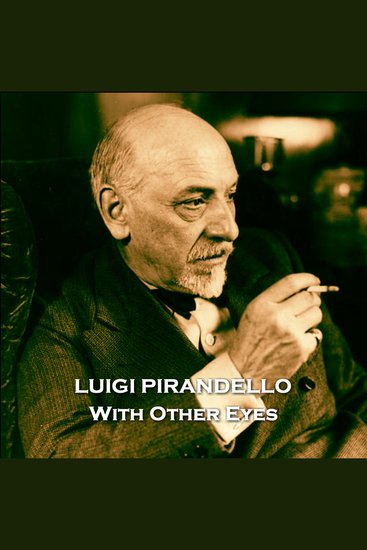
  • With Other Eyes - From their pens to your ears genius in every story - cover

    With Other Eyes - From their...

    Luigi Pirandello

    • 0
    • 0
    • 0
    Luigi Pirandello was born on 28th June 1867 into an upper-class family in Agrigento, in Sicily. 
    In 1880, the family moved to Palermo and there he completed high school and thence to the University of Palermo, at that time the centre of what became the Fasci Siciliani movement.  Although not an active member he had close friendships with many of its leading ideologists.  Pirandello then completed his university studies in Rome and Bonn, receiving his Doctorate in March, 1891. 
    His time in Rome had provided him with the opportunity to visit its many theatres. "Oh the dramatic theatre! I will conquer it. I cannot enter into one without experiencing a strange sensation, an excitement of the blood through all my veins..." 
    1894 brought marriage, at his father's suggestion, to a shy, withdrawn girl: Mara Antonietta Portulano.  The marriage encouraged his studies and writings and, the following year, the first part of the ‘Dialoghi tra Il Gran Me e Il Piccolo Me’ was published. 
    In 1903 the flooding of the sulphur mines in which his father had invested the family capital and Antonietta's dowry, brought financial catastrophe.  She, on hearing the news, was mentally broken.  Pirandello would now work a full day and then watch over his troubled wife at night. Somehow he found time to write ‘The Late Mattia Pascal’.  It was an immediate and resounding success.  
    In 1909, Pirandello began his collaboration with the prestigious Corriere della Sera.  Whilst his fame as a writer was increasing his private life was poisoned by the suspicion and jealousy of Antonietta who now turned physically violent.  His plays were now being regularly performed but, within a decade, Antonietta had to be placed into an asylum from which she never left. 
    In 1921, in Rome his play, ‘Six Characters in Search of an Author’ debuted.  It was a failure.  However, when presented in Milan it was a great success, as it also was in London and New York. 
    In 1925, Pirandello, with Mussolini’s help, assumed the artistic direction and ownership of the Teatro d'Arte di Roma.  He now described himself both as ‘a Fascist because I am Italian’ and ‘I'm apolitical, I'm only a man in the world...’  However his later conflicts with fascist leaders meant he fell under close surveillance by the OVRA, the secret police. 
    In 1934 he won the Nobel Prize but asked that the medal be melted down for Italy’s occupation of Abyssinia Campaign to which he had given his support.  
    Pirandello's canon stretches across novels, short stories, poetry, essays and some 40 plays.  His tragic farces are often cited as forerunners of the Theatre of the Absurd. 
    Luigi Pirandello died on the 10th December 1936 at his home at Via Bosio, Rome, Italy.  He was 69.
    Ver libro
  • Chinese Nightingale and Other Poems - cover

    Chinese Nightingale and Other Poems

    Vachel Lindsay

    • 0
    • 0
    • 0
    This is a collection of poems on various topics by Vachel Lindsay.Please note that the Booker T. Washington trilogy had to be omitted from this collection. - Summary by Carolin
    Ver libro
  • The Door in the Wall and Other Stories - Discover visionary Science Fiction & Fantasy in this classic collection From apocalyptic rogue stars to enchanting utopias experience H G Wells's most haunting and imaginative short stories - cover

    The Door in the Wall and Other...

    H. G. Wells

    • 0
    • 0
    • 0
    What if the greatest discovery of your life was hidden behind a simple green door you could never find again? 
    In The Door in the Wall, and Other Stories, reality is a fragile tapestry waiting to be unraveled. In the titular tale, a prominent politician is haunted by the childhood memory of a mystical garden, forcing him to choose between worldly success and the pursuit of an elusive utopia. But the journey doesn't end there. Brace yourself for cataclysmic extinction in 'The Star' as a rogue planetary body races toward Earth, boiling oceans and shattering continents. Witness the psychological torment of a man living a continuous future life torn apart by a horrific, advanced war in 'A Dream of Armageddon,' and feel the suffocating industrial dread as a jealous ironmaster seeks fiery vengeance in 'The Cone.' 
    Why you will love this: Fans of classic Science Fiction & Fantasy will be utterly captivated by this eclectic anthology. Masterfully blending psychological thriller elements, dystopian themes, and cosmic disaster tropes, H. G. Wells pioneers the foundational ideas of early speculative fiction, dark fantasy, and hard sci-fi. Whether you are craving a sweeping apocalyptic narrative, time-bending dreamscapes, or supernatural mystery, these stories deliver unmatched atmospheric tension and profound philosophical stakes. 
    About the Author: H. G. Wells (1866–1946) is universally celebrated as one of the founding fathers of science fiction. His visionary intellect and gripping storytelling anticipated space travel, apocalyptic warfare, and the complex psychological struggles of modern humanity, leaving an indelible mark on global literature.
    Ver libro