Unisciti a noi in un viaggio nel mondo dei libri!
Aggiungi questo libro allo scaffale
Grey
Scrivi un nuovo commento Default profile 50px
Grey
Iscriviti per leggere l'intero libro o leggi le prime pagine gratuitamente!
All characters reduced
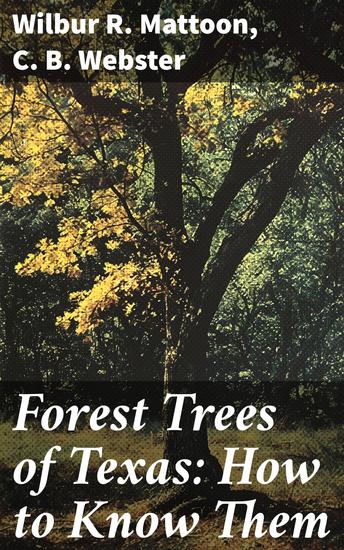
Forest Trees of Texas: How to Know Them - Exploring Texas' Arboreal Wonders and Conservation Efforts - cover

Forest Trees of Texas: How to Know Them - Exploring Texas' Arboreal Wonders and Conservation Efforts

Wilbur R. Mattoon, C. B. Webster

Casa editrice: Good Press

  • 0
  • 0
  • 0

Sinossi

Forest Trees of Texas: How to Know Them is a meticulously curated anthology that encapsulates the richness and diversity of the Lone Star State's arboreal heritage. Through a blend of encyclopedic precision and poetic imagery, the collection explores the multifaceted significance of Texas' forest trees. The anthology not only identifies and categorizes a plethora of tree species but also imbues each description with a literary craftsmanship that both informs and mesmerizes. The standout pieces in the collection illuminate the complex interplay between nature and culture, mapped against the backdrop of Texas' evolving landscapes. The contributors, Wilbur R. Mattoon and C. B. Webster, bring a wealth of expertise and passion to this volume. Mattoon's deep-rooted understanding of forestry and Webster's adept literary expression merge seamlessly, offering readers insight into the ecological and historical contexts of Texas' forests. This anthology aligns with broader movements in environmental literature, where heightened awareness of conservation and ecological significance is paramount. The authors' diverse backgrounds channel a collective voice that speaks to the urgency of preserving natural landscapes while celebrating the unique heritage of Texan woodland biodiversity. Forest Trees of Texas: How to Know Them provides readers with an unparalleled opportunity to traverse the state'Äôs vast and varied forested environments. Beyond its academic value, the anthology invites exploration of the intricate designs and stories embedded in the state's natural world, appealing to scholars, naturalists, and literary enthusiasts alike. This collection fosters an engaging dialogue amongst the works included, creating a tapestry of ecological and cultural narratives that enhance our understanding of nature's complex beauty. Its contribution to the ecological literary canon makes it a must-read for anyone eager to experience the profound relationship between people and forests.
Disponibile da: 29/10/2023.
Lunghezza di stampa: 166 pagine.

Altri libri che potrebbero interessarti

  • The Impact of Technology on Society - Opportunities and Challenges - cover

    The Impact of Technology on...

    Craig Dames

    • 0
    • 0
    • 0
    Technology has been a driving force behind human progress, shaping societies and transforming the way people live, work, and communicate. From the earliest tools created by prehistoric humans to the advanced artificial intelligence of today, technological advancements have continuously redefined the boundaries of possibility. Understanding this evolution provides insight into how innovations have shaped civilization and what the future may hold. 
    The historical development of technology dates back to the invention of simple tools made from stone, wood, and metal. Early human civilizations relied on these tools for survival, gradually advancing to more sophisticated techniques in agriculture, construction, and warfare. The discovery of fire, the wheel, and the development of writing systems marked significant milestones that laid the foundation for future progress. The Industrial Revolution of the 18th and 19th centuries ushered in a period of rapid technological growth, introducing mechanized production, steam power, and transportation systems that reshaped economies and societies. 
    Key innovations have played a crucial role in shaping modern civilization. The invention of electricity revolutionized industries and led to the creation of household appliances, lighting, and communication systems. The 20th century saw remarkable advancements, including the telephone, radio, television, and, eventually, computers. These inventions not only improved the quality of life but also connected people across vast distances, fostering global communication and collaboration. The internet, developed in the late 20th century, became one of the most transformative innovations, changing the way individuals access information, conduct business, and interact socially.
    Mostra libro
  • Social and Cultural Dynamics - The People Who Make the City (3 in 1) - cover

    Social and Cultural Dynamics -...

    Lyric Vale

    • 0
    • 0
    • 0
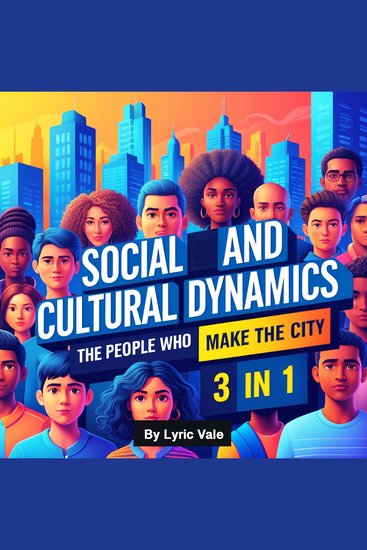
    Cities are living, breathing organisms composed not of concrete and steel, but of human stories, interactions, relationships, and collective dreams. Beyond their physical infrastructure, urban environments are complex social ecosystems where diverse human experiences intersect, collide, and transform—creating a dynamic tapestry of cultural expression, social negotiation, and collective identity. This comprehensive exploration delves into the intricate social and cultural landscapes that breathe life into urban spaces, examining how human connections, cultural practices, and sociological patterns shape the very essence of metropolitan experience. 
    The narrative of urban social dynamics is a profound journey through the human experience of collective living, where individual stories weave together to create the rich, complex fabric of city life. By exploring the social structures, cultural interactions, and sociological mechanisms that define urban environments, this book uncovers the nuanced ways in which people create meaning, build communities, and negotiate identities within the dense, diverse landscapes of modern cities. Readers will traverse the intricate terrain of urban sociology, discovering how social networks, cultural practices, economic dynamics, and human relationships transform physical spaces into living, evolving communities—revealing cities not as static geographical locations, but as dynamic, ever-changing repositories of human potential, conflict, creativity, and collective aspiration.
    Mostra libro
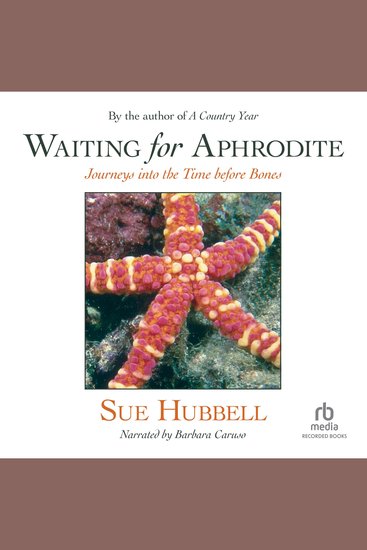
  • Waiting for Aphrodite - Journeys into the Time before Bones - cover

    Waiting for Aphrodite - Journeys...

    Sue Hubbell

    • 0
    • 0
    • 0
    "We humans are a minority of giants, stumbling around in the world of little things," Sue Hubbell writes in this marvelous book. Each of these little things "has a complicated and special way of getting on in the world, different from ours and different from one another's." 
      
    In Waiting for Aphrodite she explores the ways of sponges and sea urchins, horseshoe crabs and the sea mouse known as Aphrodite—as well as our ways. She takes us on a journey through the mysteries of time—geological, biological, and personal—as she writes of the evolution of life on this planet and the evolution of her own life: her childhood next to a Michigan graveyard; the three colleges where she "learned three things"; her twenty-five years keeping bees on a farm in the Ozarks; her move to a "strange little house" in a small Maine town, "the place I wanted to grow old in." And in the tide pools and ocean waters there she discovered a whole new world, the world of little things that inspired this book. 
      
    "In her new book, Hubbell becomes a Shakespeare of advocacy for some of the more ignored denizens of our complicated planet."—Newsday
    Mostra libro
  • A Pocket Guide to Pigeon Watching - Getting to Know the World's Most Misunderstood Bird - cover

    A Pocket Guide to Pigeon...

    Rosemary Mosco

    • 0
    • 0
    • 0
    Part field guide, part history, part ornithology primer, and altogether fun. 


    Fact: Pigeons are amazing, and until recently, humans adored them. We've kept them as pets, held pigeon beauty contests, raced them, used them to carry messages over battlefields, harvested their poop to fertilize our crops—and cooked them in gourmet dishes. Now, with A Pocket Guide to Pigeon Watching, listeners can rediscover the wonder. Equal parts field guide and quirky history, it covers behavior: Why they coo; how they flock; how they preen, kiss, and mate (monogamously); and how they raise their young (on chunky pigeon milk). Anatomy and identification, from Birmingham Roller to the American Giant Runt to the Scandaroon. Birder issues, like what to do if you find a baby pigeon stranded in the park. And our lively shared story together, including all the things we've taught them—Ping-Pong, for example. "Rats with wings?" Think again. 


    Pigeons coo, peck and nest all over the world, yet most of us treat them with indifference or disdain. So Rosemary Mosco, a bird-lover, science communicator, writer, and cartoonist, is here to give the pigeon's image a makeover, and to help every town- and city-dweller get closer to nature by discovering the joys of birding through pigeon-watching.
    Mostra libro
  • Alone in Wonderland - cover

    Alone in Wonderland

    Christine Reed

    • 0
    • 0
    • 0
    Winner of the Indie National Excellence Award for Nonfiction Category. 


    Christine discovered long distance backpacking while surfing the internet at work. She decided that day to attempt to thru-hike the Appalachian Trail. One adventure led to another and a few years later she set out on the Wonderland Trail in Mt Rainier National Park. 


    Her Rugged Outdoors Woman persona started as a joke, a nod to the outdoor adventurer that she wished to be. But in the years since, she has come into her own as a backpacker, rock climber, and trail runner. This book is a testament to the decision to name who you want to be and make it so.
    Mostra libro
  • Agriculture - Innovative Techniques for Sustainable Food Production and Resource Management - cover

    Agriculture - Innovative...

    Jeron Iris

    • 0
    • 0
    • 0
    Agriculture stands at the heart of human civilization, sustaining populations, economies, and ecosystems around the globe. As the primary source of food and materials for countless industries, agriculture is fundamental to our daily lives. Yet, as demand for food and resources grows, traditional farming practices have come under scrutiny for their impact on land, water, and ecosystems. This situation has sparked a profound exploration into how agriculture can evolve to meet future needs without compromising environmental health or resource availability. 
    In response to these challenges, sustainable agriculture has emerged as a guiding framework. Rather than depleting resources, sustainable agriculture seeks to work in harmony with nature, fostering productive systems that can endure and even improve over time. Key principles include conserving soil health, managing water resources responsibly, reducing reliance on chemical inputs, and promoting biodiversity. Sustainable agriculture not only aims to enhance the resilience of farming systems but also to address some of the long-standing issues in conventional agriculture, from soil degradation to pest resistance. 
    Advancements in technology and innovative farming practices play an essential role in this shift. Techniques such as precision farming, vertical agriculture, and renewable energy integration are now helping farmers produce more with less environmental impact. By adopting these methods, we can begin to build a resilient food system capable of withstanding fluctuations in demand and environmental pressures.
    Mostra libro