Unisciti a noi in un viaggio nel mondo dei libri!
Aggiungi questo libro allo scaffale
Grey
Scrivi un nuovo commento Default profile 50px
Grey
Iscriviti per leggere l'intero libro o leggi le prime pagine gratuitamente!
All characters reduced
The Legend of Sleepy Hollow - cover

The Legend of Sleepy Hollow

Washington Irving, Pocket Classic

Casa editrice: Pocket Classic

  • 0
  • 0
  • 0

Sinossi

"The Legend of Sleepy Hollow" represents Washington Irving's second comic masterpiece, a ghostly tale about things that go bump in the night. The specter in question here is the mysterious Headless Horseman, said to be a Hessian trooper who lost his head in a nearby battle. Each night he roams the countryside in search of it. The unlikely hero in this tale is Ichabod Crane, an itinerant schoolmaster, whose name suits him perfectly...
Written while Irving was living abroad in Birmingham, England, "The Legend of Sleepy Hollow" was first published in 1819.
Disponibile da: 31/08/2022.
Lunghezza di stampa: 92 pagine.
Altri libri che potrebbero interessarti

  • Mother - cover

    Mother

    Owen Wister

    • 0
    • 0
    • 0
    Owen Wister (July 14, 1860 - July 21, 1938) was an American writer and historian, considered the "father" of western fiction. He is best remembered for writing a biography of Ulysses S. Grant and the novel The Virginian, in which Wister created the archetypal cowboy.
    Mostra libro
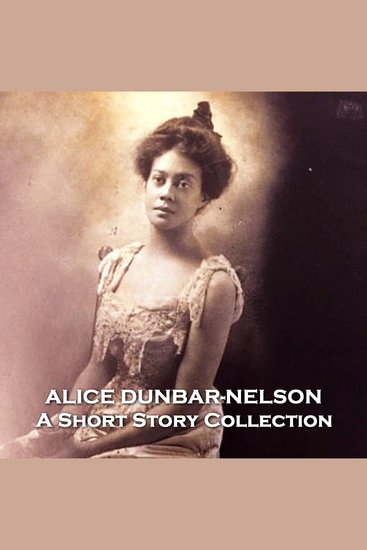
  • Alice Dunbar Nelson - A Short Story Collection - Pioneering African American woman who helped usher in the Harlem Renaissance - cover

    Alice Dunbar Nelson - A Short...

    Alice Dunbar-Nelson

    • 0
    • 0
    • 0
    Alice Ruth Moore was born on 19th July 1875 in New Orleans where she was part of the multi-racial Creole community.  She was the first generation seemingly born free after the Civil War and unusually for the times, obtained a university education which led to her becoming a teacher at a public school in New Orleans.   
    In 1895, when she was 20, she published her first collection of short stories and poems, ‘Violets and Other Tales’, and moved to New York City where she co-founded and taught at the White Rose Mission, a Home for Girls.   
    Alice was always politically active and sought to advance the position of black women.  She began work as a journalist at the Woman’s Era newspaper where her work was seen by the established poet and journalist Paul Laurence Dunbar.  After corresponding for two years she joined him in Washington DC and they married in 1898.   
    It was a difficult relationship, due mainly to Dunbar’s fragile health, alcoholism and depression.  After a severe beating she left him and moved to Delaware to teach for a decade though took time out to enroll at Cornell University. 
    A short-lived marriage to Henry A. Callis, a physician and professor at Howard University ended in divorce and she became co-editor and writer for an influential publication of the African Methodist Episcopal Church.  A third marriage to civil rights activist Robert J. Nelson came about, as did affairs with several women, notably the activist Fay Jackie Robinson.   
    In Wilmington Delaware she and her husband devoted their time and writings to working for equality for African Americans and women’s suffrage.   
    Alice Dunbar Nelson was a natural and gifted writer across many genres, from novels, essays, plays to diaries, criticism, poetry and of course short stories, of which ‘Stones in the Village’ is a fine example.  The protagonist, like herself, is light skinned from New Orleans, which allows for a social mobility and a unique position in American society that Dunbar Nelson captures with an imagination and insight to explores another divisive perspective on race.  It is unsurprising that Alice was a prominent part of the early Harlem Renaissance and influenced many others including Langston Hughes and Countee Cullen. 
    Alice and her husband moved to Philadelphia in 1932 and it was here that she died on 18th September 1935, at the age of 60, from a heart ailment.
    Mostra libro
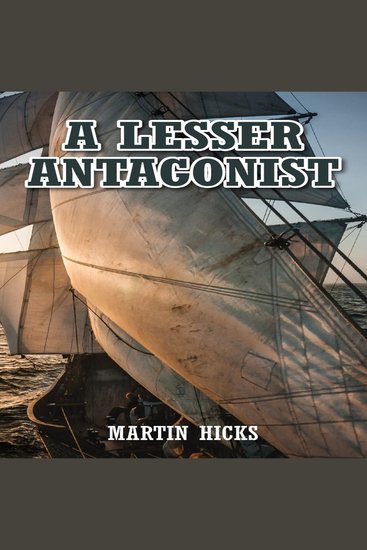
  • A Lesser Antagonist - cover

    A Lesser Antagonist

    Martin Hicks

    • 0
    • 0
    • 0
    It is the late autumn of 1854 and the steam gunboat Spartan, commanded by James Rutherford has returned to duty following the repair of her battle damage in Calcutta. 
    Another, though less powerful, Russian commerce raider is still at large in the China Sea, though as events follow their course, Rutherford is forced to confront the fact that this lesser antagonist might be a more potent adversary than he previously believed.
    Mostra libro
  • The Short Stories of Jack London - Turn of the century social activist and heralded American author - cover

    The Short Stories of Jack London...

    Jack London

    • 0
    • 0
    • 0
    John Griffith Chaney was born on January 12th, 1876 in San Francisco.   
     
    His father, William Chaney, was living with Flora Wellman when she became pregnant.  Chaney insisted she have an abortion.  Flora's response was to turn a gun on herself.  Although her wounds were not severe the trauma made her temporarily deranged. 
     
    In late 1876 his mother married John London and the young child was brought to live with them as they moved around the Bay area, eventually settling in Oakland where now, calling himself Jack, he completed grade school. 
     
    Jack worked hard at several jobs, sometimes 12-18 hours a day, but his dream was university.  He studied hard and borrowed the money to enrol in the summer of 1896 at the University of California in Berkeley. 
     
    In 1897, at 21, Jack searched out newspaper accounts of his mother's suicide attempt and for the name of his biological father. He wrote to Chaney, then living in Chicago, who claimed he could not be Jack’s father because he was impotent and casually asserted that London's mother had relations with other men.  Jack, devastated by the response, quit Berkeley and went to the Klondike. Other accounts suggest that his dire finances presented Jack with the excuse he needed to leave. 
     
    In the Klondike Jack began to gather material for his writing but also accumulated many health problems, including scurvy, which together with hip and leg problems he would carry for the rest of his life. 
     
    During the late 1890's Jack was regularly publishing short stories and by the turn of the century full blown novels. 
     
    By 1904 Jack had married, fathered two children and was now in the process of divorcing.  A stint as a reporter on the Russo-Japanese war of 1904 was equal amounts trouble and experience. But that experience was always put to good use in a continuing and remarkable output of work. 
     
    In 1905 he married Charmian Kittredge who at last was a soul and companion who brought him some semblance of peace despite his advancing alcoholism and his incurable wanderlust. 
     
    Twelve years later Jack had amassed both wealth and a literary reputation through such classics as ‘The Call of the Wild’, ‘White Fang’ and many others. He had a reputation as a social activist and was a tireless friend of the workers.   
     
    Jack London died suffering from dysentery, late-stage alcoholism and uremia, aged only 40, on November 22nd 1916 at his property in Glen Elen in California. 
    01 - Jack London - A Short Story Collection - An Introduction 
    02 - To Build a Fire by Jack London 
    03 - A Wicked Woman by Jack London 
    04 - The Unparallelled Invasion by Jack London 
    05 - A Thousand Deaths by Jack London
    Mostra libro
  • The Damned Thing - cover

    The Damned Thing

    Ambrose Bierce

    • 0
    • 0
    • 0
    Title: The Damned Thing 
    Author: Ambrose Bierce 
    Narrator: Jonathan Dunne 
    Original Publication: 1893 
    Public Domain: Yes 
    Series Placement: Number 10 in the Timeless Terrors series 
    Description: 
    The Damned Thing by Ambrose Bierce is a chilling tale of the unseen and the unknown. First published in 1893 in Tales from New York Town Topics, it presents the strange account of a man’s violent death and the mysterious force believed to be responsible. 
    Told through a coroner’s inquest, the story unfolds in stark fragments—testimony, diary entries, and grim observation—revealing hints of an invisible creature that moves through the natural world, stalking its prey. Bierce masterfully blends psychological dread with cosmic horror, leaving readers to confront the terrifying possibility of forces beyond human perception. 
    This recording, narrated by Amazon bestselling horror author Jonathan Dunne, captures the eerie tension and stark fatalism that defines Bierce’s writing. While the text is in the public domain, this performance is an original work and copyright © 2025 Jonathan Dunne. 
    Listeners should be prepared for a haunting meditation on mortality, fear, and the unseen horrors that may lurk just beyond the reach of human senses.
    Mostra libro
  • Spanking the Women's Group 2 - Jack spanks the vicar’s wife and falls in love with Mary - cover

    Spanking the Women's Group 2 -...

    Paul Amann

    • 0
    • 0
    • 0
    Jack Pilton is now a firm favourite in the Woman’s Group in the small village of Little Trumpington in Cornwall. When the vicar’s wife joins the group she is surprised that there is a man in the group because she knows there are spankings for the losers of the card games they play. It turns out that she loves to be spanked by Jack, and she drags him off to the vestry on Sunday after church, demanding another spanking. Jack and Mary declare their love for each other and Mary’s husband is happy and moves to his flat in London. Mary and Jack go into the country to have some spanking fun in the woods and are discovered by Terry’s mother who wants to have some fun as well.
    Mostra libro