Unisciti a noi in un viaggio nel mondo dei libri!
Aggiungi questo libro allo scaffale
Grey
Scrivi un nuovo commento Default profile 50px
Grey
Iscriviti per leggere l'intero libro o leggi le prime pagine gratuitamente!
All characters reduced
Voltaire's Philosophical Dictionary - Enriched edition - cover

Voltaire's Philosophical Dictionary - Enriched edition

Voltaire

Casa editrice: DigiCat

  • 0
  • 0
  • 0

Sinossi

In "Voltaire's Philosophical Dictionary," the esteemed Enlightenment thinker critiques and examines a range of philosophical topics, from religion and morality to science and government. Employing a distinct literary style characterized by wit, irony, and eloquent prose, Voltaire's work serves as both a compendium of Enlightenment thought and a caustic commentary on societal norms. Each entry is infused with his trademark skepticism, encouraging readers to question established doctrines and consider alternative perspectives, ensuring that the text resonates within the broader context of 18th-century intellectual discourse. Voltaire, born François-Marie Arouet, was a prolific writer, historian, and philosopher whose life experiences—marked by censorship, exile, and advocacy for civil liberties—shaped his critical perspective. His encounters with religious dogma and abuses of power fueled his desire to promote reason and tolerance. "Philosophical Dictionary" reflects his commitment to intellectual freedom and the examination of life's profound questions, reinforcing the values of the Age of Enlightenment and underscoring the importance of critical inquiry. This book is an essential read for anyone seeking to engage deeply with the philosophical questions that define humanity. Voltaire's sharp insights and articulate arguments invite readers to reflect on their own beliefs and the world around them, making it a timeless resource for philosophy enthusiasts and students alike.

In this enriched edition, we have carefully created added value for your reading experience:
- A comprehensive Introduction outlines these selected works' unifying features, themes, or stylistic evolutions.
- The Author Biography highlights personal milestones and literary influences that shape the entire body of writing.
- A Historical Context section situates the works in their broader era—social currents, cultural trends, and key events that underpin their creation.
- A concise Synopsis (Selection) offers an accessible overview of the included texts, helping readers navigate plotlines and main ideas without revealing critical twists.
- A unified Analysis examines recurring motifs and stylistic hallmarks across the collection, tying the stories together while spotlighting the different work's strengths.
- Reflection questions inspire deeper contemplation of the author's overarching message, inviting readers to draw connections among different texts and relate them to modern contexts.
- Lastly, our hand‐picked Memorable Quotes distill pivotal lines and turning points, serving as touchstones for the collection's central themes.
Disponibile da: 04/09/2022.
Lunghezza di stampa: 284 pagine.

Altri libri che potrebbero interessarti

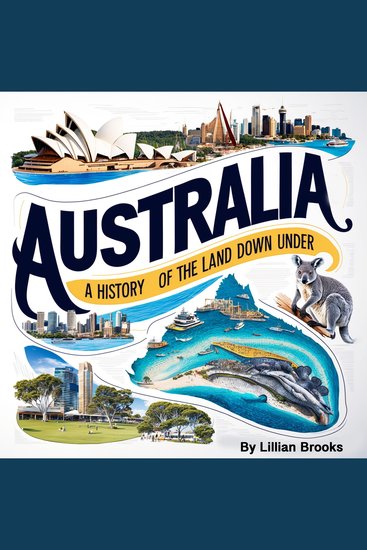
  • Australia - A History of the Land Down Under - cover

    Australia - A History of the...

    Lillian Brooks

    • 0
    • 0
    • 0
    Australia is a land of remarkable geological history, shaped over millions of years by natural forces. Its distinctive landscapes, vast deserts, tropical rainforests, and rugged mountain ranges offer a glimpse into the ancient past of the continent. The story of Australia's land begins long before human habitation, when it was part of the supercontinent Gondwana. 
    Approximately 300 million years ago, Gondwana began to break apart, and Australia, once connected to Antarctica, began its slow drift northward. Over millions of years, Australia became isolated, allowing unique plants and animals to evolve in this distant, isolated environment. This geological isolation contributed to the development of Australia’s unique biodiversity, with species found nowhere else on Earth. The landscape was sculpted by forces such as tectonic shifts, volcanic activity, and erosion, leading to the creation of natural wonders like the Great Barrier Reef, the outback, and the Blue Mountains. 
    When the first humans arrived on the continent, around 65,000 years ago, Australia’s land was already a place of immense natural beauty and complexity. The Aboriginal peoples, the continent’s first inhabitants, established deep and enduring connections to the land. For Indigenous Australians, the land is not just a physical space but a living, spiritual entity that is central to their cultural identity. This profound connection is expressed through stories, rituals, and a deep understanding of the natural world.
    Mostra libro
  • Do not accept to die - cover

    Do not accept to die

    Sissi Dimitrie Mukanyiligira

    • 0
    • 0
    • 0
    In April 1994, Dimitrie Sissi Mukanyiligira, a 22 year old joyful, and happy young woman, eager to graduate from high school, marry the love of her life and leave Rwanda to start an exciting chapter of life elsewhere after a very painful childhood, saw her dreams crashed when the genocide against the Tutsi broke out, halting every hope and ambition except for just one small firm voice that called her severally "Do Not Accept To Die"
    Mostra libro
  • Religious Equality Refuted - cover

    Religious Equality Refuted

    Gregory Heary

    • 0
    • 0
    • 0
    Feeling overwhelmed by the multitude of religious doctrines and societal values? Discover how true humility and understanding can lead you to spiritual clarity.As society increasingly worships the material—money, fame, and power—many find themselves estranged from true spiritual fulfillment. This book challenges the superficial allure of these false idols, advocating for a life centered around spiritual truths and divine teachings. It provokes thought on the essence of true religion, critiquing the common dismissal of religious beliefs as outdated or false. This book refutes the concept of Religious Equality from many aspects. For the agnostic or secular or irreligious or anti-religious this book proves how everyone is upon a religious faith even if they don't know it and that it is impossible to not have a religion. Also the importance of choosing a religion is established as the most important decision one can make and the concept that all religions are equal is a extremist false faith.This masterpiece offers a deep dive into the essence of true religion, providing clarity and guidance. It is a must-read for anyone seeking to understand the true path to spiritual enlightenment.
    Mostra libro
  • Raj Jogi Sant Attar Singh Ji (Mastuana Sahib) - Raj Jogi Sant Attar Singh Ji Di Jeevani - cover

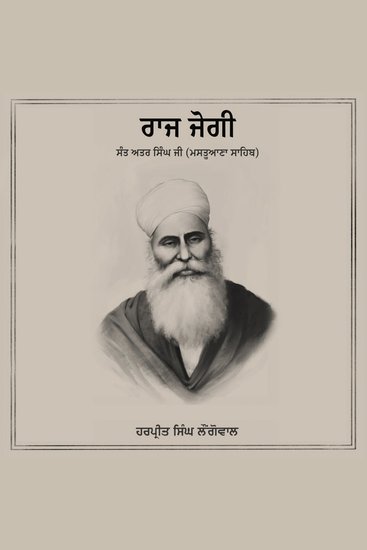
    Raj Jogi Sant Attar Singh Ji...

    Harpreet Singh Longowal

    • 0
    • 0
    • 0
    Book: Raj Jogi Sant Attar Singh Ji (Mastuana Sahib) 
    Author: Harpreet Singh Longowal 
    To understand a great personality, one way is to see how their efforts shaped the world around them. In the 20th century, Sant Attar Singh Ji of Mastuana Sahib was such an inspiring figure. He devoted his entire life to spreading the teachings of Sikhism (Gurmat).Sant Ji not only revived Sikh traditions but also actively contributed to the progress of the Sikh community. His work and contributions are immeasurable.This book shares short stories about Sant Ji’s life and work, written in a way that readers can learn something valuable from each story.
    Mostra libro
  • The Crucible of Desegregation - The Uncertain Search for Educational Equality - cover

    The Crucible of Desegregation -...

    R. Shep Melnick

    • 0
    • 0
    • 0
    Examines the patchwork evolution of school desegregation policy. 
     
    In 1954, the Supreme Court delivered the landmark decision of Brown v. Board of Education—establishing the right to attend a desegregated school as a national constitutional right—but the decision contained fundamental ambiguities. The Supreme Court has never offered a clear definition of what desegregation means or laid out a framework for evaluating competing interpretations. In The Crucible of Desegregation, R. Shep Melnick examines the evolution of federal school desegregation policy from 1954 through the termination of desegregation orders in the first decades of the twenty-first century, combining legal analysis with a focus on institutional relations, particularly the interactions between federal judges and administrators. Melnick argues that years of ambiguous, inconsistent, and meandering Court decisions left lower court judges adrift, forced to apply contradictory Supreme Court precedents in a wide variety of highly charged political and educational contexts. As a result, desegregation policy has been a patchwork, with lower court judges playing a crucial role and with little opportunity to analyze what worked and what didn’t. The Crucible of Desegregation reveals persistent patterns and disagreements that continue to roil education policy.
    Mostra libro
  • The Alpha Playbook - Raising the Pioneers of Tomorrow - cover

    The Alpha Playbook - Raising the...

    Valerie Vogue

    • 0
    • 0
    • 0
    The traditional view of leadership has often focused on authority and power, but in the modern world, leadership is about influence, empathy, and vision. It’s about guiding others through uncertainty and inspiring change through action. The leaders we need are those who can adapt to new circumstances, challenge the status quo, and unite others in pursuit of a common goal. To nurture these qualities in young people, we must first understand what leadership truly entails in today’s world. 
    Parents and mentors are the primary sources of influence for the next generation. They hold the responsibility of laying the foundation for young minds to grow into strong, confident, and ethical leaders. While natural talent and charisma certainly play a role in leadership, the development of leadership qualities is largely a result of intentional guidance and opportunities for growth. From a young age, children must be exposed to values such as integrity, responsibility, and empathy, which are at the heart of effective leadership. 
    Leadership is not something that can be taught in a classroom alone; it is cultivated through experiences, challenges, and real-world application. Encouraging children to take initiative, make decisions, and face obstacles head-on provides them with the tools they need to become self-assured leaders. It’s also essential that they learn how to inspire and uplift those around them, as true leadership is about empowering others to succeed.
    Mostra libro