Unisciti a noi in un viaggio nel mondo dei libri!
Aggiungi questo libro allo scaffale
Grey
Scrivi un nuovo commento Default profile 50px
Grey
Iscriviti per leggere l'intero libro o leggi le prime pagine gratuitamente!
All characters reduced
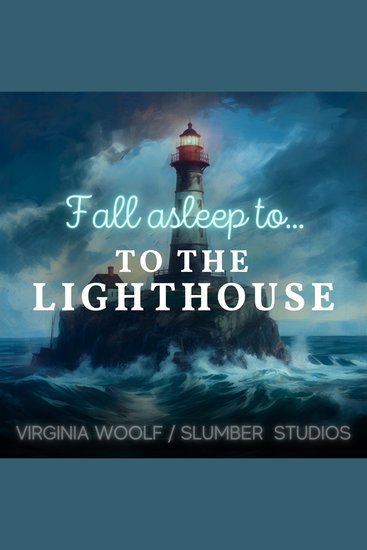
To the Lighthouse - cover

To the Lighthouse

Virginia Woolf, Pocket Classic

Casa editrice: Pocket Classic

  • 0
  • 0
  • 0

Sinossi

To the Lighthouse is a 1927 novel by Virginia Woolf. The novel centres on the Ramsay family and their visits to the Isle of Skye in Scotland between 1910 and 1920. In 1998, the Modern Library named To the Lighthouse No. 15 on its list of the 100 best English-language novels of the 20th century. In 2005, the novel was chosen by TIME magazine as one of the one hundred best English-language novels since 1923.
Disponibile da: 01/01/2023.
Lunghezza di stampa: 200 pagine.
Altri libri che potrebbero interessarti

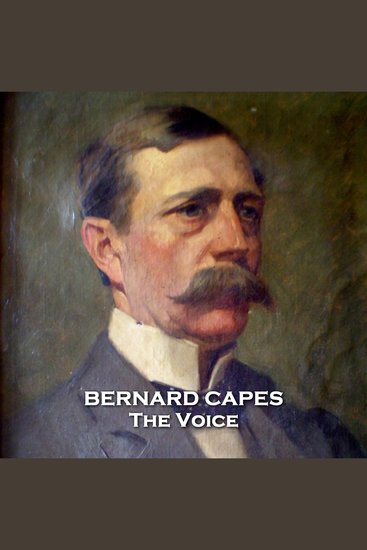
  • The Voice - From their pens to your ears genius in every story - cover

    The Voice - From their pens to...

    Bernard Capes

    • 0
    • 0
    • 0
    Bernard Edward Joseph Capes was born on the 30th August 1854 in London.  He was one of 11 children. 
    His early work was as a journalist and this developed into writing many short stories for the periodicals of the time including Blackwood's, Cassell's, Cornhill Magazine, Illustrated London News, Macmillan's Magazine, Mall Magazine, Pearson's Magazine, The Idler, and The Queen. 
    It took him many years to decide that writing full-time could be a sustainable career path.  His initial success came with ‘The Mill of Silence’.  As well as being published it garnered second prize at a competition sponsored by the Chicago Record.  He exceeded that by winning it the following year with ‘The Lake of Wine’.   
    Capes quickly became both prolific and popular.  As well as his stories and articles for the periodicals he wrote around 40 volumes across novels, poetry, history as well as romance and mystery novels. 
    Bernard Capes died on 2nd November 1918 in the flu epidemic.
    Mostra libro
  • To the Lighthouse | A Calming Story for Sleep - A soothing reading for relaxation and sleep - cover

    To the Lighthouse | A Calming...

    Virginia Woolf

    • 0
    • 0
    • 0
    Dive into the soothing beauty of "To the Lighthouse" by Virginia Woolf, narrated by the calming voice of Elizabeth Grace and produced by Slumber Studios. 
    Stuggling to relax or fall asleep? Whether you’re dealing with insomnia or an overactive mind, this audiobook is designed to lead you into a deep, restorative sleep. 
    So close your eyes, relax, and let Elizabeth Grace's gentle narration guide you through the evocative world of the Ramsay family. Traverse the emotional landscapes and lyrical prose that Woolf masterfully weaves, from the serene Scottish coast to the profound reflections on time and memory. 
    At Slumber Studios, we specialize in creating relaxing content to help you unwind and drift off to sleep. This audiobook features a slow, soft narration and soothing background music, ensuring a peaceful journey into slumber. 
    If you’re looking for a way to unwind after a long day, you’ve found it. Simply press play, lay down in bed, and let Elizabeth's calming voice transport you into a world of dreams. Wake up feeling refreshed and rejuvenated, ready to embrace the new day.
    Mostra libro
  • The War of the Worlds - An Audiobook Empire Production - cover

    The War of the Worlds - An...

    H. G. Wells

    • 0
    • 0
    • 0
    “This isn’t a war… It never was a war, any more than there’s war between men and ants.” 
    The War of the Worlds is a classic science fiction novel that has been terrifying and enthralling readers for over a century. In this epic audiobook, you will experience the story like never before, as RJ Bayley and Audiobook Empire take you on a journey through the chaos and destruction of an alien invasion. 
    From the moment the Martians land in England, you will be on the edge of your seat. H.G. Wells' vivid descriptions of the Martian war machines and the heat rays they wield are given desperate urgency and authenticity by narrator RJ Bayley (Bayley's Bookshelf Podcast). You'll feel like you're right there, witnessing the invasion firsthand. 
    More than just a thrilling tale of alien invasion, The War of the Worlds is a groundbreaking work of fiction that explores the themes of fear, hope, survival and imperialism. Even now, H.G. Wells' masterpiece has the power to chill, awe and force listeners to confront their own society's impact on others. 
    This is a must-listen audiobook for anyone who loves science fiction, adventure, or wants to experience of the most important novels ever written. So what are you waiting for? Download your copy today!
    Mostra libro
  • The Spike - From their pens to your ears genius in every story - cover

    The Spike - From their pens to...

    George Orwell

    • 0
    • 0
    • 0
    Eric Arthur Blair was born on 25th June 1903 in Motihari, Bihar, in what was then British India. When Eric was one his mother took him to England and they settled at Henley-on-Thames in Oxfordshire.  
    His education was at the nearby convent school before moving on to St Cyprian's School at Eastbourne and finally Eton where his academic studies were sidelined in favour of work on college publications. 
    University could not be achieved without a scholarship, which depended on good grades, and so it was decided that Eric should join the Imperial Police. Now 19 he chose a posting in Burma, then a province of British India. He was appointed an Assistant District Superintendent in November 1922. In Burma, he was an outsider. However, he acquired a moustache and some local tattoos—small badly drawn blue circles on his knuckles. 
    In 1927 he contracted dengue fever and returned to England to convalesce. At home he reappraised his life and resigned his job to become a writer. His police experiences were later used for ‘Burmese Days’.  
    By 1932 he had a literary agent who secured him an offer to publish a non-fiction work ‘Down and Out in London and Paris’ for a £40 advance, through the radical and socialist Victor Gollancz publishing house.  It was published in January 1933 as ‘by George Orwell’, it was modestly successful. 
    ‘Burmese Days’ (1934) and ‘A Clergyman's Daughter’ (1935) were published whilst Orwell kept on with writing ‘Keep the Aspidistra Flying’.  In January 1936, he set out by public transport to research life for the ordinary man and woman in Wigan. From these experiences emerged ‘The Road to Wigan Pier’. He also caught the eye of Special Branch who kept him under surveillance until the year before the release of ‘Nineteen Eighty-Four’. 
    Later in December 1936 Orwell set out to fight in the Spanish Civil War. Initially stationed at Alcubierre 1,500 feet above sea level, in the depth of winter on the Aragon Front. Military action was scant as was the lack of munitions, food and firewood. In April, Orwell returned to Barcelona and was caught up in the Barcelona May Days and its factional in-fighting. Returning to the Aragon Front he was almost immediately hit by a sniper's bullet through the throat. The bullet barely missed the artery but he survived.  His experiences were expressed in ‘Homage to Catalonia’ (1938) but, out of fashion with its times, it was a commercial failure.  
    When World War Two started Orwell was declared ‘unfit for any kind of military service’ but finally obtained ‘war work’ with the BBC's Eastern Service.  In September 1943, after two years Orwell left the BBC to concentrate on a new idea: ‘Animal Farm’.  
    By April 1944 ‘Animal Farm’ was ready for publication. It was a huge and resounding success.   
    Orwell left London for the island of Jura in April 1947 to work on ‘Nineteen Eighty-Four’. Once more health became an issue and in December a chest specialist was summoned from Glasgow who diagnosed tuberculosis.  By the end of July Orwell was able to return to Jura to finish ‘Nineteen Eighty-Four’. It was published the following June to immediate critical and popular acclaim. 
    By Christmas Orwell's health had again begun to decline. Early on the morning of 21st January, an artery burst in Orwell's lungs. It was fatal. He was dead at 46.
    Mostra libro
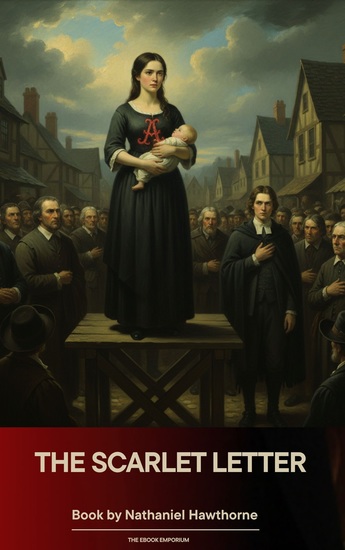
  • The Scarlet Letter - cover

    The Scarlet Letter

    Nathaniel Hawthorne

    • 0
    • 0
    • 0
    "On the breast of her gown, in fine red cloth, surrounded with an elaborate embroidery... appeared the letter A."
    
    When Hester Prynne emerges from a dark prison cell with an illegitimate infant in her arms and a scarlet "A" stitched to her chest, she becomes the living symbol of sin in her community. Yet, as she bears her public shame with quiet dignity, the true villains of the story remain hidden in the shadows. The Scarlet Letter follows the intertwined fates of three people: Hester, who finds strength in her isolation; Arthur Dimmesdale, the revered minister dying under the weight of his secret guilt; and Roger Chillingworth, the vengeful husband whose soul withers as he seeks to destroy them. Hawthorne's "Romance" is a lush, atmospheric journey into a world where the laws of man and the laws of the heart are in a constant, tragic collision.
    
    The letter "A" itself is one of the most famous symbols in literature. Initially intended to represent "Adultery," it evolves throughout the novel to mean "Able," "Angel," and even "Awe," as Hester's character transforms her punishment into a badge of resilience. Even her daughter, Pearl, serves as a "living hieroglyphic" of her mother's passion and pain.
    
    Hawthorne goes beyond a simple morality tale to explore the physical effects of spiritual distress. He vividly depicts Dimmesdale's deteriorating health as his conscience eats away at him, contrasting it with the "black man" of the forest—the symbol of the devilish temptation to abandon one's humanity for the sake of hidden impulses.
    
    The Scarlet Letter was one of the first mass-produced books in America and remains a staple of the literary canon. Its themes of social hypocrisy, the nature of evil, and the possibility of redemption are as relevant today as they were in the mid-19th century. It is a story that proves that while society may brand the body, only the individual can define the soul.
    
    Uncover the secret behind the letter. Purchase "The Scarlet Letter" today.
    Mostra libro
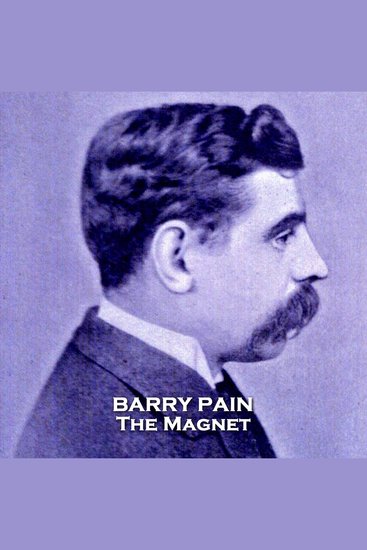
  • The Magnet - From their pens to your ears genius in every story - cover

    The Magnet - From their pens to...

    Barry Pain

    • 0
    • 0
    • 0
    Barry Eric Odell Pain was born at 3 Sydney Street in Cambridge on 28th September 1864. He was one of 4 children. 
    He was educated at Sedbergh School and then Corpus Christi College, Cambridge where he read classics and contributed to and edited Granta. 
    Four years of service as an Army coach followed before he moved to London. In 1889, Cornhill Magazine published his short story ‘The Hundred Gates’.  This opened the way for Pain to advance his literary career on several fronts. He became a contributor to Punch and The Speaker, as well as joining the staff of both the Daily Chronicle and Black and White.  
    In 1897 he succeeded Jerome K Jerome as editor of To-Day but still contributed regularly, until 1928, to the Windsor Magazine. 
    It is often said that Pain was discovered by Robert Louis Stevenson, who compared his work to that of Guy de Maupassant.  It’s an apt comparison. Pain was also a master of disturbing prose but able to inject parody and light comedy into many of his works.  A simple premise could in his hands suddenly expand into a world very real but somehow emotionally fraught and on the very edge of darkness as many of these short stories demonstrate.   
    Despite applying his talents to several genres and forms today Pain is more readily thought of, especially during the first decade of the 20th Century, as perhaps the leading British humorist of his day.  These stories reveal a darker side and beg to differ. 
    Barry Pain died on 5th May 1928 in Bushey, Hertfordshire.
    Mostra libro