Join us on a literary world trip!
Add this book to bookshelf
Grey
Write a new comment Default profile 50px
Grey
Subscribe to read the full book or read the first pages for free!
All characters reduced
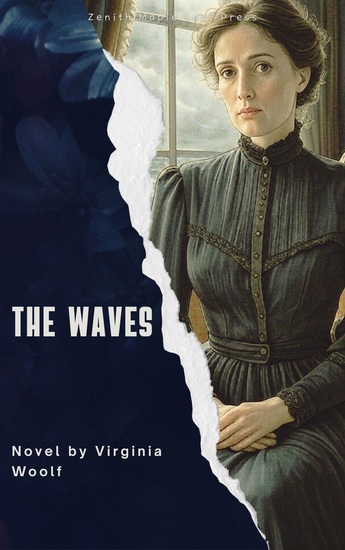
The Waves - cover

The Waves

Virginia Woolf

Publisher: Zenith Maple Leaf Press

  • 0
  • 0
  • 0

Summary

🌊 What if the rhythm of life itself could be captured in words?

Virginia Woolf's The Waves (1931) is her most experimental and poetic novel—a profound meditation on identity, memory, and the passage of time. Told through the soliloquies of six friends from childhood to old age, the book abandons traditional plot in favor of a lyrical tapestry of voices, weaving together the inner lives of its characters into one symphony of thought and emotion.

Through shifting perspectives, Woolf explores the nature of individuality, the bonds of friendship, and the eternal flow of existence. Each character becomes both distinct and interconnected, mirroring the ceaseless rise and fall of waves along the shore.

🌟 Why readers treasure this novel:

Woolf's most ambitious and poetic work, blending fiction and philosophy.

A masterpiece of modernist literature and stream-of-consciousness style.

A timeless reflection on the unity of life, death, and memory.

👉 Click Buy Now and immerse yourself in Woolf's luminous vision of the human soul.
Available since: 08/25/2025.
Print length: 193 pages.

Other books that might interest you

  • Agamemnon - cover

    Agamemnon

    Aeschylus

    • 0
    • 0
    • 0
    "Agamemnon" is the first of the three linked tragedies which make up "The Oresteia" trilogy by the ancient Greek playwright Aeschylus. Trilogy as a whole, originally performed at the annual Dionysia festival in Athens in 458 BCE, where it won first prize, is considered to be Aeschylus' last authenticated, and also his greatest, work.
    "Agamemnon" describes the homecoming of Agamemnon, king of Argos, from the Trojan War, and his return to his wife, Clytemnestra, who had been planning his murder (in concert with her lover, Aegisthus) as revenge for Agamemnon's earlier sacrifice of their daughter, Iphigenia.
    Show book
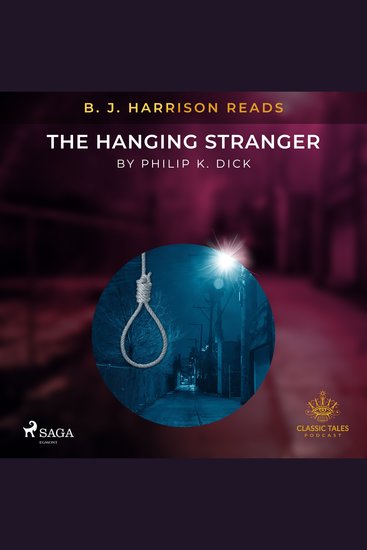
  • B J Harrison Reads The Hanging Stranger - cover

    B J Harrison Reads The Hanging...

    Philip K. Dick

    • 0
    • 0
    • 0
    Ed Loyce is a store owner who is faced with a strange sight: someone is hanging from a lamppost. Furthermore, alien insects have taken over yet no one seems to consider things to be out of the ordinary. Ed goes to the police to sort things out and to find out what is going on, only to be thoroughly surprised. The science fiction short story “The Hanging Stranger” by Philip K. Dick from 1953 was adapted into an episode for the television series "Philip K. Dick’s Electric Dreams". The story is read by the versatile B.J. Harrison. B. J. Harrison started his Classic Tales Podcast back in 2007, wanting to breathe new life into classic stories. He masterfully plays with a wide array of voices and accents and has since then produced over 500 audiobooks. Now in collaboration with SAGA Egmont, his engaging narration of these famous classics is available to readers everywhere.Philip K. Dick (1928-1982) was a prolific and influential American writer who worked in the genre of science fiction. His works carry themes such as alternate realities, authoritarian governments and human nature. Dick won several awards, including a Hugo Award for Best Novel for his novel "The Man in the High Castle" (1962). His works have become part of popular culture, including the cult film "Blade Runner" (1982), which is based on Dick’s novel "Do Androids Dream of Electric Sheep" (1968).
    Show book
  • Best English Tales and Stories - cover

    Best English Tales and Stories

    Charles Perrault, Hans Christian...

    • 0
    • 0
    • 0
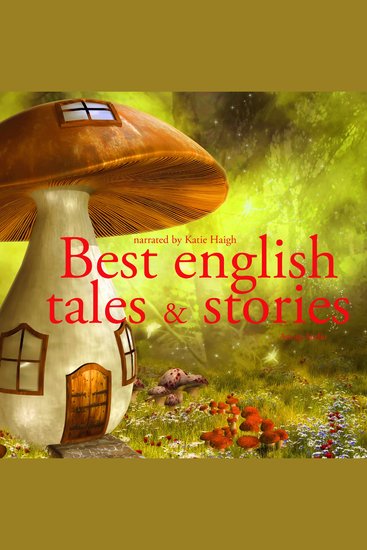
    A good story takes us to a new, fantastic world; the pleasure is all the greater if it keeps us there for long enough.  
    In this carefully curated collection, we have handpicked a range of wondrous tales that have stood the test of time.  
    From the adventures of "Peter Pan" to the classic charm of "Goldilocks and the Three Bears", each story is sure to enchant you.  
    Through the writings of beloved authors such as J.M. Barrie, Robert Southey and Brothers Grimm, this collection will bring joy and wonder to your evenings.
    Show book
  • The Adventures Of Sally - cover

    The Adventures Of Sally

    P. G. Wodehouse

    • 0
    • 0
    • 0
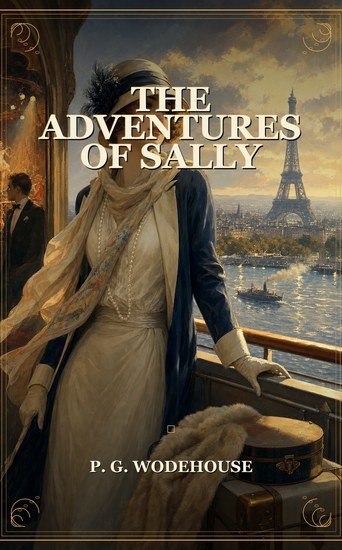
    New Yorker Sally Nicholas turns twenty one, comes into an inheritance, and bids her boardinghouse and ballroom dance life goodbye. She funds her fiancé's new Broadway play when it loses its original backer, and takes a vacation to France where she has a chance encounter with a man named Ginger Kemp. Both her and Ginger's family force her to navigate many unexpected challenges and new adventures, all while trying to maintain her financial independence. Wodehouse wrote and collaborated on numerous Broadway shows during and after World War I. This novel reflects his both Broadway experiences and English origins, combining them with his signature wit and humor into a feel-good love story that spans continents. P. G. Wodehouse (died 1975) was a significant literary figure of the 20th century. Their work has endured across generations and continues to be read and studied worldwide. As a work of classic literary fiction, The Adventures Of Sally exemplifies the narrative craft and social insight that defined great storytelling of its era. Literary fiction of this period was characterized by careful attention to character psychology, social milieu, and the moral questions that animated public discourse.
    Show book
  • The Time Machine - A Timeless Science Fiction Masterpiece: Journey to the Year 802701 to Uncover the Terrifying Secrets of the Eloi and the Subterranean Morlocks - cover

    The Time Machine - A Timeless...

    H. G. Well

    • 0
    • 0
    • 0
    Some secrets are hidden not in the deepest depths of the Earth, but in the farthest reaches of Time itself. 
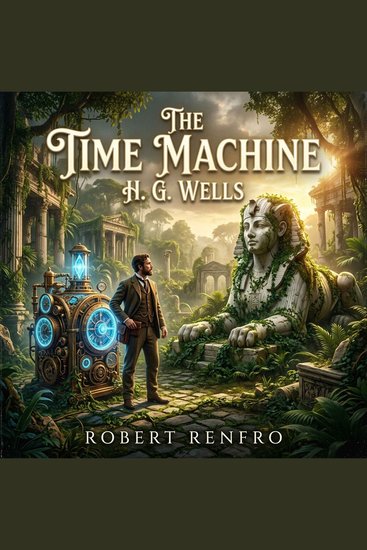
    In this foundational masterpiece of Science Fiction, a brilliant Victorian inventor builds a magnificent machine capable of slipping through the boundaries of the fourth dimension. Hurtling forward to the year 802,701 AD, the Time Traveller discovers a seemingly idyllic paradise populated by the Eloi—a gentle, fairy-like species who spend their days bathing, eating fruit, and playing in the ruins of humanity's grandest achievements. But perfection is an illusion. When his Time Machine is stolen, the Traveller is plunged into a desperate struggle for survival. Beneath the serene, sunlit world lurks a sinister truth, and a horrific subterranean race known as the Morlocks. Stranded millennia from home, he must brave the ultimate darkness to reclaim his path back to the present. 
    Why you will love this: If you are a fan of classic Science Fiction, dystopian futures, and epic time travel adventures, this gripping audiobook will hold you breathless. Woven with rich tropes of far-future world-building, post-apocalyptic societies, and thrilling man-versus-nature survival, it is an essential listen for fans of speculative fiction with profound philosophical stakes. 
    About the Author: H. G. Well is remembered as one of the visionary fathers of the science fiction genre. His unparalleled imagination and prophetic storytelling reshaped modern literature, leaving a legacy of speculative tales that continue to fascinate and thrill readers more than a century later.
    Show book
  • St John's Eve - From their pens to your ears genius in every story - cover

    St John's Eve - From their pens...

    Nikolai Gógol

    • 0
    • 0
    • 0
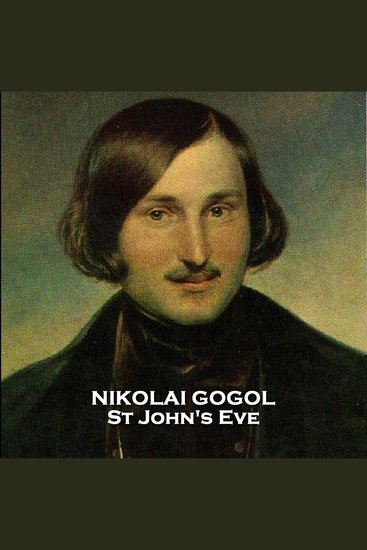
    Nikolai Vasilievich Gogol was born on 1st April 1809 to a father, descended from Ukrainian Cossacks and a mother with a military background in the Ukrainian town of Sorochyntsi, then part of the Russian Empire and rich in Cossack traditions and folklore.   
    His father wrote poetry and plays which the young Gogol helped stage at his uncle’s home theatre.  This helped ignite in him a love of literature and blossomed when he attended, what is now, the Nizhyn Gogol State University at the age of 12.  Here he participated in school theatre productions and refined his mastery of his native Ukrainian and also the Russian of his Imperial masters. 
    In 1828 he went to St Petersburg and unsuccessfully tried to begin a career as an actor after finding that with no money and no connections the civil service was barred to him. 
    Embezzling money from his mother he embarked on a trip to Germany. When the money ran out, he returned to St Petersburg but the experiences were used in a series of stories he contributed to periodicals.  These tales were steeped in his childhood memories of the Ukrainian landscape and peasantry enlivened with the supernatural of its folklore woven with realistic events of the day.  He wrote in Russian in a whimsical, colloquial style with a smattering of Ukrainian words and phrases that provided an authenticity.  Eight stories were published as ‘Evenings on a Farm near Dikanka’.  Seemingly all at once fame and fortune arrived. Gogol was hailed by his contemporaries, including Pushkin, as a pre-eminent writer of Russian literature.   
    His success continued with his brilliant plays ‘The Inspector General’ and the comedy ‘The Marriage for the Theatre’, both being highly acclaimed.   
    In 1834 he became Professor of Medieval History at the University of St. Petersburg but with little academic or teacher training, failed to adequately fulfil many of his duties and soon resigned this post.  With no obligations and using his earnings from his writing, which now included the impressionistic and immortal ‘Dead Souls’, Gogol travelled around Europe, spending the most time in Rome where he studied art, read Italian literature and developed a passion for opera.  
    In the 1840s Gogol became preoccupied with a need to purify his soul and embarked on a pilgrimage to Jerusalem. In tandem he fell under the influence of a strict and austere spiritual ascetic who persuaded him to observe strict fasts that, allied with his depression and deteriorating health, contributed to his death on 21st April 1852 at the age of only 43. 
    Gogol had a profound and enduring impact on literature which can be evidenced from his masterpiece, ‘The Cloak’, more popularly although wrongly translated as ‘The Overcoat’ published in 1841.  A hundred years later Vladamir Nabokov called it ‘The greatest Russian short story ever written.’
    Show book