Unisciti a noi in un viaggio nel mondo dei libri!
Aggiungi questo libro allo scaffale
Grey
Scrivi un nuovo commento Default profile 50px
Grey
Iscriviti per leggere l'intero libro o leggi le prime pagine gratuitamente!
All characters reduced
Jacob's Room - [Complete & Illustrated] - cover

Jacob's Room - [Complete & Illustrated]

Virginia Woolf

Casa editrice: E-Kitap Projesi & Cheapest Books

  • 0
  • 0
  • 0

Sinossi

Slowly welling from the point of her gold nib, pale blue ink dissolved the full stop; for there her pen stuck; her eyes fixed, and tears slowly filled them. The entire bay quivered; the lighthouse wobbled; and she had the illusion that the mast of Mr. Connor's little yacht was bending like a wax candle in the sun.

She winked quickly. Accidents were awful things. She winked again. The mast was straight; the waves were regular; the lighthouse was upright; but the blot had spread.

"… nothing for it but to leave," she read.
"Well, if Jacob doesn't want to play" (the shadow of Archer, her eldest son, fell across the notepaper and looked blue on the sand, and she felt chilly—it was the third of September already), "if Jacob doesn't want to play"—what a horrid blot! It must be getting late.

"Over there—by the rock," Steele muttered, with his brush between his teeth, squeezing out raw sienna, and keeping his eyes fixed on Betty Flanders's back.

"Ja—cob! Ja—cob!" shouted Archer, lagging on after a second.

The voice had an extraordinary sadness. Pure from all body, pure from all passion, going out into the world, soli-tary, unanswered, breaking against rocks—so it sounded.

Steele frowned; but was pleased by the effect of the black—it was just THAT note which brought the rest to-gether. "Ah, one may learn to paint at fifty! There's Ti-tian…" and so, having found the right tint, up he looked and saw to his horror a cloud over the bay.
Disponibile da: 21/01/2024.
Lunghezza di stampa: 300 pagine.
Altri libri che potrebbero interessarti

  • The Nigger of the "Narcissus" - cover

    The Nigger of the "Narcissus"

    Joseph Conrad

    • 0
    • 0
    • 0
    The Nigger of the "Narcissus" is one of Joseph Conrad's most powerful early novels, celebrated for its vivid prose, moral complexity, and profound examination of human solidarity under pressure. Set almost entirely aboard a merchant ship sailing from Bombay to London, the novel transforms a sea voyage into a searching study of duty, compassion, and collective responsibility.
    
    The story centers on the crew of the Narcissus and their interactions with James Wait, a gravely ill sailor whose presence becomes both a test of mercy and a source of tension. As storms batter the ship and the crew struggles with exhaustion and fear, Wait's condition forces each man to confront his own motives—self-interest, loyalty, resentment, and sympathy collide in the confined world of the vessel.
    
    Conrad uses the ship as a microcosm of society, revealing how individuals behave when bound together by necessity and shared danger. The sailors' responses to suffering expose the fragile balance between discipline and humanity, and the ways moral choices are shaped by circumstance. Rather than offering simple judgments, Conrad presents a nuanced portrait of men caught between instinct, obligation, and conscience.
    
    Renowned for its atmospheric language and innovative narrative style, The Nigger of the "Narcissus" also holds an important place in literary history for its famous preface, in which Conrad articulates his vision of fiction as an art devoted to truth, impression, and emotional resonance.
    
    Intense, lyrical, and deeply humane, the novel remains a landmark of maritime fiction and early modern literature—a compelling exploration of how individuals endure, judge, and depend upon one another when tested by the unforgiving forces of the sea.
    Mostra libro
  • Nathaniel Hawthorne - Six of the Best - Their legacy in 6 classic stories - cover

    Nathaniel Hawthorne - Six of the...

    Nathaniel Hawthorne

    • 0
    • 0
    • 0
    Six has always been a number we group things around – Six of the best, six of one half a dozen of another, six feet under, six pack, six degrees of separation and a sixth sense are but a few of the ways we use this number. 
     
    Such is its popularity that we thought it is also a very good way of challenging and investigating an author’s work to give width, brevity, humour and depth across six of their very best. 
     
    In this series we gather together authors whose short stories both rivet the attention and inspire the imagination to visit their gems in a series of six, to roam across an author’s legacy in a few short hours and gain a greater understanding of their writing and, of course, to be lavishly entertained by their ideas, their narrative and their way with words. 
     
    These stories can be surprising and sometimes at a tangent to what we expected, but each is fully formed and a marvellous adventure into the world and words of a literary master. 
     
    1 - Six of the Best - Nathaniel Hawthorne -  An Introduction 
    2 - Nathaniel Hawthorne - An Introduction 
    3 - Young Goodman Brown by Nathaniel Hawthorne 
    4 - The Devil In Manuscript By Nathaniel Hawthorne 
    5 - The Artist of the Beautiful by Nathaniel Hawthorne 
    6 - The Wedding Knell By Nathaniel Hawthorne 
    7 - Rappaccini's Daughter - Part 1 by Nathaniel Hawthorne 
    8 - Rappaccini's Daughter - Part 2 by Nathaniel Hawthorne 
    9 - Roger Malvin's Burial by Nathaniel Hawthorne
    Mostra libro
  • The Classic collection of Arthur C Clarke Short Stories - The Nine Billion Names of God Armaments Race Into the Comet The Sentinel Superiority and others - cover

    The Classic collection of Arthur...

    Arthur C. Clarke

    • 0
    • 0
    • 0
    The Classic Collection of Arthur C. Clarke brings together some of the most iconic and visionary short stories by one of science fiction's greatest minds. This anthology includes timeless works such as "The Nine Billion Names of God," "Armaments Race," "Into the Comet," "The Sentinel," "Superiority," and many others that showcase Clarke's unique blend of scientific imagination, philosophical depth, and subtle humor.In stories like "The Nine Billion Names of God," Clarke explores the intersection of science and spirituality, crafting narratives that are both thought-provoking and elegantly simple. Meanwhile, "Superiority" delivers a sharp critique of technological hubris, illustrating how advanced innovation can lead to unintended failure."Into the Comet" and "The Sentinel" reflect Clarke's fascination with space exploration and humanity's place in the cosmos. These tales challenge readers to think beyond Earth's boundaries and confront the mysteries of the universe with awe and humility.Clarke's writing is characterized by its clarity, optimism, and intellectual curiosity. His stories often feature plausible science and ethical dilemmas that remain relevant today.This collection is an essential read for science fiction enthusiasts and anyone interested in the future of humanity, technology, and the unknown.Contents: ReverieThe Other TigerPublicity CampaignIf I Forget Thee, Oh Earth…Who's There?The PossessedOut Of The Cradle, Endlessly Orbiting…The Nine Billion Names of GodArmaments RaceInto the CometThe SentinelSuperiority
    Mostra libro
  • Gooseberries - From their pens to your ears genius in every story - cover

    Gooseberries - From their pens...

    Anton Chekhov

    • 0
    • 0
    • 0
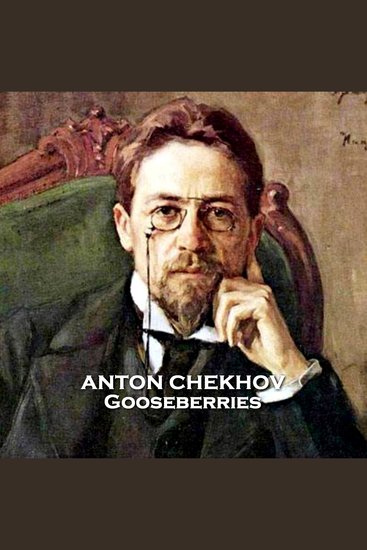
    Anton Pavlovich Chekhov was born on 29th January 1860 in Taganrog, on the south coast of Russia.  
    His family life was difficult; his father was strict and over-bearing but his mother was a passionate story-teller, a subject Chekhov warmed to. As he later said; ‘our talents we got from our father, but our soul from our mother’.  
    At school Chekhov was distinctly average. At 16 his father mis-managed his finances and was declared bankrupt. His family fled to Moscow. Chekhov remained and eked out a living by various means, including writing and selling short sketches to newspapers, to finish his schooling. That completed and with a scholarship to Moscow University obtained he rejoined his family. 
    He was able to help support them by selling satirical sketches and vignettes of Russian lifestyles and gradually obtained further commissions. In 1884, he qualified as a physician and, although it earned him little, he often treated the poor for free, he was fond of saying ‘Medicine is my lawful wife, and literature is my mistress.’ 
    His own health was now an issue as he began to cough up blood, a symptom of tuberculosis.  Despite this his writing success enabled him to move the family into more comfortable accommodation.  
    Chekhov wrote over 500 short stories which included many, many classics including ‘The Kiss’ and ‘The Lady with a Dog’.  His collection ‘At Dusk’ won him the coveted Pushkin Prize when was only 26.  
    He was also a major playwright beginning with the huge success of ‘Ivanov’ in 1887.   
    In 1892 Chekhov bought a country estate north of Moscow. Here his medical skills and money helped the peasants tackle outbreaks of cholera and bouts of famine. He also built three schools, a fire station and a clinic.  It left him with less time for writing but the interactions with real people gained him detailed knowledge about the peasantry and their living conditions for his stories.  
    His most famous work, ‘The Seagull’ was received disastrously at its premiere in St Petersburg. It was later restaged in Moscow to highlight its psychological aspects and was a huge success. It led to ‘Uncle Vanya’, ‘The Three Sisters’ and ‘The Cherry Orchard’.  
    Chekhov suffered a major lung hemorrhage in 1897 while visiting Moscow. A formal diagnosis confirmed tuberculosis and the doctors ordered changes to his lifestyle.  
    Despite a dread of weddings the elusive literary bachelor quietly married the actress Olga Knipper, whom he had met at rehearsals for ‘The Seagull’, on 25th May 1901. 
    By May 1904 with his tuberculosis worsening and death imminent he set off for the German town of Badenweiler writing cheerful, witty letters to his family and assuring them his health was improving.  
    On 15th July 1904 Anton Chekhov died at Badenweiler.  He was 44.
    Mostra libro
  • A Christmas Dream - cover

    A Christmas Dream

    Louisa May Alcott

    • 0
    • 0
    • 0
    Written as a bedtime story for her niece and part of Louisa May Alcott's Lulu Library. A Christmas Dream is the tale of a privileged little girl and a fantastic dream of Christmas teaching the value of giving to those in need. Written by Louisa May Alcott, famous for the "Little Women" Trilogy. Narrated by Michael Ward
    Mostra libro
  • A Book of Ghosts: 1 - cover

    A Book of Ghosts: 1

    D.H. Lawrence, Edith Nesbit,...

    • 0
    • 0
    • 0
    "The Dead Do Not Sleep Soundly in the West Country."
    
    Sabine Baring-Gould was one of the most versatile minds of the 19th century, but it was in the realm of the supernatural that his imagination truly flickered with a dark, cold light. A Book of Ghosts is a cornerstone of Victorian weird fiction, moving away from simple "jump scares" to explore the lingering, uncomfortable presence of those who refuse to leave this world behind.
    
    The Master of the Folkloric Fright: Baring-Gould's ghosts are not mere optical illusions; they are manifestations of history, guilt, and the rugged landscape itself. Drawing on his deep knowledge of English folklore and antiquarian history, he crafts stories where the supernatural feels as tangible as the ancient stone walls and foggy marshes of Devon and Cornwall. His work excels at the "slow burn" of dread—where a simple domestic object or a misunderstood local legend becomes the herald of something truly unsettling.
    
    A contemporary of M.R. James and Bram Stoker, Baring-Gould offers a more grounded, yet equally terrifying, vision of the afterlife. This volume is an essential cornerstone for any library of classic ghost stories, Victorian Gothic, and supernatural fiction.
    
    Step into the shadows of the past. Buy "A Book of Ghosts" today and discover why some doors are better left locked.
    Mostra libro