Join us on a literary world trip!
Add this book to bookshelf
Grey
Write a new comment Default profile 50px
Grey
Subscribe to read the full book or read the first pages for free!
All characters reduced
Missing men - cover

Missing men

Vincent Starrett

Publisher: Good Press

  • 0
  • 0
  • 0

Summary

Vincent Starrett's Missing Men is a deft collection of mystery and adventure narratives shaped by the early twentieth-century magazine tradition. The title evokes disappearance, uncertainty, and pursuit, and the stories typically unfold through tightly controlled plotting, urban atmosphere, and a cultivated taste for suspense rather than sensation alone. Starrett writes with an elegant economy characteristic of the better popular fiction of his era, blending detection, curiosity, and psychological suggestion. Situated in the broad lineage of Anglo-American crime and strange fiction, the book reflects a period when the short mystery tale was becoming both a literary craft and a mass-cultural pleasure. Starrett was far more than a storyteller: he was a distinguished Chicago man of letters, journalist, bibliophile, and one of the most celebrated Sherlock Holmes scholars of his generation. His lifelong immersion in detective literature, rare books, and periodical culture clearly informed his fiction. That background helps explain the book's assured handling of mystery conventions, its respect for narrative structure, and its subtle dialogue with earlier masters of detection and atmospheric suspense. Missing Men is especially recommended to readers interested in the borderland between classic detective fiction and literary popular narrative. It will reward admirers of Holmesian intelligence, magazine-era storytelling, and concise, intelligent mysteries crafted with historical charm and scholarly appeal.
Available since: 06/29/2026.
Print length: 27 pages.

Other books that might interest you

  • The Pulp Horror Book of Phobias Vol II - cover

    The Pulp Horror Book of Phobias...

    MJ Sydney

    • 0
    • 0
    • 0
    Expanding upon The Pulp Horror Book of Phobias, this second volume brings thirteen* not-so-irrational fears much closer to home. 
    Find out what happens when a family goes missing in their own home, an acquired piece of artwork turns out to be much more than bargained for, a child is left home alone with his grandma, the kitchen compost gets out of control, doors in the house refuse to open and more. 
    Stories by Mehitobel Wilson, Michael Bailey, Donna JW Munro, Steve Carr, Kealan Patrick Burke, Stephen King*, JG Faherty, John Peyton Cooke, John Palisano, Colleen Anderson, Nancy Kilpatrick, Jill Hand and Sèphera Girón. 
    *Please note that due to contractual limitations and obligations, Stephen King’s story, “Gramma”, is only available in the paperback, limited hardcover and audiobook editions. 
    Show book
  • The Short Stories of Willa Cather - Pulitzer prize winner who wrote about the frontier and pioneer experience in her works - cover

    The Short Stories of Willa...

    Willa Cather

    • 0
    • 0
    • 0
    Willa Sibert Cather had Welsh ancestry but like her parents Charles and Mary, was born in Virginia, on 7th December 1873.  Despite strong roots in the community, Willa was 9, when the family moved to Nebraska, to work the rich soil and avoid TB of which there were numerous outbreaks in Virginia.   
     
    The vastness and drama of the Nebraska prairie and its’ extreme weather conditions as well as the many diverse cultures of the local families proved to be a major influence on her and can be evidenced in much of her later writing.   
     
    Her first writing was for the local journal when she was at the University of Nebraska and later became the managing editor of the student newspaper.    
     
    In 1896 she obtained work for a woman’s magazine in Pittsburgh and soon after became a regular contributor to the Pittsburgh Leader and wrote poetry and short stories for the Library, another local publication.   
     
    Her first collection of short stories, ‘The Troll Garden’, was published in 1905 and contains several of her most famous including ‘A Wagner Matinee’ and ‘Paul's Case.’ As a writer Cather was now taking immense strides forward.   
     
    Between 1913 and 1918 Cather wrote her Prairie Trilogy: ‘O Pioneers!’, ‘The Song of the Lark’, and ‘My Ántonia’ and in 1922 the Pulitizer Prize was hers for her novel ‘One of Ours’ set during WWI.  
     
    Acknowledged as one of America's greatest writers’ further honours flowed. In 1943 she was elected a Fellow of the American Academy of Arts and Sciences. The following year Cather received the gold medal for fiction from the National Institute of Arts and Letters.  
     
    A determinedly private person, Cather destroyed many old drafts, personal papers, and letters. Her will would also restrict the ability of scholars to quote from personal papers that remained. 
     
    On 24th April 1947, Willa Siebert Cather died of a cerebral haemorrhage at her Manhattan home. She was 73. 
    01 - Willa Cather - A Short Story Collection - An Introduction 
    02 - Paul's Case by Willa Cather 
    03 - The Namesake by Willa Cather 
    04 - A Wagner Matinee by Willa Catha 
    05 - On the Gull's Road by Willa Cather 
    06 - The Burglar's Christmas by Willa Cather
    Show book
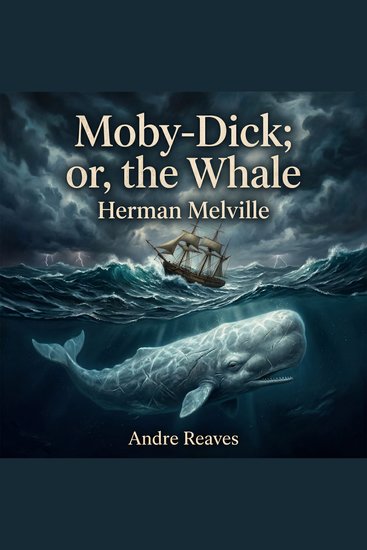
  • Moby-Dick; or the Whale - A sweeping epic of maritime obsession perilous seas and the fathomless depths of the human soul - cover

    Moby-Dick; or the Whale - A...

    Herman Melville

    • 0
    • 0
    • 0
    "Call me Ishmael." 
    With those three immortal words, the gates swing open to the greatest maritime adventure ever written. Driven by an unrelenting melancholy, a young drifter named Ishmael takes to the sea, seeking the untamed majesty of the global oceans. But what he finds is a floating purgatory, commanded by a man whose soul is consumed by a single, catastrophic obsession. 
    In Moby-Dick; or, the Whale, Herman Melville crafts a sprawling, encyclopedic tapestry of nineteenth-century whaling, intertwining gritty high-seas realism with profound philosophical terror. You will brave the frozen wharves of New Bedford, share a room with the tattooed cannibal harpooneer Queequeg, and ultimately set sail aboard the doomed Pequod. 
    Masterfully narrated by Andre Reaves, this production breathes thundering new life into a literary leviathan. Reaves captures the salt, the spray, and the encroaching madness, pulling listeners straight into the howling gales of the Atlantic and the Pacific. From Father Mapple's fire-and-brimstone sermon to the terrifying mythos of the great white whale himself, this is not just a book to be heard—it is a voyage to be survived. 
    Are you ready to cast off your lines and face the tempest?
    Show book
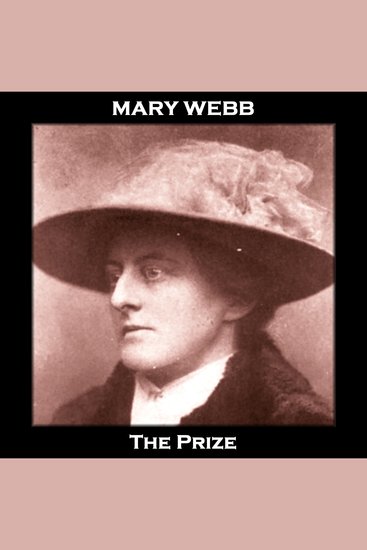
  • The Prize - From their pens to your ears genius in every story - cover

    The Prize - From their pens to...

    Mary Webb

    • 0
    • 0
    • 0
    Mary Gladys Meredith was born on 25th March 1881 at Leighton Lodge in the village of Leighton, near Shrewsbury in Shropshire.  
    Mary was home-schooled by her father before being sent to a finishing school in Southport in 1895. Her longs walks in the countryside helped her develop a heightened sense of observation and description, of both people and places, which later infused both her poetry and prose. 
    When she was 20 she developed symptoms of Graves' disease, a thyroid disorder that caused bulging protuberant eyes and throat goitre. This caused life-long ill health and was a possible contributor to her early death.  
    Mary was first published as a teenager when her brother sent to a local newspaper her poem on a recent rail accident.  Mary, who was in the habit of destroying her work was appalled though placated when she discovered that it had received some positive appreciation in readers letters. 
    1912 brought marriage to Henry Bertram Law Webb, a teacher. He supported her literary work which, in 1917, resulted in the publication of her novel ‘The Golden Arrow.’ 
    A few years later they acquired a property in London where, it was hoped, recognition of her literary talents would be more easily recognised.   
    Her 1924 novel, ‘Precious Bane’, won the Prix Femina Vie Heureuse, the prestigious French literary prize awarded by an all-female jury. 
    Most of her poetry and various other works were only published after her death. 
    By 1927 her health was deteriorating and her marriage failing.   
    Mary Webb died on 8th October 1927 at St Leonards-on-Sea, East Sussex.  She was 46.
    Show book
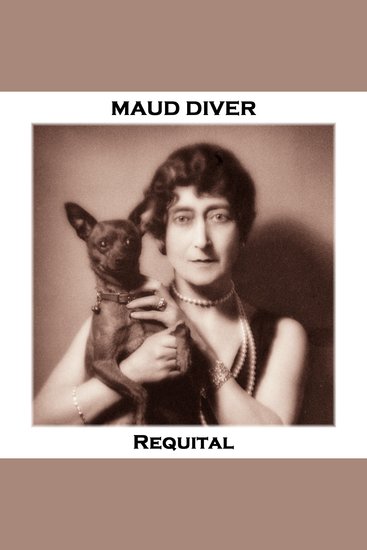
  • Requital - From their pens to your ears genius in every story - cover

    Requital - From their pens to...

    Maud Diver

    • 0
    • 0
    • 0
    Katherine Helen Maud Marshall was born on the 9th September 1867 in Murree, then part of British India, but now Pakistan. 
    For much of her early years she was raised in India and Sri Lanka but returned to England to receive her education. 
    Around 1896 she married Thomas Diver, an officer in the Royal Warwickshire Regiment.  Some years later they returned to England to settle and raise their son. 
    In 1907 her first novel, Captain Desmond VC., was published.  This and later works were commercially successful.  She specialised in the popular genre of imperial romance and whilst they depicted how the English should behave in India, they also included, somewhat daringly for their time, accounts of mixed marriages.  She was a literary contemporary of Kipling’s and great friends with his sister.    
    During Diver’s literary career she wrote novels, short stories, biographies, histories and journalistic items on Indian topics and the English in India.  She faded into obscurity after her death. 
    Her philosophy can best be summed up with her words:― 
    ‘’East and West are not antagonistic, but complementary: heart and head, thought and action, woman and man. Between all these 'pairs of opposites' fusion is rare, difficult, yet eminently possible. Why not, then, between East and West?’’ 
    Maud Diver died on the 14th October 1945.  She was 78.
    Show book
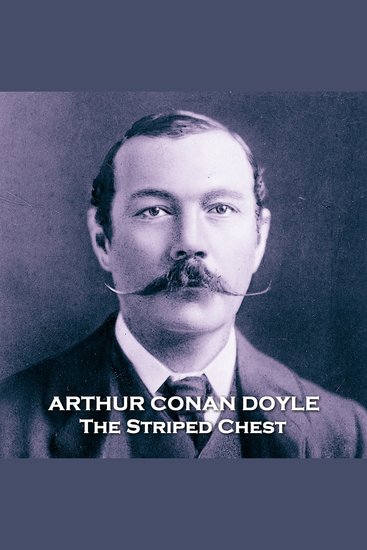
  • The Striped Chest - From their pens to your ears genius in every story - cover

    The Striped Chest - From their...

    Arthur Conan Doyle

    • 0
    • 0
    • 0
    Arthur Conan Doyle was born in Edinburgh, Scotland on 22nd May 1859.  His childhood was blighted by his father’s heavy drinking which for some years broke up the family. Fortunately, wealthy uncles were willing to support them by paying for education and clothing.  
    He was accepted at the University of Edinburgh to study medicine and also began to write short stories the first, ‘The Haunted Grange of Goresthorpe’, was published in Blackwood’s Magazine.  Despite several other stories and some articles in the British Medical Journal his medical studies took priority. 
    When these finished he was appointed as Doctor on the Greenland whaler ‘Hope of Peterhead’ in 1880 and then, after graduation, as ship’s surgeon on the SS Mayumba on its voyage to West Africa. 
    1882 saw a move to Plymouth and his own independent practice. With few patients he resumed writing and completed his first novel, ‘The Mystery of Cloomber’, although most of his output was short stories based on his experiences at sea.  
    He married Louisa Hawkins in 1885. However, two years later he met and fell in love with Jean Elizabeth Leckie, though they remained platonic out of respect for, and loyalty to, his wife. 
    His literary career suddenly burst into life in November 1886 with ‘A Study In Scarlet’, the first of the fabulously successful Sherlock Holmes stories.  
    With two children to support he now revisited his haphazard commercial arrangements and curtailed everything save for commissions from the Strand Magazine.  
    As a sportsman he was remarkably proficient. He was goalkeeper for Portsmouth Association Football Club and played ten first-class cricket matches for the Marylebone Cricket Club as well as captain of the Crowborough Beacon Golf Club in East Sussex.  
    In 1891 tired of writing Holmes stories, he began a series of historical novels and even went so far as to apparently kill off Holmes in a lethal brawl with his arch-nemesis Moriarty. 
    Despite heavy and sustained criticism he continued to write in support of the Boer War, a fact he thought contributed to his knighthood in 1902.  The following year to great relief and acclaim he brought Sherlock Holmes back from the dead in his first outing for a decade. 
    Sadly, his wife Louisa died from TB in 1906 and, a year later, he at last married Jean.  
    During the War and for several years after family deaths had left him depressed. In a search for solace and answers he alighted upon spiritualism and, such was his interest, that he wrote several books on the subject. 
    On 7th July 1930 Conan Doyle was discovered in the hall of Windlesham Manor, his house in East Sussex, clutching his chest dying of a heart attack.  He was 71.
    Show book