Unisciti a noi in un viaggio nel mondo dei libri!
Aggiungi questo libro allo scaffale
Grey
Scrivi un nuovo commento Default profile 50px
Grey
Iscriviti per leggere l'intero libro o leggi le prime pagine gratuitamente!
All characters reduced
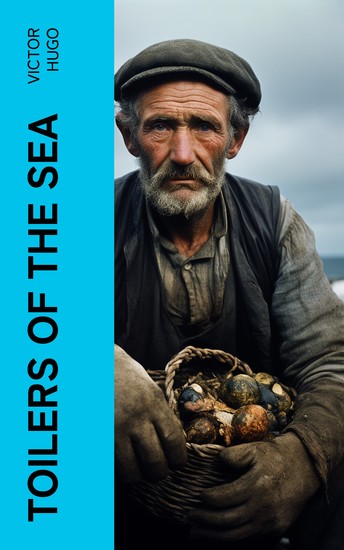
Toilers of the Sea - cover

Toilers of the Sea

Victor Hugo

Traduttore W. Moy Thomas

Casa editrice: e-artnow

  • 0
  • 0
  • 0

Sinossi

Toilers of the Sea (French: Les Travailleurs de la mer) is a novel by Victor Hugo published in 1866. The book is dedicated to the island of Guernsey, where Hugo spent 15 years in exile. The story concerns a Guernseyman named Gilliatt, a social outcast who falls in love with Deruchette, the niece of a local shipowner, Mess Lethierry. When Lethierry's ship is wrecked on the double Douvres, a perilous reef, Deruchette promises to marry whoever can salvage the ship's steam engine. Excerpt: "Christmas Day in the year 182- was somewhat remarkable on the island of Guernsey. Snow fell on that day. In the Channel Islands, a frosty winter is uncommon, and a fall of snow is an event. On that Christmas morning, the road which skirts the seashore from St. Peter's Port to the Vale was clothed in white. From midnight till the break of day the snow had been falling."
Disponibile da: 27/11/2023.
Lunghezza di stampa: 402 pagine.

Altri libri che potrebbero interessarti

  • A Ring of Truth - A Henrietta and Inspector Howard Novel Book 2 - cover

    A Ring of Truth - A Henrietta...

    Michelle Cox

    • 0
    • 0
    • 0
    Mixing Mystery and Romance in a Fizzy 1930s Cocktail! 
    A high-society summer. A missing ring. A romance put to the test. 
    Henrietta Von Harmon thought accepting Inspector Clive Howard's proposal was the hard part—until she discovers he's heir to a North Shore fortune and she's expected to spend the summer at his family's sprawling Winnetka estate. While Clive returns to an important case in Chicago, Henrietta must navigate the treacherous waters of high society under the withering gaze of his mother, who clearly thinks her son could do better. 
    Finding herself more at ease with the servants than the family, Henrietta becomes intrigued when an elderly housemaid claims her precious ring has been stolen. But what begins as a simple mystery to prove herself useful spirals into something far more sinister. 
    As Henrietta uncovers long-buried family secrets—including shocking revelations about her own mother's past—she and Clive must confront hard truths about the worlds that divide them. And when danger from their past resurfaces in the last place they expect, Henrietta must decide: Can she truly belong in Clive's world? And more urgently—will she survive long enough to find out? 
    ★ “Henrietta and Clive are a sexy, endearing, and downright fun pair of sleuths.” —Library Journal (starred review) 
    ★ “Fans of spunky, historical heroines will love Henrietta Von Harmon.” ―Booklist, starred review 
    ★ “The crème de la crème of historical fiction.” ―Brit+Co 
    ★ “Brimming with dark plot on every page, this unpredictable literary thrill ride will transport you to the heart of 1930s Chicago and the love story of a lifetime.”―POPSUGAR
    Mostra libro
  • An Idle Woman - based on one of the most sensational divorce trials of the nineteenth century - cover

    An Idle Woman - based on one of...

    Wendy Parkins

    • 0
    • 1
    • 0
    ONE WOMAN CLAIMS THE POWER TO TAKE CHARGE OF HER OWN DESTINY 
    1838, England: When eighteen-year-old Frances Dickinson impulsively marries Lieutenant John Geils, all her hopes for her future are quickly shattered as she finds there is much about her husband she did not know. A cruel and violent man, John keeps Frances in isolation on his family’s estate, while spending her fortune and preying upon their maids. 
    Frances yearns to break free from her marriage but the law is not on her side. Only when John’s abuse escalates can she set in motion a daring plan to secure her freedom. 
    A story of gaslighting, control and one woman’s fight, An Idle Woman is the true story behind one of the most sensational divorce trials of the nineteenth century. 
    ‘Remarkable… an engaging and informative read’ Leah Moyes, author of A Polish Nurse 
    ‘Reading it felt like falling through the cracks of time and witnessing a terrifying fight for freedom first-hand’ Meg Ellis, @megsreadingspot 
    ‘Powerful, heartfelt and affecting… an important story that demands to be read’ Emma Alvey, @emmas.biblio.treasures
    Mostra libro
  • A Witch's Den - A look into the darker rituals of late 19th Century rural India - cover

    A Witch's Den - A look into the...

    Helena Blavatsky

    • 0
    • 0
    • 0
    Helena Petrovna Blavatsky, often known as Madame Blavatsky, was born on 12th August 1831 into an aristocratic family in present day Dnipro in Ukraine, then part of the Russian Empire.  She was the younger sister of the writer Vera Zhelikhovsky. 
     
    Much of Blavatsky’s life story relies on her own memories which changed much during her lifetime and therefore parts of it are unreliable.  What appears to be certain is that much of her life was lived first on family travels and postings and then on her journeys in an effort to further her own self-education and quest for knowledge. 
     
    As a teenager she developed an interest in Western esotericism and from there she claimed many travels including a trip to India where she encountered a group of spiritual adepts, the ‘Masters of the Ancient Wisdom’, who sent her to Shigatse, Tibet, where they trained her to develop a deeper understanding of the synthesis of religion, philosophy, and science.  
     
    By the early 1870s, Blavatsky was involved in the Spiritualist movement, which was then popular both in Britain and abroad, even though she argued against its main tenet that those ‘contacted’ were the spirits of the dead.  
     
    She moved to the United States in 1873 and became close to the journalist Henry Steel Olcott who helped her gain public attention as a spirit medium and then also became an adherent to her principles.   
     
    In 1875 in New York City she co-founded the Theosophical Society and two years later published ‘Isis Unveiled’, a book outlining her Theosophical world-view from its ancient roots to the modern day.  Her work was even more popular in Asia than elsewhere and is said to have influenced both Ghandi and Nehru amongst many others.  
     
    In 1880, she and Olcott moved to India, where the Society was allied to a Hindu reform movement.  That same year she converted to Buddhism.  However, she was often plagued with accusations of fraudulent paranormal phenomena.  
     
    With her health failing she returned to London and published ‘The Secret Doctrine’, her commentary on claimed ancient Tibetan manuscripts, and other books.  
     
    Helena Blavatsky died in London of influenza during the global pandemic on 8th May 1891.  She was 59.
    Mostra libro
  • Nelson's Folly - Sometimes the hero isn't the one we all knew - cover

    Nelson's Folly - Sometimes the...

    Oliver Greeves

    • 0
    • 0
    • 0
    The French Revolutionary Wars have begun, and as fighting intensifies, Horatio is recalled to sea. 
    As the years pass and the war rages on, Horatio Nelson becomes a lauded hero, while Fanny loyally manages their affairs back in England. But Horatio’s success in battle has changed him – he’s proud, arrogant, bitter. How can a woman like Fanny, self-reliant but bound by 18th century attitudes, face down the Navy’s superstar without losing everything? 
    A compelling exploration of duty in all its forms, Nelson’s Folly is a sweeping, historically rich novel based on the true story of Horatio and Fanny Nelson and their lives together – and apart.
    Mostra libro
  • The Keening - A Mystery of Gaelic Ireland - cover

    The Keening - A Mystery of...

    Anne Emery

    • 2
    • 8
    • 2
    The murdered body of Sorcha the prophetess is discovered following a lavish banquet at the Maguire castle in 16th-century Ireland. In the present day, a dig commences on the land, and not only is a body discovered, but a sheaf of prophecies. Who killed Sorcha?
    		 
    There has been a guesthouse on the Tierney land in County Fermanagh for hundreds of years. Now Tierney’s Hotel is faced with a development that will block the hotel’s best feature, its view of Enniskillen Castle. But the project can be stopped if there are important historical artifacts buried on the property. Enter the archaeologists.
    		 
    Mick’s ancestor, Brigid Tierney, ran the guesthouse in the late 1500s. We see Brigid and Shane and their children at a lavish banquet at the castle, home of the ruling family, the Maguires. The wine and ale flow freely, the harpist plays, the bard recites the Maguires’ heroic deeds. But one woman has a sense of foreboding. Sorcha the prophetess sees harrowing times ahead. The Tudors of England are determined to complete their brutal conquest of Ireland.
    		 
    The morning after the banquet, Sorcha is found dead on a bed of oak leaves. And Shane is accused of the killing. His lawyer, Terence, conducts his defence on the hilltop that constitutes the court in 1595.
    		 
    Ireland has had a complex and at times woeful history, and we see that history being played out in the lives of the Tierneys, past and present. 
    		 
    In 2018, the dig commences on Mick Tierney’s land. Historical artifacts? Yes. But also a sheaf of prophecies. And a body ― a bogman ― four hundred years old.
    Mostra libro
  • The Short Stories of Arthur Conan Doyle - Creator of Sherlock Holmes who wrote many other equally impressive stories - cover

    The Short Stories of Arthur...

    Arthur Conan Doyle

    • 0
    • 0
    • 0
    Arthur Conan Doyle was born in Edinburgh, Scotland on 22nd May 1859.  His childhood was blighted by his father’s heavy drinking which for some years broke up the family. Fortunately, wealthy uncles were willing to support them by paying for education and clothing.  
     
    He was accepted at the University of Edinburgh to study medicine and also began to write short stories the first, ‘The Haunted Grange of Goresthorpe’, was published in Blackwood’s Magazine.  Despite several other stories and some articles in the British Medical Journal his medical studies took priority. 
     
    When these finished he was appointed as Doctor on the Greenland whaler ‘Hope of Peterhead’ in 1880 and then, after graduation, as ship’s surgeon on the SS Mayumba on its voyage to West Africa. 
     
    1882 saw a move to Plymouth and his own independent practice. With few patients he resumed writing and completed his first novel, ‘The Mystery of Cloomber’, although most of his output was short stories based on his experiences at sea.  
     
    He married Louisa Hawkins in 1885. However, two years later he met and fell in love with Jean Elizabeth Leckie, though they remained platonic out of respect for, and loyalty to, his wife. 
     
    His literary career suddenly burst into life in November 1886 with ‘A Study In Scarlet’, the first of the fabulously successful Sherlock Holmes stories.  
     
    With two children to support he now revisited his haphazard commercial arrangements and curtailed everything save for commissions from the Strand Magazine.  
     
    As a sportsman he was remarkably proficient. He was goalkeeper for Portsmouth Association Football Club and played ten first-class cricket matches for the Marylebone Cricket Club as well as captain of the Crowborough Beacon Golf Club in East Sussex.  
     
    In 1891 tired of writing Holmes stories, he began a series of historical novels and even went so far as to apparently kill off Holmes in a lethal brawl with his arch-nemesis Moriarty. 
     
    Despite heavy and sustained criticism he continued to write in support of the Boer War, a fact he thought contributed to his knighthood in 1902.  The following year to great relief and acclaim he brought Sherlock Holmes back from the dead in his first outing for a decade. 
     
    Sadly, his wife Louisa died from TB in 1906 and, a year later, he at last married Jean.  
     
    During the War and for several years after family deaths had left him depressed. In a search for solace and answers he alighted upon spiritualism and, such was his interest, that he wrote several books on the subject. 
     
    On 7th July 1930 Conan Doyle was discovered in the hall of Windlesham Manor, his house in East Sussex, clutching his chest dying of a heart attack.  He was 71. 
    01 - Arthur Conan Doyle - A Short Story Collection - An Introduction 
    02 - The Striped Chest by Arthur Conan Doyle 
    03 - How It Happened by Arthur Conan Doyle 
    04 - B24 by Arthur Conan Doyle 
    05 - The Cabman's Story. The Mystery of a London Growler by Arthur Conan Doyle 
    06 - The Final Problem by Arthur Conan Doyle
    Mostra libro