Unisciti a noi in un viaggio nel mondo dei libri!
Aggiungi questo libro allo scaffale
Grey
Scrivi un nuovo commento Default profile 50px
Grey
Iscriviti per leggere l'intero libro o leggi le prime pagine gratuitamente!
All characters reduced
The Complete Novels - cover

The Complete Novels

Victor Hugo

Casa editrice: DigiCat

  • 0
  • 0
  • 0

Sinossi

Victor Hugo's "The Complete Novels" offers a magnificent compendium of his literary genius, encapsulating the rich tapestry of 19th-century French society. This anthology includes seminal works such as "Les Misérables" and "Notre-Dame de Paris," characterized by Hugo's intricate narrative style and profound philosophical underpinnings. His prose is both emotive and dynamic, weaving human suffering and redemption with vivid descriptions and powerful symbolism. The intermingling of historical events, social commentary, and the architecture of the human spirit in these novels reflect Hugo's engagement with the Romantic literary movement, which sought to explore the depths of human experience in a rapidly changing world. Hugo, a towering figure in not just literature but also political activism, was deeply affected by the social injustices and upheavals of his time. His life experiences, including exile and his passionate opposition to poverty and oppression, fueled his narratives and imprinted a moral clarity that resonates throughout his works. Hugo's ability to blend emotive storytelling with poignant critique of society makes his novels timeless explorations of the human condition. This comprehensive collection is a must-read for anyone who seeks to understand the complexities of love, justice, and humanity through an artistic lens. Readers will find themselves immersed in Hugo's lyrical prose, pondering life's profundities as they traverse the landscapes he meticulously crafts, making "The Complete Novels" an essential addition to any literary library.
Disponibile da: 11/10/2022.
Lunghezza di stampa: 3459 pagine.


Altri libri che potrebbero interessarti

  • At the Edge of the Night - cover

    At the Edge of the Night

    Friedo Lampe

    • 0
    • 0
    • 0
    Banned by the Nazis, the haunting novel At the Edge of the Night (Am Rande der Nacht), by the German writer Friedo Lampe, is a work of magic realism. This poignant book, beautifully translated by Simon Beattie, was, in Lampe’s own words, ‘born into a regime where it could not breathe’; he hoped that one day it might rise again. It evokes the sensations and impressions of a sultry September evening on the waterfront of Bremen, with its charm and tenderness, squalor and lust. The plot contains a stream of images with many characters: children, old and young people, men and women, townsfolk, performers, students and sailors. Its depiction of raw reality was unacceptable to the Nazis: the book was seized by them in December 1933 and withdrawn from sale.
    At the Edge of the Night is a powerful and thought-provoking novel that offers a unique perspective on the experience of the Second World War. Lampe’s prose is lyrical and evocative, and his characters are complex and multi-dimensional. The book is a must-read for anyone interested in the history of the war or the human experience of conflict. It drew praise from Hermann Hesse, who first read it in 1933 and said that ‘what struck us at the time... as so beautiful and powerful has not paled, it has withstood; it proves itself with the best, and captivates and delights just as then’.
    Mostra libro
  • The Trumpet Major - cover

    The Trumpet Major

    Thomas Hardy

    • 0
    • 0
    • 0
    The Trumpet-Major is the seventh published novel by English author Thomas Hardy published in 1880, and his only historical novel. 
    When Anne Garland wakes up one morning, she little realises the significance of the sight from her window; of soldiers setting up camp for the summer on the hills overlooking her quiet village of Overcombe.  
    But she soon finds herself pursued romantically by three men: Trumpet Major John Loveday, his brother Bob and the boorish Squire's nephew and yeoman; Festus Derrimen, as the Napoleonic war roils over the continent. All three compete off and on for her affections, but who will finally win her hand?  
    Narrated by Michael Ward.
    Mostra libro
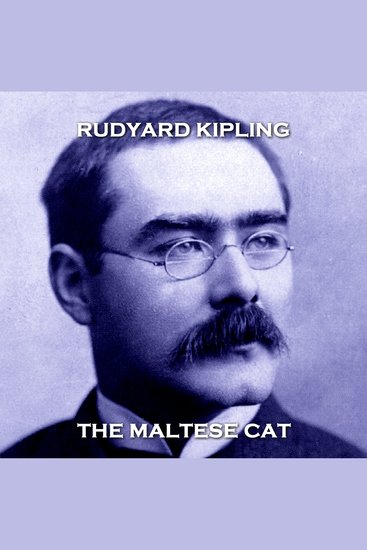
  • The Maltese Cat - Celebrated author of The Jungle Book Kipling brings another marvellous story from the perspective of an animal this time about a game of polo set in India during British rule - cover

    The Maltese Cat - Celebrated...

    Rudyard Kipling

    • 0
    • 0
    • 0
    Joseph Rudyard Kipling was born in Mumbai, India on 30th December 1865.   
     
    As was the custom in those days, he and his sister were sent back to England when he was 5.  The ill-treatment and cruelty by the Portsmouth couple they boarded with Kipling said contributed to the onset of his literary life.  
     
    At 16 he returned to India to work on a local paper where he was soon contributing and writing.  It also exposed him to the issues of identity and national allegiance which pervade much of his work.  
     
    In 1886, his ‘Departmental Ditties’, collection of verse appeared in print followed by 39 short stories for his newspaper over only 8 months.  These were then published as ‘Plain Tales from the Hills’, shortly after his 22nd birthday.  
     
    He continued his prolific pace of writing before being dismissed in a dispute and, taking his pay-off and the profits from the sale of some publishing rights, decided to return to London, travelling via Rangoon, Hong Kong, Japan and the United States, all the while writing articles, and arriving at Liverpool in October 1889. 
     
    Over the next two years he saw further works published as books and in magazines, as well as a nervous breakdown for which he was prescribed a sea voyage, to South Africa, Australia, New Zealand and India.  
     
    Happier times came with marriage to Caroline Starr Balestier in January 1892.  The honeymoon began in Vermont and ended in Yokahama where they heard their bank had failed.  They returned to Vermont and settled.  Caroline was now pregnant and he was planning the ‘Jungle Books’.  
     
    A failed arbitration between the US and England resulted in an argument between Caroline’s brother and Kipling, and then his arrest.  At the hearing he was mortified by the exposure of his private life and after settling the matter they returned to England and life in Torquay.  ‘Kim’ was published in 1902, and ‘Just So Stories for Little Children’, a year later.  
     
    In 1907 he was awarded the Nobel Prize for Literature with the citation “in consideration of the power of observation, originality of imagination, virility of ideas and remarkable talent for narration which characterise the creations of this world-famous author”.   
     
    When the Great War erupted, he scorned those who refused conscription.  His son enlisted and was killed at the Battle of Loos in September 1915, at 18, an exploding shell had ripped his face apart.  This death inspired Kipling’s writing thereafter, but the tragedy broke his life and by 1930 his prolific pen had almost ceased. 
     
    Rudyard Kipling died on 18th January 1936 from a perforated duodenal ulcer.  He was 70.  His ashes are buried at Poets’ Corner in Westminster Abbey. 
     
    In the Maltese Cat Kipling returns once more to India and the British Empire.  A polo match is being played.  The fierce competitive instincts of two social classes are fighting for dominance.  All told through the voice of the Maltese Cat, the most cunning of the horses.
    Mostra libro
  • The Rubaiyat of Omar Khayyam - cover

    The Rubaiyat of Omar Khayyam

    Omar Khayyam, Edward FitzGerald

    • 0
    • 0
    • 0
    The Rubaiyat of Omar Khayyam is a collection of quatrains (four-line verses) attributed to the 12th-century Persian poet, mathematician, and astronomer, Omar Khayyam. While the original Persian text is complex and open to interpretation, it is the English translation by Edward Fitzgerald that popularized the work in the Western world. 
    Fitzgerald's translation portrays a world view that is often characterized as: 
    Carpe Diem: Seize the day, emphasizing the fleeting nature of life and the importance of enjoying the present moment. 
    Skepticism: Questioning traditional beliefs and religious dogma, particularly in relation to the afterlife. 
    Epicureanism: Focusing on pleasure and the senses as the primary goods in life. 
    Fatalism: Accepting one's fate and the inherent unpredictability of existence.
    Mostra libro
  • Behind a Mask - cover

    Behind a Mask

    Louisa May Alcott

    • 0
    • 0
    • 0
    Jean Muir, a cunning and ambitious governess, infiltrates the wealthy Coventry household under a veil of innocence. With calculated charm and deceit, she manipulates each family member to achieve her ambitions, exposing their secrets and vulnerabilities. Alcott crafts a gripping tale of social climbing, betrayal, and revenge, challenging societal expectations of femininity and morality. Beneath its suspenseful surface lies a sharp critique of class dynamics and gender roles. Darker and more subversive than her traditional works, this novella reveals Alcott’s mastery of psychological drama and biting social commentary.
    Mostra libro
  • Dracula - cover

    Dracula

    Bram Stoker

    • 0
    • 0
    • 0
    tbc
    Mostra libro