Unisciti a noi in un viaggio nel mondo dei libri!
Aggiungi questo libro allo scaffale
Grey
Scrivi un nuovo commento Default profile 50px
Grey
Iscriviti per leggere l'intero libro o leggi le prime pagine gratuitamente!
All characters reduced
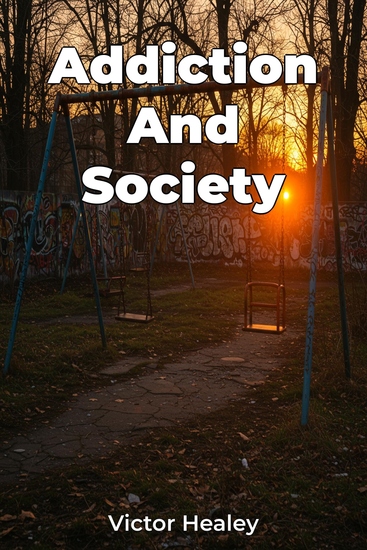
Addiction And Society - cover

Addiction And Society

Victor Healey

Traduttore A AI

Casa editrice: Publifye

  • 0
  • 0
  • 0

Sinossi

Addiction and Society examines the wide-ranging effects of drug addiction on communities and the resources meant to support them. It highlights how addiction disrupts social cohesion, burdens public services, and raises ethical questions about treatment and prevention. The book argues that addiction is not just an individual struggle but a complex social issue deeply rooted in inequality and community breakdown. For example, the economic impact includes healthcare costs, law enforcement expenditures, and lost productivity, all of which strain public resources. 

 
The book provides a sociological analysis of addiction's impact on families, social networks, and its connection to crime and violence. It uses sociological theories to understand the social determinants of drug addiction, moving beyond individual-focused approaches. Supported by research, including national surveys and ethnographic studies, the book advocates for comprehensive, community-based solutions. 

 
The book unfolds logically, starting with a sociological definition of addiction and progressing through impacts on social structures before concluding with prevention and treatment strategies. A key strength of Addiction and Society lies in its integration of sociological theory with empirical data, offering a nuanced perspective on addiction's social consequences. It aims to engage scholars, public health professionals, and community leaders, providing a framework for understanding and addressing the social challenges posed by drug addiction.
Disponibile da: 21/02/2025.
Lunghezza di stampa: 93 pagine.


Altri libri che potrebbero interessarti

  • When Harry Met Pablo - Truman Picasso and the Cold War Politics of Modern Art - cover

    When Harry Met Pablo - Truman...

    Matthew Algeo

    • 0
    • 0
    • 0
    Harry Truman and Pablo Picasso were contemporaries and were both shaped by and shapers of the great events of the twentieth century—the man who painted Guernica and the man who authorized the use of atomic bombs against civilians. But in most ways, they couldn’t have been more different. Picasso was a communist, and probably the only thing Truman hated more than communists was modern art. Picasso was an indifferent father, a womanizer, and a millionaire. Truman was utterly devoted to his family and, despite his fame, far from a rich man. How did they come to be shaking hands in front of Picasso’s studio in the south of France? Truman’s meeting with Picasso was quietly arranged by Alfred H. Barr Jr., the founding director of New York’s Museum of Modern Art and an early champion of Picasso. Barr knew that if he could convince these two ideological antipodes, the straight-talking politician from Missouri and the Cubist painter from Málaga, to simply shake hands, it would send a powerful message, not just to reactionary Republicans pushing McCarthyism at home but to the whole world: modern art was not evil. A rigorous history with a heartwarming center, When Harry Met Pablo intertwines the biographies of Truman and Picasso, the history of modern art, and twentieth-century American politics, but at its core, it is the touching story of two old men who meet for the first time and realize they have more in common—and are more alike—than they ever imagined.
    Mostra libro
  • Legal Partners - cover

    Legal Partners

    Carl U Maxwell

    • 0
    • 0
    • 0
    In the heart of bustling New York City lies the prestigious law firm of Moore, McKenna & Crane, where ambition knows no bounds.  
    Legal Partners delves into the high-stakes world of legal sex play, where aspiring lawyers will stop at nothing to claim the coveted partner's corner office. 
    Amidst the ruthless competition, the story exposes the naked truth of the legal profession, where sexual use and abuse are wielded as weapons by both males and females.  
    As loyalties are put to the test, young associates find themselves entangled in a web of deceit and ambition, questioning how far they're willing to go and how many they will have to screw to reach their goals. 
    This is a story with sexual explicit details.  
    Music by David Fesliyan
    Mostra libro
  • T-dola 11 - cover

    T-dola 11

    Jason Yonai

    • 0
    • 0
    • 0
    T-DOLA 11 by Jason Yonai is narrated by KazeLoon for K.D Lean Inc. publishing.
    Mostra libro
  • Operation Speedy Express: The History and Legacy of One of the Vietnam War’s Most Controversial Campaigns - cover

    Operation Speedy Express: The...

    Editors Charles River

    • 0
    • 0
    • 0
    Before the Vietnam War, most Americans would have been hard pressed to locate Vietnam on a map. South Vietnamese President Diệm’s regime was extremely unpopular, and war broke out between Communist North Vietnam and South Vietnam around the end of the 1950s. Kennedy’s administration tried to prop up the South Vietnamese with training and assistance, but the South Vietnamese military was feeble. A month before his death, Kennedy signed a presidential directive withdrawing 1,000 American personnel, but shortly after Kennedy’s assassination, new President Lyndon B. Johnson reversed course, instead opting to expand American assistance to South Vietnam. 
    	Operation Speedy Express was a highly controversial military operation carried out by the U.S. Army supported by the Army of South Vietnam (ARVN) as well as regional and popular forces during the Vietnam War. It lasted from December 1968 until May 1969 and took place in the Mekong Delta's Kien Hoa and Vinh Binh provinces. The operation was a part of U.S. Army “pacification” efforts toward the Viet Cong, as American forces sought to interdict Viet Cong supply and communication lines from Cambodia and deny them the use of operational bases. Formally, the operation involved 8,000 U.S. soldiers and resulted in 242 American lives lost compared to 10,899 Viet Cong and People’s Army of Vietnam (PAVN) killed, according to Department of Defense records. Operation Speedy Express was considered successful by U.S. standards, as determined by the primary metric of body counts. However, while the number of Vietnamese dead, including civilians, is unknown, it is assumed to surpass 5,000, and the high number of casualties was attributed to the indiscriminate use of firepower, which included air and artillery strikes in densely populated areas.
    Mostra libro
  • Wacousta or the prophecy: A Tale of the Canadas Volume 3 - cover

    Wacousta or the prophecy: A Tale...

    Jon Richardson

    • 0
    • 0
    • 0
    This is volume 3 of Major John Richardson, 1832 novel Wacousta. It is set at Fort Detroit and the surrounding country during Pontiac's rebellion of 1763. The mysterious warrior Wacousta has aligned himself with the First Nations forces who are besieging Detroit and Fort Michilimackinac on the extreme western edge of the British North American frontier. Pontiac is determined to stop expansion into the region, by any means. Wacousta, is a great friend of Pontiac but has his own agenda. - revenge against the British Commander at Detroit, Colonel De Haldimar. The story begins with Wacousta stealing in to the secure fort and whispering something in to De Haldimar's ear. Only later to we discover the nature of his message. Meanwhile, Pontiac designs a clever scheme to break the siege at the well defended fort - a scheme so cunningly designed as to have every chance of success. Volume 3 is the conclusion of this engaging work. This book was written in 1832 and incorporates all the attitudes and perspectives of class, race and culture prevalent at the time. Some of the terminology is now considered offensive but was common in the nineteenth century. It is a powerful and engaging story, although the style of writing is extremely convoluted and complex, and can be difficult to read. I hope hearing it helps you enjoy it.
    Mostra libro
  • Introduction to The Philosophy of History - cover

    Introduction to The Philosophy...

    Georg Wilhelm Friedrich Hegel

    • 0
    • 0
    • 0
    The introduction to Hegel's lectures on the philosophy of world history is often used to introduce students to Hegel's philosophy, in part because Hegel's sometimes difficult style is muted in the lectures, and he discourses on accessible themes such as world events in order to explain his philosophy. Much of the work is spent defining and characterizing Geist or spirit. Geist is similar to the culture of people, and is constantly reworking itself to keep up with the changes of society, while at the same time working to produce those changes through what Hegel called the "cunning of reason". Another important theme of the text is the focus on world history, rather than regional or state history. The obscure writings of Jakob Böhme had a strong effect on Hegel. Böhme had written that the Fall of Man was a necessary stage in the evolution of the universe. This evolution was, itself, the result of God's desire for complete self-awareness. Hegel was fascinated by the works of Spinoza, Kant, Rousseau, and Goethe, and by the French Revolution. Modern philosophy, culture, and society seemed to Hegel fraught with contradictions and tensions, such as those between the subject and object of knowledge, mind and nature, self and Other, freedom and authority, knowledge and faith, the Enlightenment and Romanticism. Hegel's main philosophical project was to take these contradictions and tensions and interpret them as part of a comprehensive, evolving, rational unity that, in different contexts, he called "the absolute idea" or "absolute knowledge". According to Hegel, the main characteristic of this unity was that it evolved through and manifested itself in contradiction and negation. Contradiction and negation have a dynamic quality that at every point in each domain of reality—consciousness, history, philosophy, art, nature, society—leads to further development until a rational unity is reached that preserves the contradictions as phases and sub-parts through an up-lifting (Aufhebung) into a higher unity. This whole is mental because it is mind that can comprehend all of these phases and sub-parts as steps in its own process of comprehension. It is rational because the same, underlying, logical, developmental order underlies every domain of reality and is ultimately the order of self-conscious rational thought, although only in the later stages of development does it come to full self-consciousness. The rational, self-conscious whole is not a thing or being that lies outside of other existing things or minds. Rather, it comes to completion only in the philosophical comprehension of individual existing human minds who, through their own understanding, bring this developmental process to an understanding of itself. (summary by wikipedia and d.e. wittkower)
    Mostra libro