Unisciti a noi in un viaggio nel mondo dei libri!
Aggiungi questo libro allo scaffale
Grey
Scrivi un nuovo commento Default profile 50px
Grey
Iscriviti per leggere l'intero libro o leggi le prime pagine gratuitamente!
All characters reduced
The Violet Book - Exploring the Depths of Human Experience - cover

The Violet Book - Exploring the Depths of Human Experience

Various Various

Casa editrice: Good Press

  • 0
  • 0
  • 0

Sinossi

The Violet Book is a fascinating anthology that gathers a diverse range of literary voices, reflecting on themes of identity, love, and the complexity of human relationships. The contributors employ a rich tapestry of styles, from lyrical poetry to poignant prose, showcasing a myriad of perspectives that deepen the reader's understanding of these universal experiences. Set against the backdrop of contemporary society, this collection not only highlights the evolution of modern literature but also serves as a mirror to the social dynamics and cultural dialogues of our time. The compilation features the work of various authors, many of whom bring unique cultural insights and personal histories to their contributions. The anthology is shaped by a collective desire to explore and articulate the intricacies of human emotion, shaped by the authors' own experiences navigating their multifaceted identities. Their diverse backgrounds enrich the text, creating a dialogue that echoes the complexity of the world we inhabit. Readers looking for an evocative exploration of the human experience will find The Violet Book to be an essential addition to their literary collection. It not only invites contemplation but also fosters a greater understanding of diverse narratives, making it a compelling read for anyone passionate about contemporary literature and its role in illuminating the human condition.
Disponibile da: 18/09/2023.
Lunghezza di stampa: 42 pagine.
Altri libri che potrebbero interessarti

  • Off the Tracks - A Meditation on Train Journeys in a Time of No Travel - cover

    Off the Tracks - A Meditation on...

    Pamela Mulloy

    • 0
    • 1
    • 0
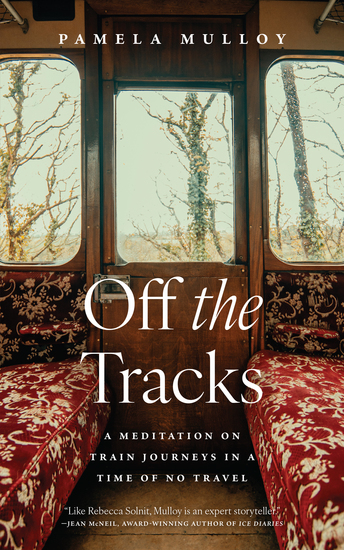
    Train travel is having a renaissance. Grand old routes that had been canceled, or were moldering in neglect, have been refurbished as destinations in themselves. The Rocky Mountaineer, the Orient Express, and the Trans-Siberian Railroad run again in all their glory. 
    		 
    Pamela Mulloy has always loved train travel. Whether returning to the Maritimes every year with her daughter on the Ocean, or taking her family across Europe to Poland, trains have been a linchpin of her life. As COVID locked us down, Mulloy began an imaginary journey that recalled the trips she has taken, as well as those of others. Whether it was Mary Wollstonecraft traveling alone to Sweden in the late 1700s, or the incident that had Charles Dickens forever fearful of trains, or the famous actress Sarah Bernhardt trapped in her carriage in a midwestern blizzard in the 1890s, or Sir John A. Macdonald’s wife daring to cross the Rockies tied to the cowcatcher at the front of the train, the stories explore the odd mix of adventure and contemplation that travel permits. 
    		 
    Thoughtful, observant, and fun, Off the Tracks is the perfect blend of research and personal experience that, like a good train ride, will whisk you into another world.
    Mostra libro
  • Anguish The double secret - cover

    Anguish The double secret

    Max Dorra

    • 0
    • 0
    • 0
    The words of others, as an unpleasant remark ("You’re not hardworking") or a medical diagnosis ("You’re bipolar"), have the power to plunge us into anguish whenever they show an image of ourselves that we do not recognize: "In a world where words become viruses, certain sentences can kill." 
    The reductive identity that is thus assigned to us creates the illusion that our life can be summed up by these few words, allowing others to exercise the tyrannical power of anxiety over us. 
    Max Dorra explains how this illusion, created temporarily by the gaze of others, is just a montage-effect of our memory—as in a movie—and that it is enough to understand the mechanisms of this illusion in order to free ourselves from it: "To become aware of the fact that one is held captive by a montage is to be freed from a false confinement."
    In virtuosic and sensitive language ("The affects—shapeless and promising, wonderful clouds"), the author journeys through music, painting and cinema, appealing to sociology, psychoanalysis and philosophy, while remaining firmly rooted in reality: "There are more things in a hospital elevator than in all of philosophy." 
    He shows us that trusting our imagination allows us to tame anxiety without fearing it, and understanding that "another montage is possible" allows us to go towards the other without losing ourselves.
    Mostra libro
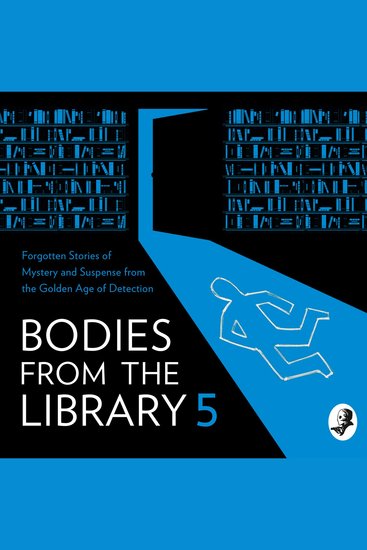
  • Bodies from the Library 5: Forgotten Stories of Mystery and Suspense from the Golden Age of Detection - cover

    Bodies from the Library 5:...

    Tony Medawar

    • 0
    • 0
    • 0
    Classic crime fiction's 'Indiana Jones' Tony Medawar unearths more unpublished and uncollected stories from the Golden Age of suspense. 
    ‘Five books in, and the selection here might well be the strongest yet. This series continues to delight with the high standard of forgotten gems that Medawar uncovers, and there’s sufficient range to ensure that all fans of the genre will find something to enjoy. Book 6 can’t come soon enough.’ 
    Jim Noy, author of The Red Death Murders 
    The end of the First World War saw the rise of an insatiable public appetite for clever and thrilling mystery fiction and a new kind of hero – the modern crime writer. As the genre soared in popularity, so did the inventiveness of its best authors, ushering in a “Golden Age” of detective fiction – two decades of exemplary mystery writing: the era of the whodunit, the impossible crime and the locked-room mystery, with stories that have thrilled and baffled generations of readers. 
    The Golden Age still casts a long shadow, with many of the authors who were published at that time still hugely popular today. Aside from novels, they all wrote short fiction – stories, serials and plays – and although many have been republished in books over the last 100 years, Bodies from the Library collects the ones that are impossible to find: stories that appeared in a newspaper, magazine or an anthology that has long been out of print; ephemeral works such as plays not aired, staged or screened for decades; and unpublished stories that were absorbed into an author’s archive when they died . . . 
    Complete with fascinating biographies by Tony Medawar of all the featured authors, this latest volume in the annual Bodies from the Library series once again brings into the daylight the forgotten, the lost and the unknown, and is an indispensable collection for any bookshelf. 
    The historical thrillers in this collection are top-notch, showcasing the traditional storytelling techniques that made the Golden Age of detective fiction so beloved. Each story is a journey back in time, a thrilling ride filled with suspense and intrigue. 
    For fans of Carter Dickson (The White Priory Murders), E.C.R. Lorac (Death of an Author), John Dickson Carr (The Black Spectacles), Christianna Brand (Suddenly at His Residence), and Tony Medawar (Ghosts from the Library). 
    HarperCollins 2022
    Mostra libro
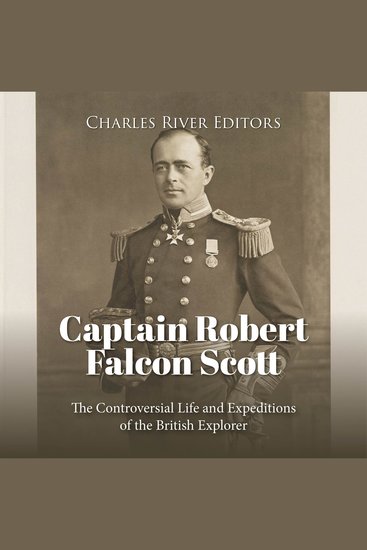
  • Captain Robert Falcon Scott: The Controversial Life and Expeditions of the British Explorer - cover

    Captain Robert Falcon Scott: The...

    Editors Charles River

    • 0
    • 0
    • 0
    The golden age of polar exploration of the Northern and Southern continents did not reach its zenith until the turn of the 20th century, and national rivalries abounded between the major seafaring nations of the world. Where past explorers made glancing journeys to Antarctica, the superior technology of the coal engine, various new survival materials, and even the motorcar opened new possibilities for more daring treks. Backed by governments, banking organizations, and great newspapers, a small group of restless adventurers assaulted the polar continents with the intent of reaching and marking the exact locations of Earth’s northern and southernmost points.  
    More than any other country, Britain staked its national pride on being the first to reach the poles. Britain made its first and finest statement for actually reaching the South Pole in the first years of the 20th century, even as the dangers of the Antarctic, including scurvy, dehydration, and hypothermia, were well known to all major explorers. They also understood that even the most incidental detail of an expedition going amiss could spell doom for all parties involved. The era was universally dubbed the Heroic Age of Antarctic Exploration, and some of the explorers who were involved became household names around the world, including British explorer Sir Ernest Henry Shackleton and Norwegian explorer Roald Amundsen. However, one name above all others has become associated with this period: Robert Falcon Scott. Widely referred to as “Scott of the Antarctic,” Captain Scott became an icon of tenacity in the face of incredible adversity, and his final expedition to the South Pole lives on as an example of the nobility of the human spirit, even in the face of utter disaster. A monument to Scott’s persistence still stands at Observation Point, inscribed with the last line of Tennyson’s “Ulysses”: “To strive, to seek, to find, and not to yield.”
    Mostra libro
  • Alpine Divorce An - From their pens to your ears genius in every story - cover

    Alpine Divorce An - From their...

    Robert Barr

    • 0
    • 0
    • 0
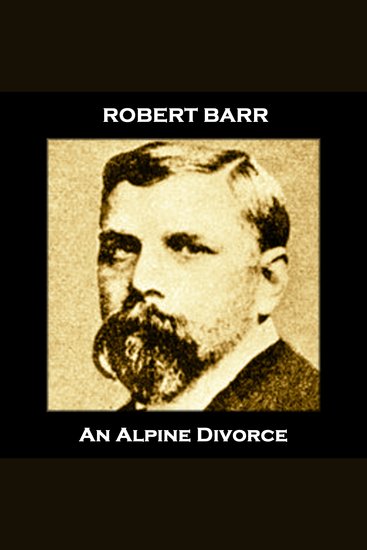
    Robert Barr was born in Glasgow, Scotland on the 16th September 1849.  Five years later the family emigrated to a farm near Muirkirk in Upper Canada.  
    His early years were uneventful as the family settled into their new lives and Barr began his education. 
    A career path as a teacher opened up for him and, by 1874, he had been appointed as headmaster at the Central School at Windsor.  Concurrently he also wrote travel and humourous articles for magazines.  Within two years their success in the regional periodicals encouraged him to change careers to become a reporter and columnist. 
    In August 1876, at age 27, he married Eva Bennett and they began a family. 
    A half decade later he was the exchange editor of the ‘Free Press’ but decided to relocate to London to establish an English edition and to write fiction, which both met with much success. 
    Over the years he was a prolific writer and in 1892, along with Jerome K Jerome, he established ‘The Idler’ magazine and, just after the turn of the century, became its sole proprietor. 
    Although a number of his crime novels and short stories are parodies on Sherlock Holmes and other best-selling detectives of the time, he also wrote short stories across a whole range of subjects and genres usually with intriguing ideas and many laced with wit and humour. 
    Robert Barr died at his home in Woldingham, Surrey of heart disease on the 21st October 1912.  He was 63.
    Mostra libro
  • Elisabeth Elliot - Joyful Surrender - cover

    Elisabeth Elliot - Joyful Surrender

    Janet Benge, Geoff Benge

    • 0
    • 0
    • 0
    Since she was young, Elisabeth Elliot had been intrigued by missionaries who gave up so much to tell others about God s love. With a passion to translate the Bible into new languages, she followed God's call to work among tribes in Ecuador, including the Waorani (Auca), who had killed her husband and four others. Elisabeth kept a detailed journal of her life and missionary service. She returned to the United States after many years in South America, becoming one of the most influential Christian women of our time. A prolific author, speaker, and radio host, she passes on a message of joyful surrender to the world.
    Mostra libro