

Unisciti a noi in un viaggio nel mondo dei libri!
Aggiungi questo libro allo scaffale
Grey
Scrivi un nuovo commento Default profile 50px
Grey
Iscriviti per leggere l'intero libro o leggi le prime pagine gratuitamente!
All characters reduced
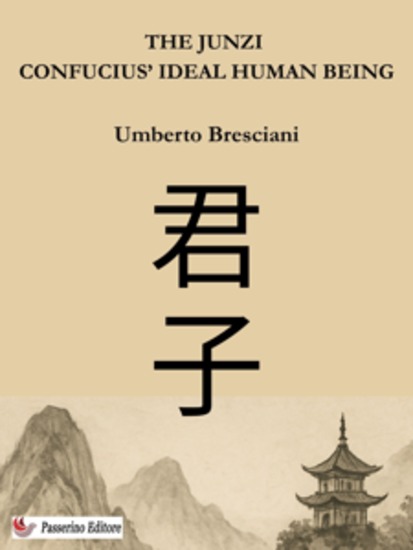
The Junzi - Confucius’ ideal human being - cover

The Junzi - Confucius’ ideal human being

Umberto Bresciani

Casa editrice: Passerino

  • 0
  • 0
  • 0

Sinossi

It is a deeply rooted habit among the Chinese to divide people into two categories: the junzi (gentlemen, decent people, those with a sense of justice, noble-spirited men) and the xiaoren (petty men, mean-spirited individuals who look only to personal profit and never to the common good). This habit, too, is a legacy of Confucius, who transformed the meaning of these two labels.The term junzi — rendered kunshi in Japanese, kwunca in Korean, and quân tử in Vietnamese — already existed before Confucius, and its original meaning was simply to indicate a person’s social status. As a social designation, junzi meant “son (zi) of a feudal lord (jun)” or of an aristocrat, and thus a member of the noble class that governed under that system. In Confucius’s time, society was divided into two classes: the junzi (the aristocrats) and the xiaoren (the common people, the masses).The original meaning occasionally resurfaces in the Analects, as we will point out in due course. But in most cases, the term is used with a different sense. Confucius transformed it into a moral qualification: from “son of a feudal lord (or an aristocrat)” to “a person who has the ideal qualities of a feudal lord or an aristocrat.”From a social qualification (“noble man by blood”) to an ethical one (“noble man by spirit”).The junzi is, according to Confucius, the ideal human being.Naturally, its opposite, the xiaoren, then does not (in most cases) mean someone of humble social origin, but rather a petty, selfish man, unable to see beyond his own narrow personal interests. As we will see, the junzi of Confucius is not a hereditary condition; it is an ideal of life, a goal to be achieved, which any person may aspire to, not just those of noble birth.The descriptions Confucius gives us of the personality of the junzi, or conversely the xiaoren, are in fact his definitions of the ideal human being — how, in his view, a person worthy of the name “human” should or should not behave.Umberto Bresciani1942 Born in Ca’d’Andrea, Cremona, Italy.1962 High School Graduate (Maturità Classica), Liceo Ballerini, Seregno (MI), Italy.1968 Licentiate of Philosophy & Theology, Studentato Teologico Saveriano, Parma, Italy.1969 Entered Chinese Language Institute (Annexed to Fujen University, Taipei, Taiwan).1973 B.A. (major: History; minor: Chinese Studies), University of Maryland (U.S.A.), Far East Division.1975 M.A. Chinese Literature, National Taiwan University, Taipei, Taiwan.1983 Ph. D. Chinese Literature, National Taiwan University, Taipei, Taiwan.Professor of Italian Language: National Taiwan Normal University, Taipei (since 1974).Professor, Dept. of Italian Language & Culture, Fujen University, Xinzhuang, Taipei, Taiwan (since 2003).Umberto Bresciani has lived in Taiwan for over 40 years.His main interest is Chinese philosophical and religious thought and comparative theological studies.Main publicationsBooks:Xifang hanxuejia yanjiu wenshidongyi de shangdui (Evaluation of research by Western sinologists on the Wenshidongyi), dissertation for the Ph.D., Chinese Literature, Taipei: National Taiwan University, May 1983.Reinventing Confucianism: The New Confucian Movement, Taipei: Ricci Institute, 2001.La filosofia cinese nel ventesimo secolo – I nuovi confuciani, Roma: Urbaniana University Press, 2009.Il primo principio della filosofia confuciana, Gaeta: Passerino Editore, 2014.
Disponibile da: 01/07/2025.
Altri libri che potrebbero interessarti

  • Understanding Biblical Law - Skills for Thinking With and Through Torah - cover

    Understanding Biblical Law -...

    Dru Johnson

    • 1
    • 1
    • 0
    Southwestern Journal of Theology 2025 Book Award (Honorable Mention, Biblical Reference / Biblical Backgrounds) 
     
    We tend to be perplexed by the psalmists who express delight in God's laws. We see biblical law as a long list of rules with harsh punishments, and the more we read the biblical law within modern legal frameworks, the stranger it appears. We are too estranged from its world, aims, and concerns to see its beauty and wisdom. 
     
    In Understanding Biblical Law, Dru Johnson 
    reorients the reader to see biblical law through ancient Israelite eyes. He deconstructs common myths regarding biblical law and shows how it often differs significantly from both modern law and ancient Near Eastern law. Johnson weaves in an ancient murder mystery between chapters to show how ancient Israelites could have reasoned with and through Torah to solve real-life problems. He then demonstrates how we can do the same by discerning biblical law's literary and historical contexts, appreciating its sophisticated wisdom, and distinguishing it from our modern legal notions. 
     
    This book is engaging and accessible for undergrads and laypeople but robust enough for seminarians. Johnson demonstrates a skill-based approach for interpreting Old Testament law and uses examples to encourage readers to practice these skills for themselves. 
     
    When we enter the biblical world, we see with the psalmists the beauty and sophistication of Israel's laws and discover a rich resource for thinking about the law's theological implications for Hellenistic Judaism, the New Testament, and readers today.
    Mostra libro
  • 500 Unique Nakshatra Predictive Techniques - Vedic Astrology - cover

    500 Unique Nakshatra Predictive...

    Saket Shah

    • 0
    • 2
    • 0
    I have used nakshatras from many decades so in this book I am using 27 nakshatra from Ashwini to Revati and providing some quick snapshot techniques which can be used on horoscope while predicting. These techniques are very quick and easy. All these techniques are based on experience of many decades. I am expecting every reader might love this technique.
    Regards,
    Saket Shah
    AUTHOR DESCRIPTION
    I am practicing astrology from many decades. With my experience knowledge and wisdom I have written many books. I believe in providing best knowledge to all the people across globe. I have seen thousands of horoscope in my life and experienced many events of astrology in past few decades. I welcome each person to enhance their knowledge of astrology by joining me in this divine journey. I am a software engineer and investor by profession and I took astrology as a hobby. But this hobby became my passion when I started decoding the secrets of universe hidden in astrology or jyotish vidya. Our ancient seer possessed divine third eye to decode the universe and written down the astrology in form of scripture I am presenting this divine knowledge in front of entire world. I recommend every body to make the best out of my books. I welcome each person in the world to dip in the ocean of divine and cosmic energy of universe called jyotish. It is also called as light of God. Because knowledge of astrology is directly provided by God to humans in ancient times. The kind of bliss you will feel in this journey will evolve your soul to next stage of spiritualism. This journey will blow your mind and senses and will connect your soul to divine. I definitely believe you will feel bliss with this gyan(knowledge).
    Mostra libro
