Unisciti a noi in un viaggio nel mondo dei libri!
Aggiungi questo libro allo scaffale
Grey
Scrivi un nuovo commento Default profile 50px
Grey
Iscriviti per leggere l'intero libro o leggi le prime pagine gratuitamente!
All characters reduced
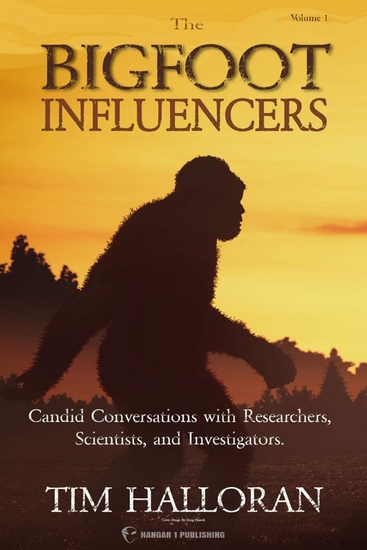
Bigfoot Influencers - Candid Conversations with Researchers Scientists and Investigators - cover

Bigfoot Influencers - Candid Conversations with Researchers Scientists and Investigators

Tim Halloran

Casa editrice: Hangar 1 Publishing

  • 0
  • 0
  • 0

Sinossi

The book highlights researchers, scientists, and influencers currently performing impactful work on the study related to the subject of Bigfoot.
 
Tim dives into their theories, experiences, and research with the influencers, giving readers a glimpse into their historical impact on the subject and their current projects.
 
His inspiration to write the book began with a personal quest to better understand who is actively studying the Bigfoot Phenomenon and what motivates them to do so. He soon realized the enormous and strategic efforts being put forth by individuals and groups across North America. With this in mind, the book brings all these individuals together for the readers. Whether you are an enthusiast or a researcher, The Bigfoot Influencers shares fascinating experiences and facts about the influencers in North America and the impact they are having.
 
The Bigfoot Influencers Volume 1 is the first in the series of books delving into this fascinating phenomenon.
 
"I'm always struck by an eyewitness who will comment on the fact how amazingly rapidly this creature receded or climbed up a slope. There was one who said, 'it would have taken me forty-five minutes to get up to that ridge top. And this thing did it in ten'" - Dr. Jeff Meldrum"It's a Mystery that hardly no one gives evidence and no one studies it… for the most part. When sightings happen, most people clam up. When evidence is presented, the scientists clam up." - Doug Hajicek"The scientific method is about observation, that's where it begins. One begins with an observation and from that emerges some sort of hypothesis." - Daryl Colyer"I'm more confident now about the Patterson Gimlin Film than when I was a 10 or 11-year-old back in the late 60s. That confidence is based on data and analysis, not just first impressions." - Dr. Jeff Meldrum"The question of Bigfoot is a complicated one. All of science deals with reality, whether it's physics or chemistry, every science deals with it." - Dr. Esteban Sarmiento"These anecdotes Span the entire globe, involving hundreds of different cultures explaining the same phenomenon by different names, so at some point you have to, even as a scientist, say, 'Well, there's got to be something.'" - Les Stroud
Disponibile da: 10/10/2022.
Lunghezza di stampa: 302 pagine.

Altri libri che potrebbero interessarti

  • A Road Running Southward - Following John Muir's Journey through an Endangered Land - cover

    A Road Running Southward -...

    Dawn Chapman

    • 0
    • 0
    • 0
    In 1867, John Muir set out on foot to explore the botanical wonders of the South, keeping a detailed journal of his adventures as he traipsed from Kentucky southward to Florida. One hundred and fifty years later, on a similar whim, veteran Atlanta reporter Dan Chapman recreated Muir's journey to see for himself how nature has fared since Muir's time. Channeling Muir, he uses humor, keen observation, and a deep love of place to celebrate the South's natural riches. 


    Each chapter touches upon a local ecological problem—moving between John Muir's vivid descriptions of a lush botanical paradise and the myriad environmental problems facing the South today. Along the way he talks to locals with deep ties to the land—scientists, hunters, politicians, and even a Muir impersonator—who describe the changes they've witnessed and what it will take to accommodate a fast-growing population without destroying the natural beauty and a cherished connection to nature. 


    A Road Running Southward is part travelogue, part environmental cri de coeur, and paints a picture of a South under siege. It is a passionate appeal, a call to action to save one of the loveliest and most biodiverse regions of the world by understanding what we have to lose if we do nothing.
    Mostra libro
  • Wayfarer: Love loss and life on Britain’s ancient paths - cover

    Wayfarer: Love loss and life on...

    Phoebe Smith

    • 0
    • 0
    • 0
    Shortlisted for the Edward Stanford Travel Book of the Year 2025A Financial Times best summer travel book of 2024Travel Book of the Year at the Inspire Global Media Awards 
    'A powerfully delicate book of love, loss and discovery, along paths of emotional understanding and physical wonder.' Raynor Winn 
    On an assignment to walk the most famous pilgrimage in the world – the Camino de Santiago, in northern Spain – Phoebe Smith somehow lost her way. 
    Having spent a lifetime exploring unfamiliar places, she quit her dream job, ended her long-term relationship and headed home to North Wales to discover the point to… everything. 
    In her search for answers she found herself – quite by accident – walking some of Britain’s oldest pilgrim paths. And by following these old ways, she ended up confronting past traumas that she thought she had laid to rest. 
    But while it follows holy trails, this is not a book about religion. From losing her mother as a teenager to surviving toxic relationships, Phoebe offers an unflinchingly honest look at her battle with an eating disorder, depression, and the pitfalls of newfound singledom. 
    Skilfully weaving together Phoebe’s own story with those of countless travellers past and present, Wayfarer reveals how nature and place can heal past wounds, offering a pathway to salvation she’d never thought existed. 
    In this award-winning autobiography, Smith takes us on a journey through Europe, her words painting vivid images of the walks and hikes she undertakes. Her memoirs are not just travelogues, but essays of self-discovery and healing. 
    For fans of Raynor Winn (Landlines), Stephen Neale (The South West Coast Path), Will Millard (The Way of the Hermit), Steve Davison (15 Short Walks on Dartmoor North), and Daniel Start (Wild Guide Lake District and Yorkshire Dales). 
    HarperCollins 2024
    Mostra libro
  • Wei Shu and Wu - The Three Kingdoms Warlords Intrigue and the Fight for Supremacy - cover

    Wei Shu and Wu - The Three...

    Rolf Hedger

    • 0
    • 0
    • 0
    The fall of the Han Dynasty marked the end of one of China’s longest and most influential imperial reigns, setting the stage for the chaotic period of the Three Kingdoms. While the dynasty had enjoyed centuries of stability and prosperity, internal corruption, weak leadership, and external rebellions steadily eroded its power. By the late second century AD, the once-mighty Han court was little more than a battleground for rival factions, warlords, and opportunists seeking to seize control. 
    One of the first major signs of decline was the increasing corruption within the imperial court. Eunuchs, who had gained substantial influence over the young emperors, manipulated state affairs for personal gain. As these power struggles intensified, competent officials and generals were sidelined or purged, leaving the empire vulnerable to both internal unrest and external threats. The weakening of central authority allowed regional governors and warlords to act with growing independence, further fragmenting the empire. 
    Amidst this political turmoil, a major peasant uprising erupted in 184 AD—the Yellow Turban Rebellion. Led by Zhang Jue, a Taoist healer who promised salvation through divine intervention, the rebellion quickly spread across northern and central China, drawing hundreds of thousands of followers. Although the Han government eventually crushed the revolt, the effort severely drained the empire’s resources and exposed its inability to maintain control. The rebellion’s suppression also elevated the status of military commanders, many of whom would later become the powerful warlords who divided the empire.
    Mostra libro
  • Flowers of War - cover

    Flowers of War

    Llŷr Gwyn Lewis

    • 0
    • 0
    • 0
    When the author is given a small package, containing letters and papers relating to his grandfather's brother, who was killed in Syria during the Second World War, it leads him on an extended personal journey. An exploration of history, imagination and the process of memory, shifting imperceptibly from autobiography to travelogue, from letters and diaries to official records, from text to visual image.
    
    In his first prose work Lewis reveals a rare and consummate literary talent. Deeply rooted in his Welsh identity, this young writer locates his own and his family's experience within the wider European world in a thoughtful, mature and highly original book.
    
    Flowers of War is a translation of Rhyw Flodau Rhyfel (Y Lolfa, 2014), which won the Creative Non-Fiction category in the 2015 Wales Book of the Year award.
    Mostra libro
  • The Tang Dynasty - Cultural Flourishing and Expansion - cover

    The Tang Dynasty - Cultural...

    Jun Liu

    • 0
    • 0
    • 0
    The Tang Dynasty (618–907 CE) emerged after the collapse of the short-lived Sui Dynasty, which had failed due to internal strife, heavy taxation, and forced labor projects that drained the empire’s resources. The fall of the Sui created a power vacuum, allowing various factions to vie for control. Amid this turmoil, Li Yuan, a former Sui general, led a successful rebellion and established the Tang Dynasty in 618 CE, taking the throne as Emperor Gaozu. His leadership set the foundation for one of China’s most influential and prosperous dynasties. 
    Emperor Gaozu focused on stabilizing the empire by reforming the government, lowering excessive taxes, and restoring order to a nation weakened by years of misrule. However, his reign was relatively short-lived as his son, Li Shimin, proved to be a more capable leader. In 626 CE, Li Shimin forced his father to abdicate and took the throne as Emperor Taizong. His ascension marked the true consolidation of Tang power and the beginning of an era of expansion, reform, and cultural advancement. 
    Under Emperor Taizong’s rule, the Tang Dynasty established a strong centralized government based on Confucian principles. He refined the imperial examination system, ensuring that officials were chosen based on merit rather than birthright. This system allowed for the creation of a competent and efficient bureaucracy, which would become a hallmark of Tang governance. Additionally, Taizong worked to solidify China’s borders by engaging in strategic military campaigns. His army pushed westward into Central Asia, securing control over key trade routes and strengthening the empire’s influence along the Silk Road. These military victories, combined with diplomatic relations with neighboring states, positioned the Tang Dynasty as a dominant force in East Asia.
    Mostra libro
  • Maya Civilization - Pyramids Astronomy and the Rise and Fall of Mesoamerican Power - cover

    Maya Civilization - Pyramids...

    Rolf Hedger

    • 0
    • 0
    • 0
    The Maya civilization emerged from the fertile lands of Mesoamerica, where early agricultural societies gradually developed into one of the most advanced cultures of the ancient world. Long before the rise of monumental cities and towering pyramids, the ancestors of the Maya lived in small villages, relying on farming, hunting, and fishing for sustenance. Corn, or maize, became the cornerstone of their diet and played a central role in their mythology, economy, and daily life. Over time, these early settlements expanded, evolving into complex societies with trade networks, religious practices, and political hierarchies. 
    The roots of Maya civilization can be traced back to the Preclassic period, around 2000 BCE. During this time, small communities scattered across present-day southern Mexico, Guatemala, Belize, Honduras, and El Salvador began cultivating staple crops such as maize, beans, squash, and chili peppers. As agricultural techniques improved, populations grew, leading to the formation of larger settlements. Villages transitioned into regional centers, where early forms of leadership and governance emerged. These developments set the stage for the sophisticated city-states that would later define the Maya world. 
    The Maya were not isolated in their cultural development. They shared Mesoamerica with other influential civilizations, most notably the Olmecs, who thrived along the Gulf Coast of Mexico. The Olmecs, often considered the “mother culture” of Mesoamerica, left a lasting impact on the Maya through their artistic styles, religious beliefs, and ceremonial architecture. The colossal stone heads of the Olmecs, their early writing systems, and their concept of a sacred ballgame were all absorbed and adapted by the Maya. This exchange of ideas helped shape the foundations of Maya civilization, leading to the rise of the first great Maya cities.
    Mostra libro