Unisciti a noi in un viaggio nel mondo dei libri!
Aggiungi questo libro allo scaffale
Grey
Scrivi un nuovo commento Default profile 50px
Grey
Iscriviti per leggere l'intero libro o leggi le prime pagine gratuitamente!
All characters reduced
The Cabala - Exploring Love Loss and Existential Angst in 20th Century Europe - cover

The Cabala - Exploring Love Loss and Existential Angst in 20th Century Europe

Thornton Wilder

Casa editrice: Good Press

  • 0
  • 0
  • 0

Sinossi

In "The Cabala," Thornton Wilder delivers a rich and intriguing narrative interwoven with philosophical inquiries and spiritual reflections. The novel is set in the vibrant milieu of the 1920s, blending elements of realism with Wilder's characteristic lyricism. The plot revolves around the lives of a diverse group of characters who grapple with the existential questions of identity, love, and the quest for meaning. Employing a style that gracefully shifts between prose and poetic dialogue, Wilder constructs a vivid tapestry that reflects the era's cultural and existential dilemmas, demonstrating his prowess in marrying intellectual curiosity with storytelling art. Thornton Wilder was a multifaceted writer, celebrated for his profound insights into human nature, which were shaped by his experiences growing up in a multicultural environment. His engagement with philosophical thought, particularly influenced by the ideas of old and modern thinkers, manifests in "The Cabala" as he invites readers to explore the mystique of human relationships and divine intervention. Wilder'Äôs keen interest in the human experience, as seen throughout his works, signals a profound respect for the complexity of life. For readers seeking a compelling exploration of existential themes and rich character studies, "The Cabala" is an essential addition to any literary collection. Wilder's eloquent prose and insightful observations provide a thought-provoking experience, making the novel both intellectually stimulating and emotionally resonant. This book is a testament to Wilder's belief in the interconnectedness of humanity, offering timeless reflections that continue to resonate with contemporary audiences.
Disponibile da: 21/08/2022.
Lunghezza di stampa: 105 pagine.
Altri libri che potrebbero interessarti

  • The Further Adventures of Robinson Crusoe - cover

    The Further Adventures of...

    Daniel Defoe

    • 0
    • 0
    • 0
    "The Further Adventures of Robinson Crusoe" is a novel by Daniel Defoe, first published in 1719. Just as in its significantly more popular predecessor, Robinson Crusoe (1719), the first edition credits the work's fictional protagonist Robinson Crusoe as its author. It was published under the considerably longer original title: The Farther Adventures of Robinson Crusoe; Being the Second and Last Part of His Life, And of the Strange Surprising Accounts of his Travels Round three Parts of the Globe. Although intended to be the last Crusoe tale, the novel is followed by a non-fiction book involving Crusoe by Defoe entitled Serious Reflections During the Life and Surprising Adventures of Robinson Crusoe: With his Vision of the Angelick World (1720). The story is speculated to be partially based on Moscow embassy secretary Adam Brand's journal detailing the embassy's journey from Moscow to Peking from 1693 to 1695.
    The book starts with the statement about Crusoe's marriage in England. He bought a little farm in Bedford and had three children: two sons and one daughter. Our hero suffered a distemper and a desire to see "his island." He could talk of nothing else, and one can imagine that no one took his stories seriously, except his wife. She told him, in tears, "I will go with you, but I won't leave you." But in the middle of this felicity, Providence unhinged him at once, with the loss of his wife.
    Mostra libro
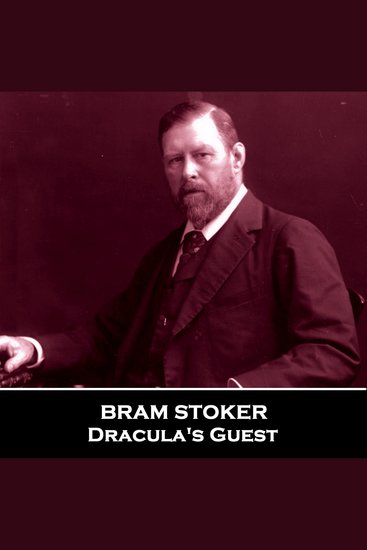
  • Dracula's Guest - From their pens to your ears genius in every story - cover

    Dracula's Guest - From their...

    Bram Stoker

    • 0
    • 0
    • 0
    Abraham Stoker was born in Dublin, Ireland on the 8th of November 1847, the third of seven children.  
    His early years were plagued with such ill-health that he was unable to start school until the age of seven.  He turned the long periods of recovery into an opportunity for thinking and said “I was naturally thoughtful, and the leisure of long illness gave opportunity for many thoughts which were fruitful according to their kind in later years”.  
    Strikingly at Trinity College, Dublin his health had returned with such vigour that he was named their University Athlete whilst also achieving a BA in Mathematics with honours.  
    At this time his interest in theatre became a job offer to be the Dublin Evening Mail’s theatre critic, co-owned by Sheridan Le Fanu.  He now began to also write short stories and in 1872 ‘The Crystal Cup’ was published.  An interest in art developed and he co-founded the Dublin Sketching Club.  
    In 1878 came marriage to Florence Balcombe.  She had formerly been courted by Stoker’s acquaintance, Oscar Wilde.  The marriage produced one child.   
    Stoker had some years before reviewed Henry Irving’s Hamlet and had dined with him.  That friendship now resulted in a proposal from Irving to move to London and to manage his Lyceum Theatre.  His numerous commercial innovations ensured both he and the theatre thrived.  Irving would also often take Stoker with him when he toured abroad. 
    Despite this busy life Stoker continued to write and these works paved the way for his most famous creation, published in 1897, ‘Dracula’.  It is rightly recognised as one of the greatest horror novels of all time and although not the first with a theme of Vampires, it is undoubtedly the most well-known. 
    Stoker also wrote poetry and many excellent short stories and continued to write novels and other works throughout his career. 
    Politically Stoker supported Home Rule, though only by peaceful means.  He was also keen on following scientific trends particularly in medicine. 
    In 1902 his tenure at the Lyceum Theatre ended and although he continued to write his health was deteriorating, mainly due to a series of debilitating strokes. 
    Bram Stoker died on the 20th April 1912, in Pimlico, London.  He was 64.
    Mostra libro
  • Stolen Bacillus The (Unabridged) - cover

    Stolen Bacillus The (Unabridged)

    H. G. Wells

    • 0
    • 0
    • 0
    The Stolen Bacillus and Other Incidents is a collection of fifteen fantasy and science fiction short stories written by the English author H. G. Wells between 1893 and 1895. It was first published by Methuen & Co. in 1895 and was Wells's first book of short stories. All of the stories had first been published in various weekly and monthly periodicals.
    Mostra libro
  • Monkey Nuts - cover

    Monkey Nuts

    D H Lawrence

    • 0
    • 0
    • 0
    ‘Monkey Nuts’ was written by D H Lawrence in 1922. 'Monkey Nuts' turns the traditional love story on its head. It is the woman (the new liberated woman Lawrence had little time for) who does the chasing and the boy who is reluctant. Lawrence seems to be saying it is the unspoken love between the two men in the story which is more satisfying than the possible love between the man and the woman which the boy rejects. Although the older man goes through the motions of chasing the girl, even he seems to realise the sterility of one-sided love.
    Mostra libro
  • A Thousand Deaths - From their pens to your ears genius in every story - cover

    A Thousand Deaths - From their...

    Jack London

    • 0
    • 0
    • 0
    John Griffith Chaney was born on January 12th, 1876 in San Francisco.   
    His father, William Chaney, was living with Flora Wellman when she became pregnant.  Chaney insisted she have an abortion.  Flora's response was to turn a gun on herself.  Although her wounds were not severe the trauma made her temporarily deranged. 
    In late 1876 his mother married John London and the young child was brought to live with them as they moved around the Bay area, eventually settling in Oakland where now, calling himself Jack, he completed grade school. 
    Jack worked hard at several jobs, sometimes 12-18 hours a day, but his dream was university.  He studied hard and borrowed the money to enrol in the summer of 1896 at the University of California in Berkeley. 
    In 1897, at 21, Jack searched out newspaper accounts of his mother's suicide attempt and for the name of his biological father. He wrote to Chaney, then living in Chicago, who claimed he could not be Jack’s father because he was impotent and casually asserted that London's mother had relations with other men.  Jack, devastated by the response, quit Berkeley and went to the Klondike. Other accounts suggest that his dire finances presented Jack with the excuse he needed to leave. 
    In the Klondike Jack began to gather material for his writing but also accumulated many health problems, including scurvy, which together with hip and leg problems he would carry for the rest of his life. 
    During the late 1890's Jack was regularly publishing short stories and by the turn of the century full blown novels. 
    By 1904 Jack had married, fathered two children and was now in the process of divorcing.  A stint as a reporter on the Russo-Japanese war of 1904 was equal amounts trouble and experience. But that experience was always put to good use in a continuing and remarkable output of work. 
    In 1905 he married Charmian Kittredge who at last was a soul and companion who brought him some semblance of peace despite his advancing alcoholism and his incurable wanderlust. 
    Twelve years later Jack had amassed both wealth and a literary reputation through such classics as ‘The Call of the Wild’, ‘White Fang’ and many others. He had a reputation as a social activist and was a tireless friend of the workers.   
    Jack London died suffering from dysentery, late-stage alcoholism and uremia, aged only 40, on November 22nd 1916 at his property in Glen Elen in California.
    Mostra libro
  • Anthology of Classic Short Stories Vol 1 (Characters) - The Darling by Anton Chekhov Alyosha the Pot by Leo Tolstoy Bartleby The Scrivener by Herman Melville The Ambitious Guest by Nathaniel Hawthorne and others - cover

    Anthology of Classic Short...

    Anton Chekhov, Guy de...

    • 0
    • 0
    • 0
    This is a collection of stories about interesting, unusual, bright human characters and destinies.
    Contents:
    Gusev by Anton Chekhov
    Boule de Suif by Guy De Maupassant
    Alyosha the Pot by Leo Tolstoy
    Mateo Falcone by Prosper Mérimée
    Little Brother by Mary E. Mann
    Bartleby, The Scrivener by Herman Melville
    The Lightning-Rod Man by Herman Melville
    The Ambitious Guest by Nathaniel Hawthorne
    The Darling by Anton Chekhov
    A Simple Heart by Gustave Flaubert
    Mostra libro