Begleiten Sie uns auf eine literarische Weltreise!
Buch zum Bücherregal hinzufügen
Grey
Einen neuen Kommentar schreiben Default profile 50px
Grey
Jetzt das ganze Buch im Abo oder die ersten Seiten gratis lesen!
All characters reduced
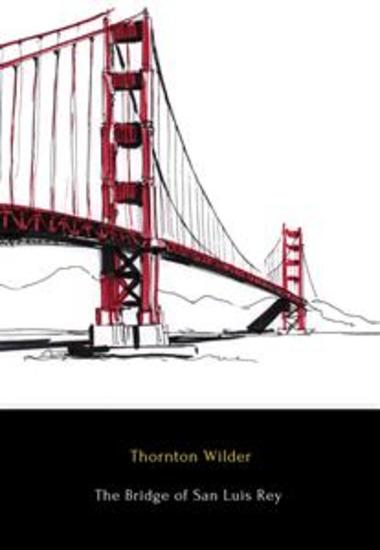
The Bridge of San Luis Rey - cover

The Bridge of San Luis Rey

Thornton Wilder

Verlag: Carousel Books

  • 0
  • 0
  • 0

Beschreibung

First published in 1927 and winner of the Pulitzer Prize in 1928, “The Bridge of San Luis Rey” is the moving story of a tragic accident and its aftermath by American author Thornton Wilder. The novel tells the fictional story of the victims of a horrific collapse of an Incan rope bridge in Peru and how they came to be on the bridge on that fateful day. Set in the early 18th century, the novel begins with a description of the bridge’s collapse, which claimed the lives of all five people who were crossing it, by the tragedy’s sole witness: a Franciscan friar, Brother Juniper, who was almost crossing the bridge himself when it collapsed. Brother Juniper wishes to make sense of the day’s events and hopes to understand how the tragedy relates to Divine Providence by finding out all that he can about the victims. The friar begins a philosophical and introspective journey that will last him several years and takes him thousands of miles. Critically acclaimed and deeply thoughtful, “The Bridge of San Luis Rey” endures as a timeless story of loss, tragedy, and man’s eternal search for meaning in a cruel world.
Verfügbar seit: 22.03.2023.

Weitere Bücher, die Sie mögen werden

  • Gabriel-Ernest - From their pens to your ears genius in every story - cover

    Gabriel-Ernest - From their pens...

    Saki Saki

    • 0
    • 0
    • 0
    Hector Hugh Munro, more familiarly known by his pen-name ‘Saki’ was born in what was then Akyab in British Burma on 18th December 1870. His father was an Inspector General for the Indian Imperial Police, and his mother the daughter of a Rear Admiral. 
    When he was 2 his mother died and he and his siblings were sent back to England to be raised by their grandmother and paternal maiden aunts in a strict, puritanical household near Barnstaple, Devon. Educated by governesses Saki used many of these women as character models for his later writing. 
    At 17 his father retried and returned to England and then embarked on a series of European travels with Saki and his siblings. 
    After a short stint working in Burma with the Indian Imperial Police Saki decided to move to London to make a living as a writer. Initially he wrote as a journalist for a number of newspapers and magazines before attempting an historical study, ‘The Rise of the Russian Empire’, whose real value lay in directing him to writing short stories instead, the first of which, ‘Dogged’, he published in 1899. 
    From here it was a short stab of the pen to writing political satire before in 1902 he became the foreign correspondent for The Morning Post, first in the Balkans, then Russia, Paris and back to London in 1908, where 'the agreeable life of a man of letters with a brilliant reputation awaited him.'  
    Collections of his short stories full of witty, mischievous and often macabre stories that satirized Edwardian society and two novels now appeared in the years up to the Great War.  At its’ outbreak he was 43 but managed to join as an ordinary trooper. More than once he returned to the battlefield when officially too sick or injured.  
    On 14th November 1916 Hector Hugh Munro was sheltering in crater during the Battle of the Ancre, when he was shot and killed by a German sniper. According to several sources, his last words were "Put that bloody cigarette out!"
    Zum Buch
  • Murder Amongst Shadows - cover

    Murder Amongst Shadows

    Jessica Lyn

    • 0
    • 0
    • 0
    Murder Amongst Shadows is a tragic story that projects sadness, terror, and injustice. Bison is a small town with 350 people, that was situated near a grand river in the South Dakota Plains. The people of Bison had constant faceoffs with death and terror. Families frequently lose their loved ones. It became a norm in the town. People get killed, young girls go missing daily, and no one dares to ask questions to request justice for fear of becoming the next target. Detective Eddie, a daring, smart, and diligent man was the people's source of hope. He was good at his job and has a criminal instinct that enabled him to spot the bad guys easily. Eddie worked on restoring peace to South Dakota and brought justice to the families whose daughters were kidnapped. Rachael on the other hand, was the heart of the people. She brought light into the community. She is a rich, vibrant, and brave young lady who made sure everyone in Bison tapped from her blessings. Rachael and her parents, Mr. & Mrs. Lawson were good people who went all out for their community. Unfortunately, Rachael's good deeds didn't prevent them from the cold hands of death. Sadly, good things don't last; and bad things happen to good people. Tragedy befalls the family of Mr. & Mrs. Lawson as they lost their lovely daughter, Rachael. She was caught up in an evil nest and was brutally murdered by her supposed husband, Albert. Day suddenly turned night, fear crept in, tears-soaked clothes, and confusion filled the air, …it was indeed a great loss! The perpetrators of the evil act were in no time caught and faced the law. The family of the deceased sought fortitude and strength to be able to bear the loss of their daughter.
    Zum Buch
  • A Dialogue Among Clever People - From their pens to your ears genius in every story - cover

    A Dialogue Among Clever People -...

    Leo Tolstoy

    • 0
    • 0
    • 0
    Leo Tolstoy was born in 1828 in the Russian province of Tula to a wealthy noble family. As a child, he had private tutors but he showed little interest in any formal education. When he went to the University of Kazan in 1843 to study oriental languages and law, he left without completing his courses.  Life now was relaxed and idle but with some writing also taking place.  Gambling debts forced an abrupt change of path and he joined the army to fight in the Crimean War.  He was commended for his bravery and promoted but was appalled at the brutality and loss of life.  He recorded these and other earlier experiences in his diaries which formed the basis of several of his works. 
    In 1852 ‘Childhood’ was published to immediate success and was followed by ‘Boyhood’ and ‘Youth’. 
    His experience in the army and the horrors he witnessed resulted in ‘The Cossacks’ in 1862 and the trilogy ‘Sevastopol Tales’. After the war he travelled around Europe, visiting London and Paris and meeting such luminaries as Victor Hugo and Charles Darwin.  
    It was now that Tolstoy began his masterpiece, ‘War and Peace’. Published in 1869 it was an epic work that changed literature. He quickly followed this with ‘Anna Karenina’.  
    These successes made Tolstoy rich and helped him accomplish many of his dreams but also brought problems as he grappled with his faith and the lot of the oppressed poor. These revolutionary views became so popular that the authorities now kept him under surveillance.  
    He led a life of asceticism and vegetarianism and put his socialist ideals into practice by establishing numerous schools for the poor and food programmes. He also believed in giving away his wealth, which caused much discord with his wife.  
    His writing continued to bring forth classics such as ‘The Death of Ivan Ilyich’ and many brilliant and incisive short stories such as ‘How Much Land Does A Man Need’.  
    In 1901 Tolstoy was excommunicated from the Church and controversially deselected for the Nobel Prize for Literature. 
    Whilst undertaking a pilgrimage by train in October 1910 with his daughter Aleksandra he caught pneumonia in the nearby town of Astapovo.  Leo Tolstoy died on November 9th, 1910, he was 82.
    Zum Buch
  • The Celestial Omnibus and Other Stories - cover

    The Celestial Omnibus and Other...

    E. M. Forster

    • 0
    • 0
    • 0
    The Celestial Omnibus and Other Stories is a collection of short-stories which Forster wrote during the prewar years, most of which were symbolic fantasies or fables. It includes:The Story of a PanicThe Other Side of the HedgeThe Celestial OmnibusOther KingdomThe Curate's FriendThe Road from ColonusE.M. Forster (born January 1, 1879, London) was a British novelist, essayist, and social and literary critic. He is most renowned and admired for his novels Howards End (1910), A Passage to India (1924), and his large body of criticism.
    Zum Buch
  • A Successful Rehearsal - From their pens to your ears genius in every story - cover

    A Successful Rehearsal - From...

    Anthony Hope

    • 0
    • 0
    • 0
    Sir Anthony Hope Hawkins was born on 9th February 1863 in Clapton, London.  
    He was educated at St John's School, Leatherhead, Marlborough College and Balliol College, Oxford.  Hope trained as a lawyer and barrister and was called to the Bar by the Middle Temple in 1887. Despite what was thought to be a promising legal career he had literary ambitions and wrote in his spare time. 
    His early works appeared in various periodicals of the day but for his first book ‘A Man of Mark’ (1890), with no publisher interested, he published with his own resources.  
    More novels and short stories followed, including the mildly successful ‘Mr Witt's Widow’ in 1892. Hope even found time to run as the Liberal candidate for Wycombe in the election that same year but was unsuccessful. 
    His first major literary success came with ‘The Dolly Dialogues’, a collection of previously published magazine pieces followed very quickly by his instant classic, ‘The Prisoner of Zenda’. He now gave up the vestiges of his legal career to pursue writing full-time. 
    Despite never again reaching the same pinnacle of success he was popular and wrote prolifically across novels, plays and of course, short stories though his writing output rapidly diminished after the war. 
    In 1918 he was knighted for his contribution to propaganda efforts during World War I.  
    His short stories are delicate, mannered and often surprising with their wit, humour and interplay of characters who say one thing and usually mean another.  He was very definitely a writer of escapist rather than serious fare but they are no less enjoyable for that. 
    Anthony Hope died of throat cancer on 8th July 1933 at his country home, Heath Farm at Walton-on-the-Hill in Surrey. He was 70.
    Zum Buch
  • Artists On Art - A Short Story Volume - Stories about all manner of arts in both fun and scary settings - cover

    Artists On Art - A Short Story...

    H. P. Lovecraft, Edgar Allan...

    • 0
    • 0
    • 0
    Art. The greatest standard bearer of what the human condition really is?  Or Emperor’s Clothes, cheap gimmicks displayed as all-knowing? 
    When it comes to writing we have our favourite authors.  But what of the authors themselves. What are they keen to write of? 
    For our classic authors; from Poe to Lovecraft, from Woolf to Fitzgerald art in their words, is something to be admired.  From many angles, many views, their stories, their characters interact with art and the consequences fall as they may. 
     
    01 - Artists on Art - A Short Story Volume 
    02 - Pickman's Model by H. P. Lovecraft 
    03 - The Mezzotint by M. R. James 
    04 - Psyche's Art by Louisa May Alcott 
    05 - Fun In An Artist's Studio by F. Scott Fitzgerald 
    06 - Blue & Green by Virginia Woolf 
    07 - The Oval Portrat by Edgar Allan Poe
    Zum Buch