Unisciti a noi in un viaggio nel mondo dei libri!
Aggiungi questo libro allo scaffale
Grey
Scrivi un nuovo commento Default profile 50px
Grey
Iscriviti per leggere l'intero libro o leggi le prime pagine gratuitamente!
All characters reduced
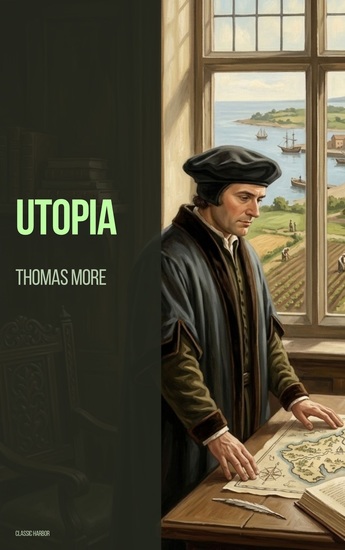
Utopia - cover

Utopia

Thomas More

Casa editrice: Classic Harbor

  • 0
  • 0
  • 0

Sinossi

Enter Thomas More's imagined society and explore enduring questions about politics, justice, wealth, work, and human nature.

Thomas More's Utopia presents an imagined island society that provides the framework for a wide-ranging examination of European political and social life.

Through conversations and descriptions of the fictional society, More explores government, property, labor, education, religion, law, wealth, and social organization. The work invites readers to question whether the institutions of their own society truly produce justice and happiness.

Since its publication in the sixteenth century, Utopia has remained a foundational work of political philosophy and social thought.

Discover Thomas More's influential vision and explore timeless questions about how societies should be organized and governed.
Disponibile da: 07/10/2026.
Lunghezza di stampa: 155 pagine.
Altri libri che potrebbero interessarti

  • The Brussels Speech - What is the Great Replacement? - cover

    The Brussels Speech - What is...

    Renaud Camus

    • 0
    • 0
    • 0
    On May 6, 2023, Renaud Camus, a prominent French writer and theorist, was invited by Vlaams Belang to deliver a speech at the Flemish Parliament in Brussels. This publication presents his thought-provoking speech, translated from French to English.
    Mostra libro
  • Activating the Common Good - Reclaiming Control of Our Collective Well-Being - cover

    Activating the Common Good -...

    Peter Block

    • 0
    • 0
    • 0
    A powerful, inspiring, and achievable vision of a society based on cooperation and community instead of competition and commodification. 
     
    This book counters the dominant and destructive story that we are polarized, violent, selfish, and destined to consume everything in sight. That is not who we are. 
     
    The challenge, Peter Block says, is that we are suffering under an economic theology that is based on scarcity, self-interest, competition, and infinite growth. We're told we can purchase and outsource all that matters. Block calls this the "business perspective narrative." It dominates not only the economy but also architecture, faith communities, journalism, arts, neighborhoods, and much more. 
     
    Block offers an antidote:  the "common good narrative." It embodies the belief that we are basically communal and cooperative. And that we have the capacity to communally produce what we care most about: raising a child, safety, livelihood, health, and a clean and sustainable environment. 
     
    This book describes how shifts to the common good perspective could transform many areas, fostering journalism that reports on what works, architecture that designs habitable spaces creating connection, faith collectives that build community, a market that is restrained and local, and leadership and activism that build social capital by creating trust among citizens. With these shifts, we would fundamentally change the world we live in for the better.
    Mostra libro
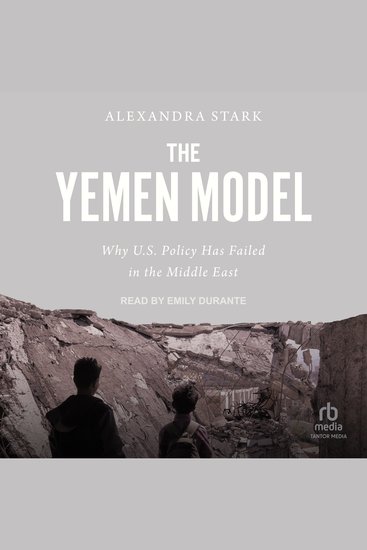
  • The Yemen Model - Why US Policy Has Failed in the Middle East - cover

    The Yemen Model - Why US Policy...

    Alexandra Stark

    • 0
    • 0
    • 0
    A close look at failed US policies in the Middle East, offering a fresh perspective on how best to reorient goals in the region 


    In this book Alexandra Stark argues that the US approach to Yemen offers insights into the failures of American foreign policy throughout the Middle East. Stark makes the case that despite often being drawn into conflicts within Yemen, the United States has not achieved its policy goals because it has narrowly focused on counterterrorism and regional geopolitical competition rather than on the well-being of Yemenis themselves. She offers recommendations designed to reorient US policy in the Middle East in pursuit of US national security interests and to support the people of these countries in their efforts to make their own communities safe, secure, and prosperous.
    Mostra libro
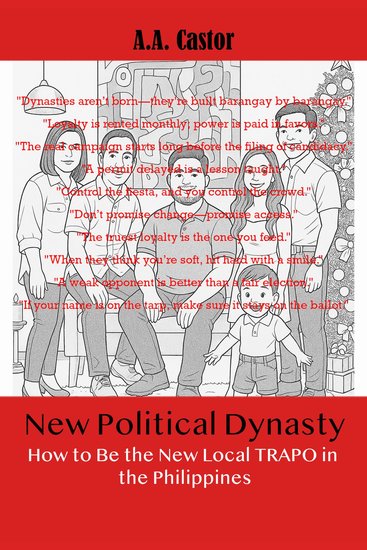
  • New Political Dynasty: How to Be the New Local TRAPO in the Philippines - cover

    New Political Dynasty: How to Be...

    A.A. Castor

    • 0
    • 0
    • 0
    New Political Dynasty: How to Be the New Local TRAPO in the Philippines is a bold, unfiltered guide to mastering the ruthless realities of local politics in the Philippines. In a landscape dominated by dynasties and backroom deals, this book offers an unapologetic roadmap for rising to power—and staying there. 
    Whether you're an aspiring barangay captain, a first-time councilor, or a seasoned political operator ready to build a legacy, this book dives deep into the hard truths and real mechanics behind political success. From exploiting rivalries and controlling precincts to installing loyal judges and manufacturing public support, each chapter equips you with tools used by the most enduring political families in the country. 
    This is not about idealism. It's about strategy. It's not about pretending to be clean—it's about knowing how to play the game better than anyone else. 
    If you've ever wondered how political dynasties maintain their grip on power—or how to become one yourself—this brutally honest manual delivers what others won't: the real playbook behind the politics of patronage, perception, and permanence.
    Mostra libro
  • The Marxism of Che Guevara - Philosophy Economics Revolutionary Warfare - cover

    The Marxism of Che Guevara -...

    Michael Löwy

    • 0
    • 0
    • 0
     “Excellent. . . .The book gives one a clear understanding of the relationship of Guevara's thought to traditional Russian and Marxist philosophy.” —Choice Reviews   In this seminal exploration of Che Guevara’s contributions to Marxist thinking, Michael Löwy traces Che's ideas about Marxism both as they related to Latin America and to more general philosophical, political, and economic issues. Now revised and updated, this edition includes a chapter on Guevara's search for a new paradigm of socialism and a substantive essay by Peter McLaren on Che’s continued relevance today. Löwy portrays Guevara as a revolutionary humanist who considered all political questions from an internationalist viewpoint. For him, revolutionary movements in Latin America were part of a world process of emancipation. Löwy considers especially Che's views on the contradiction between socialist planning and the law of value in the Cuban economy and his search for an alternative road to the “actually existing socialism” of the Stalinist and post-Stalinist Soviet bloc. Che’s varied occupations—doctor and economist, revolutionary and banker, agitator and ambassador, industrial organizer and guerrilla fighter—were expressions of a deep commitment to social change. This book eloquently captures his views on humanity, his contributions to the theory of revolutionary warfare, and his ideas about society’s transition to socialism, offering a cohesive, nuanced introduction to the range of Guevara's thought.   “An excellent classroom tool for anyone teaching about Latin America or revolution.” ―Science & Society “[This book] provides us with the picture of [Guevara’s] great, flexible, and searching mind.” —Carleton Beals   “Michael Löwy’s brief but penetrating book takes Che Guevara not as a romantic adventurer but as a serious revolutionary militant.” ―Telos  
    Mostra libro
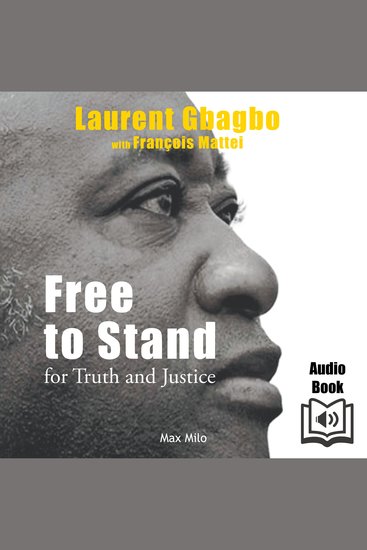
  • Free to Stand for Truth and Justice - cover

    Free to Stand for Truth and Justice

    Laurent Gbagbo

    • 0
    • 0
    • 0
    Ousted from power by the French army on April 11, 2011, following the disputed presidential election in Côte d'Ivoire of November 2010, Laurent Gbagbo was charged with crimes against humanity before the International Criminal Court (ICC) in The Hague, on December 5, 2011.
    
    This book, written from 2012 onwards, thanks to numerous prison visits and interviews, is the only one to have been produced with the participation of the Ivorian president during his incarceration and trial.
    This unique testimony is more than ever a document for history, because it sheds light on the manipulations of the 2010 elections, the collusion between Nicolas Sarkozy's France and the ICC to get rid of Laurent Gbagbo, and the stalling tactics and maneuvers that marred "Gbagbogate."
    Over meetings with François Mattei, Laurent Gbagbo looks back on his seven years in prison, explains what they mean and shares his vision for the future—that of a free man, come what may.
    Mostra libro