Unisciti a noi in un viaggio nel mondo dei libri!
Aggiungi questo libro allo scaffale
Grey
Scrivi un nuovo commento Default profile 50px
Grey
Iscriviti per leggere l'intero libro o leggi le prime pagine gratuitamente!
All characters reduced
Tess of the d'Urbervilles: A Pure Woman - cover

Tess of the d'Urbervilles: A Pure Woman

Thomas Hardy

Casa editrice: DigiCat

  • 0
  • 0
  • 0

Sinossi

Thomas Hardy's "Tess of the d'Urbervilles: A Pure Woman" is a poignant exploration of tragedy, social criticism, and the complexities of human relationships set in Victorian England. The novel employs a naturalistic style, rich in vivid imagery and emotional depth, effectively weaving Tess's plight against the rigid social structures and moral expectations of her time. The narrative scrutinizes the idyllic façade of rural life while exposing the harsh realities faced by individuals, particularly women, whose lives are governed by societal norms and class disparities. Hardy's intricate characterization, especially of Tess, portrays her as a victim of fate, thus inviting readers to ponder the existential dilemmas she encounters throughout her life. Thomas Hardy, a novelist and poet deeply influenced by the cultural upheavals of the 19th century, infuses his work with an acute awareness of the struggles against determinism and social convention. His own experiences in rural England, along with a profound connection to the landscapes he described, shaped his portrayal of human suffering and resilience. Hardy's concern for women's rights and critiques of industrialization further illuminate the motivations behind creating Tess, who embodies both purity and the harsh realities of society. I wholeheartedly recommend "Tess of the d'Urbervilles" for readers seeking a rich, introspective literary experience that resonates with contemporary issues of gender, class, and morality. Hardy's masterful prose ensures that Tess's story remains timeless, compelling us to reflect on the nuanced interplay between fate and free will.
Disponibile da: 16/09/2022.
Lunghezza di stampa: 370 pagine.

Altri libri che potrebbero interessarti

  • The Wound Dresser - The Lost Manuscript - cover

    The Wound Dresser - The Lost...

    Walt Whitman

    • 0
    • 0
    • 0
    Walter Whitman was an American poet, essayist and journalist. A humanist, he was a part of the transition between transcendentalism and realism, incorporating both views in his works. Whitman is among the most influential poets in the American canon, often called the father of free verse. His work was controversial in its time, particularly his 1855 poetry collection Leaves of Grass, which was described as obscene for its overt sensuality. Whitman's own life came under scrutiny for his presumed homosexuality. 
     
    Born in Huntington on Long Island, as a child and through much of his career, he resided in Brooklyn. At age 11, he left formal schooling to go to work. Later, Whitman worked as a journalist, a teacher, and a government clerk. Whitman's major poetry collection, Leaves of Grass, was first published in 1855 with his own money and became well known. The work was an attempt at reaching out to the common person with an American epic. He continued expanding and revising it until his death in 1892. During the American Civil War, he went to Washington, D.C. and worked in hospitals caring for the wounded. His poetry often focused on both loss and healing. On the death of Abraham Lincoln, whom Whitman greatly admired, he wrote his well-known poems, "O Captain! My Captain!" and "When Lilacs Last in the Dooryard Bloom'd", and gave a series of lectures. After a stroke towards the end of his life, Whitman moved to Camden, New Jersey, where his health further declined. When he died at age 72, his funeral was a public event. 
     
    Whitman's influence on poetry remains strong. Mary Whitall Smith Costelloe argued: "You cannot really understand America without Walt Whitman, without Leaves of Grass ... He has expressed that civilization, 'up to date,' as he would say, and no student of the philosophy of history can do without him." Modernist poet Ezra Pound called Whitman "America's poet ... He is America.
    Mostra libro
  • Picture in the House The (Unabridged) - cover

    Picture in the House The...

    H. P. Lovecraft

    • 0
    • 0
    • 0
    While riding his bicycle in the Miskatonic Valley of rural New England, a genealogist seeks shelter from an approaching storm. He enters an apparently abandoned house, only to find it occupied by a "loathsome old, white-bearded, and ragged man", speaking in "an extreme form of Yankee dialect... thought long extinct." The narrator notices that the house is full of antique books, exotic artifacts, and furniture predating the American Revolution. At first, the old man appears harmless and ignorant towards his guest. However, he shows a disquieting fascination for an engraving in a rare old book, Regnum Congo, and admits to the narrator how it made him hunger for "victuals I couldn't raise nor buy"- presumably human flesh. It's suggested that the old man was murdering travelers who stumbled upon the house to satisfy his "craving", and has extended his own life preternaturally through cannibalism.[4] Soon, a now frightened narrator realizes the old man has been alive for over a century. Still, the old man denies he ever acted upon such a desire. Suddenly, a drop of blood falls from the ceiling, clearly coming from the floor above, and splashes a page in the book. The narrator then looks up to see a spreading red stain on the ceiling; this belies the old man's statement. At that moment, a bolt of lightning destroys the house. Fortunately, the narrator survives to tell of his ordeal.
    Mostra libro
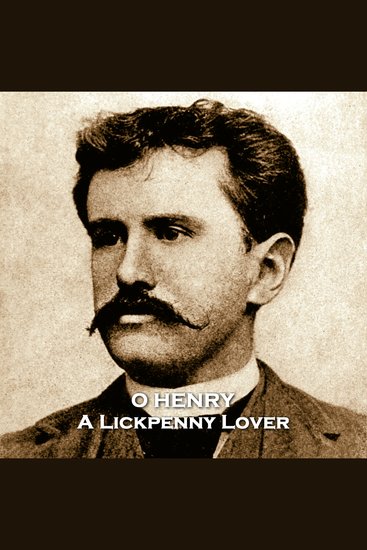
  • A Lickpenny Lover - From their pens to your ears genius in every story - cover

    A Lickpenny Lover - From their...

    O Henry

    • 0
    • 0
    • 0
    William Sydney Porter was born on 11th September 1862 in Greensboro, North Carolina. At age 3 his mother died from tuberculosis. From an early age it was clear Porter had a large appetite for reading as he absorbed the world around him. 
    He first attended at a school run by his aunt before enrolling at the Lindsey Street High School and then worked at his uncle’s drugstore and gained a pharmacists’ license in 1881.  
    A persistent cough took him to Texas in the hope that a change of climate would help his symptoms. He took on various types of work, initially from ranch hand and cook and then as varied as pharmacist, draftsman, bank teller and journalist. He also began to write, though for now, purely as a hobby. 
    He was a member of several singing and dramatic groups when he met 17 year old Athol Estes, daughter of a wealthy Austin family. Despite her mother’s objection owing to Athol’s tuberculosis, they began courting and in July 1887, they eloped and soon married. 
    Athol, impressed by his writing, encouraged him to get them published. A job as a draftsman at the Texas General Land Office paid a healthy $100 dollars per month and life was good. 
    But then life turned cruel. His son died a few hours after birth although a daughter, Margaret, came the following year.  His job had to be vacated but another was found at the First National Bank of Austin. The bank operated informally and Porter was careless in keeping the books. He lost that job but began writing for the humourous weekly The Rolling Stone and the Houston Post. Some time later the federal Bank auditors went through his former accounts and he was arrested on charges of embezzlement. 
    Porter fled the day before his trial to Honduras. Holed up for several months he began to write.  Athol had become too ill to travel to meet him and learning that her health was deteriorating he surrendered to the court in February 1897.  Bail was obtained so that he could stay with Athol during her final days.  
    Porter was sentenced to five years at the Ohio Penitentiary in Columbus. His pharmacy qualifications got him the job of night druggist.  His sentence also gave him time to write and publish fourteen short stories. In December 1899 in McClure’s Magazine he published a short story as O Henry.  
    He was released two years early in July 1901, and reunited with Margaret, now 11, in Pittsburgh.  He now began his most prolific period of writing; a short story per week for the New York World, while also publishing works in other magazines.  Eventually over 600 of his short stories were published. 
    Porter was a heavy drinker and in 1908 his health, which had deteriorated for several years, took a dramatic turn for the worse, as did his writing.  
    O Henry died of cirrhosis of the liver complicated by diabetes and an enlarged heart on 5th June 1910.
    Mostra libro
  • Christmas Holidays at Merryvale - cover

    Christmas Holidays at Merryvale

    Alice Hale Burnett

    • 0
    • 0
    • 0
    Daddy Williams' Toy Shop is the center of interest to "Toad" and his friends long before Christmas arrives. They plan a surprise that brings joy to a poor family. The boys erect snow forts, and the two sides have a battle royal.
    Mostra libro
  • Little Women - Audiobook - cover

    Little Women - Audiobook

    Louisa May Alcott, Classic...

    • 0
    • 0
    • 0
    Little Women by Louisa May Alcott is a timeless coming-of-age story that follows the lives of the four March sisters—Meg, Jo, Beth, and Amy—as they grow up in Civil War–era New England. Each sister has her own dreams, struggles, and unique personality, and together they navigate the joys and sorrows of family life, friendship, love, and loss. From childhood mischief to adult responsibilities, the novel paints a warm and deeply human portrait of a close-knit family.More than just a domestic tale, Little Women is a rich exploration of female ambition, identity, and independence in a society with strict expectations for women. Jo March, the fiercely intelligent and rebellious second sister, has become an enduring literary heroine. With its heartfelt storytelling, moral depth, and unforgettable characters, Little Women continues to resonate with readers of all ages.
    Mostra libro
  • Emma (Volume 1) - cover

    Emma (Volume 1)

    Jane Austen

    • 0
    • 0
    • 0
    Emma (Volume 1), by Jane Austen, is a novel about youthful hubris and the perils of misconstrued romance. The story takes place in the fictional village of Highbury and the surrounding estates of Hartfield, Randalls, and Donwell Abbey and involves the relationships among individuals in those locations consisting of "3 or 4 families in a country village".
    Mostra libro