Join us on a literary world trip!
Add this book to bookshelf
Grey
Write a new comment Default profile 50px
Grey
Subscribe to read the full book or read the first pages for free!
All characters reduced
The History of Rome: From the Union of Italy to the Subjugation of Carthage and the Greek States - Unveiling Rome's Ascendance: Conquests Politics and Power - cover

The History of Rome: From the Union of Italy to the Subjugation of Carthage and the Greek States - Unveiling Rome's Ascendance: Conquests Politics and Power

Theodor Mommsen

Translator William P. Dickson

Publisher: Good Press

  • 0
  • 0
  • 0

Summary

In "The History of Rome: From the Union of Italy to the Subjugation of Carthage and the Greek States," Theodor Mommsen presents a meticulously crafted narrative that chronicles the transformative events of the Roman Republic from the late 4th century BC to the Roman conquest of Carthage and the Greek territories. Mommsen's literary style is characterized by its vivid prose and analytical rigor, blending historical detail with engaging storytelling. The work is situated within the broader literary context of 19th-century historiography, where Mommsen's unique perspective illuminates the socio-political dynamics of ancient Rome, presenting a richly textured view of its rise and imperial ambitions. Theodor Mommsen, a German classical scholar and politician, was awarded the Nobel Prize in Literature in 1902 for this very work, which reflects his deep engagement with Roman history and its lasting implications on Western civilization. His extensive studies in philology and archaeology informed his comprehensive approach to history, linking the political and military events of Rome with the cultural evolution of its society. Additionally, his commitment to civic duty and belief in progress may have influenced his interpretation of Rome as a model of governance and civilization. Readers seeking to deepen their understanding of Roman history will find Mommsen's work indispensable. With its scholarly depth and eloquent presentation, this book not only serves as a foundational text for aspiring historians but also appeals to general readers fascinated by the complexities of ancient Rome. Drawing from timeless historical insights, Mommsen's narrative invites reflection on the nature of power and its consequences, making it a compelling read for anyone interested in the legacies that shape our modern world.
Available since: 08/12/2023.
Print length: 527 pages.

Other books that might interest you

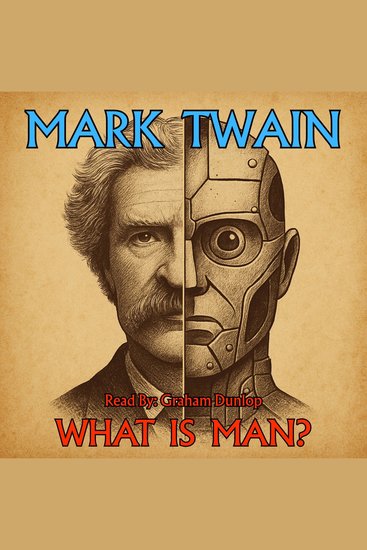
  • What is Man? - cover

    What is Man?

    Mark Twain

    • 0
    • 0
    • 0
    In this thought-provoking dialogue, Mark Twain strips away illusions about free will, morality, and the nature of human behavior. Presented as a sharp exchange between a young idealist and a seasoned philosopher, What Is Man? challenges cherished beliefs, probing whether humans are truly autonomous or simply products of their training, environment, and inherent machinery. 
    Witty, uncompromising, and intellectually bracing, Twain’s work pushes listeners to question their assumptions about themselves and others. This unflinching philosophical conversation reveals a side of Twain rarely seen—one that’s as incisive as it is unsettling. 
    Perfect for fans of classic literature, moral philosophy, and fearless inquiry, this audiobook offers a timeless exploration of what it really means to be human.
    Show book
  • The Hidden History of the American Dream - The Demise of the Middle Class—and How to Rescue Our Future - cover

    The Hidden History of the...

    Thom Hartmann

    • 0
    • 0
    • 0
    America's most popular progressive radio host and New York Times bestselling author explores the fall of the American Dream and the steps we can take to bring it back. 


    The widening wealth gap is all too familiar to many Millennials and GenZers, especially when home ownership and the lack of debt seem like faraway fantasies. And it's no surprise when they only hold about 4.6% of the country's wealth while Boomers held 22% at around the same age. So what happened to the promise of the American Dream? 


    In this new, final entry of his celebrated Hidden History series, Thom Hartmann uncovers the rise of the American middle class through the progressive policies of FDR, through to its downfall with the increasing privatization and economic deregulations of the Reagan era. 


    He also explores potential solutions including wealth and inheritance taxes to lessen economic inequality, supporting unions through increasing labor rights, and renationalizing public spaces and transportation. 


    The American Dream often remains just a dream for many, but this book highlights what needs to be done to take it back and help make it a reality for us all.
    Show book
  • News and Democratic Citizens in the Mobile Era - cover

    News and Democratic Citizens in...

    Johanna Dunaway, Kathleen Searles

    • 0
    • 0
    • 0
    Though people frequently use mobile technologies for news consumption, evidence from several fields shows that smaller screens and slower connection speeds pose major limitations for meaningful reading. In News and Democratic Citizens in the Mobile Era, Johanna Dunaway and Kathleen Searles demonstrate the effects of mobile devices on news attention, engagement, and recall, and identify a key cognitive mechanism underlying these effects: cognitive effort. They advance a theory that is both old and new: the costs of information-seeking curb participatory behaviors unless the benefits outweigh them. For news consumers in the mobile era, for example, mobile devices increase the time, economic, and cognitive costs associated with information-seeking. Only for a small few do the benefits of attending to the news on mobile devices outweigh the costs. 


    Dunaway and Searles argue that attention, engagement, and recall suffer when people consume news on mobile devices. They then investigate the implications of these effects for the news industry and for an informed democratic citizenry. Drawing on both laboratory and real-world studies, Dunaway and Searles bring the psychophysiology of news consumption to bear on the question of what we could lose in an information environment characterized by a dramatic shift in reliance on mobile devices.
    Show book
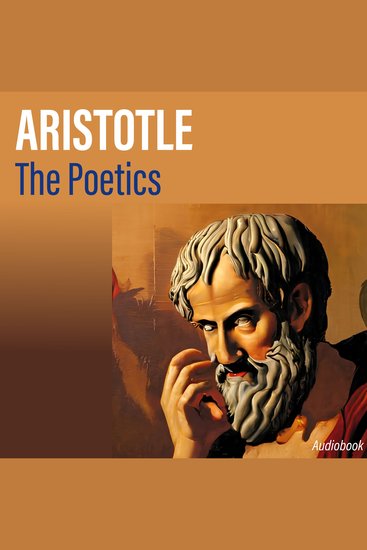
  • The poetics of Aristotle - cover

    The poetics of Aristotle

    Aristotle

    • 0
    • 0
    • 0
    "The Poetics" is a book written by the ancient Greek philosopher Aristotle, which is believed to have been composed around 335 BCE. The book is an important work of literary criticism and is considered one of the earliest surviving discussions of dramatic theory. 
    In "The Poetics," Aristotle explores the nature of tragedy and offers insights into the elements that make up successful works of literature, such as plot, character, language, and spectacle. He discusses the purpose and function of tragedy, and argues that its ultimate goal is to elicit a cathartic response in the audience. 
    Aristotle's ideas on the principles of drama and the nature of tragedy have had a profound impact on Western literary theory and have influenced the works of countless writers, playwrights, and critics over the centuries.
    Show book
  • Human Freedom - The Struggle for Individual Rights and Liberty Across the Globe (2 in 1) - cover

    Human Freedom - The Struggle for...

    Marcus Klein

    • 0
    • 0
    • 0
    This bundle contains the following titles: 
    Freedom of Speech: Freedom of speech is a cornerstone of democratic societies, integral to the exercise of individual autonomy and the pursuit of truth. At its core, it is the right to express ideas, opinions, and beliefs without fear of government reprisal or censorship. This principle is enshrined in numerous legal documents, most notably the First Amendment to the U.S. Constitution, which guarantees "the freedom of speech, or of the press," protecting the individual’s right to speak openly in the public sphere. 
    Children’s Rights: Children represent the future of our societies, yet they remain among the most vulnerable and marginalized populations worldwide. The protection of children's rights has become one of the most critical global issues in the 21st century, demanding urgent attention and action. While significant progress has been made in raising awareness of children's rights, millions of children still suffer from abuse, neglect, exploitation, and deprivation. This complex and multifaceted issue requires an in-depth understanding of the challenges children face, as well as the actions needed to safeguard their well-being.
    Show book
  • History of Finland: A Captivating Guide to Finnish History - cover

    History of Finland: A...

    Captivating History

    • 0
    • 0
    • 0
    Finnish culture is centuries old, yet Finland itself has only been an independent nation for just over one hundred years.  
    Finland’s history is an interesting subject filled with misconceptions. Would you be surprised to learn that the Finns, for the most part, were not Vikings? Or that Finland is not part of Scandinavia? The Finns are not even related to their closest neighbors: Sweden, Norway, and Denmark. 
    This book pulls back the curtain so you can get a better look at Finland’s history. Its history is exciting, even without the Vikings, and its proximity to Russia is something that is still talked about in the news today. 
    In 2022, moves were made for the nation to join the North Atlantic Treaty Organization (NATO) in response to the Russian invasion of Ukraine. Finland has entered a new phase of its history. But wouldn’t you like to learn about its past? 
    In this book, you’ll learn the following:The ancient Finnish did not worship the famous Norse gods like Thor and Odin.The national poem of Finland, the Kalevala, explores the ancient Finnish creation myth and the gods and heroes of Finland’s distant past.The history of Finland and Sweden are intertwined; Finland was part of Sweden for five hundred years!Finland was also part of the Russian Empire from 1809 to 1917.The Finns fought a heroic struggle against the Russians in 1939/40, which inspired the world and inspires Finns today.The Finn who commanded Finland’s armies during that struggle, Marshal Mannerheim, was of Swedish/German descent and did not speak Finnish particularly well. Yet, in 2004, he was voted the “greatest Finn of all time.”Finnish is one of the most unique languages in the world.And much, much more! 
    So, what are you waiting for? Click the “add to cart” button to begin learning about Finland today!
    Show book