Unisciti a noi in un viaggio nel mondo dei libri!
Aggiungi questo libro allo scaffale
Grey
Scrivi un nuovo commento Default profile 50px
Grey
Iscriviti per leggere l'intero libro o leggi le prime pagine gratuitamente!
All characters reduced
Coal Ecology and Environmental Impacts - cover

Coal Ecology and Environmental Impacts

Tara Pandey

Casa editrice: Educohack Press

  • 0
  • 0
  • 0

Sinossi

The illustrations in this book are created by “Team Educohack”.
 
"Coal Ecology and Environmental Impacts" explores the critical topics surrounding coal, its utilization, and mining. Our book addresses every query with comprehensive summaries and inquiries, making it an invaluable resource.We provide detailed explanations supported by high-quality diagrams, tables, and graphs to analyze past, present, and future scenarios. This book is perfect for students and beginners in the field, offering an easy-to-understand approach to complex topics.
 
Our goal is to enhance your knowledge and make learning about coal ecology accessible. Each chapter is designed to simplify vast subjects, ensuring you grasp every concept effortlessly. Join us in exploring the vital role of coal in our environment.
Disponibile da: 03/01/2025.
Lunghezza di stampa: 283 pagine.

Altri libri che potrebbero interessarti

  • Phycology - Algae and Aquatic Plants: Life in Water's Depths - cover

    Phycology - Algae and Aquatic...

    Mike Crawford

    • 0
    • 0
    • 0
    Phycology, also known as algology, is the scientific study of algae, a diverse and essential group of photosynthetic organisms found in aquatic environments. Algae range from microscopic single-celled phytoplankton to large, multicellular seaweeds like kelp. These organisms play a critical role in global ecosystems, serving as primary producers in both freshwater and marine habitats. They contribute significantly to oxygen production and are a fundamental part of the food web, supporting a vast array of aquatic life. 
    The study of algae is crucial due to their ecological, economic, and environmental importance. Algae are responsible for nearly half of the world’s oxygen production through photosynthesis, making them vital to maintaining atmospheric balance. Additionally, they act as a key food source for marine organisms, from zooplankton to large fish and mammals. Their ability to rapidly absorb carbon dioxide makes them important players in global carbon cycling, influencing climate regulation.
    Mostra libro
  • With One Hand Tied behind My Brain - cover

    With One Hand Tied behind My Brain

    Avrel Seale

    • 0
    • 0
    • 0
    Most would not expect a book about a stroke to be entertaining, but this memoir will force you to laugh through a tragedy, then cry, then laugh again.Avrel Seale was fifty, did not smoke or drink, had low blood pressure, and had hiked more than two hundred miles the year a stroke nearly ended his life. In an instant, he was teleported into the body of an old man—unbalanced, shaky, spastic, and half-paralyzed. Overnight, he was plunged into a world of brain surgeons, nurses, insurance case managers, and an abundance of therapists.Seale leads us through the harrowing day of his stroke and emergency brain surgery with minute-by-minute intensity. We then follow him through ICU, a rehab hospital, and a neuro-recovery group-living center, where we meet a memorable cast of other stroke survivors and also those recovering from auto accidents and gunshots. Finally home, Seale leads us through a new life of firsts, including returning to work, to driving, to playing guitar, to camping, and even to writing a book—all with one hand.What emerges from his humor (“elegant but devastating”) is a revealing critique of the hospital experience, the insurance industry, and rehab culture. And his nothing-off-the-table quest for recovery shows both the sobering struggles and inspiring possibilities of life after a stroke in twenty-first century America.
    Mostra libro
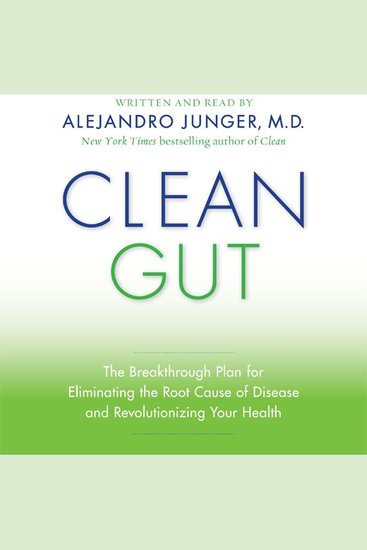
  • Clean Gut - The Breakthrough Plan for Eliminating the Root Cause of Disease and Revolutionizing Your Health - cover

    Clean Gut - The Breakthrough...

    Anonimo

    • 0
    • 0
    • 0
    In Clean Gut, Alejandro Junger, M.D, New York Times bestselling author of Clean and creator of the world-famous Clean Program, delivers a complete toolkit for reversing disease and sustaining life-long health. 
    All of today’s most-diagnosed ailments can be traced back to an injured and irritated gut. The gut is an intricate and powerful system, naturally designed to protect and heal the body every moment of every day  And yet for far too many of us, this remarkable system is in disrepair, which leads to all kinds of health problems—from extra pounds, aches and pains, allergies, mood swings, and lack of libido, to heart disease, cancer, autoimmune disorders, insomnia, and depression. 
    But we no longer have to be sick to get healthy. In this groundbreaking program, Alejandro Junger, M.D. explains how instead of treating the symptoms as they arise, we can preemptively attack disease before it takes root in the gut. 
    No matter your current state of health, you will benefit from this program: Clean Gut will help you put an end to everyday ailments, reverse chronic disease, and achieve true, long-lasting health.
    Mostra libro
  • The Digital Revolution - Transforming Society - cover

    The Digital Revolution -...

    Nova Ashford

    • 0
    • 0
    • 0
    The origins of the digital revolution can be traced back to several key developments in technology, many of which were shaped by visionary thinkers and groundbreaking innovations. At the heart of this transformation was the invention of the computer, a device that would later evolve into the complex machines that now permeate every aspect of modern life. Early computing, which began in the 1930s and 1940s, was initially limited to large, cumbersome machines used by governments and research institutions. These machines, like the ENIAC and the UNIVAC, were monumental in size and expensive to maintain, but they laid the groundwork for the digital age that would follow. 
    The true revolution, however, began with the development of the microprocessor in the 1970s. This small, powerful component allowed computers to shrink in size, becoming affordable for individuals and small businesses. Companies like Intel and AMD played pivotal roles in creating chips that would power everything from personal computers to smartphones. The release of the first microprocessor-powered personal computers in the late 1970s and early 1980s, such as the Apple II and the IBM PC, marked the beginning of a new era in computing. 
    Parallel to the rise of personal computing was the development of the internet, which would fundamentally change how people connect with one another and access information. The internet's roots can be traced to the 1960s, when the U.S. Department of Defense developed ARPANET, a network designed to share information across computers in a decentralized manner. As the internet expanded during the 1990s, it transformed from a tool for academic and government use into a platform for businesses and individuals alike. The introduction of the World Wide Web, developed by Tim Berners-Lee in 1991, made the internet more accessible and user-friendly, leading to the explosion of online content and services that would define the digital age.
    Mostra libro
  • Surgeon Secrets to Captivating Insights - "Transform your learning with 'Surgeon Secrets'—dynamic audio lessons that deliver captivating insights for impactful growth!" - cover

    Surgeon Secrets to Captivating...

    Ashby Lockridge

    • 0
    • 0
    • 0
    Surgeon Secrets to Captivating Insights 
    ⭐⭐ A Simplified Guide with In-Depth Explanations! ⭐⭐ 
    Are you eager to advance in your career and enhance your understanding of the resilience exhibited behind operating room doors?  
    Do you need a thorough guide that equips you with all the essential information to grasp the complexities of this vital field?  
    Your search ends here!  
    This audiobook is your ultimate resource for enriching your knowledge, honing your skills, and engaging in practical exercises. With these tools in hand, you'll be poised for success.  
    Now updated to align with modern practices in the operating room. 
    Key features of this enhanced guide include: 
    - Insightful perspectives on the challenges and triumphs experienced in surgical environments 
    - Comprehensive explanations of the human resilience demonstrated in high-pressure situations 
    - Effective strategies for preparing for the demands of surgical practice and overcoming obstacles 
    Our audiobook stands out due to its thorough approach, which is crucial for your success in understanding this intricate field. Concepts are explored in depth, ensuring you won't just skim the surface. 
    Crafted with a clear structure and accessible language, "Surgeon Secrets to Captivating Insights" guarantees seamless transitions between topics. Say farewell to complicated jargon and welcome clear, precise, and technically accurate content. 
    So, why hesitate? Click the BUY NOW button to secure your copy and embark on your journey to uncovering the inspiring stories of humanity's resilience behind operating room doors! 
    Mostra libro
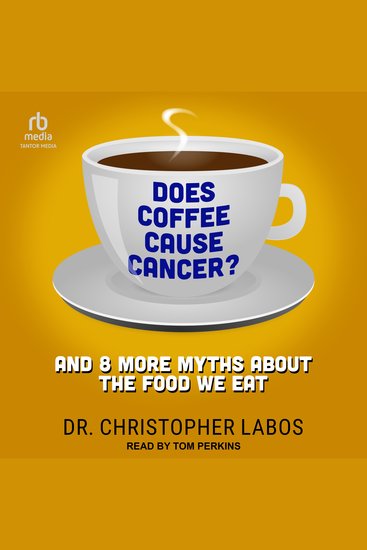
  • Does Coffee Cause Cancer? - And 8 More Myths About the Food We Eat - cover

    Does Coffee Cause Cancer? - And...

    Dr. Christopher Labos

    • 0
    • 0
    • 0
    In this fascinating, refreshingly clarifying book about food, food myths, and how sloppy science perpetuates misconceptions about food, a medical doctor on his way to a conference gets drawn into conversations that answer the following questions: Does vitamin C prevent the common cold? And if it works, why does it only work in Canadian soldiers, ultramarathon runners, and skiers? Was red meat really declared a carcinogen by the WHO? Does that mean I should become a vegetarian? And who decides what gets labeled as red meat and white meat? Is salt really not that bad for you and did a group of researchers really want to experiment on prisoners to prove the point? Does coffee cause cancer or heart attacks? Why did a California court say coffee needed a warning label? Is red wine really good for your heart, and what makes the French Paradox such a paradox? Why did the New England Journal of Medicine link eating chocolate with winning a Nobel Prize? Why were eggs once bad for you but now good for you again? Does that mean I don't need to worry about cholesterol? Should I be taking vitamin D?
    Mostra libro