Unisciti a noi in un viaggio nel mondo dei libri!
Aggiungi questo libro allo scaffale
Grey
Scrivi un nuovo commento Default profile 50px
Grey
Iscriviti per leggere l'intero libro o leggi le prime pagine gratuitamente!
All characters reduced
Bassano Del Grappa Pocket Guide - cover

Bassano Del Grappa Pocket Guide

Tania Zonta

Casa editrice: Babelcube

  • 0
  • 0
  • 0

Sinossi

The Bassano del Grappa Pocket Guide will help you discover the city, with its history and fine living. 


You will be able to organize your personal itinerary thanks to the following information found in the book: 


-Useful information for an all-round experience;
-Localized route with short descriptions of museums and monuments to learn about its history;
-Rooms and restaurants in the city centre;
-Information about what to visit in the surroundings;
-The people who made the city famous;
-The role of Bassano in the First and Second World War.
Disponibile da: 23/06/2023.
Lunghezza di stampa: 335 pagine.

Altri libri che potrebbero interessarti

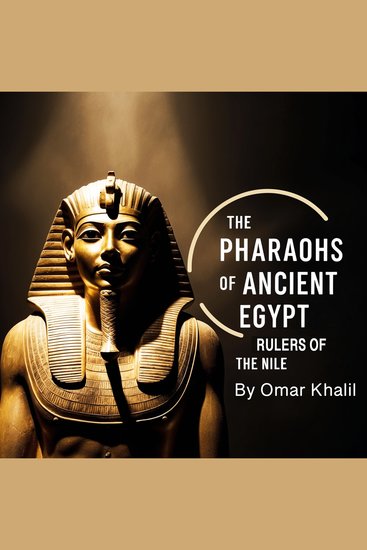
  • The Pharaohs of Ancient Egypt - Rulers of the Nile - cover

    The Pharaohs of Ancient Egypt -...

    Omar Khalil

    • 0
    • 0
    • 0
    The emergence of the pharaohs marked the beginning of one of history’s most iconic civilizations. In the early dynastic period around 3100 BCE, Egypt underwent a dramatic transformation as Upper and Lower Egypt were unified under a single ruler, traditionally identified as King Narmer or Menes. This unification not only established centralized rule but also laid the foundations for a dynastic tradition that would endure for millennia. The pharaoh, whose name means “great house,” came to be seen as both a political leader and a divine figure, embodying the will of the gods on earth. 
    As Egypt’s first kings consolidated power, they created administrative systems to manage resources, command armies, and oversee large-scale construction projects. Hierarchical governance emerged, with officials and scribes acting under the pharaoh’s authority to maintain order throughout the land. This new system allowed the pharaohs to centralize authority, control the fertile Nile Valley, and ensure the production and redistribution of grain and other goods, which became critical for sustaining a growing population and for asserting royal dominance. 
    Religious ideology played a key role in solidifying the power of the pharaohs. They were often depicted as the sons of deities, particularly associated with the sun god Ra and the sky god Horus. Temples were erected not just as places of worship, but as instruments of royal propaganda, showcasing the divine legitimacy of the ruler. Rituals, festivals, and monumental inscriptions reinforced the pharaoh’s sacred status and his role in maintaining ma’at, the cosmic order of balance and harmony.
    Mostra libro
  • Planes Flying over a Monster - Essays - cover

    Planes Flying over a Monster -...

    Daniel Saldaña París

    • 0
    • 0
    • 0
    From one of Mexico's most exciting young writers, a cosmopolitan and candid essay collection exploring life in cities across the world and reflecting on the transformative importance of literature in understanding ourselves 


    In ten intimate essays, Daniel Saldaña París explores the cities he has lived in, each one home to a new iteration of himself. In Mexico City he's a young poet eager to prove himself. In Montreal—an opioid addict desperate for relief. In Madrid—a lonely student seeking pleasure in grotesque extremes. These now diverging, now coalescing selves raise questions: Where can we find authenticity? How do we construct the stories that define us? What if our formative memories are closer to fiction than truth? 


    Saldaña París turns to literature and film, poetry and philosophy for answers. The result is a hybrid of memoir and criticism, "a sensory work, full of soundscapes, filth, planes, closed spaces, open vastness" (El País).
    Mostra libro
  • Chola Empire - Masters of the Seas and Builders of Temples - cover

    Chola Empire - Masters of the...

    Rolf Hedger

    • 0
    • 0
    • 0
    The Chola Empire, one of the longest-ruling dynasties in South Indian history, has origins shrouded in legend and antiquity. The early Cholas find mention in Tamil literature and ancient inscriptions, tracing their lineage back to mythical rulers. The Sangam period texts, such as the Pattinappalai and Puranaanuru, speak of the valor and governance of early Chola kings, who ruled over fertile lands along the Kaveri River. However, after a period of decline, the Cholas reemerged as a dominant force in the 9th century CE under the leadership of Vijayalaya Chola, the founder of the imperial Chola dynasty. 
    Vijayalaya Chola, initially a minor chieftain under the Pallavas, seized the opportunity to establish his rule in the fertile region of Thanjavur around 850 CE. This marked the resurgence of Chola power after centuries of obscurity. By defeating the Mutharaiyars, who controlled the region, Vijayalaya laid the foundation for an empire that would dominate South India for the next four centuries. Under his rule, the Cholas not only expanded their territories but also strengthened their political and military structures. He initiated temple-building activities, commissioning the construction of the temple of Nisumbhasudani in Thanjavur, a precursor to the grand temple-building tradition that would define the dynasty. 
    His successor, Aditya I, continued the expansion by defeating the Pallavas, thereby establishing the Cholas as a formidable power in the region. This victory marked a turning point, allowing the Cholas to assert their dominance over Tamil Nadu. Aditya I’s campaigns also extended into Kongu Nadu and the northern parts of Kerala, laying the groundwork for further expansion. His administrative policies ensured a stable governance system, which helped integrate the newly conquered regions into the Chola fold.
    Mostra libro
  • Kentucky Y'all - A Celebration of the People and Culture of the Bluegrass State - cover

    Kentucky Y'all - A Celebration...

    Blair Thomas Hess, Cameron M....

    • 0
    • 0
    • 0
    When people think of Kentucky, three things usually come to mind: bourbon, Colonel Sanders's secret chicken recipe, and the glamorous Kentucky Derby. Add college basketball to that list, and you have yourself a superfecta. Looking beyond these time-honored traditions, however, visitors will find in Kentucky a diverse patchwork of faces and places, each as unique as the state's geography.Kentucky, Y'all is an entertaining and informative compilation of the state's favorite oddities, cultural quirks, traditions, and rites of passage. Authors and proud Kentuckians Blair Thomas Hess and Cameron M. Ludwick share the best stories from their experiences as writers, travelers, and residents in this ode to the Commonwealth. From the iconic to the obscure, the book reveals vital knowledge that every Kentuckian―whether by birth, residence, or simply in mind and heart―should know. What is beer cheese? Who was Bill Monroe? Where can you get a hemp hot dog? Listeners are introduced to the brilliant minds behind the Louisville Slugger, the Bowie knife, and pioneering work in genetics. The book also includes a handy list of dos and don'ts of tailgating, a Kentucky sayings glossary, and bucket lists of things to do, drink, read, and eat. Kentucky, Y'all is an insightful and exuberant guide to the Bluegrass State―for Kentucky natives and visitors alike.
    Mostra libro

  • Travel Tips - cover

    Travel Tips

    Kyle Rasmussen

    • 0
    • 0
    • 0
    Travel Tips by Kyle Rasmussen is a deep look at some of the typical things that every traveler experiences and tips for how to make each aspect of the trip your best trip ever. This true compilation from the mind of an experienced and avid traveler provides insight into travel in the modern world. Mr. Rasmussen teaches readers to use a myriad of resources to make the trip even better. This is a helpful guide, but it is also an entertaining book full of personal stories from Mr. Rasmussen’s many travels. The tips, tricks, and advice within these pages can be utilized by all travelers: young and old, rich and not-so-rich, seasoned travelers or those embarking on their first journey. Mr. Rasmussen’s hope is that his writing will educate, entertain, inspire, and encourage people to travel and to leave the world a better place than they found it.
    Mostra libro
  • The Song Dynasty - Economic and Technological Innovations - cover

    The Song Dynasty - Economic and...

    Jun Liu

    • 0
    • 0
    • 0
    The Song Dynasty (960–1279) emerged from the remnants of the fragmented Five Dynasties and Ten Kingdoms period, establishing a centralized government that would shape China for centuries. Unlike previous dynasties that relied heavily on military conquest, the Song prioritized administration, economic growth, and cultural development, laying the foundation for one of the most prosperous eras in Chinese history. 
    The dynasty is traditionally divided into two periods: the Northern Song (960–1127) and the Southern Song (1127–1279). The Northern Song was founded by Emperor Taizu, who implemented policies to weaken the power of military governors and strengthen civilian rule. This shift reduced the influence of warlords, allowing for a stable bureaucratic system. However, external threats, particularly from the Khitan Liao and later the Jurchen Jin, forced the court to focus on diplomacy and financial strategies rather than military expansion. Eventually, the Jin conquest of the north in 1127 led to the retreat of the Song court to the south, marking the beginning of the Southern Song period. Despite losing control over key northern territories, the Southern Song maintained a flourishing economy, driven by trade, technological advancements, and agricultural productivity. 
    The Song Dynasty’s political structure was characterized by a well-organized bureaucracy based on merit rather than aristocratic privilege. The expansion of the civil service examination system ensured that government officials were selected through rigorous academic testing rather than birthright. This system, rooted in Confucian ideals, emphasized knowledge of classical texts and governance principles, creating a scholar-official class that played a crucial role in state affairs. While this meritocratic system promoted stability, it also created a conservative bureaucracy resistant to radical reforms.
    Mostra libro