Unisciti a noi in un viaggio nel mondo dei libri!
Aggiungi questo libro allo scaffale
Grey
Scrivi un nuovo commento Default profile 50px
Grey
Iscriviti per leggere l'intero libro o leggi le prime pagine gratuitamente!
All characters reduced
Education Reform Role - cover

Education Reform Role

Talia Mercer

Traduttore A AI

Casa editrice: Publifye

  • 0
  • 0
  • 0

Sinossi

Education Reform Role explores the significant impact of LGBTQ+ educators and students on reshaping academic institutions. It investigates how these individuals have driven curriculum reform, increased visibility, and fostered inclusion within education, addressing historical marginalization and systemic inequities. The book highlights the power of grassroots activism in creating more equitable learning environments, revealing how LGBTQ+ individuals have transformed exclusionary spaces into more inclusive environments. For example, the establishment of LGBTQ+ resource centers and the implementation of inclusive policies are concrete outcomes of these efforts.

 
The book is structured to provide a comprehensive analysis of this transformation. Beginning with an examination of the historical context of LGBTQ+ erasure, it progresses through case studies and narratives that highlight activism and advocacy. Later sections analyze curriculum revisions and inclusive policies. The book draws upon diverse sources, including archival research and oral histories, to illuminate the lived experiences of LGBTQ+ educators and students.

 
This approach offers a unique perspective by centering the voices of LGBTQ+ educators and students, making it valuable for educators, policymakers, and anyone interested in social justice.
Disponibile da: 07/04/2025.
Lunghezza di stampa: 91 pagine.

Altri libri che potrebbero interessarti

  • Small Medium Large - How Government Made the US into a Manufacturing Powerhouse - cover

    Small Medium Large - How...

    Colleen A. Dunlavy

    • 0
    • 0
    • 0
    We live in a world of seemingly limitless consumer choice. Yet, as every shopper knows without thinking about it, many everyday goods—from beds to batteries to printer paper—are available in a finite number of "standard sizes." What makes these sizes "standard" is an agreement among competing firms to make or sell products with the same limited dimensions. But how did firms—often hotly competing firms—reach such collective agreements? 


    In exploring this question, Colleen Dunlavy puts the history of mass production and distribution in an entirely new light. She reveals that, despite the widely publicized model offered by Henry Ford, mass production techniques did not naturally diffuse throughout the US economy. On the contrary, formidable market forces blocked their diffusion. It was only under the cover of collectively agreed-upon, industry-wide standard sizes—orchestrated by the federal government—that competing firms were able to break free of market forces and transition to mass production and distribution. Without government promotion of standard sizes, the twentieth-century American variety of capitalism would have looked markedly less "Fordist." 


    Small, Medium, Large will make all of us think differently about the everyday consumer choices we take for granted.
    Mostra libro
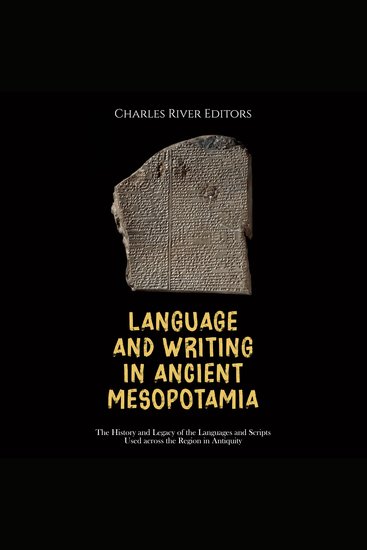
  • Language and Writing in Ancient Mesopotamia: The History and Legacy of the Languages and Scripts Used across the Region in Antiquity - cover

    Language and Writing in Ancient...

    Editors Charles River

    • 0
    • 0
    • 0
    Along with Egypt, the cultural and geographic region known as Mesopotamia was home to some of the world’s earliest civilizations and also the first known form of writing, cuneiform. Many different ethnic groups vied for power in ancient Mesopotamia over the course of antiquity, spanning about 3,000 years, and many of them spoke different languages. Despite these differences, the people in Mesopotamia shared many cultural attributes, including similar religious practices, a common art and architecture style, and a shared use of the cuneiform script.  
    	As this suggests, language and writing were different but also interconnected. The languages spoken by the peoples of Mesopotamia were as diverse as the many ethnic groups, but as those groups asserted their military, economic, and cultural power over the other groups, two languages became dominant in the region: Sumerian and Akkadian. These were the two languages that were primarily used by the people of Mesopotamia to record their myths, religious rituals, government records, and historiographical accounts.  
    	Indeed, the languages and written scripts of Mesopotamia were not just enduring over time in the region, but they also had wide geographic influence, much more than any language groups or scripts at the time. The Sumerian language continued to be learned by scribes throughout Mesopotamia centuries after it had become a “dead language,” and the Akkadian language eventually became the lingua franca of the Near East by the Late Bronze Age. Akkadian became the language of diplomacy and trade, while cuneiform was used to record agreements in Akkadian between the "Great Powers” of the era. Cuneiform was also adopted by people outside of Mesopotamia, such as the Hittites and Elamites, who modified the script to fit the lexicons and rules of grammar for their own languages.
    Mostra libro
  • Responses to 7 October: Universities - cover

    Responses to 7 October:...

    David Hirsh, Rosa Freedman, Eric...

    • 0
    • 0
    • 0
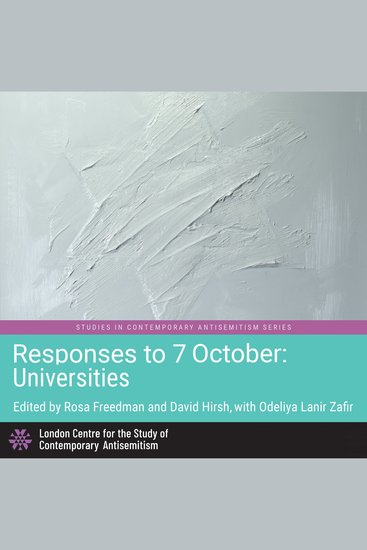
    One of three volumes responding to the 7 October attack, Universities focuses on the heartland of contemporary antisemitic thinking, which is scholarship; and its reflection in student discourse on campus. 
    Contributions go back to Sartre and to debates of Marx’s time; another looks at the New Left forged in the civil rights movement, and shows how antisemitic responses to the 2023 violence were anticipated by some of the responses to the 1967 Arab League aggression. The feminist movement and ‘progressives’ more generally come under scrutiny, and there is analysis of antisemitism on campus after 7 October, showing how it is tolerated and protected there; including in archaeological attempts to deny that there is an ancient Jewish history in Israel. 
    This work will appeal to scholars, students and activists with an interest in antisemitism, Jewish studies and the politics of Israel.
    Mostra libro
  • Crusades in Europe The: The History of the Catholic Crusaders’ Campaigns against the Ottomans and Christians across the Continent - cover

    Crusades in Europe The: The...

    Editors Charles River

    • 0
    • 0
    • 0
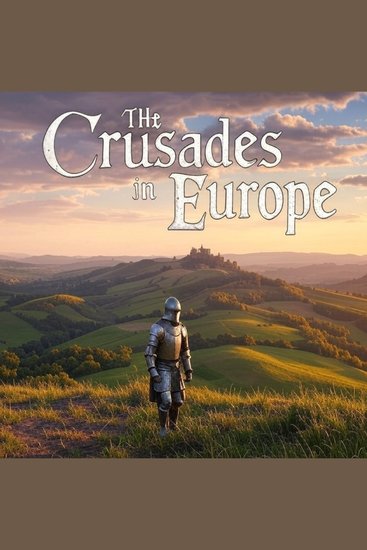
    Christianity was not a state religion for its first three centuries, and it was only when Emperor Constantine the Great declared it so in the early 4th century that the Church was faced with the thorny problem of state-sanctioned violence. The first major Christian authority to justify the use of arms in defense of Church and State was Augustine, Bishop of Hippo, who wrote in the 5th century, “They who have waged war in obedience to the divine command or in conformity with His laws, have represented in their persons the public justice or the wisdom of government, and in this capacity have put to death wicked men; such persons have by no means violated the commandment, ‘Thou shalt not kill.’”  
    	This opinion gained increasing influence in Western Christianity, though in the East, the attitude was (and continues to be) more nuanced. War was tolerated as a regrettable necessity in a world wounded by sin but never blessed. Canon law enacted in the Byzantine (Eastern Roman) Empire tended to treat soldiers who had killed as sinners needing to repent, and Bishop Basil of Caesarea (d. c. 330) believed that they needed to abstain from receiving communion for three years after battle. It was not that that the Eastern Roman Empire was a particularly peaceable state–far from it, in fact: it was engaged in almost continuous warfare for its entire existence. However, its conflicts were mostly defensive in character, fighting barbarians, Persians, or Muslims, and the idea of consecrating arms for the cause of Christianity was considered alien to its spirit.  
    At the Council of Clermont in July 1095, Pope Urban II canonized religious war by urging Western Europe's nobility to take up arms in defense of the Byzantine Empire against the Muslims, thus launching the Crusades, and religious military orders such as the Knights of Saint John, the Templars, and the Hospitallers arose.
    Mostra libro
  • Uncle Tom's Cabin Volume 2 - cover

    Uncle Tom's Cabin Volume 2

    Harriet Beecher Stowe

    • 0
    • 0
    • 0
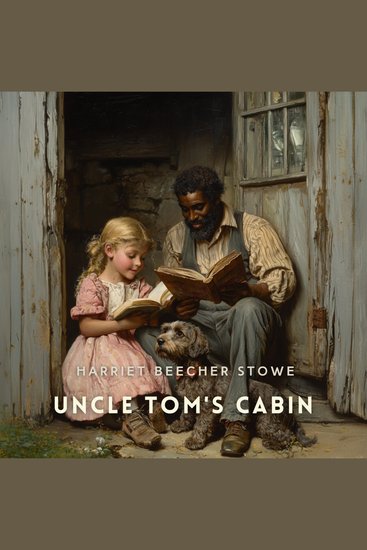
    In Uncle Tom’s Cabin Volume 2, Harriet Beecher Stowe deepens the exploration of slavery’s brutal realities. Uncle Tom, sold to the cruel Legree, endures unimaginable hardship while clinging to his faith and kindness. Meanwhile, Eliza and George Harris continue their perilous journey to Canada, facing dangers but finding allies in their fight for freedom. Through parallel stories of suffering and resilience, Stowe highlights the moral cost of slavery. As characters confront cruelty and compassion, the novel builds toward a powerful crescendo, emphasizing themes of redemption, hope, and the unbreakable spirit of those who resist oppression.
    Mostra libro
  • Ayodhya - The Dark Night - The Secret History of Rama's Appearance In Babri Masjid - cover

    Ayodhya - The Dark Night - The...

    Anonimo

    • 0
    • 0
    • 0
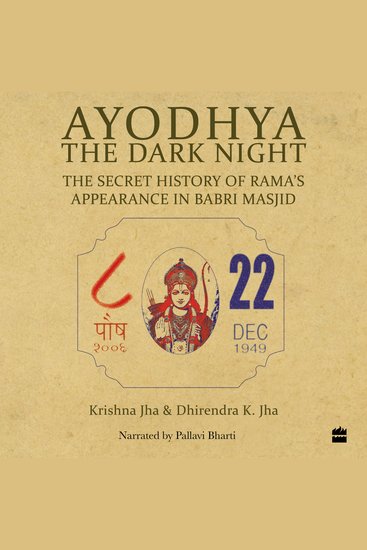
    22 December 1949: A conspiracy that began with the assassination of Mahatma Gandhi culminated in the execution of the Ayodhya strategy. Late that night, a little-known sadhu, Abhiram Das, and his followers entered the Babri Masjid and planted an idol of Rama inside it. While it is known that the Hindu Mahasabha had a role in placing the idol in the mosque, the larger plot and the chain of events that led to that act have never been subject to rigorous scrutiny. Krishna Jha and Dhirendra K. Jha bring together the disparate threads of the buried narrative for the first time. Ayodhya: The Dark Night uncovers, in vivid detail, what really transpired on the fateful night that was to leave a permanent scar on the Indian polity.
    Mostra libro