Unisciti a noi in un viaggio nel mondo dei libri!
Aggiungi questo libro allo scaffale
Grey
Scrivi un nuovo commento Default profile 50px
Grey
Iscriviti per leggere l'intero libro o leggi le prime pagine gratuitamente!
All characters reduced
The Collected Works - cover

The Collected Works

Susan Coolidge

Casa editrice: DigiCat

  • 0
  • 0
  • 0

Sinossi

In "The Collected Works," Susan Coolidge weaves together a rich tapestry of storytelling that delights in the intricacies of childhood and the innocence of youth. Featuring her most notable works, including the beloved "What Katy Did" series, Coolidge employs a distinctive blend of realism and sentimentality that reflects the values and social contexts of 19th-century America. Her prose is marked by vivid imagery and a keen understanding of the human condition, establishing her as a pivotal figure in children's literature during her time, influencing subsequent generations of writers. Susan Coolidge, born Sarah Chauncey Woolsey in 1835, was deeply influenced by her own experiences growing up in a literary family in Ohio. Her desire to create relatable characters arose from her observations of children's lives and societal expectations. By channeling her insights into the challenges and joys of adolescence, she crafted narratives that resonate with authenticity and emotional depth, addressing themes of resilience and personal growth. This volume is a must-read for anyone interested in the evolution of children's literature or the portrayal of adolescence in literary history. Each story offers a timeless exploration of character and experience, appealing to both younger audiences and adults who appreciate the nuance of Coolidge's writing.
Disponibile da: 11/10/2022.
Lunghezza di stampa: 1450 pagine.

Altri libri che potrebbero interessarti

  • Once Upon a Tome - The Misadventures of a Rare Bookseller - cover

    Once Upon a Tome - The...

    Oliver Darkshire

    • 0
    • 0
    • 0
    Some years ago, Oliver Darkshire stepped into the hushed interior of Henry Sotheran Ltd (est. 1761) to apply for a job. Allured by the smell of old books and the temptation of a management-approved afternoon nap, Darkshire was soon unteetering stacks of first editions and placating the store's resident ghost (the late Mr. Sotheran, hit by a tram). 


    A novice in this ancient, potentially haunted establishment, Darkshire describes Sotheran's brushes with history (Dickens, the Titanic), its joyous disorganization, and the unspoken rules of its gleefully old-fashioned staff, whose mere glance may cause the computer to burst into flames. As Darkshire gains confidence and experience, he shares trivia about ancient editions and explores the strange space that books occupy in our lives—where old books often have strong sentimental value, but rarely a commercial one. 


    By turns unhinged and earnest, Once Upon a Tome is the colorful story of life in one of the world's oldest bookshops and a love letter to the benign, unruly world of antiquarian bookselling, where to be uncommon or strange is the best possible compliment.
    Mostra libro
  • George Eliot - A Very Short Introduction - cover

    George Eliot - A Very Short...

    Juliette Atkinson

    • 0
    • 0
    • 0
    George Eliot pushed the boundaries of fiction and of Victorian society. She was an extraordinary woman whose unconventional life meant that she was judged harshly by family, friends, and strangers. Eliot wanted to draw attention to the feelings and motivations of ordinary people, so that we might feel more generous towards each other. But human beings are complex, and to capture that complexity Eliot drew on an astonishing range of philosophical, psychological, and scientific ideas. She hoped her work might do good, yet she was clear-eyed about the limits of both human sympathy and the novel.In this Very Short Introduction, Juliette Atkinson explores the ideas feeding Eliot's fiction and looks at the literary techniques—such as narrative voice, genre, imagery, structure, and syntax—that she used to embody them. These shape her recurrent themes: the stifling nature of gossip, the hardships experienced by commonplace individuals, the duty of practicing fellow-feeling and the difficulty of doing so. Atkinson argues that George Eliot was a social outcast who became a sage, through the creation of some of the most influential novels ever written in English.
    Mostra libro
  • How Ronald Reagan Changed My Life - cover

    How Ronald Reagan Changed My Life

    Peter Robinson

    • 0
    • 0
    • 0
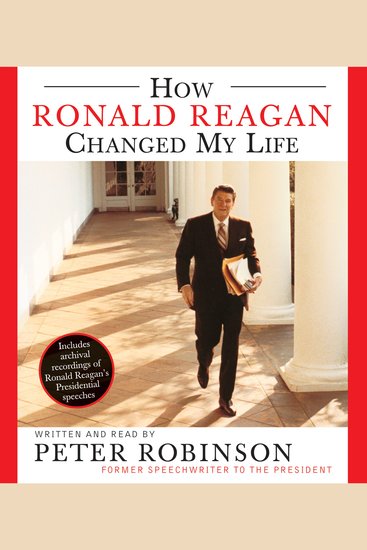
    On February 6, 2001, my nine-year-old daughter happened to wander into the room during a television segment marking Ronald Reagan's ninetieth birthday. She watched for a moment. Then she turned to me and asked, ""Dad, is that the President you worked for?"" 
    What answer could I give her? How could I make her see? I wanted my daughter to recognize that the world she inhabited was freer and more prosperous because of that old, old man on television. But I also wanted her to grasp my personal debt to him, to understand all that he taught me-how to work and how to relax, how to think and how to use words, how to be a good husband, how to approach life itself... 
    I needed to tell my children how Ronald Reagan changed my life. 
    In 1982, as a young man, Peter Robinson was hired as a speechwriter in the Reagan White House. During the six years that followed, he was one of a core group of writers who became informal experts on Reagan, absorbing not just his political positions but his personality, manner, and way of carrying himself And the example Reagan set-as a confident, passionate, principled, generous-spirited older man-molded Robinson's outlook just as he was coming into his own. ""Hard work. A good marriage. A certain lightness of touch,"" he writes. ""The longer I studied Ronald Reagan, the more lessons I learned."" 
    At the core of How Ronald Reagan Changed My Life are ten of the life lessons Robinson learned from the fortieth President-principles that have guided his own life ever since. But it also offers a warm and unforgettable portrait of a great yet ordinary man who touched the individuals around him as surely as he did his millions of admirers around the world. 
    Drawing on journal entries from his days at the White House, as well as interviews with those who knew the President best, Robinson etches his portrait with fresh observations, telling detail, and that ""certain lightness of touch"" that recalls the master himself The result is nothing less than a love story-an account of the profound respect and affection that one young man came to feel for the President who changed his life forever.
    Mostra libro
  • Through the Brazilian Wilderness - cover

    Through the Brazilian Wilderness

    Theodore Roosevelt

    • 0
    • 0
    • 0
    Roosevelt's popular book Through the Brazilian Wilderness describes his expedition into the Brazilian jungle in 1913 as a member of the Roosevelt-Rondon Scientific Expedition co-named after its leader, Brazilian explorer Cândido Rondon. The book describes all of the scientific discovery, scenic tropical vistas and exotic flora, fauna and wild life experienced on the expedition. One goal of the expedition was to find the headwaters of the Rio da Duvida, the River of Doubt, and trace it north to the Madeira and thence to the Amazon River. It was later renamed Rio Roosevel. Roosevelt's crew consisted of his 24-year-old son Kermit, Colonel Cândido Rondon, a naturalist sent by the American Museum of Natural History named George K. Cherrie, Brazilian Lieutenant Joao Lyra, team physician Dr. José Antonio Cajazeira, and sixteen highly skilled paddlers (called camaradas in Portuguese). The initial expedition started on December 9, 1913, at the height of the rainy season. The trip down the River of Doubt started on February 27, 1914. 
     
    During the trip down the river, Roosevelt contracted malaria and a serious infection resulting from a minor leg wound. These illnesses so weakened Roosevelt that, by six weeks into the expedition, he had to be attended day and night by the expedition's physician, Dr. Cajazeira, and his son, Kermit. By this time, Roosevelt considered his own condition a threat to the survival of the others. At one point, Kermit had to talk him out of his wish to be left behind so as not to slow down the expedition, now with only a few weeks rations left. Roosevelt was having chest pains when he tried to walk, his temperature soared to 103 °F (39 °C), and at times he was delirious. He had lost over fifty pounds (20 kg). Without the constant support of his son, Kermit, Dr. Cajazeira, and the continued leadership of Colonel Rondon, Roosevelt would likely have perished. Despite his concern for Roosevelt, Rondon had been slowing down the pace of the expedition by his dedication to his own map-making and other geographical goals that demanded regular stops to fix the expedition's position via sun-based survey. 
     
    Upon his return to New York, friends and family were startled by Roosevelt's physical appearance and fatigue. Roosevelt wrote to a friend that the trip had cut his life short by ten years. He might not have really known just how accurate that analysis would prove to be, because the effects of the South America expedition had so greatly weakened him that they significantly contributed to his declining health. For the rest of his life, he would be plagued by flareups of malaria and leg inflammations so severe that they would require hospitalization. 
     
    The racial attitudes reflected in Roosevelt's American history do not seem to carry over into his attitude toward the native Americans he encounters on this trip, although his enthusiastic anticipation of the development of the virgin wilderness he is crossing may be jarring to some contemporary readers. (Summary adapted from Wikipedia by Karen Merline.)
    Mostra libro

  • Medical Investigation 301: Perspicacity - A Book Advancing PERSPICACITY in Students of Medicine Science - cover

    Medical Investigation 301:...

    Richard Griffith

    • 0
    • 0
    • 0
    Medical Investigation 301 introduces adult readers to an enlightened view of the educational methodology in medical sciences. The book hits with spartan terseness. Expect surprises. The enormous quantity of information students in healthcare must master commonly leaves them familiar with the details of all the trees. But less comfortable with the forest. They may grope, bereft of cunning or shrewdness, in the bizarre situations actual patients present. Perspicacity speaks to this desire for savvy. The author/narrator, experienced in clinical practice and deductive sciences, adds a fresh viewpoint with examples. Adult readers not interested in a medical career will still enjoy these insights into medical concepts that seem to lack logical explanations. This understanding can enhance their ability to deal with their own healthcare needs. How does your nervous system recognize that something injured a part of your body? Why do viruses exist? Why does our body react incorrectly to a heart attack and worsen the outcome? Exploring these questions helps everyone peek behind the curtain. General readers of this book will acquire a refined comprehension of the labyrinth we call healthcare.
    Mostra libro
  • Six Great Scientists - Copernicus Galileo Newton Darwin Marie Curie Einstein - cover

    Six Great Scientists -...

    J.G. Crowther

    • 0
    • 0
    • 0
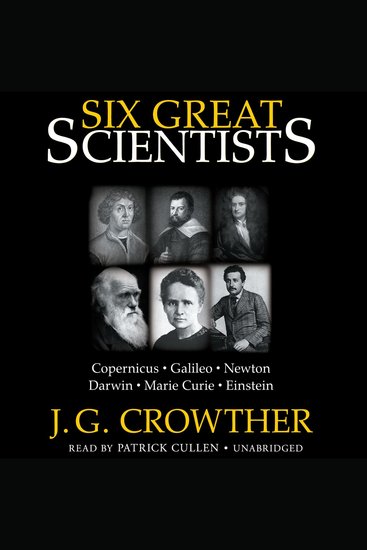
    Copernicus, Galileo, Newton, Darwin, Curie, Einstein: all of these geniuses had one thing in common. They had not only the imagination to conceive great ideas but also the integrity and determination to pursue and defend their science whatever the obstacles. 
    In spite of resistance and sometimes persecution by societies reluctant to let go of old views, these scientists persevered in their research and fought for the truths they discovered. While giving birth to the modern scientific outlook, the fact of evolution, the theory of relativity, or the secrets of atomic energy, they also struggled for the preservation of intellectual freedom and against the dangers inherent in the misuse of science. 
    Their stories will renew our confidence in the human spirit by reminding us of what men and women are capable of when they have the ability and courage to achieve great things.
    Mostra libro