Unisciti a noi in un viaggio nel mondo dei libri!
Aggiungi questo libro allo scaffale
Grey
Scrivi un nuovo commento Default profile 50px
Grey
Iscriviti per leggere l'intero libro o leggi le prime pagine gratuitamente!
All characters reduced
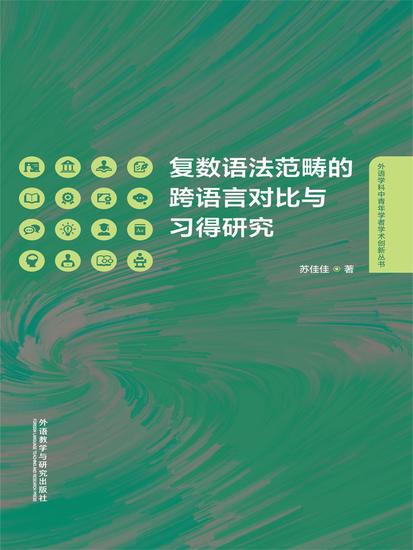
复数语法范畴的跨语言对比与习得研究(英文) - cover

复数语法范畴的跨语言对比与习得研究(英文)

苏画弦

Casa editrice: 外研社/SJPUBLISH

  • 0
  • 0
  • 0

Sinossi

内容简介:
《复数语法范畴的跨语言对比与习得研究》在生成语法框架内分析了复数语法范畴在汉语、英语、韩语中的共性和差异,并考察了英语母语者和韩语母语者对汉语复数语法范畴的习得情况。其中,跨语言对比研究以最简方案(Chomsky 2000, 2001; Pesetsky & Torrego 2007)的特征核查机制为理论基础,分析了汉语"们"、英语复数标记-s、韩语复数标记-tul的句法和语义异同,同时也分析了汉语量词重叠的复数义及其句法推导过程。依据特征重组假说(Lardiere 2009),二语学习者需对母语复数表征所涉及的特征集合进行拆分,进而重组出二语复数表征所需的特征集合。本书通过实证研究验证了这一假说,并深入分析了复数语法范畴习得中特征重组的方式和过程。本研究的理论意义在于深度分析了复数语法范畴在量词语言和非量词语言中的表征异同,尤其是在最简方案框架内对复数标记以及与之相关的量词和指示代词的句法推导进行了统一分析,并将理论分析所得出的特征及其组合方式应用于二语习得实证研究中,使母语迁移的内容、方式和结果更加简明清晰。实证研究结果扩展了对量词语言中复数语法范畴习得的认识,深化了对特征重组的方式和过程的了解。
作者简介:
苏佳佳,语言学博士,毕业于加拿大麦吉尔大学McGill University语言学系,现为北京外国语大学中国外语与教育研究中心专职研究员。从事二语习得、汉外语言对比、语音学与音系学等方面的研究。在Second Language Research,Linguistic Approaches to Bilingualism,《外语教学与研究》等国内外学术期刊上发表论文多篇。主持省部级重点课题、参与国家级课题多项。
Disponibile da: 16/01/2025.
Lunghezza di stampa: 689 pagine.

Altri libri che potrebbero interessarti

  • The Home I Worked to Make - Voices from the New Syrian Diaspora - cover

    The Home I Worked to Make -...

    Wendy Pearlman

    • 0
    • 0
    • 0
    War forced millions of Syrians from their homes. It also forced them to rethink the meaning of home itself. 


    In 2011, Syrians took to the streets demanding freedom. Brutal government repression transformed peaceful protests into one of the most devastating conflicts of our times, killing hundreds of thousands and displacing millions. The Home I Worked to Make takes Syria's refugee outflow as its point of departure. Based on hundreds of interviews conducted across more than a decade, it probes a question as intimate as it is universal: What is home? With gripping immediacy, Syrians now on five continents share stories of leaving, losing, searching, and finding (or not finding) home. Across this tapestry of voices, a new understanding emerges: home, for those without the privilege of taking it for granted, is both struggle and achievement. Recasting "refugee crises" as acts of diaspora-making, The Home I Worked to Make challenges listeners to grapple with the hard-won wisdom of those who survive war and to see, with fresh eyes, what home means in their own lives.
    Mostra libro
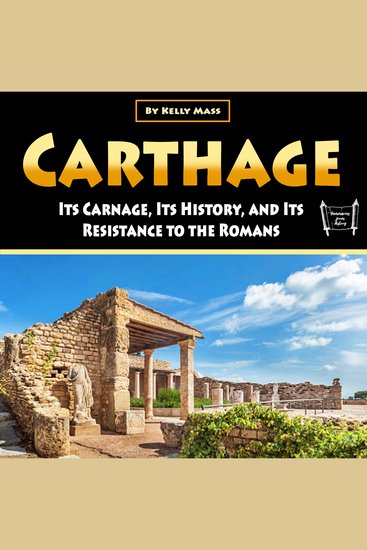
  • Carthage - Its Carnage Its History and Its Resistance to the Romans - cover

    Carthage - Its Carnage Its...

    Kelly Mass

    • 0
    • 0
    • 0
    Carthage was an ancient city-state located in what is now modern-day Tunisia. Founded by Phoenician settlers in the ninth century BC, Carthage would rise to become one of the most influential and powerful empires of the ancient Mediterranean world, only to be destroyed by the Romans in 146 BC. Despite its destruction, the Romans later lavishly rebuilt it, cementing its place in history. During its peak in the fourth century BC, Carthage was the capital of the Carthaginian Empire, a force that dominated the western Mediterranean with unmatched power and influence. 
    The origins of Carthage can be traced back to around 814 BC, when settlers from Tyre, a prosperous Phoenician city-state in modern Lebanon, arrived on the northern coast of Africa. Following the fall of Phoenicia to the Neo-Assyrian Empire in the seventh century BC, Carthage emerged as an independent entity. Over time, it expanded its influence, securing political and economic control over vast territories across the western Mediterranean. By 300 BC, Carthage controlled a sprawling empire that included the coastal regions of northwest Africa, southern Iberia (modern-day Spain, Portugal, and Gibraltar), and a series of key islands such as Sicily, Sardinia, Corsica, Malta, and the Balearic Islands. This expansion was achieved through a complex network of colonies, vassal states, and satellite territories. 
    Carthage’s strategic location played a significant role in its success. Its access to fertile agricultural lands and critical maritime trade routes allowed the city to thrive economically and become one of the wealthiest and most powerful centers of commerce in the ancient world. Carthage’s trade network extended across the Mediterranean and beyond, reaching as far as West Asia, West Africa, and northern Europe.
    Mostra libro
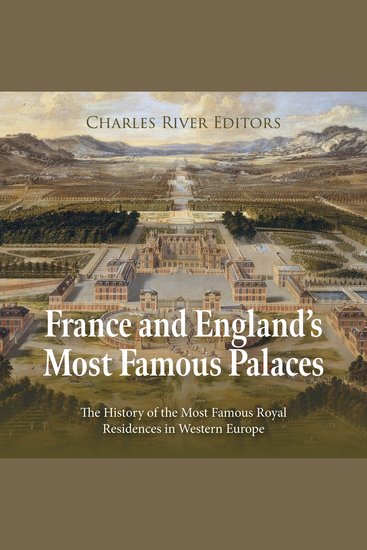
  • France and England’s Most Famous Palaces: The History of the Most Famous Royal Residences in Western Europe - cover

    France and England’s Most Famous...

    Editors Charles River

    • 0
    • 0
    • 0
    When people think of the British Royal family, and more specifically where they live, the first image that often pops into mind is that of stately Buckingham Palace, with its changing of the guard and the occasional royal coach leaving or entering. Others may think of the royal country estate of Windsor Castle, a favorite of both Britain’s longest-reigning and second longest-reigning monarchs. And there was a time when both royal residences played second fiddle to a much better known home, the elegant Kensington Palace. Buckingham Palace is not different, for though it was originally built as a home of a private citizen, once a king bought it, its future was sealed.  
    	For the French, and those who study their history, Versailles is a symbol of, as Charles Dickens once put it, “the best of times…the worst of times.” It was here that the Sun King, Louis XIV, built a palace worthy of a great nation during a time when peace was, at best, short-lived. It was at Versailles that Russian Tsar Peter the Great studied the palace’s architecture and gardens so that he could recreate them in his home country. Indeed, the greatest minds and artistic geniuses of the later stages of the Renaissance came to Versailles to build and paint, and it was here that Madame de Pompadour and her successor, Madame du Barry, used their wit and beauty to charm a king into doing their bidding. However, as history constantly demonstrates, nothing good lasts forever, and so it was with Versailles.  
    	France, like all European countries, has had its fair share of palaces over time, but none suffered the rise and fall of fortune like the Tuileries. Built by a widow with a flair for architecture, it grew for more than a decade, along with the royal family that it housed. Then, during the French Revolution, it fell from grace with that family and even became a sight of execution, its famous gardens providing the background for the infamous guillotine. 
    Mostra libro
  • Deborah and the War of the Tanks 1917 - cover

    Deborah and the War of the Tanks...

    John A. Taylor

    • 0
    • 0
    • 0
    Deborah is a British First World War tank that rose from the grave after taking part in one of the most momentous battles in history. In November 1917, she played a leading role in the first successful massed tank attack at Cambrai. Eighty years later, in a remarkable feat of archaeology, the tank's buried remains were rediscovered and excavated, and are now preserved as a memorial to the battle and to the men who fought in it. John Taylor's book tells the tale of the tank and her crew and tracks down their descendants to uncover a human story every bit as compelling as the military one.
    Mostra libro
  • Spirit Voices - The Mysteries and Magic of North Asian Shamanism - cover

    Spirit Voices - The Mysteries...

    David J. Shi

    • 0
    • 0
    • 0
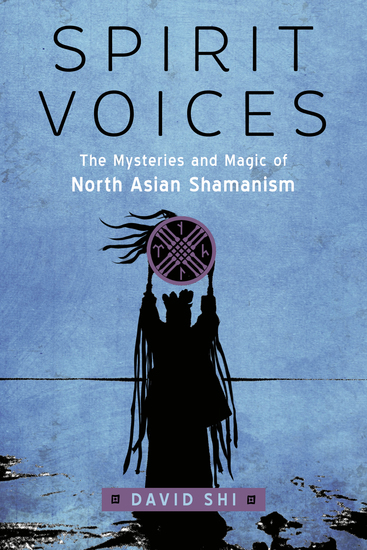
    Provides a clear and accessible guide to the many different North Asian shamanic traditions, past and present.What is shamanism? Where is it from? How does one become a shaman? What are the requirements to become one? Anthropologists tell us that the word shaman derives from the Tungus language and traditions, but few people understand the full scope of what that means. In his groundbreaking book, Spirit Voices, David Shi answers all these questions and more.Drawing upon his own ancestral traditions, Shi explores the history and practice of shamanism. He guides readers through what may be the unfamiliar landscapes of North Asia—the place where shamanism was born—as well as the largely hidden and unfamiliar traditions of Turkic, Mongolic, and Tungus shamanism, exploring the subtle and unique aspects of each tradition. Shi provides a clear and accessible guide that explores the many different North Asian shamanic traditions.So, what exactly is shamanism? David Shi suggests that the most accurate definition derives from shamanologist Nicholas Breeze Wood, who writes, “A shaman is someone chosen by the spirits [typically at or before birth] and who can go into a controlled and repeatable deliberate trance state, during which they A) experience ‘spirit flight,’ where they go to the spirit worlds and meet spirits, who they either fight with, negotiate with, or trick, in order to create change in this physical world, or B) are often taken over/possessed by the spirits (normally ancestral shaman spirits, or local land spirits) while in this physical world—the spirits using the shaman’s voice and body to heal, or give advice to members of the shaman’s community. Without the spirits and their blessing, a shaman cannot exist or function. Without the trance state, it is not shamanism.”Featuring history, firsthand experiential reports, mythology, and folklore, Spirit Voices explores the spirits, spirituality, tools, and practices of true shamanism, past and present. Shi also provides practical information for those readers seeking to implement shamanic practices, including those that are appropriate to noninitiates and outsiders to the culture. As the author points out, “the purpose of shamanism can be summed up in two words: coexistence and balance—coexistence with our spirits and our communities, and the balance that must be preserved between all of us and within ourselves.”
    Mostra libro

  • Across the Board - How Games Make Us Human - cover

    Across the Board - How Games...

    Tim Clare

    • 0
    • 0
    • 0
    Tabletop games are ordinary and extraordinary. Ordinary because they're everywhere: played in bars and cafés, churches and casinos, through sunless winters in polar research stations and in the sweltering summer heat of Tanzanian villages and streamed live over Twitch to millions of viewers. They fill the activity pages of children's magazines and the halls of senior centers. They appear as smartphone apps and in luxury editions and as game boards scratched into the dirt. 


    And they're extraordinary for precisely the same reason: they're everywhere, in every civilization, everywhere in the world across all recorded human history. 


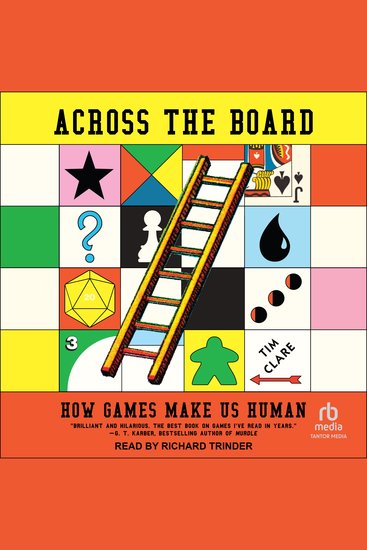
    In Across the Board, tabletop game aficionado Tim Clare takes us through that history and across those civilizations. We learn how the same games emerge over and over and how they've evolved and spread, as well as about the contemporary culture of gaming: with rousing enthusiasm, Tim explores games as familiar to us as Monopoly or chess, as niche as Magic: The Gathering, and as unexpected as the Japanese poetry-matching card game karuta. We learn about games as recreation and as ritual, and above all, we see how they can be a way for us to come together—because of all the things that make us human, there's nothing quite so set up for connection as sharing a round of cards or the roll of a d20.
    Mostra libro