Unisciti a noi in un viaggio nel mondo dei libri!
Aggiungi questo libro allo scaffale
Grey
Scrivi un nuovo commento Default profile 50px
Grey
Iscriviti per leggere l'intero libro o leggi le prime pagine gratuitamente!
All characters reduced
Extending Excel with Python and R - Unlock the potential of analytics languages for advanced data manipulation and visualization - cover

Extending Excel with Python and R - Unlock the potential of analytics languages for advanced data manipulation and visualization

Steven Sanderson, David Kun

Casa editrice: Packt Publishing

  • 0
  • 0
  • 0

Sinossi

– Extending Excel with Python and R is a game changer resource written by experts Steven Sanderson, the author of the healthyverse suite of R packages, and David Kun, co-founder of Functional Analytics. – This comprehensive guide transforms the way you work with spreadsheet-based data by integrating Python and R with Excel to automate tasks, execute statistical analysis, and create powerful visualizations. – Working through the chapters, you’ll find out how to perform exploratory data analysis, time series analysis, and even integrate APIs for maximum efficiency. – Both beginners and experts will get everything you need to unlock Excel's full potential and take your data analysis skills to the next level. – By the end of this book, you’ll be able to import data from Excel, manipulate it in R or Python, and perform the data analysis tasks in your preferred framework while pushing the results back to Excel for sharing with others as needed.
Disponibile da: 30/04/2024.
Lunghezza di stampa: 344 pagine.

Altri libri che potrebbero interessarti

  • Cornerstone at the Confluence - Navigating the Colorado River Compact's Next Century - cover

    Cornerstone at the Confluence -...

    Jason A. Robison

    • 0
    • 0
    • 0
    Signed on November 24, 1922, the Colorado River Compact is body of laws colloquially called the "Law of the River" that governs how human beings use water from the river system dubbed the "American Nile." No fewer than forty million people have come to rely on the Colorado River system in modern times—a system immersed in an unprecedented, unrelenting megadrought for more than two decades. Attempting to navigate this "new normal," policymakers are negotiating new management rules for the river system, a process coinciding with the compact's centennial that must be completed by 2026. 


    Animated by this remarkable confluence of events, Cornerstone at the Confluence leverages the centennial year to reflect on the compact and broader "Law of the River" to envision the future. It is a volume inviting dialogue about how the river system's flows should be apportioned given climate change, what should be done about environmental issues such as ecosystem restoration and biodiversity protection, and how long-standing issues of water justice facing Native American communities should be addressed. 


    These topics touch on the concept of "equity" embedded within the compact—a concept that tees up what is perhaps the foundational question confronted by Cornerstone at the Confluence: Who should have a seat at the table of Colorado River governance?
    Mostra libro
  • Rhinoceros Giants - The Paleobiology of Indricotheres - cover

    Rhinoceros Giants - The...

    Donald R. Prothero

    • 0
    • 0
    • 0
    Written for everyone fascinated by the huge beasts that once roamed the earth, this book introduces the giant hornless rhinoceros, Indricotherium. These massive animals inhabited Asia and Eurasia for more than 14 million years, about 37 to 23 million years ago. They had skulls six feet long, stood twenty-two feet high at the shoulder, and were twice as heavy as the largest elephant ever recorded, tipping the scales at 44,100 pounds. Fortunately, the big brutes were vegetarians. Donald R. Prothero tells their story, from their discovery just a century ago to the latest research on how they lived and died.
    Mostra libro
  • Evolution of Modern Mathematics The: The Lives of Influential Mathematicians Who Helped Bring Math into the Computer Age Kindle - cover

    Evolution of Modern Mathematics...

    Editors Charles River

    • 0
    • 0
    • 0
    In the last 50 years, life has been simplified by the awe-inspiring advancements that have been achieved in the world of computer science and technology. In 1976, Steve Jobs and Steve Wozniak unveiled the Apple I, the first-ever computer that operated on a single-circuit board, just five years after a team of IBM engineers introduced the “floppy disk,” which revolutionized data-sharing. In 1981, the first personal computer – IBM's Acorn – equipped with an optional color monitor, two floppy disks, and an intel chip was rolled out to the masses, and the dynamic evolution of the World Wide Web soon followed. 
    Today, the world is in the midst of the transformative and ever-developing Digital Age, otherwise referred to as the “Age of Information.” It has been an unprecedented, remarkable, and explosive era marked by social media and computer-generated imagery (and with it, deep fakes), among other novel, previously unimaginable concepts. The bulky monitors and blocky towers of personal computers and laptops, which were once upon a time considered fashionable, futuristic contraptions, have since been replaced with a sleek and stylish array – both multi-functional and specialized – of aerodynamic, minimalistic devices, ranging from smartphones and tablets to lightweight laptops and full-fledged gaming set-ups packed with powerhouse processors. 
    This new age was brought forth in large measure by the different works of scientists and mathematicians spanning several centuries, from Blaise Pascal's work on calculators to Charles Babbage's Difference Engine and Alan Turing's groundbreaking cryptography work.
    Mostra libro
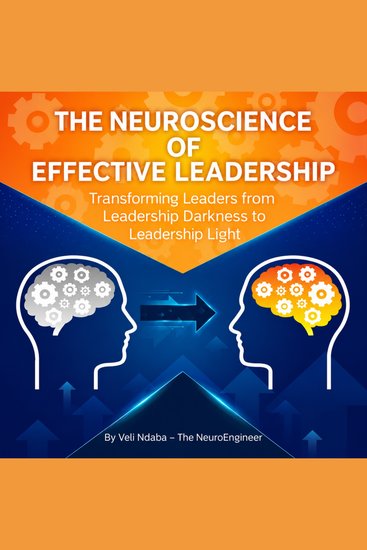
  • The Neuroscience of Effective Leadership - Transforming Leaders From Leadership Darkness to Leadership Light - cover

    The Neuroscience of Effective...

    Veli Ndaba

    • 0
    • 0
    • 0
    This audiobook is narrated by a digital voice generated using ElevenLabs AI. 
    
     
    Why Listen to The Neuroscience of Effective Leadership? 
    
     
    The Neuroscience of Effective Leadership by Veli Ndaba (“The Neuroengineer”) is a groundbreaking, practical guide that bridges the gap between brain science and impactful management. Whether you are a seasoned executive or an aspiring manager, this book reveals how understanding the inner workings of the brain can completely revolutionize your leadership approach. 
    
     
    Key Takeaways for Readers: 
    
     
    Science-Backed Effectiveness: Discover the exact neural mechanisms that drive decision-making, problem-solving, and critical thinking. 
    
     
    Enhanced Soft Skills: Learn how emotions and social interactions impact teams, giving you the tools to dramatically improve your communication and relationship-building. 
    
     
    Real-World Application: Packed with real-life examples and case studies, the book translates complex neuroscience into actionable strategies you can implement immediately. 
    
     
    Organizational Success: Master how to leverage brain science to reduce workplace stress, inspire your team, and drive high-performance results. 
    
     
    The Bottom Line: This book is a must-read for anyone looking to move past traditional management methods, tap into their full leadership potential, and harness the power of the brain to achieve career and organizational success.
    Mostra libro
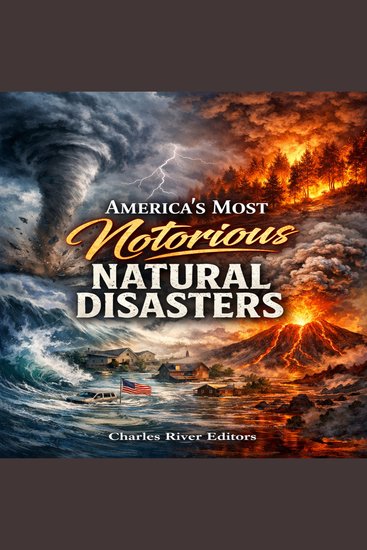
  • America’s Most Notorious Natural Disasters - cover

    America’s Most Notorious Natural...

    Charles River Editors

    • 0
    • 0
    • 0
    It had taken about 40 years for Chicago to grow from a small settlement of about 300 people into a thriving metropolis with a population of 300,000, but in just two days in 1871, much of that progress was burned to the ground. In arguably the most famous fire in American history, a blaze in the southwestern section of Chicago began to burn out of control on the night of October 8, 1871.  
    In 2005, the world watched in horror as Hurricane Katrina decimated New Orleans, and the calamity seemed all the worse because many felt that technology had advanced far enough to prevent such tragedies, whether through advanced warning or engineering. However, the failure of human engineering like that seen in New Orleans was nothing new, and it had previously had even deadlier consequences in Johnstown, Pennsylvania. Although floods rarely get as much coverage as other kinds of natural disasters like volcanic explosions, the Johnstown Flood of 1889 has remained an exception due to the sheer destruction and magnitude of the disaster.  
    As bad as Hurricane Katrina was, the hurricane that struck Galveston, Texas on September 8, 1900 killed several times more people, with an estimated death toll between 6,000-12,000 people. Prior to advanced communications, few people knew about impending hurricanes except those closest to the site, and in the days before television, or even radio, catastrophic descriptions were merely recorded on paper, limiting an understanding of the immediate impact.   
    	On April 18, 1906, most of the residents of the city of San Francisco were sound asleep when the ground started to shake around 5:15 a.m., but what started as fairly soft tremors turned into a violent shaking in all directions. The earthquake lasted about a minute, but it had enough destructive force to divert the course of entire rivers and level much of the 9th largest city in America at the time. 
    Mostra libro
  • The Return To Office - From Isolation To Inspiration Rebuilding Connection for a Stronger Workplace - cover

    The Return To Office - From...

    Dr. Sharcon Jeannette

    • 0
    • 0
    • 0
    The world stood still as whispers turned to warnings, and warnings became a reality. This book is an engaging and coarse account of how the COVID-19 crisis spread. It exposes the cracks in global preparedness, leadership failures, and the stability of everyday people. This book carries readers past the headlines, presenting a deep analysis of the chaotic early days of the pandemic. It emphasizes how misinformation, political missteps, and lack of readiness intensified the crisis, shifting what could have been a managed outbreak into a global disaster. The author also captures the full spectrum of survival, from frontline healthcare workers battling exhaustion to corporate leaders scrambling to hold businesses afloat. But it is not merely confined to being a retrospective—it’s a call to action. It pushes readers to question: Are we truly ready for the next global crisis? With its influential narration and critical insights, this book is essential for anyone aspiring to apprehend the pandemic’s lessons and the 'tomorrow' of global health security.
    Mostra libro