

Unisciti a noi in un viaggio nel mondo dei libri!
Aggiungi questo libro allo scaffale
Grey
Scrivi un nuovo commento Default profile 50px
Grey
Iscriviti per leggere l'intero libro o leggi le prime pagine gratuitamente!
All characters reduced
David Trimble: Peacemaker - cover

David Trimble: Peacemaker

Stephen Walker

Casa editrice: Gill Books

  • 1
  • 0
  • 0

Sinossi

Nobel laureate, party leader, peacemaker, first minister and statesman – David Trimble had many roles. But what is the real story behind the man who made headlines and changed lives?
In this definitive biography of Trimble's life and death, award-winning journalist Stephen Walker vividly details how a shy Belfast academic changed the political landscape of Northern Ireland.
Written with the cooperation of his widow, Lady Trimble, and their grown-up children, Peacemaker offers unparalleled insights into the life of the first person to be elected first minister of Northern Ireland and the most significant unionist leader since the creation of Northern Ireland in 1921. From the beginning of his political career in the dark days of the Troubles, to bringing unionism and nationalism together to end decades of division and violence and secure peace, Trimble's personal journey mirrors the story of Northern Ireland itself.
Drawing on over 100 fresh interviews, this is a colourful and personal account of the life of a key figure in Irish history and an essential companion to Stephen Walker's bestselling biography of John Hume.
Disponibile da: 11/09/2025.
Lunghezza di stampa: 464 pagine.


Altri libri che potrebbero interessarti

  • Commander in Chief - Partisanship Nationalism and the Reconstruction of Congressional War Powers - cover

    Commander in Chief -...

    Casey B. K. Dominguez

    • 0
    • 0
    • 0
    The constitutional balance of war powers has shifted from Congress to the president over time. Today, presidents broadly define their constitutional authority as commander in chief. In the nineteenth century, however, Congress was the institution that claimed and defended expansive war powers authority. This discrepancy raises important questions: How, specifically, did Congress define the boundaries between presidential and congressional war powers in the early republic? Did that definition change? 


    Casey Dominguez's Commander in Chief systematically analyzes the authority that members of Congress ascribe to the president as commander in chief and the boundaries they put around that authority. 


    Dominguez shows that for more than a century members of Congress defined the commander in chief's authority narrowly. But in a wave of nationalism during the Spanish-American War, members of Congress began to argue that Congress owed deference to the commander in chief. They also tended to argue that a president of their own party should have broad war powers, while the powers of a president in the other party should be defined narrowly. Together, these two dynamics suggest that the conditions for presidentially dominated modern constitutional war powers were set at the turn of the twentieth century, far earlier than is often acknowledged.
    Mostra libro
  • Infected - How Power Politics and Privilege Use Science Against the World’s Most Vulnerable - cover

    Infected - How Power Politics...

    Muhammad H. Zaman

    • 0
    • 0
    • 0
    In this groundbreaking new book, award-winning scientist Muhammad H. Zaman delves into the history of US epidemics, from the earliest cases of syphilis, cholera, and smallpox to AIDS and the recent COVID crisis, to show how the country's response (or lack thereof) to infectious disease in America is part of a critical, time-tested strategy in America's toolbox of oppression of the weak, the poor, and the non-white. 


    In the vein of Rebecca Skloot's The Immortal Life of Henrietta Lacks and Dorothy Roberts's Fatal Invention, Infected is the epic story of white supremacists, compromised doctors, racist politicians, and the heroes who challenged them. Zaman shows that exclusionary immigration acts, the Tuskegee syphilis experiments, the development of biological weapons, the early response to the AIDS epidemic, the fake CIA vaccination campaign in Pakistan, and the xenophobic rhetoric sparked by the COVID-19 pandemic are all parts of the same deeper story—one of medical science twisted in the service of social control. 


    This is a story that continues today, on Native American reservations, in foreign zones occupied by the US military, and on our borders, where asylum seekers are denied lifesaving medicines. Melding cutting-edge science and history, Infected presents infection as a key to understanding our recent past, present, and future.
    Mostra libro
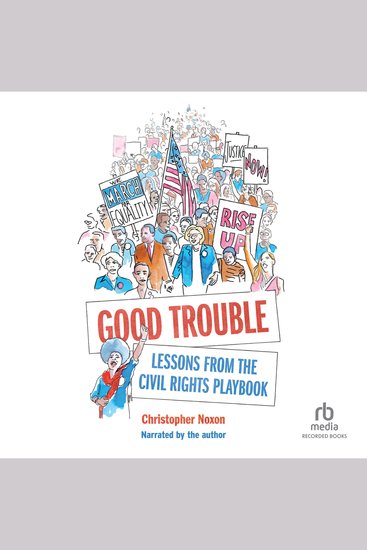
  • Good Trouble - Lessons from the Civil Rights Playbook - cover

    Good Trouble - Lessons from the...

    Christopher Noxon

    • 0
    • 0
    • 0
    Good Trouble is the helpful antidote to all the pessimism and name-calling that is permeating today’s political and social dialogues. Revisiting episodes from the civil rights movement of the 1950s and ’60s, it highlights the essential lessons that modern-day activists and the civically minded can extract and embrace in order to move forward and create change. Journalist Christopher Noxon dives into the real stories behind the front lines of the Montgomery bus boycott and the Greensboro lunch counter sit-ins and notable figures such as Rosa Parks and Bayard Rustin, all while exploring the parallels between the civil rights movement era and the present moment. This thoughtful, fresh approach is sure to inspire conversation, action, and, most importantly, hope.
    Mostra libro
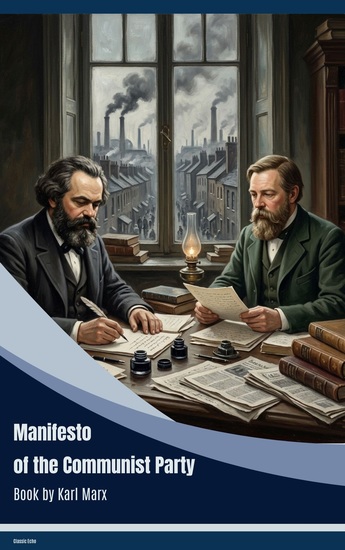
  • Manifesto of the Communist Party - cover

    Manifesto of the Communist Party

    Karl Marx

    • 0
    • 0
    • 0
    One of the most influential political texts in modern history, Manifesto of the Communist Party examines the forces shaping society, economics, and political change.
    
    Originally published in 1848, Manifesto of the Communist Party by Karl Marx and Friedrich Engels presents a concise and influential critique of nineteenth-century capitalist society and the social structures surrounding it. Written during a period of rapid industrialization and political upheaval, the work examines the development of modern classes, economic relationships, and conflicts between social groups.
    
    The manifesto famously explores the historical development of class struggle, examining the relationship between the bourgeoisie and the working class. Marx and Engels argue that economic structures and material conditions play a central role in shaping political institutions, social relationships, and historical change.
    
    Divided into several sections, the work discusses the relationship between communists and the working class, critiques contemporary socialist and political movements, and presents the authors' vision of social transformation. Its direct style and condensed arguments have made it an enduring subject of political, economic, historical, and philosophical study.
    
    Beyond its political arguments, the manifesto provides valuable insight into the intellectual and social conditions of nineteenth-century Europe. It has influenced political movements, academic debates, revolutionary history, economics, sociology, and discussions about capitalism and inequality around the world.
    
    For students, researchers, and readers interested in political philosophy, economic history, socialism, Marxism, capitalism, class theory, and modern political thought, Manifesto of the Communist Party remains an essential historical document.
    
    Explore one of the defining political texts of the modern era. Read Manifesto of the Communist Party today and examine Marx and Engels' influential ideas about class, capitalism, labor, society, and historical change.
    Mostra libro
  • It's Not You It's Capitalism - Why It's Time to Break Up and How to Move On - cover

    It's Not You It's Capitalism -...

    Malaika Jabali

    • 0
    • 0
    • 0
    A biting, brilliant, often hilarious guide to socialism for budding anti-capitalists who know it’s time to dump their toxic ex (Capitalism) and try something finer. Journalist Malaika Jabali debunks myths, centers forgotten socialists of color who have shaped our world, and shows socialism is not all Marx and Bernie Bros—it can be pretty sexy. We’ve all dated someone who took control of the relationship—you know, someone who makes you feel like you’re unhappy because you’re just not putting in the work, or it’s all in your head. But when you think about trying to meet new people, it feels terrifying. Like, have you looked at Tinder recently? It’s rough out there! Your tough-love new best friend, award-winning journalist, policy attorney, and life-long socialist Malaika Jabali is here to say: we are all in a generations-long toxic relationship with Capitalism, and it is time to get the h*ll out of there and move ALONG. She gives you everything you need to know about what a healthy relationship could actually look like, issue by issue—from healthcare and housing to the whole concept of American democracy—with our new boo: Socialism. And no, Socialism isn’t the boring, grey, authoritarian, Cold-War-era monster that you’ve heard about.  With accessible explanations and illustrations, often surprising graphs and stats, and some Drake memes, this book will show you that we NEED to build a world that’s safer, kinder, cleaner, healthier, and more equal. And that this isn’t a utopian dream – it’s within our grasp, if we collectively decide to call out Capitalism for what it really is and wake up to a better future.   Fun, smart, and inspiring, It’s Not You It’s Capitalism is the hottest new relationship in your life!
    Mostra libro
  • Under Jackie's Shadow - Voices of Black Minor Leaguers Baseball Left Behind - cover

    Under Jackie's Shadow - Voices...

    Mitchell Nathanson

    • 0
    • 0
    • 0
    The stories of thirteen Black Minor League baseball players during the post–Jackie Robinson era, from the 1960s to the mid-1970s, who were figuratively and literally left behind even as both baseball and the country claimed a newfound racial progressiveness.
    Mostra libro