Unisciti a noi in un viaggio nel mondo dei libri!
Aggiungi questo libro allo scaffale
Grey
Scrivi un nuovo commento Default profile 50px
Grey
Iscriviti per leggere l'intero libro o leggi le prime pagine gratuitamente!
All characters reduced
A Writer Writes - A Memoir - cover

Ci dispiace! L'editore o autore ha rimosso questo libro dal nostro catalogo. Ma per favore non ti preoccupare, hai ancora oltre 500.000 altri libri da scegliere!

A Writer Writes - A Memoir

Stephen Birmingham

Casa editrice: Open Road Media

  • 0
  • 1
  • 0

Sinossi

A memoir by the New York Times–bestselling author and longtime chronicler of America’s wealthy elite. Born in Connecticut in 1929 and educated at Williams College, Stephen Birmingham went on to create a literary niche with his numerous nonfiction works about New York’s—and the nation’s—upper class, particularly focusing on Jewish, African American, and Irish communities, as well as old-money WASPs. He also drew on his “intimate knowledge of the private lives of the rich and famous” to write bestselling works of fiction such as The Auerbach Will (The New York Times Book Review). In this book, Birmingham’s attention is turned to his own life, both personal and professional, allowing us to learn about the man who created such compelling portraits of glittering parties, exclusive addresses, and, in some cases, rags-to-riches sagas that epitomize the American dream—and the American struggle. In the end, his story is as fascinating as those of the aristocrats he documented. “When it comes to the folkways of the rich, the powerful, and the privileged, Stephen Birmingham knows what he’s talking about.” —Los Angeles Times
Disponibile da: 15/11/2022.
Lunghezza di stampa: 412 pagine.

Altri libri che potrebbero interessarti

  • Familiar Violence - A History of Child Abuse - cover

    Familiar Violence - A History of...

    Heather Montgomery

    • 0
    • 0
    • 0
    Child abuse casts a long shadow over the history of childhood. Across the centuries there are numerous accounts of children being beaten, neglected, sexually assaulted, or even killed by those closest to them. This book explores this darker side of childhood history, looking at what constituted cruelty towards children in the past and at the social responses towards it. Focusing primarily on England, it is a history of violence against children in their own homes, covering a large timeframe which extends from medieval times to the present. 


    Undeniably, the experience of children in the past was often brutal, and children were treated with, what seems to contemporary mores, callousness and cruelty. However, historians have paid far less attention to how the mistreatment of children was understood within its contemporary context. Most parents, both now and in the past, loved their children and there have always been widely shared understandings of the boundaries that separate the acceptable treatment of children from the intolerable and morally wrong. This book will examine how these boundaries have changed and been contested over time and, in doing so, provides a context to the many forms of violence experienced by children in the past.
    Mostra libro
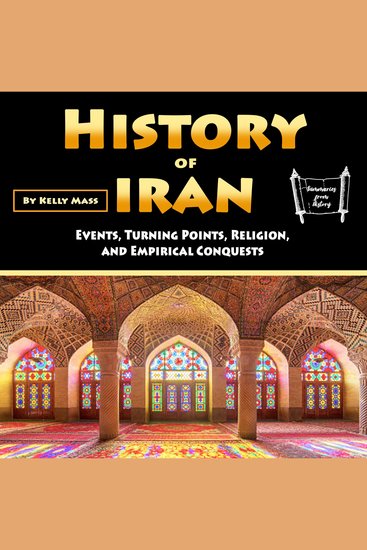
  • History of Iran - Events Turning Points Religion and Empirical Conquests - cover

    History of Iran - Events Turning...

    Kelly Mass

    • 0
    • 0
    • 0
    The history of Iran, once known as Persia in the Western world until the mid-twentieth century, is deeply intertwined with the history of a much broader region, referred to as Greater Iran. This expansive area stretches from Anatolia in the west to the borders of ancient India and the Syr Darya in the east, and from the Caucasus and Eurasian Steppe in the north to the Persian Gulf and the Gulf of Oman in the south. This vast territory has been home to a series of powerful civilizations and empires, each contributing to Iran's rich and complex history. 
    Iran's historical roots date back to around 7000 BC, with evidence of ancient settlements that make it one of the world's oldest continuous major civilizations. From the Early Bronze Age onward, the southwestern and western regions of the Iranian Plateau became integrated into the broader tapestry of the Ancient Near East. Early inhabitants such as the Elamites, followed by the Kassites, Mannaeans, and Gutians, played significant roles in shaping the region's cultural and political landscape. The Persians themselves are often regarded as the "first historical people" by the philosopher Georg Wilhelm Friedrich Hegel, reflecting their pivotal role in the development of world history. 
    In 625 BC, the Medes, a people native to the Iranian Plateau, succeeded in uniting Iran into a single nation and empire. This marked the beginning of the country's transformation into a major power. However, it was the Achaemenid Empire, founded by Cyrus the Great in 550 BC, that truly set Iran on the global stage. Under Cyrus, the Achaemenid Empire became the first true superpower in history, stretching across three continents—from the Balkans and North Africa to Central Asia.
    Mostra libro
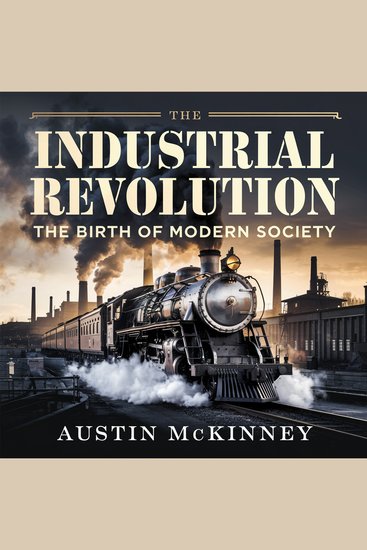
  • The Industrial Revolution – The Birth of Modern Society - How Innovation Machines and Factories Transformed the World - cover

    The Industrial Revolution – The...

    Austin Mckinney

    • 0
    • 0
    • 0
    The world we live in today—one of skyscrapers, mass production, and global trade—was born from one of history’s greatest transformations: the Industrial Revolution. But how did we go from handcrafting goods to building massive factories, steam-powered locomotives, and electric cities? 
    This audiobook takes you deep into the story of the Industrial Revolution, uncovering its inventions, economic impact, and the people who drove progress forward. Discover: 
    ✅ How steam engines, textile mills, and railroads reshaped economies 
    ✅ The key figures behind industrial breakthroughs, from James Watt to Henry Ford 
    ✅ The social effects of urbanization, child labor, and factory life 
    ✅ How the Industrial Revolution paved the way for the modern technological era 
    The Industrial Revolution – The Birth of Modern Society is a must-listen for history lovers, technology enthusiasts, and anyone fascinated by the forces that shaped today’s world.
    Mostra libro
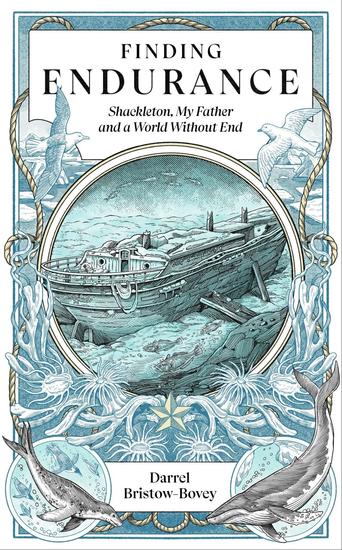
  • Finding Endurance - Shackleton My Father and a World Without End - cover

    Finding Endurance - Shackleton...

    Darrel Bristow-Bovey

    • 0
    • 0
    • 0
    'Engaging, absorbing and crammed with marvellous stories, Finding Endurance is a tale about exploring the cold, told with much warmth.' MICK HERRON
    
    'Beautiful, thrilling, heroic and kind, a ripping yarn' CLAIRE ROBERTSON, AUTHOR OF THE SPIRAL HOUSE
    
    'Tender, heartfelt and lyrical' PETINA GAPPAH, AUTHOR OF OUT OF DARKNESS, SHINING LIGHT
    
    'An exhilarating read' HENRIETTA ROSE-INNES, AUTHOR OF GREEN LION
    
    Since the discovery of the wreck of Ernest Shackleton's ship Endurance on the bed of the Antarctic ocean, the world has been enthralled anew by one of the greatest stories of all time.
    
    Acclaimed South African writer Darrel Bristow-Bovey, himself a Shackleton aficionado, revisits this dramatic event, which managed to sweep the tide of anger and rancour off the timelines and front pages of the world.
    
    He asks how so many ordinary people, who don't know a nunatak from a barquentine, were so moved at the finding of a small wooden ship once sailed by a half-forgotten Irishman? In re-examining the story and its players, he presents new details and a new understanding of the courage and hardship of the Endurance voyage, and reminds us of how extraordinary humans can be. Not all is lost, and what has been lost can be regained: the ocean has given us something back.
    
    What's more, we are reminded that miracles still happen: human miracles, performed by flawed people in helpless situations.
    Mostra libro
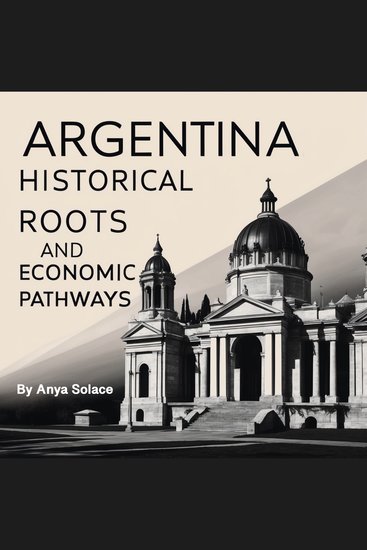
  • Argentina - Historical Roots and Economic Pathways - cover

    Argentina - Historical Roots and...

    Anya Solace

    • 0
    • 0
    • 0
    Argentina’s economic history is deeply intertwined with its political evolution and the social transformations that have shaped its national identity. From its early days as a Spanish colony to its modern-day status as one of the largest economies in Latin America, Argentina’s economic journey reflects both its potential and its vulnerabilities. The development of Argentina’s economy has been marked by periods of prosperity, such as during the late 19th and early 20th centuries, and periods of profound crisis, including the devastating economic collapse of 2001-2002. This chapter introduces the key historical milestones that have influenced the economic landscape of Argentina, providing a foundation for understanding the complex dynamics of its economic structure. 
    The story of Argentina’s economy begins with the indigenous societies that thrived on the land long before European colonization. Spanish colonization, starting in the 16th century, brought profound changes, introducing new economic systems and reshaping local trade practices. Agriculture became the dominant sector under colonial rule, with the Spanish focusing on extracting resources and establishing a trade-based economy that centered on Buenos Aires as a port for export. However, the colonial legacy of resource extraction and the absence of industrialization laid the groundwork for some of Argentina's long-standing economic challenges. 
    Upon gaining independence from Spain in 1816, Argentina faced the daunting task of creating a stable economic framework. The early post-independence years were marked by internal divisions and external conflicts, which stifled economic development. However, by the late 19th century, Argentina began to establish itself as a key global agricultural exporter. The development of railways and ports enabled the country to transport vast quantities of grain, beef, and other commodities to European markets, ushering in a period of unprecedented economic growth.
    Mostra libro
  • Writing Archetypal Character Arcs - The Hero's Journey and Beyond - cover

    Writing Archetypal Character...

    K.M. Weiland

    • 0
    • 0
    • 0
    The Six Transformational Character Arcs of the Human Life 
    Ready to take your story’s character arcs and themes to the next level? This latest book from veteran writing teacher and story theorist K.M. Weiland ventures far beyond the popular and pervasive Hero’s Journey to explore six important archetypal character arcs, representing key moments of initiation in the human experience:The MaidenThe HeroThe QueenThe KingThe CroneThe Mage 
    Found in every genre from fantasy to drama to romance to adventure, these transformational stories are the secret of powerhouse fiction—as shown through a wide variety of real-story examples throughout the book. 
    Writing Archetypal Character Arcs will teach you:The archetypal beats for each of the six journeysWhich archetypes are right for your particular storyThe best way to use archetypes in a seriesHow to choose the right archetypes for supporting charactersHow to use archetypes to identify your story’s theme 
    You will also learn how to deepen your stories by implementing shadow archetypes (the negative sides of each positive archetype), resting or “flat” archetypes (the fixed stage between each of the main arcs), and archetypal antagonists (the epic antagonistic forces that oppose each of the positive archetypes in their journeys). The Hero’s Journey is just the beginning. 
    Learning about archetypal character arcs will change the way you view stories—and life—forever.
    Mostra libro