Unisciti a noi in un viaggio nel mondo dei libri!
Aggiungi questo libro allo scaffale
Grey
Scrivi un nuovo commento Default profile 50px
Grey
Iscriviti per leggere l'intero libro o leggi le prime pagine gratuitamente!
All characters reduced
Our New Selection - Enriched edition - cover

Our New Selection - Enriched edition

Steele Rudd

Casa editrice: DigiCat

  • 0
  • 0
  • 0

Sinossi

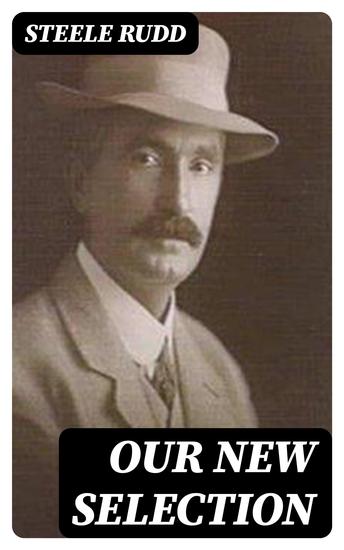
Steele Rudd's "Our New Selection" is a quintessential exploration of Australian rural life, woven with a rich tapestry of humor and poignancy that reflects the socio-cultural dynamics of the early 20th century. The book presents a collection of stories featuring the beloved character Dad and his family, showcasing the challenges and triumphs of farm life. Rudd's prose is notable for its vivid imagery and authentic dialogue, which captures the Australian vernacular, bringing the characters and their surroundings to life in a manner reminiscent of pastoral literature. These narratives not only entertain but also provide a commentary on the changing Australian landscape and society. Born in 1868 as the son of a pioneer family, Steele Rudd, originally named Arthur Hoey Davis, was deeply influenced by his own rural upbringing in Queensland. Experiences of hardship and community spirit found in his formative years permeate his writing, propelling him to immortalize the experiences of ordinary Australians. Rudd's affinity for storytelling, humor, and keen observation of human nature are driving forces that inject life into his characters and their adventures. "Our New Selection" is a must-read for anyone interested in Australian literature, social history, or the intricate dance of familial relationships against a backdrop of agrarian life. Rudd's relatable humor and heartfelt observations make this collection a timeless homage to rural values and human resilience.

In this enriched edition, we have carefully created added value for your reading experience:
- A comprehensive Introduction outlines these selected works' unifying features, themes, or stylistic evolutions.
- A Historical Context section situates the works in their broader era—social currents, cultural trends, and key events that underpin their creation.
- A concise Synopsis (Selection) offers an accessible overview of the included texts, helping readers navigate plotlines and main ideas without revealing critical twists.
- A unified Analysis examines recurring motifs and stylistic hallmarks across the collection, tying the stories together while spotlighting the different work's strengths.
- Reflection questions inspire deeper contemplation of the author's overarching message, inviting readers to draw connections among different texts and relate them to modern contexts.
- Lastly, our hand‐picked Memorable Quotes distill pivotal lines and turning points, serving as touchstones for the collection's central themes.
Disponibile da: 22/11/2022.
Lunghezza di stampa: 86 pagine.

Altri libri che potrebbero interessarti

  • HorrorBabble's Subterranean Terror - 10 Stories of the Dark Places Beneath Us - cover

    HorrorBabble's Subterranean...

    Robert Bloch, Edmond Hamilton,...

    • 0
    • 0
    • 0
    A collection of horror stories set in shadowy caverns, crypts, and other undesirable hollows. 
    Contents: 
    Far Below by Robert Barbour Johnson (Weird Tales, June-July 1939) 
    The story of dreadful creatures burrowing up into the New York subway. 
    The Creeper in the Crypt by Robert Bloch (Weird Tales, July 1937) 
    An unusual case of kidnapping in witch-haunted Arkham. 
    The Secret in the Tomb by Robert Bloch (Weird Tales, May 1935) 
    A man answers an inexplicable summons from beyond the grave. 
    Murder in the Grave by Edmond Hamilton (Weird Tales, February 1935) 
    A night of terror ten feet below the surface of the ground. 
    The Thing in the Cellar by David H. Keller (Weird Tales, March 1932) 
    The tale of a terrified little boy, and his fear of what might be lurking in the basement. 
    It Walks by Night by Henry Kuttner (Weird Tales, December 1936) 
    A ghastly horror that stalked through the crypts beneath an old graveyard. 
    The Graveyard Rats by Henry Kuttner (Weird Tales, March 1936) 
    A cemetery caretaker must exterminate a colony of monstrous rats. 
    The People of the Pit by Abraham Merritt (All-Story Weekly, January 1918) 
    An individual descended much too deeply into the heart of the Earth. 
    The Epiphany of Death by Clark Ashton Smith (The Fantasy Fan, July 1934) 
    A shocking revelation in the catacombs of Ptolemides. 
    The Seed from the Sepulchre by Clark Ashton Smith (Weird Tales, October 1933) 
    In the Venezuelan jungle, a diabolical plant lived on human life.
    Mostra libro
  • Sense And Sensibility - Full Cast Drama - cover

    Sense And Sensibility - Full...

    Jane Austen

    • 0
    • 0
    • 0
    Welcome to the world of Jane Austen, one of the most beloved authors in the English language. Austen's works are known for their wit, social commentary, and romantic storylines that have captivated readers for generations. This audiobook is an introduction to the life and works of Austen and will provide a glimpse into her world and the legacy she left behind. 
     
    Sense and Sensibility was written by Jane Austen and published in 1811. The novel follows the lives of the Dashwood sisters, Elinor and Marianne, as they navigate the complexities of love, society, and family in 19th-century England. In this essay, we will explore the themes, characters, and plot of Sense and Sensibility in detail. One of the central themes is the contrast between sense, represented by Elinor, and sensibility, represented by Marianne. Elinor is rational and reserved, while Marianne is impulsive and romantic. The novel explores the strengths and weaknesses of both approaches to life and love. Ultimately, the novel suggests that a balance of sense and sensibility is necessary for a happy and fulfilling life. 
     
    The plot of Sense and Sensibility is rich and engaging, with several subplots and twists. The novel begins with the death of the Dashwood sisters' father, leaving them with an uncertain financial future. They move to a cottage in Devonshire, where they meet new friends and potential suitors. Elinor falls in love with Edward Ferrars, but their relationship is threatened by his engagement to Lucy Steele. Marianne falls in love with John Willoughby, but he abandons her for a wealthy heiress. Meanwhile, Colonel Brandon is quietly in love with Marianne, but he is too reserved to express his feelings. Eventually, Elinor and Marianne find love and happiness, but not without enduring hardship and heartbreak along the way.
    Mostra libro
  • Thy Soul Shall Bear Witness! - cover

    Thy Soul Shall Bear Witness!

    Selma Lagerlöf

    • 0
    • 0
    • 0
    “Thy Soul shall bear Witness” (Körkarlen) by the Swedish Nobel Laureate Selma Lagerlöf is a kind of spooky Novel. It was first published in 1912 and in English in 1922, the same year as the international release of the Silent Movie “The Phantom Carriage”, today considered a classic movie, and one that strongly influenced the Swedish Director Ingmar Bergman. A second Movie based on the Novel was made again in 1958. In English the Novel is today very rare, very few copies are said to exist.- It is New Years Eve. David Holm who has become a depraved drunkard is sitting with some comrades in a Church-Yard, drinking, and telling a story he has heard some years earlier from a friend, George, about the Death-Cart, and how a person who dies on New-Years eve when the clock strikes Midnight will have to take over the Death-Cart as driver. The Death-Cart is a beaten-down horse-drawn carriage, drawn by a very old, one eyed horse, which travels the earth to pick up the souls of the dead and take them to heaven or hell. And as it happens, after a brawl, David is dying in the Church-Yard just as the clock strikes midnight, and a cart, moving closer and closer, is heard creaking. And at the reins sits David's old friend, George.In another part of the town a little slum sister, Edit, is dying. She has tried to help both David Holm and his family, in vain. Her only wish is to see David before she dies. She can not help it, but she loves him.George has come to introduce David into the job of becoming driver of the Death-Cart, as David is now going to relieve him from the task, and to show David what his life has been, and visiting his past, and also Edith, in her last moments.This story may be quite a bit different from most of Selma Lagerlöf's other Novels. But at the same time it is, as many of her stories, a story about love, forgiveness and redemption, and most captivating. (Summary by Lars Rolander)
    Mostra libro
  • The Joy Of Christmas - Classic Tales - cover

    The Joy Of Christmas - Classic...

    Charles Exeter

    • 0
    • 0
    • 0
    In this classic series of delightful Christmas stories especially for kids are all the beautiful, hopes, dreams, peace, love, light, and joy we look forward to every 25th of December. Here is a unique loving collection of extraordinary tales for all the little ones on the most special day of the calendar year. A very Merry Christmas and happy holidays to everyone! A truly unique audio treasure the whole family can enjoy! Welcome to a real old-time family celebration.
    Mostra libro
  • A Diagnosis of Death - From their pens to your ears genius in every story - cover

    A Diagnosis of Death - From...

    Ambrose Bierce

    • 0
    • 0
    • 0
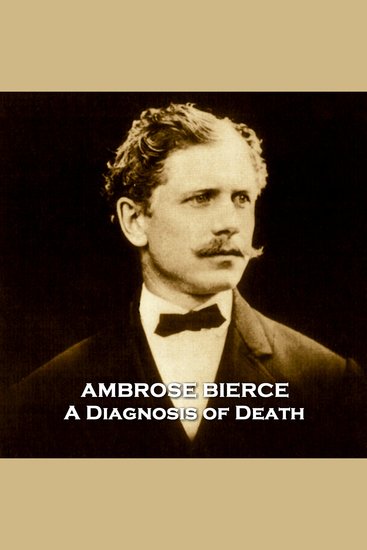
    Ambrose Gwinnett Bierce was born on 24th June 1842 at Horse Cave Creek in Meigs County, Ohio. His parents were poor but they introduced him to literature at an early age, instilling in him a deep appreciation of books, the written word and the elegance of language.  
    Growing up in Koscuisko County, Indiana poverty and religion were defining features of his childhood, and he would later describe his parents as “unwashed savages” and fanatically religious, showing him little affection but always quick to punish. He came to resent religion, and his introduction to literature appears to be their only positive effect. 
    At age 15 Bierce left home to become a printer’s devil, mixing ink and fetching type at The Northern Indian, a small Ohio paper. Falsely accused of theft he returned to his farm and spent time sending out work in the hopes of being published. 
    His Uncle Lucius advised he be sent to the Kentucky Military Institute. A year later he was commissioned as an Officer.  As the Civil War started Bierce enlisted in the 9th Indiana Infantry Regiment.  
    In April 1862 Bierce fought at the Battle of Shiloh, an experience which, though terrifying, became the source of several short stories. Two years later he sustained a serious head wound and was off duty for several months. He was discharged in early 1865.  
    A later expedition to inspect military outposts across the Great Plains took him all the way to San Francisco. He remained there to become involved with publishing and editing and to marry, Mary Ellen on Christmas Day 1871.  They had a child, Day, the following year.  
    In 1872 the family moved to England for 3 years where he wrote for Fun magazine. His son, Leigh, was born, and first book, ‘The Fiend’s Delight’, was published.  
    They returned to San Francisco and to work for a number of papers where he gained admiration for his crime reporting. In 1887 he began a column at the William Randolph Hearst’s San Francisco Examiner.  
    Bierce’s marriage fell apart when he discovered compromising letters to his wife from a secret admirer. The following year, 1889 his son Day committed suicide, depressed by romantic rejection. 
    In 1891 Bierce wrote and published the collection of 26 short stories which included ‘An Occurrence at Owl Creek Bridge’.  Success and further works including poetry followed.  
    Bierce with Hearst’s resources helped uncover a financial plot by a railroad to turn 130 million dollars of loans into a handout. Confronted by the railroad and asked to name his price Bierce answered “my price is $130 million dollars. If, when you are ready to pay, I happen to be out of town, you may hand it over to my friend, the Treasurer of the United States”.  
    He now began his first foray as a fabulist, publishing ‘Fantastic Fables’ in 1899.  But tragedy again struck two years later when his second son Leigh died of pneumonia relating to his alcoholism.  
    He continued to write short stories and poetry and also published ‘The Devil’s Dictionary’.  
    At the age of 71, in 1913 Bierce departed from Washington, D.C., for a tour of the battlefields where he had fought during the civil war. At the city of Chihuahua he wrote his last known communication, a letter to a friend. It’s closing words were “as to me, I leave here tomorrow for an unknown destination,” Ambrose Bierce then vanished without trace.
    Mostra libro
  • Uncle's Tom Cabin - cover

    Uncle's Tom Cabin

    Harriet Beecher Stowe

    • 0
    • 0
    • 0
    "Uncle Tom's Cabin," published in 1852, is an anti-slavery novel by American author Harriet Beecher Stowe. The story follows the lives of several enslaved African Americans, primarily Uncle Tom, as they navigate the harsh realities of slavery in the United States. Stowe wrote the novel as a response to the Fugitive Slave Act of 1850 and intended to portray the immorality of slavery. The book had a profound impact on American public opinion and is often credited with helping to galvanize the abolitionist movement.
    Mostra libro