Unisciti a noi in un viaggio nel mondo dei libri!
Aggiungi questo libro allo scaffale
Grey
Scrivi un nuovo commento Default profile 50px
Grey
Iscriviti per leggere l'intero libro o leggi le prime pagine gratuitamente!
All characters reduced
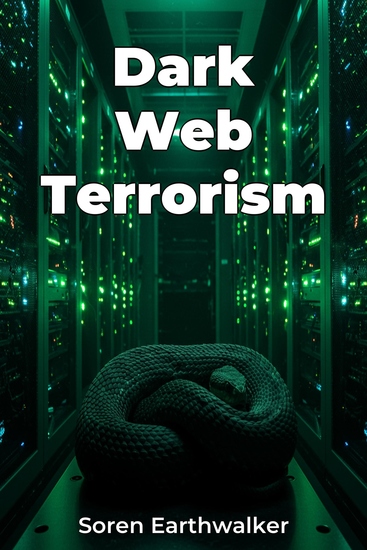
Dark Web Terrorism - cover

Dark Web Terrorism

Soren Earthwalker

Traduttore A AI

Casa editrice: Publifye

  • 0
  • 0
  • 0

Sinossi

Dark Web Terrorism explores how terrorist groups exploit the dark web's anonymity for communication, recruitment, and propaganda dissemination, posing a significant threat to global security. The book investigates the operational methods of these groups, the psychological manipulation used for online radicalization, and the strategies employed by law enforcement to counter these activities. Interestingly, the dark web, initially intended for privacy, has become a haven for extremist ideologies, illustrating a complex intersection of technology and crime. The book uniquely emphasizes understanding the psychological techniques used in online propaganda, revealing how individuals are persuaded to adopt extremist beliefs. Through case studies and analysis of leaked documents, it illustrates the real-world consequences of terrorist plots conceived and coordinated on the dark web. Each chapter builds upon the previous, starting with the dark web's infrastructure, then moving to radicalization psychology, case studies, and finally, counter-terrorism strategies. This approach provides a comprehensive understanding for policymakers, cybersecurity experts, and anyone interested in true crime and political science.
Disponibile da: 27/02/2025.
Lunghezza di stampa: 75 pagine.
Altri libri che potrebbero interessarti

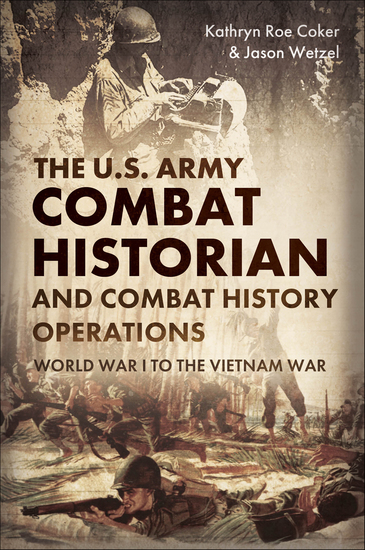
  • The US Army Combat Historian and Combat History Operations - World War I to the Vietnam War - cover

    The US Army Combat Historian and...

    Kathryn Roe Coker, Jason Wetzel

    • 0
    • 0
    • 0
    "How is history useful for an operational commander or to soldiers in general? What role does history have for doctrine and training to the U.S. Army as an institution? These are questions this book answers as the authors narrate the development combat historian and the evolving role of combat historians as they develop history into a useful tool for informing training, operations, and doctrine development."—New York Journal of Books
    
    In World War I, Major General Pershing proposed the idea of establishing a historical office within the AEF headquarters. The War Department reorganized the General Staff to include a Historical Branch. Evidence shows that soldiers acting as historians went "down range," albeit not into combat. By World War II, the situation had changed—whether S.L.A. Marshall's popping out of a billet in Sibret as a shells exploded on the road; Forrest Pogue's typing "on a little camp desk under an apple tree;" Chester Starr's terrain reconnaissance in the Mediterranean theater, or Ken Hechler's command of a four-man historical team interviewing soldiers at the Remagen Bridge and searching through secret documents—the World War II combat historians were there behind and on the front lines with a notebook in one hand and their carbine in the other hand, ever ready to collect battlefield information.
    
    Eight historical service detachments were deployed to Korea. The youngest commander, 1st Lieutenant Bevin Alexander, noted "We were on the front lines the whole time . . . We would interview the people afterwards and create a battle study…." After the Korean War, the duties of the combat historian further evolved as what became the Center of Military History published doctrine about military history detachments (MHDs). As America’s immersion in Vietnam escalated, there was concern regarding historical coverage. Chief of Military History Brigadier General Hal Pattison established a network of historical teams to collect information on the U.S Army in the war. A major development in the history program and in deploying MHDs came with the establishment of Headquarters, U.S. Army Vietnam (USARV) under General William C. Westmoreland’s command. In 1965, the history office was organized at Headquarters, U.S. Army Vietnam (USARV). MHDs were deployed across Vietnam, conducting combat after action interviews, and collecting documents. This study focuses on U.S. Army historical programs during combat operations from World War I to the Vietnam War with particular attention on the combat historians, those individuals deployed to a theater of war with the mission of documenting the actions of that theater for current and future historical use.
    Mostra libro
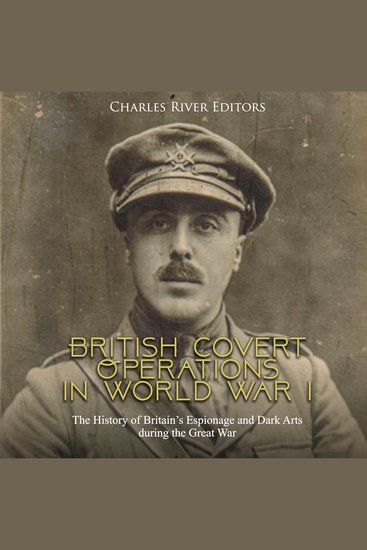
  • British Covert Operations in World War I: The History of Britain’s Espionage and Dark Arts during the Great War - cover

    British Covert Operations in...

    Charles River Editors

    • 0
    • 0
    • 0
    World War I, also known in its time as the “Great War” or the “War to End all Wars,” was an unprecedented holocaust in terms of its sheer scale. Fought by men who hailed from all corners of the globe, it saw millions of soldiers do battle in brutal assaults of attrition which dragged on for months with little to no respite. Tens of millions of artillery shells and untold hundreds of millions of rifle and machine gun bullets were fired in a conflict that demonstrated man’s capacity to kill each other on a heretofore unprecedented scale, and as always, such a war brought about technological innovation at a rate that made the boom of the Industrial Revolution seem stagnant. 
    Many members of British society viewed war as a sport, a lethal one admittedly, but one played by gentlemen in the spirit of amateurism and fair play as it had been throughout the British Empire in the preceding decades. The bloody stalemate on the Western Front caught them unprepared for the dark arts of covert warfare which would be needed to avert defeat, gain the initiative, win the war and, ultimately, shape the peace. Those operations would witness the evolution of an ad hoc coalition of stakeholders from the military, the political elite, academics, technical experts, various kinds of industry, the media, and even the artistic community, all of which came together to wage a variety of forms of covert warfare. Many of the programs were technically successful, and in some cases, they undoubtedly saved lives and shortened the war. In the process, the administration and execution of covert warfare became increasingly well-organized and sophisticated.
    Mostra libro
  • Alarms & Discursions - Reflections on Englishness and humanity - cover

    Alarms & Discursions -...

    G K Chesterton

    • 0
    • 0
    • 0
    The fragments of futile journalism or fleeting impression which are here collected are very like the wrecks and riven blocks that were piled in a heap round my imaginary priest of the sun. They are very like that grey and gaping head of stone that I found overgrown with the grass. Yet I will venture to make even of these trivial fragments the high boast that I am a medievalist and not a modern. That is, I really have a notion of why I have collected all the nonsensical things there are. I have not the patience nor perhaps the constructive intelligence to state the connecting link between all these chaotic papers. But it could be stated. This row of shapeless and ungainly monsters which I now set before the reader does not consist of separate idols cut out capriciously in lonely valleys or various islands. These monsters are meant for the gargoyles of a definite cathedral. I have to carve the gargoyles, because I can carve nothing else; I leave to others the angels and the arches and the spires. But I am very sure of the style of the architecture, and of the consecration of the church. -- From the introduction
    Mostra libro
  • Addiction and Recovery Handbook - Unmask Addiction Unleash Recovery! - cover

    Addiction and Recovery Handbook...

    Jack Alan Levine

    • 0
    • 0
    • 0
    This audiobook is narrated by an AI Voice.  Addiction Recovery Handbook by Jack Alan Levine is a powerful and practical guide to overcoming addiction, restoring hope, and building a life of lasting freedom. More than a single-author resource, this book also features the voices, insight, and experience of nineteen additional contributors from diverse backgrounds across the recovery, counseling, mental health, ministry, and treatment communities. 
     
    Drawing from real-life experience, professional expertise, and personal transformation, this handbook offers clear guidance for those battling substance abuse, destructive habits, and the emotional pain that often drives addiction. Readers will find actionable steps for breaking unhealthy cycles, rebuilding self-worth, restoring relationships, handling setbacks, and creating a future rooted in purpose rather than dependency. 
     
    Inside are perspectives from counselors, treatment leaders, medical professionals, pastors, coaches, and individuals with lived recovery experience—making this book both compassionate and deeply practical. Whether you are personally struggling, supporting a loved one, working in the helping professions, or searching for answers after years of frustration, Addiction Recovery Handbook provides wisdom, encouragement, and a proven path forward. 
     
    Recovery is possible. Healing is real. A new beginning can start today. A trusted resource for individuals, families, and professionals seeking real recovery.
    Mostra libro
  • Chanakya - cover

    Chanakya

    Amol Raikar

    • 0
    • 0
    • 0
    Chanakya was the royal advisor to the first emperor of Maurya Dynasty, Chandragupta Maurya. He was a teacher, philosopher, economist and a master strategist. He is also known as Kautilya, who wrote the famous Sanskrit text, Arthashashtra, an ancient Indian text on statecraft, economic policy and military strategy. He helped Chandragupta to form a small army and enter Pataliputra, the capital of Magadha Kingdom to started a civil war. Using his intelligence Chandragupta eventually won over the throne in 322 BC beginning the rule of Maurya Dynasty.
    Mostra libro
  • To the Lighthouse - cover

    To the Lighthouse

    Virginia Woolf

    • 0
    • 0
    • 0
    Unlock the Profound Beauty of Human Connection and the Unstoppable March of Time.
    
    Experience the height of stream of consciousness storytelling with Virginia Woolf's most autobiographical and evocative work, To the Lighthouse. Set on the Isle of Skye, the novel centers on the Ramsay family and their visits to the Scottish coast, framed by the anticipation of a simple trip to a nearby lighthouse—a trip that will take ten years and a lifetime of emotional change to complete.
    
    Through the shifting perspectives of the nurturing Mrs. Ramsay, the intellectually demanding Mr. Ramsay, and the struggling artist Lily Briscoe, Woolf explores the intricate tensions of family life and the fleeting nature of experience. The famous middle section, "Time Passes," stands as one of the most haunting passages in literature, depicting the decay of the family home while world events and personal tragedies unfold in the background.
    
    A landmark of Modernist literature, To the Lighthouse is more than a story; it is a meditation on how we perceive reality and the struggle to create something permanent in a world of constant flux.
    
    Journey into the heart of the Ramsay family. Buy "To the Lighthouse" today and experience one of the greatest novels of the 20th century.
    Mostra libro