Unisciti a noi in un viaggio nel mondo dei libri!
Aggiungi questo libro allo scaffale
Grey
Scrivi un nuovo commento Default profile 50px
Grey
Iscriviti per leggere l'intero libro o leggi le prime pagine gratuitamente!
All characters reduced
God or Nature Whatever - Spinoza's Guide to Getting Excommunicated from Every Religion Simultaneously - cover

God or Nature Whatever - Spinoza's Guide to Getting Excommunicated from Every Religion Simultaneously

Sophia Blackwell

Casa editrice: Cogito Ergo Nope

  • 0
  • 0
  • 0

Sinossi

God or Nature, Whatever is what happens when a philosophy grad student decides to explain Baruch Spinoza—the 17th-century lens grinder who got canceled by every major religion—using sarcasm, swearing, and a deeply unhealthy relationship with Euclidean geometry.Sophia Blackwell takes Spinoza's Ethics (a book structured like a math textbook, only less fun) and translates it into plain, hilarious, possibly heretical English. The result? A philosophical roast that actually teaches you something.Inside, you'll learn:
 
Why Spinoza thought God was just... everything (yes, including you, your dog, and that one sock you keep losing).
 
How he managed to be too atheist for the religious and too God-obsessed for the atheists.
 
Why your free will is fake but your bad decisions are still kind of your fault.
 
How to find spiritual peace by accepting you're a temporary Mode of an infinite Substance and not special at all (yay!).
 
And why Einstein loved Spinoza while religious authorities mostly wanted him yeeted into oblivion.
 
This book is for anyone who's ever read a sentence from a philosopher and thought, “Why are you like this?” It’s also for readers who like their deep metaphysical insights wrapped in existential dread and memes.Perfect for fans of irreverent nonfiction, people pretending to understand Spinoza, and anyone who’s been excommunicated for asking too many questions
Disponibile da: 08/04/2025.
Lunghezza di stampa: 48 pagine.
Altri libri che potrebbero interessarti

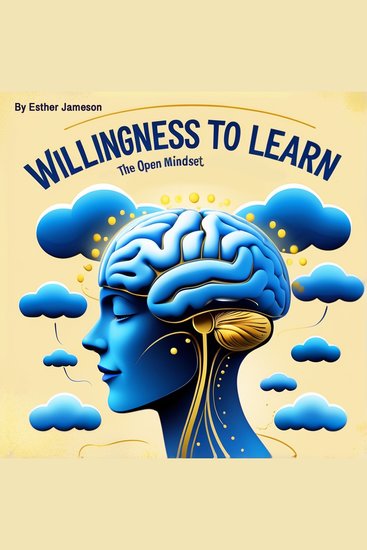
  • Willingness to Learn - The Open Mindset - cover

    Willingness to Learn - The Open...

    Esther Jameson

    • 0
    • 0
    • 0
    The journey begins with the simple act of curiosity, a spark that drives us to explore the vast realm of knowledge and self-improvement. In every life, there exists a turning point where the desire to learn outweighs the comfort of the familiar. This chapter explores the early stages of that transformative journey, when individuals decide to step beyond their comfort zones and embrace the challenges of growth. It is a time filled with both excitement and uncertainty, where every question asked becomes a stepping stone toward a deeper understanding of oneself and the world. 
    At the heart of this journey is the recognition that learning is not a finite process. Instead, it is an ongoing adventure that demands patience, persistence, and an open mind. The decision to learn often comes after moments of reflection, when past experiences—both successes and failures—combine to illuminate the need for change. This process involves shedding limiting beliefs and accepting that each setback is a valuable lesson in disguise. The willingness to embrace the unknown, even when the outcome is uncertain, becomes the foundation upon which a richer, more informed life is built. 
    In this early stage, individuals frequently encounter obstacles that test their resolve. It is in overcoming these barriers that the true value of the learning journey is revealed. The initial steps may be filled with self-doubt, yet every challenge conquered reinforces the commitment to personal growth. This chapter emphasizes that every small victory contributes to a greater sense of purpose and capability. The gradual accumulation of knowledge and experience leads to a newfound confidence that empowers learners to tackle more complex questions and explore diverse fields of inquiry.
    Mostra libro
  • Empath Mastery - Understanding the Emotions of Highly Sensitive People - cover

    Empath Mastery - Understanding...

    Charles Cummings

    • 0
    • 0
    • 0
    Are you "too sensitive," or do you know someone who is? Do friends pinpoint that you are too emotional? Tired of being told to grow thick skin?If you answered "yes" to any of the questions above, then keep reading! 
    Empath Mastery - Understanding the Emotions of Highly Sensitive People is a comprehensive book that includes everything you need to know to thrive. It is crucial to understand and develop strategies to use this blessing; otherwise, you might find yourself exhausted and bothered all the time. Understanding the characteristics is a must to figure out whether you are an empathetic or highly sensitive person. 
    These coping strategies will turn your empathy into a superpower and help you avoid falling into negative patterns or shutting down from the world. It is a practical and empowering guide that will improve your relationships and attitude towards life. 
    Within these pages, you will discover:What Does It Mean to Be An Empath;What Are the Six Types of Empaths;Indications of Empathetic Individuals;Habits of an Empath;Difference Between Empaths and Highly Sensitive People;11 Intense Problems Empaths Face in Relationships;Coping Skills That All Empaths Simply Must Know;15 Signs You're In A Relationship with an Empath; 
    AND MUCH MORE! 
    If you're ready to take control and understand how being an empath can assist in bettering your life - then look no further.Don't waste another minute, scroll up and hit "BUY NOW" to get started today!
    Mostra libro
  • The Fly Girls Revolt - The Story of the Women Who Kicked Open the Door to Fly in Combat - cover

    The Fly Girls Revolt - The Story...

    Eileen A. Bjorkman

    • 0
    • 0
    • 0
    In 1993, U.S. women earned the right to fly in combat, but the full story of how it happened is largely unknown. The Fly Girls Revolt chronicles the actions of a band of women who overcame decades of discrimination and prevailed against bureaucrats, chauvinists, anti-feminists, and even other military women. 


    Drawing on extensive research, interviews with women who served in the 1970s and 1980s, and her personal experiences in the Air Force, Eileen Bjorkman weaves together a riveting tale of the women who fought for the right to enter combat and be treated as equal partners in the U.S. military. 


    Although the military had begun training women as aviators in 1973, by a law of Congress they could not fly in harm's way. Time and again when a woman graduated at the top of her pilot training class, a less-qualified male pilot was sent to fly a combat aircraft in her place. 


    Most of the women who fought for change between World War II and today would never fly in combat themselves, but they earned their places in history by strengthening the U.S. military and ensuring future women would not be denied opportunities solely because of their sex. The Fly Girls Revolt is their story.
    Mostra libro
  • Aging is a Mindset - Stay young at heart - YOUR LIFE DEPENDS ON IT! - cover

    Aging is a Mindset - Stay young...

    Adam Stevenson

    • 0
    • 0
    • 0
    This book is an entertaining, thought provoking, funny and inspirational book that is full of scientific and sometimes not so scientific gems that are researched and written from the heart of one old person to another! It's about coming to terms with the aging process and provokes you to stay young at heart so that you can stay healthy in your mind and body until the sweet end. 
    It's a mindset to learn to live with yourself and to stay engaged in the process of living your life happy and still pursuing your potential. It's about staying passionate about life, no matter what we face and to learn the skills of finding a balance so that we can maintain momentum and keep moving forward.  
    In this book, you will feel inspired in a realistic but refreshing way so that you are in a better place with yourself to enjoy your life and cope with the aging process.
    Mostra libro
  • Ottoman Empire’s Worst Defeats The: The History and Legacy of the Decisive Battles that Checked the Ottomans’ Expansion into Europe - cover

    Ottoman Empire’s Worst Defeats...

    Editors Charles River

    • 0
    • 0
    • 0
    In the wake of taking Constantinople, the Ottoman Empire would spend the next few centuries expanding its size, power, and influence, bumping up against Eastern Europe and becoming one of the world’s most important geopolitical players. It was a rise that would not truly start to wane until the 19th century. 	The long agony of the “sick man of Europe,” an expression used by the Tsar of Russia to depict the falling Ottoman Empire, could almost blind people to its incredible power and history. Preserving its mixed heritage, coming from both its geographic position rising above the ashes of the Byzantine Empire and the tradition inherited from the Muslim Conquests, the Ottoman Empire lasted more than six centuries. Its soldiers fought, died, and conquered lands on three different continents, making it one of the few stable multiethnic empires in history, and likely one of the last. Thus, it’s somewhat inevitable that the history of its decline is at the heart of complex geopolitical disputes, as well as sectarian tensions that are still key to understanding the Middle East, North Africa and the Balkans.  
    	When studying the fall of the Ottoman Empire, historians have argued over the breaking point that saw a leading global power slowly become a decadent empire. The defeat in the Battle of Lepanto stopped the Ottomans from pushing further into the Mediterranean, and the Battle of Vienna in 1683 was certainly an important turning point for the expanding empire, as the defeat of Grand Vizier Kara Mustafa Pasha at the hands of a coalition led by the Austrian Habsburg dynasty, Holy Roman Empire and Polish-Lithuanian commonwealth marked the end of Ottoman expansionism. It was also the beginning of a slow decline during which the Ottoman Empire suffered multiple military defeats, found itself mired by corruption, and had to deal with the increasingly mutinous Janissaries (the Empire’s initial foot soldiers).
    Mostra libro
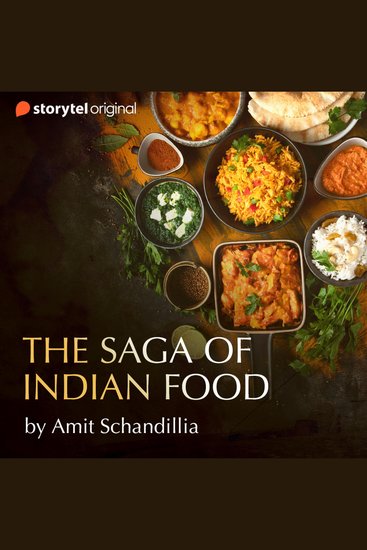
  • The saga of Indian Food - cover

    The saga of Indian Food

    Amit Schandillia

    • 0
    • 0
    • 0
    More than 2,400 years ago, Indian merchants traveling along the Silk Road introduced the world to an aromatic rice dish that would later become the Persian staple, pilaf. A couple of millennia down the line, the Mughals brought the dish back to the subcontinent and turned it into biryani. Meanwhile in the East, the Portuguese were busy inventing the evergreen Bengali icon, the rosogulla. Between biryani and rosogulla, is a fascinating story of how foreign foods came to conquer India.
    Mostra libro