Unisciti a noi in un viaggio nel mondo dei libri!
Aggiungi questo libro allo scaffale
Grey
Scrivi un nuovo commento Default profile 50px
Grey
Iscriviti per leggere l'intero libro o leggi le prime pagine gratuitamente!
All characters reduced
Nava-vraja-mahimā 4 - Volume Four - cover

Nava-vraja-mahimā 4 - Volume Four

Sivarama Swami

Casa editrice: Magyaroroszági Krisna-tudatú Hívők Közössége

  • 3
  • 2
  • 0

Sinossi

From the author of the highly acclaimed Krishna in Vrndavana series comes a nine volume literary treasure, Nava-vraja-mahima. In this epic work of over 4,000 pages, Sivarama Swami reveals the glories of the sacred dhama through the medium of pastime, parikrama, and philosophy.
 
Volume 4 is a glorification of Yoga-pitha and Radha-kunda, then parikrama from Siva-khor to Svananda-sukhada-kunja, and Radha-Gokulananda Mandir, with a special Appendix of Sri-Vilapa-kusumanjali
Disponibile da: 11/10/2016.
Lunghezza di stampa: 768 pagine.

Altri libri che potrebbero interessarti

  • Operation Z - cover

    Operation Z

    Jacques Baud

    • 0
    • 0
    • 0
    Why did Putin launch Operation Z in Ukraine? Are Ukrainian forces using neo-Nazi volunteers? What are the forces involved and the reality of the military conflict for the past six months? What do we know about war crimes like Butcha? Have Western economic sanctions worked? Has the massive shipment of arms by the West had an effect on the conflict? After the best-seller Putin: Master of the Game, whose analysis has been praised worldwide, Jacques Baud returns in this book to the root causes of the war in Ukraine and the reasons that pushed Vladimir Putin to intervene on February 24, 2022. Using information from intelligence services and official reports, he analyzes the course of the military actions and the way they were interpreted in the West. He explains the political and economic upheaval of the world order, as well as the long-term consequences of Western sanctions on our daily lives. It reveals how the conflict could have been avoided and what avenues were deliberately left open by the United States and Europe. Colonel Jacques Baud is a former member of the Swiss Strategic Intelligence, a specialist in Eastern Europe and former head of Doctrine of the United Nations Peace Operations. Within NATO, he was involved in programs in Ukraine, including after the Maidan Revolution of 2014 and 2017. He is the author of several books on intelligence, war and terrorism, including Putin, Master of the Game? Governing by Fake News, and The Navalny Affair, all published by Max Milo. 
    This audiobook is read by a synthesized voice.
    Mostra libro
  • Medieval Russia: A Captivating Guide to Russian History during the Middle Ages - cover

    Medieval Russia: A Captivating...

    Captivating History

    • 0
    • 0
    • 0
    Did you know that Russia, as a united state, was not formed until the 16th century? 
    Today, Russia is the biggest and one of the most populous countries in the world. From the early, primitive state-like formations in the 9th century, all the way to the creation of the first true tsardom of Russia in 1547, the history of medieval Russia is one filled with constant struggles for power, personal rivalries between various princes, bloody wars, and a search for identity. 
    This period, which spans about eight centuries, is often forgotten when talking about Russia, despite its importance. Nowadays, people’s perception of Russia is largely defined by the era of the Soviet Union, and it is not hard to understand why. However, exploring such a pivotal period that shaped modern Russia is a must for everybody who is even partially interested in the history of the world. 
    This audiobook serves as a guide for all listeners who want to delve deep into the history of medieval Russia. It covers exciting topics, such as:The rise and fall of Kievan Rus—the first Russian stateThe separation of Russian territories into appanagesInternal fighting between the Russian princes for dominationThe Mongol conquest and how they ruled RussiaThe emergence of new social and cultural trends in Russian societyStruggle for independence and freedom from the Mongol rulersAssumption of power by Muscovy—the most powerful Russian territory in the 14th century 
    Scroll up and click the “add to cart” button to begin learning more about medieval Russia!
    Mostra libro
  • Empire of Ife - The Cradle of Yoruba Culture and the Kingdom of Sculptors - cover

    Empire of Ife - The Cradle of...

    Rolf Hedger

    • 0
    • 0
    • 0
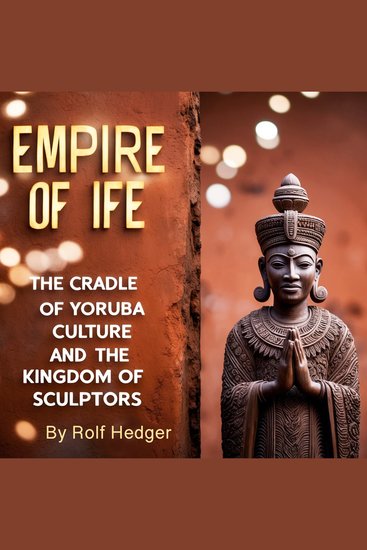
    The origins of Ife are deeply rooted in mythology, oral traditions, and historical accounts, making it one of the most revered ancient cities in West Africa. Ife is often referred to as the cradle of the Yoruba civilization, a place where culture, religion, and governance took form. The story of its beginning is intertwined with Yoruba cosmology, particularly the legend of Oduduwa, who is considered the progenitor of the Yoruba people. 
    According to Yoruba mythology, Olodumare, the Supreme Being, entrusted Oduduwa with the sacred task of creating the earth. He descended from the heavens with a chain, a handful of earth, and a rooster. Upon reaching the watery expanse that covered the world, he spread the earth on the surface, and the rooster scattered it, forming the first landmass. This sacred land became known as Ile-Ife, meaning “The Land of Expansion.” Over time, Oduduwa and his followers established a kingdom that became the center of Yoruba civilization, laying the foundation for its political, spiritual, and artistic traditions. 
    Beyond mythology, historical and archaeological evidence suggests that Ife was already a flourishing city-state by the 9th century, possibly earlier. It grew as a hub of trade, attracting merchants and artisans from different parts of West Africa. Its strategic location allowed for the exchange of goods, ideas, and cultural practices, contributing to the city’s rapid development. The city’s early rulers, often referred to as the Oonis, played a crucial role in consolidating power and maintaining the harmony between religious and political institutions. The Ooni of Ife, regarded as both a king and a divine figure, acted as the intermediary between the people and the gods, reinforcing Ife’s status as a sacred city.
    Mostra libro

  • Thriving DOPAMINE Secrets for Lasting Joy - "Unlock lasting joy! Dive into powerful audio lessons revealing thriving dopamine secrets" - cover

    Thriving DOPAMINE Secrets for...

    Cyrus Thistledown

    • 0
    • 0
    • 0
    Thriving DOPAMINE Secrets for Lasting Joy 
    ⭐⭐ A Simplified Guide & Explanations Included ⭐⭐ 
    Are you eager to enhance your happiness and cultivate lasting joy by unlocking the power of dopamine in your life? 
    Searching for a comprehensive guide that encompasses everything you need to know about finding joy through moderation in a pleasure-driven world? 
    Look no further! 
    This guide is your ultimate companion for deepening your understanding, applying your insights, and engaging in practical exercises. With this resource, you’re set up for success. 
    Updated for the latest knowledge in 2025. 
    Key features of this enriched guide: 
    - In-depth insights into the realm of joy and dopamine 
    - Detailed explanations on how to utilize dopamine for happiness 
    - Effective strategies for maintaining balance and finding joy 
    Our guide sets itself apart with thorough coverage, which is crucial for your success. Concepts are explored in depth, rather than examined superficially. 
    Please be aware that this guide operates independently and is not affiliated with any official organization; it's crafted solely for your benefit. 
    With a clear structure and easy-to-follow language, our guide to discovering joy ensures seamless transitions between topics. Bid farewell to complicated jargon and welcome clear, precise, and technically sound content. 
    So, why delay? Click the BUY NOW button, secure your guide, and embark on your journey toward lasting joy! 
    Thriving DOPAMINE Secrets for Lasting Joy
    Mostra libro
  • Chasing Bandits in the Badlands - cover

    Chasing Bandits in the Badlands

    Bob Breen

    • 0
    • 0
    • 0
    In January 1993, the Australian government sent just under one thousand young men and women to serve under American command in a violent, impoverished, starving society. Most males over the age of twelve either carried or had access to a gun, and most Somali men had been fighting a vicious civil war for years. 
    Australian soldiers and their teams had to gain control of the streets of Baidoa and surrounding towns. This contest was not ‘find, fight and kill’ warfare. There was no decisive victory or defeat. The aim was to detect ‘the bad boys’ and deter and de-escalate their violence rather than escalate hostilities to success through ‘body count’. This mode of operation was not community policing by soldiers either. It involved adjusting attitudes forcefully and assuring uncomfortable consequences for bad behaviour and ultimately lethal responses to armed challenges. 
     
    The world looked over their shoulders. Corporals and diggers had to make split-second decisions to open or hold fire. Holding fire when provoked by punks constituted disciplined professional performance. Opening fire before understanding the situation, especially against unarmed provocateurs, constituted unprofessional conduct and possible condemnation, even criminal charges. These young Australians carried the international reputation of Australia and its army on their shoulders. Their actions would either enhance that reputation or create controversy, negative publicity and, potentially, international embarrassment and condemnation. 
     
    After adjusting their own attitudes to balance aggression and compassion, fight leaders and their diggers forcefully adjusted Somali attitudes, secured a stalemate, and then took control for the time they were in Somalia Australian soldiers individually and collectively helped a traumatised society needing a ‘fair go’ and gave ordinary Somali men, women and children trying to survive a little bit of hope.
    Mostra libro
  • Liberation of Western Europe in World War II The: The History of the Western Allies’ Campaigns on the Continent - cover

    Liberation of Western Europe in...

    Editors Charles River

    • 0
    • 0
    • 0
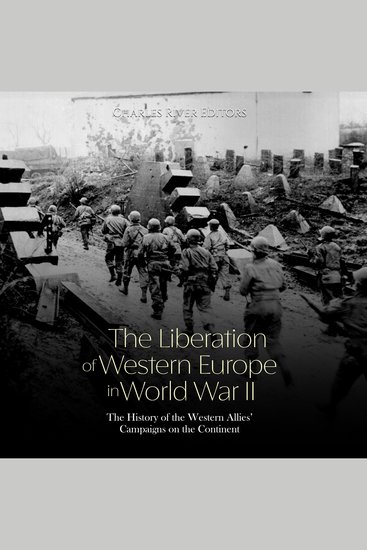
    During World War II, the free world literally hung in the balance, with the Axis and Allies engaging in warfare on an unprecedented scale. Although Hitler’s Nazi Germany had overrun much of the European continent by 1940, the Allies began to reverse the momentum in 1942. By the end of 1943, with Allied forces firmly established in Italy and the Soviets on the verge of turning the tide in Russia, the British and Americans began to plot the invasion that would liberate Europe from the Nazis.  
    	During the first half of 1944, the Americans and British commenced a massive buildup of men and resources in the United Kingdom, while Allied Supreme Commander Dwight D. Eisenhower and military brass planned the details of an enormous and complex amphibious invasion of Europe. Though the Allies used misinformation to try deceiving the Germans, the most obvious place for an invasion was just across the narrow English Channel, and the Germans had built coastal fortifications throughout France to protect against just such an invasion. 
    The invasion across the Channel came in the early morning hours of June 6, 1944. That day, forever known as D-Day, the Allies commenced Operation Overlord by staging the largest and most complex amphibious invasion in human history. After the successful amphibious invasion on D-Day in June 1944, the Allies began racing east toward Germany and liberating France along the way. The Allies had landed along a 50 mile stretch of French coast, and despite suffering 8,000 casualties on D-Day, over 100,000 still began the march across the western portion of the continent.  
    After resisting the German attack, the Allied armies began advancing, and with that, the race to Berlin was truly on. While much has been written of the Battle of the Bulge, Okinawa, Midway, Stalingrad, and many other conflicts of the Second World War, the Battle for Berlin has remained in the shadows for many historians. 
    Mostra libro