Unisciti a noi in un viaggio nel mondo dei libri!
Aggiungi questo libro allo scaffale
Grey
Scrivi un nuovo commento Default profile 50px
Grey
Iscriviti per leggere l'intero libro o leggi le prime pagine gratuitamente!
All characters reduced
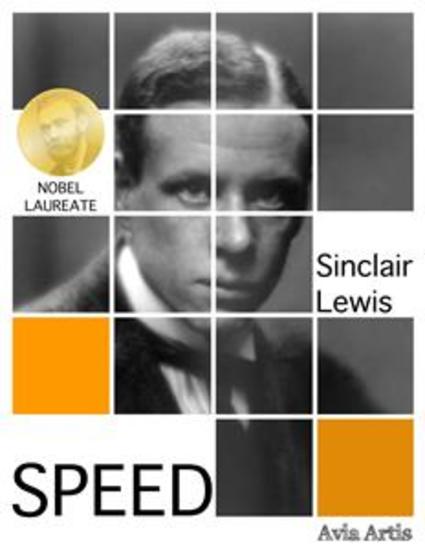
Speed - cover

Speed

Sinclair Lewis

Casa editrice: Avia Artis

  • 0
  • 0
  • 0

Sinossi

“Speed” is a book by Sinclair Lewis an American writer. In 1930, he became the first writer from the United States to receive the Nobel Prize in Literature.
“Speed” is a short story by Sinclair Lewis. 
“Out in the road were two new automobile tires, and cans of gasoline, oil, water. The hose of a pressure air-pump stretched across the cement sidewalk, and beside it was an air-gauge in a new chamois case. Across the street a restaurant was glaring with unshaded electric lights; and a fluffy-haired, pert-nose girl alternately ran to the window and returned to look after the food she was keeping warm. The president of the local motor club, who was also owner of the chief garage, kept stuttering to a young man in brown union overalls, “Now be all ready — for land’s sake, be ready. Remember, gotta change those casings in three minutes.” They were awaiting a romantic event — the smashing of the cross-continent road-record by a Mallard car driven by J. T. Buffum.”
Preview.
 
Disponibile da: 22/03/2022.

Altri libri che potrebbero interessarti

  • Aloysha the Pot - From their pens to your ears genius in every story - cover

    Aloysha the Pot - From their...

    Leo Tolstoy

    • 0
    • 0
    • 0
    Leo Tolstoy was born in 1828 in the Russian province of Tula to a wealthy noble family. As a child, he had private tutors but he showed little interest in any formal education. When he went to the University of Kazan in 1843 to study oriental languages and law, he left without completing his courses.  Life now was relaxed and idle but with some writing also taking place.  Gambling debts forced an abrupt change of path and he joined the army to fight in the Crimean War.  He was commended for his bravery and promoted but was appalled at the brutality and loss of life.  He recorded these and other earlier experiences in his diaries which formed the basis of several of his works. 
    In 1852 ‘Childhood’ was published to immediate success and was followed by ‘Boyhood’ and ‘Youth’. 
    His experience in the army and the horrors he witnessed resulted in ‘The Cossacks’ in 1862 and the trilogy ‘Sevastopol Tales’. After the war he travelled around Europe, visiting London and Paris and meeting such luminaries as Victor Hugo and Charles Darwin.  
    It was now that Tolstoy began his masterpiece, ‘War and Peace’. Published in 1869 it was an epic work that changed literature. He quickly followed this with ‘Anna Karenina’.  
    These successes made Tolstoy rich and helped him accomplish many of his dreams but also brought problems as he grappled with his faith and the lot of the oppressed poor. These revolutionary views became so popular that the authorities now kept him under surveillance.  
    He led a life of asceticism and vegetarianism and put his socialist ideals into practice by establishing numerous schools for the poor and food programmes. He also believed in giving away his wealth, which caused much discord with his wife.  
    His writing continued to bring forth classics such as ‘The Death of Ivan Ilyich’ and many brilliant and incisive short stories such as ‘How Much Land Does A Man Need’.  
    In 1901 Tolstoy was excommunicated from the Church and controversially deselected for the Nobel Prize for Literature. 
    Whilst undertaking a pilgrimage by train in October 1910 with his daughter Aleksandra he caught pneumonia in the nearby town of Astapovo.  Leo Tolstoy died on November 9th, 1910, he was 82.
    Mostra libro
  • Greats Abridged The: Great Expectations - cover

    Greats Abridged The: Great...

    Charles Dickens

    • 0
    • 0
    • 0
    The Greats Abridged: Great Expectations brings Charles Dickens' iconic coming-of-age tale to life in a concise, compelling format ideal for modern listeners. This expertly abridged version preserves the heart and drama of Pip’s journey—from humble beginnings as an orphaned blacksmith’s apprentice to the glittering illusions of gentlemanly life in London. 
    Narrated with rich depth by Richard Stibbard, this adaptation captures the emotion, mystery, and unforgettable characters that have made Great Expectations one of the greatest novels ever written. Miss Havisham’s haunting legacy, Estella’s icy charm, and the brooding secret of Pip’s benefactor are all here, streamlined without sacrificing Dickens’ masterful storytelling. 
    Perfect for first-time listeners, busy students, or fans revisiting the novel with fresh ears—this abridged edition delivers the power of Dickens in a shorter, highly engaging form.
    Mostra libro
  • A Profitable Weakness - From their pens to your ears genius in every story - cover

    A Profitable Weakness - From...

    George Gissing

    • 0
    • 0
    • 0
    George Robert Gissing was born on November 22nd, 1857 in Wakefield, Yorkshire.  
    He was educated at Back Lane School in Wakefield. Gissing loved school. He was enthusiastic with a thirst for learning and always diligent.  By the age of ten he was reading Dickens, a lifelong hero. 
    In 1872 Gissing won a scholarship to Owens College. Whilst there Gissing worked hard but remained solitary. Unfortunately, he had run short of funds and stole from his fellow students. He was arrested, prosecuted, found guilty, expelled and sentenced to a month's hard labour in 1876. 
    On release he decided to start over.  In September 1876 he travelled to the United States. Here he wrote short stories for the Chicago Tribune and other newspapers. On his return home he was ready for novels. 
    Gissing self-published his first novel but it failed to sell.  His second was acquired but never published. His writing career was static.  Something had to change.  And it did. 
    By 1884 The Unclassed was published.  Now everything he wrote was published. Both Isabel Clarendon and Demos appeared in 1886. He mined the lives of the working class as diligently as any capitalist. 
    In 1889 Gissing used the proceeds from the sale of The Nether World to go to Italy. This trip formed the basis for his 1890 work The Emancipated. 
    Gissing's works began to command higher payments. New Grub Street (1891) brought a fee of £250.  
    Short stories followed and in 1895, three novellas were published; Eve's Ransom, The Paying Guest and Sleeping Fires. Gissing was careful to keep up with the changing attitudes of his audience.  
    Unfortunately, he was also diagnosed as suffering from emphysema. The last years of his life were spent as a semi-invalid in France but he continued to write. 1899; The Crown of Life. Our Friend the Charlatan appeared in 1901, followed two years later by The Private Papers of Henry Ryecroft. 
    George Robert Gissing died aged 46 on December 28th, 1903 after catching a chill on a winter walk.
    Mostra libro
  • Shadow The - Story Time Episode 76 (Unabridged) - cover

    Shadow The - Story Time Episode...

    Hans Christian Andersen

    • 0
    • 0
    • 0
    "The Shadow" (Danish: Skyggen) is a fairy tale by Danish poet and author Hans Christian Andersen. The tale was first published in 1847. Once a learned man from the northern regions of Europe went on a voyage south. One night, he sat on his terrace, while the fire behind him cast his shadow on the opposite balcony. As he was sitting there, resting, the man was amused to observe how the shadow followed his every movement, as if he really did sit upon the opposing balcony. When he finally grew tired and went to sleep, he imagined the shadow would likewise retire in the house across the street. The next morning however, the man found to his surprise that he in fact had lost his shadow overnight. As a new shadow slowly grew back from the tip of his toes, the man did not give the incident another thought, returned to northern Europe, and took up writing again. Several years passed by until one night there was a knock at his door. To his surprise, it was his shadow, the one he lost years before in Africa, and now stood upon his doorstep, almost completely human in appearance. Astonished by his sudden reappearance, the learned man invited him into his house, and soon the two sat by the fireplace, as the shadow related how he had come to be man...
    Mostra libro
  • Lady Susan - cover

    Lady Susan

    Jane Austen

    • 0
    • 0
    • 0
    Delve into the cunning world of "Lady Susan" by Jane Austen, a captivating novella told through a series of letters. The charming yet unscrupulous Lady Susan Vernon weaves a web of flirtation and manipulation, seeking advantageous matches for herself and her daughter. As her scheming unfolds, the characters around her must navigate the fallout of her deceptive games. Austen's sharp wit and incisive social commentary shine through in this enthralling tale of ambition, romance, and intrigue, showcasing the complexities of human relationships and moral ambiguity.
    Mostra libro
  • North and South - cover

    North and South

    Elizabeth Gaskell

    • 0
    • 0
    • 0
    "North and South" is a social novel by English writer Elizabeth Gaskell, published in 1855. The story is set in the fictional industrial town of Milton in the North of England and contrasts the way of life in the industrial North with that in the rural South. The novel follows Margaret Hale, a young woman from rural southern England, who moves to the northern industrial town and encounters the stark realities of industrialization, class conflict, and social upheaval. The novel explores themes of industrialization, class differences, gender roles, and societal change. Margaret’s evolving relationships, particularly with the mill owner John Thornton, form the crux of the narrative
    Mostra libro