Introduction to Matter Physics
Simone Malacrida
Casa editrice: Simone Malacrida
Sinossi
The following basic physics topics are presented in this book:introduction to the physics of mattersolid state physicssemiconductor physicsphysics of plasmas
Casa editrice: Simone Malacrida
The following basic physics topics are presented in this book:introduction to the physics of mattersolid state physicssemiconductor physicsphysics of plasmas
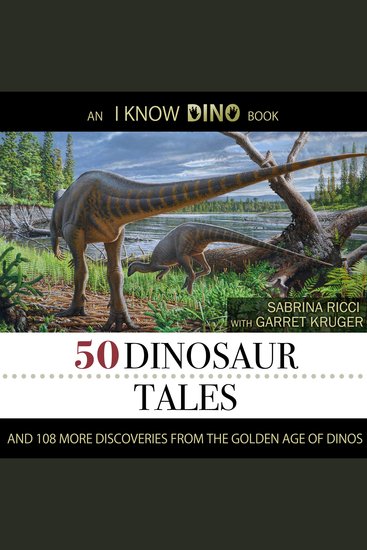
Gualicho takes a bite out of the ornithopod's back as it runs away from her, causing it to stumble and fall. She jumps on top of the body and rips open its neck with her teeth. The ornithopod becomes still and limp. Satisfied, Gualicho begins to feast. But, after only two bites, she senses something is wrong. She lifts her head and sees a Mapusaurus making its way toward her. Blending fiction with fact, 50 Dinosaur Tales imagines the way 50 newly described dinosaurs from the Triassic, Jurassic, and Cretaceous lived in their natural habitats. Also included is a list of fun facts for each dinosaur story, and facts about 108 additional dinosaurs. If you want to hear more about new dinosaurs as soon as they are discovered, listen to the weekly podcast I Know Dino.Mostra libro
This is the story of an astonishing transformation as Wales entered the twenty-first century embracing a new democratic direction. The Senedd, designed by architect Richard Rogers, rose as the country’s distinctive ultramodern forum, the expression of the people’s voices and diversity. Senedd documents the rise of Cardiff as a city and place of government through to the concepts, challenges and final acheivements of the Senedd building itself, superbly photographed by Andrew Molyneux. Trevor Fishlock’s rigorously researched account provides an extensive background, highlighting not only the unique design of the building and the process of its completion but also the even greater significance of what it continues to represent for Wales. The book also includes a conversation conducted by Fishlock with the late architect Richard Rogers and firm partner Ivan Harbour on their vision for the project and its execution.Mostra libro
The COVID-19 pandemic has demonstrated our fragility as a species. Humanity was attacked by a previously unknown virus that spread very rapidly, thanks to a speed of population mobility never before seen in human history. It succeeded in creating the complete upset of the global socio-economic system. Such an event gives us an important stimulus to re-evaluate health in the context of a circular system that encompasses humans and the environment in which we live. The key challenge we face is the discovery of novel paths to crisis resolution. Can we abandon the often cherished, but now rather obsolete, tendency to specialize in a restricted subject area? Can we re-discover the ability to become permeable to ideas that reach us from other disciplines and embrace a thinking-out-of-the-box approach? This book encourages the reader to consider this challenge via the telling of stories, both great and small. Stories that, although sometimes overlooked, have defi ned the course of our history and thus open the door to a new pathway of progress. In some ways, COVID-19 may have shown the direction nature expects us to take. Ilaria Capua suggests to us that, today more than ever, we are the responsible actors in the circle of life, guardians of our planet and defenders of its health. As one entity of circular nature.Mostra libro
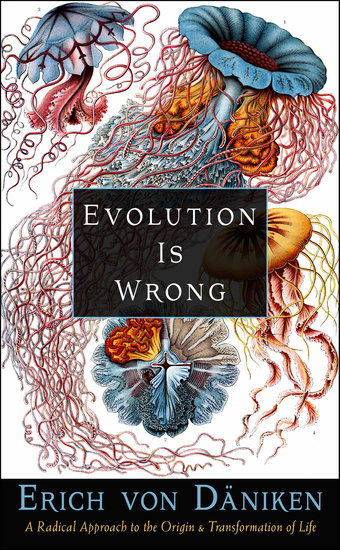
A Fascinating Exploration on Why the Darwinists’ Theory No Longer Explains EverythingThere was once a set of ideas called the theory of evolution, conceived by clever people and confirmed by countless scientists. Then people discovered the electron microscope. This made it possible to make the molecules within the cell visible, and suddenly questions about evolution arose that were not possible before. Which force actually bundles the atoms in the right order? What moves the molecular chains into the correct position? How did the first living unit within the cell actually come about? How does inheritance work, how does information pass on to the next generation? Did humans descend only and exclusively from primates—as Charles Darwin and countless other great minds assumed—or did additional “engines” intervene in evolution? Today it is clear: countless questions can no longer be answered with the previous theory of evolution. There is a form of life called “Blob” (Physarum polycephalum). The “thing” has neither eyes nor ears, neither a mouth nor a nose or even a brain. Nevertheless, it takes in food, overcomes obstacles by the shortest route and exchanges information with other “blobs.” The “blob” contradicts any evolutionary thought that one develops from the other. Or the “gastric-brooding frogs” (Rheobatrachus) found in Australia. They hatch their young in the stomach. Impossible in a slow, evolutionary process. Everywhere there are characteristics of animals that do not want to fit into the theory of evolution anywhere. And man? Are we really the most adapted life-form on this planet? Today, more and more scientists who contradict the previous theory of evolution speak out. The theory fits the changes within the species, but it can no longer be reconciled with the inner workings of the cell. Some other influence that has so far escaped us is affecting evolution. It is called “Intelligent Design.” Intelligent planning is suspected behind this. Anyone or anything—a spirit of the universe? Aliens?—could be behind this planning. Erich von Däniken uses countless examples to demonstrate the impossibility of the previous evolutionary idea. He quotes scientists who argue against the previous teaching, but also those who defend it. Unfortunately, established science still refuses to look at discrepancies and holes in the theory of evolution, even though it is quite obvious that there is more going on with regard to the development of all species, as well as human culture, than could be explained by the theory of evolution alone.Mostra libro
The Elements of Mammalogy is one of seven in a Series of First Books of Natural History Prepared for the Use of Schools and Colleges. This succinct little textbook from 1845 presents an introduction to mammalogy. The information, albeit not current, is still interesting and of use as a general overview of mammal biology. The classification of mammals has changed considerably since this time. The author was a surgeon in the U.S. Navy and president of the Academy of Natural Sciences. (Summary by A. Gramour)Mostra libro
In this 2023 conversation with Justine Willis Toms, New York Times contributor Margaret Renkl suggests that we make an “untidy” garden that will nurture our soul and the natural world. She encourages us to fall in love with the natural companions in our lives: the spiders, the hummingbirds, crickets, and raccoons, and all the other species who are living right beside us. When we fall in love with them, we can't help but want to save them. Renkl suggests stepping out of our small world of computer screens, smartphones and TVs to step into the larger natural world, which is everywhere, just outside our front door. Margaret Renkl is the author of:Late Migrations: A Natural History of Love and Loss (Milkweed Editions 2019)Graceland, At Last: Notes on Hope and Heartache from the American South. (Milkweed Editions 2021)The Comfort of Crows: A Backyard Year (Spiegel and Grau 2023) Interview Date: 6/19/2023 Tags: Margaret Renkl, birding tradition, blue jays, crows, bird language, tadpoles, amphibians, frogs, toads, endocrine disruptors, chemical fertilizers, insecticides, pesticides, monarch butterflies, Methuselah generation, Roundup, glyphosate, pollinator plants, rabbits, manicured lawns, spiders, hummingbirds, walking, Ecology/Nature/Environment, WritingMostra libro