Unisciti a noi in un viaggio nel mondo dei libri!
Aggiungi questo libro allo scaffale
Grey
Scrivi un nuovo commento Default profile 50px
Grey
Iscriviti per leggere l'intero libro o leggi le prime pagine gratuitamente!
All characters reduced
The Collected Works of Sigmund Freud: Psychoanalytic Studies Theoretical Essays & Articles - Exploring the Depths of the Human Psyche: Freudian Insights and Psychoanalytic Discoveries - cover

The Collected Works of Sigmund Freud: Psychoanalytic Studies Theoretical Essays & Articles - Exploring the Depths of the Human Psyche: Freudian Insights and Psychoanalytic Discoveries

Sigmund Freud

Traduttore A. A. Brill, M. D. Eder, Stanley Hall, H. W. Chase

Casa editrice: Good Press

  • 0
  • 0
  • 0

Sinossi

In "The Collected Works of Sigmund Freud: Psychoanalytic Studies, Theoretical Essays & Articles," Freud offers a comprehensive compilation of his pioneering contributions to the field of psychoanalysis. This meticulous anthology delves into the intricacies of human psychology, exploring themes such as the unconscious, dreams, and the dynamics of human relationships. Written in Freud's distinctive and engaging prose, the collection presents theoretical essays and studies that contextualize psychoanalytic thought within the broader landscape of early 20th-century intellectual currents, making it an indispensable resource for both scholars and enthusiasts alike. Sigmund Freud, often referred to as the father of psychoanalysis, emerged from a diverse background of medicine and philosophy. His innovative ideas stemmed from a blend of scientific inquiry and a deep understanding of human behavior, shaped by cultural influences and personal experiences. Freud's unique position allowed him to challenge conventional thought and lay the groundwork for modern psychology, addressing the complexities of mental health and human motivation. This compelling anthology is highly recommended for anyone seeking to understand the profound impact of Freud's work on psychology, literature, and the humanities. By engaging with these collected writings, readers will gain invaluable insights into the development of psychoanalytic theory and its relevance in contemporary discourse.
Disponibile da: 10/01/2024.
Lunghezza di stampa: 1700 pagine.

Altri libri che potrebbero interessarti

  • History of Finland: A Captivating Guide to Finnish History - cover

    History of Finland: A...

    Captivating History

    • 0
    • 0
    • 0
    Finnish culture is centuries old, yet Finland itself has only been an independent nation for just over one hundred years.  
    Finland’s history is an interesting subject filled with misconceptions. Would you be surprised to learn that the Finns, for the most part, were not Vikings? Or that Finland is not part of Scandinavia? The Finns are not even related to their closest neighbors: Sweden, Norway, and Denmark. 
    This book pulls back the curtain so you can get a better look at Finland’s history. Its history is exciting, even without the Vikings, and its proximity to Russia is something that is still talked about in the news today. 
    In 2022, moves were made for the nation to join the North Atlantic Treaty Organization (NATO) in response to the Russian invasion of Ukraine. Finland has entered a new phase of its history. But wouldn’t you like to learn about its past? 
    In this book, you’ll learn the following:The ancient Finnish did not worship the famous Norse gods like Thor and Odin.The national poem of Finland, the Kalevala, explores the ancient Finnish creation myth and the gods and heroes of Finland’s distant past.The history of Finland and Sweden are intertwined; Finland was part of Sweden for five hundred years!Finland was also part of the Russian Empire from 1809 to 1917.The Finns fought a heroic struggle against the Russians in 1939/40, which inspired the world and inspires Finns today.The Finn who commanded Finland’s armies during that struggle, Marshal Mannerheim, was of Swedish/German descent and did not speak Finnish particularly well. Yet, in 2004, he was voted the “greatest Finn of all time.”Finnish is one of the most unique languages in the world.And much, much more! 
    So, what are you waiting for? Click the “add to cart” button to begin learning about Finland today!
    Mostra libro
  • Russia 2070 (Population): The Death of An Old Empire - cover

    Russia 2070 (Population): The...

    Andrew Kirby

    • 0
    • 0
    • 0
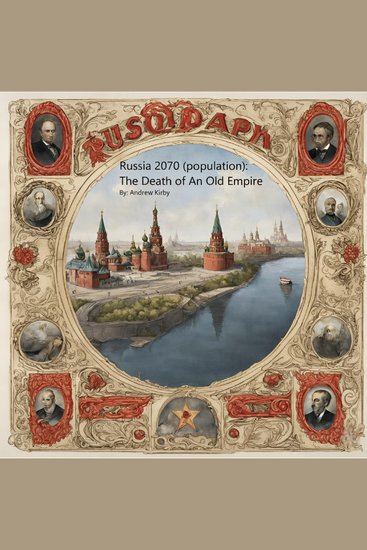
    Dive into the most comprehensive projection of Russia’s population and ethnic landscape by the year 2070. This meticulous analysis goes far beyond national totals, providing granular, region-by-region estimates for every Oblast, Okrug, and Autonomous Region. 
    Using a rigorous methodology that cross-references historic Census data, detailed Ethnologue sources, and current demographic trends, this report paints a striking portrait of the potential collapse and transformation of an old empire. Discover which regions face the most catastrophic population decline and how internal and external migration flows are set to reshape the ethnic map of the Russian Federation. 
    This is more than just a list of numbers. It’s a stark, data-driven look at the forces eroding Russian society. While based strictly on established demographic trends, the underlying context of this population crisis, including Russia's persistent Tier 3 ranking on the U.S. Department of State's human trafficking list—underscores the complex challenges threatening the nation’s stability. 
    Understand the future of Russia's people, one region at a time. The death of an empire starts with its population.
    Mostra libro
  • Gupta Empire - Golden Age of Art Science and Literature - cover

    Gupta Empire - Golden Age of Art...

    Rolf Hedger

    • 0
    • 0
    • 0
    The Gupta Empire, one of the most influential dynasties in Indian history, emerged in the early 4th century CE. It marked the beginning of a new era characterized by political stability, territorial expansion, and remarkable advancements in various fields. The foundation of the empire was laid by Chandragupta I, whose leadership and strategic alliances set the stage for the golden age that followed. 
    The origins of the Gupta dynasty remain somewhat obscure, but historical records suggest that they were a powerful regional clan in the Magadha region, present-day Bihar. Unlike the Mauryan Empire, which had a centralized administrative structure, the Gupta rulers adopted a more decentralized approach, allowing local rulers to maintain a degree of autonomy while still pledging allegiance to the empire. This governance model contributed to their long-lasting rule and ensured stability across their vast territories. 
    Chandragupta I, who ascended the throne around 320 CE, played a crucial role in the establishment of the empire. His most significant achievement was his matrimonial alliance with the Licchavi princess Kumaradevi, which not only strengthened his position but also expanded his influence in the fertile Ganges basin. This strategic marriage helped him consolidate power and gain the support of powerful regional factions. As a result, the empire's boundaries began to expand, laying the groundwork for future conquests.
    Mostra libro
  • Barack Obama - Conservative Pragmatist Progressive - cover

    Barack Obama - Conservative...

    Burton I. Kaufman

    • 0
    • 0
    • 0
    Following his election, President Obama's supporters and detractors anticipated radical reform. As the first African American to serve as president, he reached the White House on a campaign promise of change. But, as Burton Kaufman explores in this insightful biography, Obama showed clear patterns of classical conservativism of an ideological sort and basic policy-making pragmatism. His commitment to usher in a multiracial, multiethnic, and multicultural society was fundamentally connected to opening up, but not radically altering, the existing free enterprise system. 


    The Affordable Care Act was a distillation of President Obama's complex motivations for policy. More conservative than radical, the ACA fitted the expansion of health insurance into the existing system. Similarly, in foreign policy, Obama eschewed the use of force to affect regime change. Yet he kept boots on the ground in the Middle East and supported ballot-box revolts geared toward achieving in foreign countries the same principles of liberalism, free enterprise, and competition that existed in the United States. 


    In estimating the course and impact of Obama's full political life, Kaufman makes clear that both the desire for and fear of change in the American polity affected the popular perception but not the course of action of the forty-fourth US president.
    Mostra libro
  • LGBTQ+ Trailblazers of San Francisco - cover

    LGBTQ+ Trailblazers of San...

    Dr. William Lipsky

    • 0
    • 0
    • 0
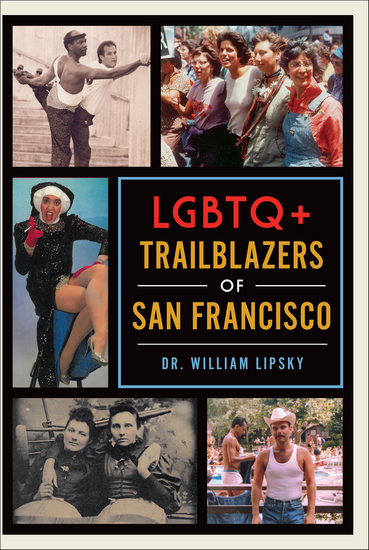
    Famous and forgotten, they're all our fabulous ancestors.  From Charles Warren Stoddard, the first openly gay San Franciscan, to Felicia "Flames" Elizondo, the exuberant transgender rights advocate, the LGBT community is integrally woven into the fabric of the city's history. Household names like Queen Califia, Charley Parkhurst, Elsa Gidlow, Jose Sarria and Harvey Milk are celebrated worldwide, while Bert LaRose, Mabel Edison and Clarence Lockett are now largely forgotten. Whether '49ers, bohemians, beatniks, boomers, hippies, clones or conformists, their fascinating stories contributed to the development of a vibrant community, many simply by being themselves.  Join Dr. William Lipsky as he recounts their struggles and achievements in the City by the Bay.
    Mostra libro
  • Blood and Treasure - The Economics of Conflict from the Vikings to the Modern Era - cover

    Blood and Treasure - The...

    Duncan Weldon

    • 0
    • 0
    • 0
    Wars are expensive, both in human terms and monetary ones. But while warfare might be costly it has also, at times, been an important driver of economic change and progress. Over the long span of history nothing has shaped human institutions—and thus the process of economic development—as much as war and violence. Wars made states and states made wars. As the costs of warfighting grew so did state structures, taxation systems and national markets for debt. And as warfare became ever more destructive the incentive for governments to resort to it changed too. 
     
    Blood and Treasure looks at the history and economics of warfare from the Viking Age to the war in Ukraine, examining how incentives and institutions have changed over the centuries. It surveys how warfare helped drive Europe's rise to global prominence, and it explains how the total wars of the twentieth century required a new type of strategy, one that took economics seriously. 
     
    Underpinning this riveting narrative is a focus on how and why the economics of conflict have changed over time. This is a story of how economics can help to explain the motivations of war, and how understanding the history of warfare can help explain modern economics.
    Mostra libro