Unisciti a noi in un viaggio nel mondo dei libri!
Aggiungi questo libro allo scaffale
Grey
Scrivi un nuovo commento Default profile 50px
Grey
Iscriviti per leggere l'intero libro o leggi le prime pagine gratuitamente!
All characters reduced
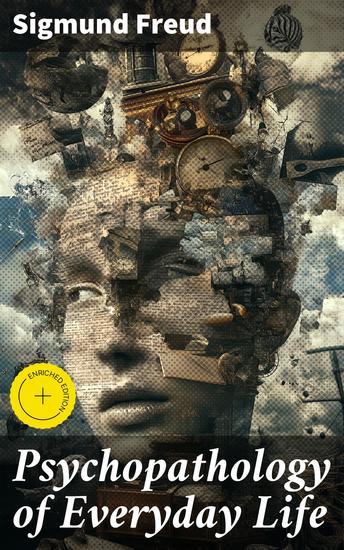
Psychopathology of Everyday Life - Enriched edition Revealing the Unconscious: Freudian Psychology in Daily Life - cover

Psychopathology of Everyday Life - Enriched edition Revealing the Unconscious: Freudian Psychology in Daily Life

Sigmund Freud

Traduttore A. A. Brill

Casa editrice: Good Press

  • 0
  • 0
  • 0

Sinossi

In "Psychopathology of Everyday Life," Sigmund Freud meticulously explores the interplay between the unconscious mind and everyday behaviors, presenting a groundbreaking analysis of slips of the tongue, forgotten names, and mundane actions. Employing a blend of clinical case studies, introspective analysis, and theoretical discourse, Freud elucidates how these seemingly trivial incidents reveal deeper psychological conflicts and desires. Written in a clear yet incisive literary style, the text serves as a cornerstone for psychoanalytic theory, positioning personal experiences within a broader context of human psychology, all while challenging the conventional understanding of sanity and expression in turn-of-the-century Vienna. Sigmund Freud, the father of psychoanalysis, derived insights for this seminal work from his extensive clinical practice and familiarity with contemporary psychological discussions. Born in 1856 in Austria, Freud's revolutionary ideas emerged from an era that grappled with the complexities of the human psyche. His innovative theories were influenced by his studies in neurology, the prevailing philosophical currents of his time, and a profound interest in the unconscious, which shaped his lifelong dedication to uncovering the hidden motivations behind human behavior. "Psychopathology of Everyday Life" is indispensable for anyone seeking to comprehend the intricate links between everyday occurrences and our internal psyches. Freud's groundbreaking examination remains relevant, offering profound insights for psychology students, literary scholars, and general readers alike. Engaging with this work provides a meaningful exploration into the depths of human behavior, inviting readers to reflect on their own unconscious processes.

In this enriched edition, we have carefully created added value for your reading experience:
- A succinct Introduction situates the work's timeless appeal and themes.
- The Synopsis outlines the central plot, highlighting key developments without spoiling critical twists.
- A detailed Historical Context immerses you in the era's events and influences that shaped the writing.
- An Author Biography reveals milestones in the author's life, illuminating the personal insights behind the text.
- A thorough Analysis dissects symbols, motifs, and character arcs to unearth underlying meanings.
- Reflection questions prompt you to engage personally with the work's messages, connecting them to modern life.
- Hand‐picked Memorable Quotes shine a spotlight on moments of literary brilliance.
- Interactive footnotes clarify unusual references, historical allusions, and archaic phrases for an effortless, more informed read.
Disponibile da: 21/08/2022.
Lunghezza di stampa: 184 pagine.


Altri libri che potrebbero interessarti

  • The Gnosis of the Mind - cover

    The Gnosis of the Mind

    George Robert Stow Mead

    • 0
    • 0
    • 0
    The Gnosis of the Mind, written by G. R. S. Mead, is an exploration into the concept of gnosticism, wherein a personal transformation is achieved through knowledge and self-realization. The text highlights the idea that one's individual consciousness can be awakened and enhanced through spiritual enlightenment, advocating for a greater understanding of self and of one's potential within the universe. Read in English, unabridged.
    Mostra libro
  • When Science Meets Power - 1st Edition - cover

    When Science Meets Power - 1st...

    Geoff Mulgan

    • 0
    • 0
    • 0
    Science and politics have collaborated throughout human history and science is repeatedly invoked today in political debates, from pandemic management to climate change. 


    Leading policy analyst Geoff Mulgan here calls attention to the growing frictions caused by the expanding—and unsolicited—authority being heaped upon science. As science increasingly competes with politics, a defined plan of cooperation is urgently needed. 


    Mulgan outlines science and politics as two distinct, imperfect forms of collective intelligence. Whereas science is ordered around what we know and what is, politics engages what we feel and what matters. Politics functions because it recognizes the limits of power, the need for delegation and expert advice. The intellectual logic of science, on the other hand, focuses on detail and depth, struggling to place its knowledge in wider contexts. The crux of the matter, Mulgan argues, is how can we ensure that crucial decisions taken in democracies are both well informed and legitimate? 


    Rooted in understanding that science and politics are not just fields of ideas but also fields of action, this book proposes ways to ensure that the two work effectively together.
    Mostra libro
  • The history of money and banking - cover

    The history of money and banking

    KidsChoice

    • 0
    • 0
    • 0
    KidsChoice: World knowledge for Children is an engaging audiobook series that takes young listeners on a fascinating journey to explore and understand the world around them. Aimed at curious children aged 7 to 99, this series dives into a variety of topics in science, society, and culture, making complex ideas accessible and exciting.  Each episode brings a unique theme to life—whether exploring the mysteries of space, uncovering the secrets of the human body, or discovering the diversity of cultures and traditions worldwide. With lively narration, interesting facts, and interactive elements, the series guides young listeners on an adventure full of discovery, encouraging them to ask questions and expand their understanding in a fun way.  In the scientific world of KidsChoice, children learn about the wonders of nature and the universe. Concepts like the solar system, animal behavior, the human body, and Earth's various ecosystems are explained in a way that is easy for kids to grasp and find fascinating. Exciting analogies and vivid examples help spark curiosity, turning learning into an adventure.  Societal topics also have a special place in the series. KidsChoice introduces young listeners to the basics of community, compassion, and making a positive impact. Children learn what it means to be a good citizen and how they can make small, meaningful contributions to their communities.  Additionally, KidsChoice opens a window to the vibrant world of global cultures. Through a virtual journey around the globe, children discover how people in other countries live, the customs and traditions they follow, the languages they speak, and the foods they enjoy. This fosters understanding and respect for diverse ways of life, celebrating the richness of human experience as a beautiful, valuable part of the world.  With its vivid language and captivating soundscapes, "KidsChoice: World knowledge for Children" turns learning into an exciting experience, sparking a lifelong curiosity and a deeper understanding of the world around them.
    Mostra libro
  • The Bodhisattva Concept - cover

    The Bodhisattva Concept

    A.G.S. Kariyawasam

    • 0
    • 0
    • 0
    This is a Pariyatti audiobook of Bodhi Leaves No. 157, "The Bodhisattva Concept" by A.G.S. Kariyawasam found in the Pariyatti Edition of Collected Bodhi Leaves Vol. V.
     
    Excerpt from The Bodhisattva Concept:
     
    In original Pali Buddhism, the term bodhisatta is used more or less exclusively to designate Gautama Buddha prior to his enlightenment.
     
    'The concept of bodhisattva, along with that of Buddha and of the cakravartin (world-ruler), was in vogue in India even before the appearance of Gautama Buddha. When Prince Siddhārtha, who later became Gautama Buddha, took conception in the womb of Queen Māyā, a seer predicted that Suddhodana’s future son would be either a world-ruler (cakravartin) or a Buddha. Once, answering a question by a brahmin, the Buddha himself admitted that he is neither a god nor a yakkha, but a Buddha, meaning thereby one of a succession of Buddhas (A II 38).
    Mostra libro
  • Genghis Khan by Hitori-Nakamoto - His Life His Success and a Fascinating Story About Him - cover

    Genghis Khan by Hitori-Nakamoto...

    Hitori-Nakamoto

    • 0
    • 0
    • 0
    Genghis Khan by Hitori-Nakamoto 
    In the expansive landscape of human history, few figures loom as large as Genghis Khan. His name conjures up deeply polarized images - brutal warrior, visionary leader, ruthless conqueror, and inspired empire-builder. By charting his early life and improbable rise to power, this book aims to provide insight into the experiences that forged this polarizing, larger-than-life figure.  
      
    Rising from obscurity on the harsh Mongolian steppe, Genghis Khan would establish the largest contiguous land empire the world had ever seen. At its peak, this empire stretched from Eastern Europe to the Sea of Japan, encompassing illustrious cities like Beijing, Kabul and Baghdad within its realm. His vision of empire, his mastery of cavalry warfare, and his skill at uniting fractious nomads under his banner transformed medieval Eurasia forever. 
      
    To comprehend the genesis of this world-changing figure, we must explore his early life and the tribulations that steeled his unyielding ambition. Born as Temüjin around 1162 CE into an atmosphere of tribal warfare, betrayal and blood feuds, his childhood was dramatically reshaped by the poisoning death of his father, leaving his family abandoned and destitute. As explored in Chapter 1, these experiences of loss and humiliation fostered in Temüjin a dream of uniting the perpetually warring Mongols into a single people. 
      
     Grab a copy of this book now!
    Mostra libro
  • There Are No Guilty People - The Death Penalty Moral Conscience and the Illusion of Justice - cover

    There Are No Guilty People - The...

    Leo Tolstoy, Tim Zengerink

    • 0
    • 0
    • 0
    What if the people we punish most severely are the ones we understand least? 
    There Are No Guilty People is Leo Tolstoy’s impassioned outcry against the death penalty, delivered through a mix of storytelling and moral argument. Based on real events and driven by a deep sense of compassion, this work asks the reader to look beyond judgment—and into the heart of what it means to be human. 
    This modern audiobook adaptation preserves the intensity and clarity of Tolstoy’s original message while updating the language for today’s listener. 
    What You’ll Hear in This Modern Translation: 
    •	A moving fictional narrative of a condemned man 
    •	A passionate and persuasive critique of the justice system 
    •	A call to compassion that challenges common ideas of guilt and punishment 
    Included in This Edition: 
    This edition brings new urgency to Tolstoy’s moral message, offering a powerful listening experience that speaks directly to the conscience. 
    Listen now—and reconsider what justice really means.
    Mostra libro