Unisciti a noi in un viaggio nel mondo dei libri!
Aggiungi questo libro allo scaffale
Grey
Scrivi un nuovo commento Default profile 50px
Grey
Iscriviti per leggere l'intero libro o leggi le prime pagine gratuitamente!
All characters reduced
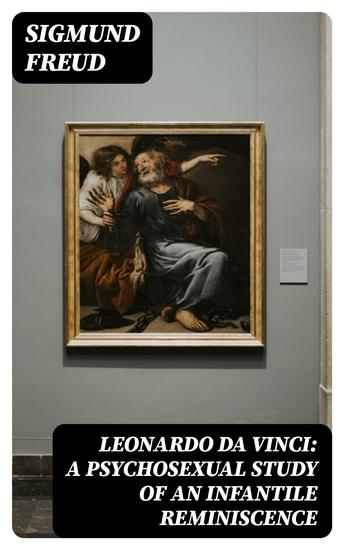
Leonardo da Vinci: A Psychosexual Study of an Infantile Reminiscence - cover

Leonardo da Vinci: A Psychosexual Study of an Infantile Reminiscence

Sigmund Freud

Traduttore A. A. Brill

Casa editrice: DigiCat

  • 0
  • 0
  • 0

Sinossi

In "Leonardo da Vinci: A Psychosexual Study of an Infantile Reminiscence," Sigmund Freud delves into the intricacies of the artist's psyche through the lens of psychoanalysis. Freud explores the symbolic significance of da Vinci's memories, particularly his purported recollection of being nourished by a bird, interpreting this as a manifestation of his relationship with his mother and the complexities of his sexual identity. Employing a rigorous psychoanalytic framework, the text weaves together art, memory, and desire, thereby positioning da Vinci's oeuvre within the broader context of Renaissance humanism and psychological conflict. Freud's distinctive literary style combines erudition with accessible prose, inviting readers to engage with his innovative theories on art and sexuality. Sigmund Freud, the father of psychoanalysis, developed his groundbreaking theories amidst a cultural milieu marked by rapid scientific and artistic change. His work on da Vinci reflects Freud's fascination with the intersection of psychology and creativity, shaped by his early experiences and professional aspirations in neurology and the burgeoning field of psychoanalysis. The study exemplifies his belief in the profound connection between art and the unconscious, encouraging readers to consider how personal history informs artistic expression. This book is an essential read for scholars of psychoanalysis, art history, and those intrigued by the depths of human creativity. Freud's insights not only illuminate da Vinci's genius but also challenge us to contemplate our own psychological landscapes. "Leonardo da Vinci" invites sophisticated discourse on the relationship between creative expression and the psyche, making it a noteworthy contribution to both psychological and artistic studies.
Disponibile da: 15/09/2022.
Lunghezza di stampa: 64 pagine.


Altri libri che potrebbero interessarti

  • Soothing Sounds for Relaxing Deep Sleep - cover

    Soothing Sounds for Relaxing...

    EasyTube Zen Studio

    • 0
    • 0
    • 0
    In the modern-day world, it can often prove difficult to step back, relax, and have GOOD sleep.Soothing Sounds for Deep Sleep with Binaural Beats are used by many to allow an individual's mind to release stress and enter a meditative state and rapidly increase sleep quality.We are YouTube channel specialize on producing video music for overcoming anxiety, depression, sleep disorder and also spirituality music.All our content is produced originally in our studio in New York and we are committed to help you improve your sleep and relax with our music.This eBook is free because the sounds are available on Audible where you can download this book for Free if you’re a new customer in Audible (please see details in the eBook)Over 20 hours of produce an array of gentle, pleasant, and very calming sensations.What are the benefits of Binaural Beats?    increase focus and concentration    reduce anxiety    lower stress    increase relaxation    foster positive moods    promote creativity    help manage painInside you'll find:    Ocean Sounds    Soothing Sounds for Deep Sleep    High Quality Binaural Beats    Delta Waves    Calming Nature Sounds    And much much more....!Don't hesitate, and start listening now!
    Mostra libro
  • A Brilliant Commodity - Diamonds and Jews in a Modern Setting - cover

    A Brilliant Commodity - Diamonds...

    Saskia Coenen Snyder

    • 0
    • 0
    • 0
    During the late nineteenth century, tens of thousands of diggers, prospectors, merchants, and dealers extracted and shipped over 50 million carats of diamonds from South Africa to London. The primary supplier to the world, South Africa's diamond fields became one of the formative sites of modern capitalist production. At each stage of the diamond's route through the British empire and beyond—from Cape Town to London, from Amsterdam to New York City—carbon gems were primarily mined, processed, appraised, and sold by Jews. 


    In A Brilliant Commodity, historian Saskia Coenen Snyder traces how once-peripheral Jewish populations became the central architects of a new, global exchange of diamonds. Centuries of restrictions had limited Jews to trade and finance, businesses that often heavily relied on internal networks. Jews were well-positioned to become key players in the earliest stage of the diamond trade and its growth into a global industry. Relying on mercantile and familial ties across continents, Jews created a highly successful commodity chain that included buyers, brokers, cutters, factory owners, financiers, and retailers. 


    Working within a diasporic ethnic community that bridged city and countryside, metropole and colony, Jews helped build a flourishing diamond industry and a place for themselves in the modern world.
    Mostra libro
  • Elusive Cures - Why Neuroscience Hasn’t Solved Brain Disorders—and How We Can Change That - cover

    Elusive Cures - Why Neuroscience...

    Nicole C. Rust

    • 0
    • 0
    • 0
    Brain research has been accelerating rapidly in recent decades, but the translation of our many discoveries into treatments and cures for brain disorders has not happened as many expected. We do not have cures for the vast majority of brain illnesses, and many medications we have to treat the brain are derived from drugs produced in the 1950s—before we knew much about the brain at all. Tackling brain disorders is one of the biggest challenges facing humanity today. What will it take to overcome it? Nicole Rust takes listeners along on her journey to answer this question. 


    Drawing on decades of experience, Rust reflects on how far we have come in our quest to unlock the secrets of the brain and what remains to be discovered. She shows us that treating a brain disorder is more like redirecting a hurricane than fixing a domino chain of cause and effect, arguing that only once we embrace the idea of the brain as a complex system do we have any hope of finding cures. Rust profiles the pioneering ideas about the brain that are driving research at the cutting edge to illuminate exactly how much we know about disorders—and what it will take to eradicate these scourges. 


    Elusive Cures sheds light on one of the most daunting challenges confronted by science while offering hope for revolutionary new treatments and cures for the brain.
    Mostra libro
  • The New Negro - An Interpretation - cover

    The New Negro - An Interpretation

    Alain Locke

    • 0
    • 0
    • 0
    "Of all the voluminous literature on the Negro, so much is mere external view and commentary…We turn therefore in the other direction to the elements of truest social portraiture, and discover in the artistic self-expression of the Negro to-day a new figure on the national canvas and a new force in the foreground of affairs.” 
      
    The New Negro Movement of the 1920s marked a shift in the pursuit of African American equality. African American soldiers were returning home from World War I, and after fighting for freedoms abroad, they were inspired to continue that fight on their own soil. The “old” ways had focused on passively accepting social policies, but the “new” ways would harness their collective voices in defining their own identity. The intellectual and artistic movement of the Harlem Renaissance stirred a tremendous wave of social change. 
      
    The New Negro was edited by Dr. Alain LeRoy Locke, a great intellectual and social visionary who is also considered the father of the Harlem Renaissance. This collection features works from many influential African American writers, such as Langston Hughes, Zora Neale Hurston, and Countee Cullen. 
      
    Alain Locke dedicates this book to future generations. In keeping with his vision, inAudio is honored to share this audiobook production with an enduring legacy of listeners.
    Mostra libro
  • The Subjection of Women - cover

    The Subjection of Women

    John Stuart Mill

    • 0
    • 0
    • 0
    "The Subjection of Women" is an essay written by John Stuart Mill in 1869. The essay is a critique of the social and legal status of women in Victorian England and argues for gender equality. Mill argues that the subjugation of women is not only morally wrong but also results in negative consequences for both men and women. 
    In the essay, Mill examines the various ways in which women are subjugated, including their lack of legal rights, their exclusion from education and professional opportunities, and their relegation to the domestic sphere. He argues that these societal restrictions prevent women from fulfilling their potential and living full, autonomous lives. 
    Mill also argues that the subjugation of women is not a natural or inevitable state of affairs but is instead a result of historical and cultural factors. He contends that by removing legal and social barriers to gender equality, society can create a more just and harmonious social order. 
    "The Subjection of Women" was a groundbreaking work in its time and helped to lay the groundwork for the feminist movement. Mill's arguments continue to be influential to this day, and the essay remains a key text in the history of feminist thought.
    Mostra libro
  • The Four Workarounds - Strategies from the World's Scrappiest Organizations for Tackling Complex Problems - cover

    The Four Workarounds -...

    Paulo Savaget

    • 0
    • 0
    • 0
    We constantly encounter complex problems at home, in our places of work, and in society at large. Even if we had all the time and money in the world, sometimes no good solution can be found. So, what should we do, especially when we can’t wait? The answer: a workaround.For ages, global corporations have been lecturing small organizations and not-for-profits on how to get things done. As it turns out, it should have been the other way around. In this groundbreaking audiobook, award-winning researcher Paulo Savaget shows how the most valuable lessons about problem-solving can be learned from the scrappiest groups.Savaget draws most of his examples from small organizations dedicated to social action that have made an art form out of subverting the status quo and have proved themselves adept at achieving massive wins with minimal resources. Through his research, Savaget identified the four workarounds that these groups commonly employ: the piggyback, the loophole, the roundabout, and the next best. With vivid and fascinating examples from his life and travels, he demonstrates how each one works and how to know which one to use when.The Four Workarounds shows how seemingly intractable problems—from public urination to the challenges of delivering lifesaving medicine to remote communities—were addressed using unconventional tactics. Some of the world’s biggest and most admired companies are already using Savaget’s research to transform the ways they do business. And these same lessons can also revolutionize the ways we approach the challenges we all encounter every day of our lives.A Macmillan Audio production from Flatiron Books.
    Mostra libro