Unisciti a noi in un viaggio nel mondo dei libri!
Aggiungi questo libro allo scaffale
Grey
Scrivi un nuovo commento Default profile 50px
Grey
Iscriviti per leggere l'intero libro o leggi le prime pagine gratuitamente!
All characters reduced
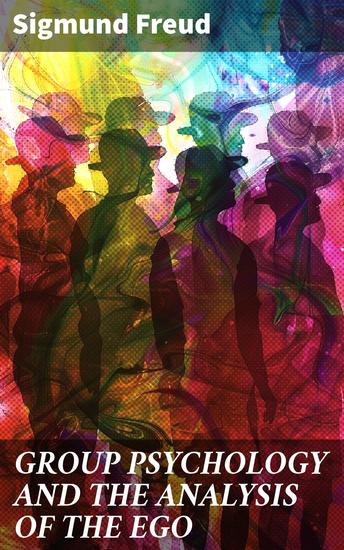
GROUP PSYCHOLOGY AND THE ANALYSIS OF THE EGO - Unraveling the Dynamics of Group Behavior and the Ego's Influence - cover

GROUP PSYCHOLOGY AND THE ANALYSIS OF THE EGO - Unraveling the Dynamics of Group Behavior and the Ego's Influence

Sigmund Freud

Traduttore James Strachey

Casa editrice: Good Press

  • 0
  • 0
  • 0

Sinossi

In "Group Psychology and the Analysis of the Ego," Sigmund Freud delves into the dynamics of group behavior and the psychological mechanisms that underpin social influence. Utilizing his signature blend of empirical observation and theoretical deduction, Freud examines how individual psyche interacts with the collective mindset, emphasizing concepts such as identification, the erotic component in group cohesion, and the complexities of the super-ego within social contexts. This seminal work not only extends psychoanalytic theory but also situates it within a broader socio-cultural narrative, reflecting the tumultuous anxieties of the early 20th century, particularly in the wake of World War I and the burgeoning tensions of modernity. Freud, renowned as the father of psychoanalysis, established his theoretical framework through a combination of clinical practice and cultural analysis. His experiences during the unprecedented social shifts of his time contributed significantly to his inquiry into group phenomena. Freud's insights into human behavior and his exploration of the unconscious mind shaped not only psychology but also broader intellectual discourse, positioning him as a pivotal figure in understanding the complexities of human relationships. "Group Psychology and the Analysis of the Ego" is essential reading for anyone intrigued by the interplay between individual and collective identities. Freud's profound observations resonate with contemporary social psychology and provide timeless insights that help us navigate the challenges of modern group dynamics, making this work crucial for students, scholars, and practitioners alike.
Disponibile da: 17/01/2024.
Lunghezza di stampa: 88 pagine.

Altri libri che potrebbero interessarti

  • The Maurya Empire - History of Events Causes and Consequences - cover

    The Maurya Empire - History of...

    Kelly Mass

    • 0
    • 0
    • 0
    The Maurya Empire was a South Asian Iron Age historic empire centered in Magadha, created by Chandragupta Maurya in the year 322 before Christ and lasting till 185 before Christ in a loose-knit way. The conquest of the Indo-Gangetic Plain focused the Maurya Empire, and Pataliputra functioned as its capital city (modern-day Patna). Beyond this royal core, the empire's geographical reach was limited by the dedication of army leaders who ruled the armed cities that dot the landscape. 
    Other than for the far south, the empire briefly controlled the significant city centers and arteries of the Indian subcontinent throughout Ashoka's rule (which was from around 268 to 232 before Christ). 
    After Ashoka's reign, it sank for practically 50 years before liquifying in 185 before Christ with the murder of Brihadratha by Pushyamitra Shunga and the facility of the Shunga dynasty in Magadha. 
    Let’s explore the details of this empire that’s relatively unknown in the west, but certainly something people in South Asia are often familiar with.
    Mostra libro
  • The Age of Reason - cover

    The Age of Reason

    Thomas Paine

    • 0
    • 0
    • 0
    In "The Age of Reason", which is a classic in American literature, Thomas Paine argues for the philosophical position of Deism.  
    It follows in the tradition of 18th century British deism, and challenges institutionalized religion and the legitimacy of the Bible. 
    Paine's work inspired and guided many free thinkers including Thomas Jefferson, Abraham Lincoln, Mark Twain and Bertrand Russell.
    Mostra libro
  • The Unknown story of the First Raid on the Golden Temple - cover

    The Unknown story of the First...

    Amit Schandillia

    • 0
    • 0
    • 0
    The Golden Temple of Amritsar has always been more than just a holy site. Throughout its chequered history, the complex has served as the undeniable seat of Sikh power, both theological as well as political. So when it was desecrated in 1984, it's only natural the entirety of North India burst into flames. But that wasn't the first time its sanctum sanctorum was invaded. Nor was Indira Gandhi its first antagonist. This is the story of one such raid that predates Operation Bluestar by three decades under the watch of none other than Jawaharlal Nehru.
    Mostra libro
  • How to Eat - An Ancient Guide for Healthy Living - cover

    How to Eat - An Ancient Guide...

    Abigail Reno

    • 0
    • 0
    • 0
    Today, we're stuffed with dietary recommendations from every direction. Social media, advertising, food packaging, diet books, doctors—all have advice on what, how much, and when to eat. This would have been no surprise to ancient Greeks and Romans. Their doctors were intensely interested in food, offered highly prescriptive dietary advice, and developed detailed systems to categorize foods and their health effects. How to Eat is a delectable anthology of Greco-Roman writings on how to eat, exercise, sleep, bathe, and manage your sex life for optimal health. It also gathers ancient opinions on specific foods of all sorts, from how to deploy onions to cure baldness and cabbage to get sober to whether lentils are healthy and why arugula increases your sex drive. 


    With lively new translations by Claire Bubb, How to Eat features voices from medicine, philosophy, natural history, agriculture, and cooking, including Hippocrates, Pliny the Elder, Galen, Seneca, Plutarch, and Cato. 


    While medicine and science have obviously changed enormously since the classical world, and some Greco-Roman beliefs about diet now appear hilariously off the mark, How to Eat reveals that much of their advice still resonates—and all of it is fascinating.
    Mostra libro
  • Radionics and Life Force Technologies - cover

    Radionics and Life Force...

    Martin K. Ettington

    • 0
    • 0
    • 0
    Radionics is the term for machines which manipulate life forces. This is often for healing or increasing psychic perceptions.The Author is an engineer and has many decades of experience with the paranormal and well as time learning and experimenting with radionics devices from the 1970s.While radionics devices are often considered pseudoscience, those opinions don’t take into account the sensitivities of individuals who have incredible paranormal and healing abilities.In my first year of engineering school at Rensselaer Polytechnic Institute in Troy, New York I met a man who became my mentor in the Paranormal and other things too. This was in 1973.I learned to meditate and how to open my crown chakra to take in vital forces which allowed me to do many things including healing others.In addition I also met another middle aged guy at a Psychic Fair in Saratoga Springs, New York. He was a researcher in the arcane field of Kirlian Photography.In this book the history of radionics is discussed, some of the major influencers on that history, how these devices are used for healing, and even some plans for building radionics devices. My hope is that this book will give you a good grounding in radionics to learn to use it productively for your own efforts.
    Mostra libro
  • A Rare Recording of Frank Lloyd Wright - cover

    A Rare Recording of Frank Lloyd...

    Frank Lloyd Wright

    • 0
    • 0
    • 0
    Frank Lloyd Wright (June 8, 1867 to April 9, 1959), born in Richland Center, Wisconsin, was an American architect, designer, writer, and educator. He designed more than 1,000 structures over a creative period of 70 years. Wright played a key role in the architectural movements of the twentieth century, influencing architects worldwide through his works and mentoring hundreds of apprentices in his Taliesin Fellowship. Wright believed in designing in harmony with humanity and the environment, a philosophy he called organic architecture. This philosophy was exemplified in Fallingwater (1935), which has been called "the best all-time work of American architecture." The following audio clips are from the late 1950s.
    Mostra libro